1-Decanol Market Size, Share Demand Report By Type (Synthetic 1-Decanol, Bio-based 1-Decanol), By Application (Plasticizers, Surfactants, Lubricants, Solvents, Others), By End-Use Industry (Chemical Industry, Personal Care Industry, Automotive Industry, Construction Industry, Others) By Region & Segment Forecasts, 2026–2034
USD 3950
Market Overview
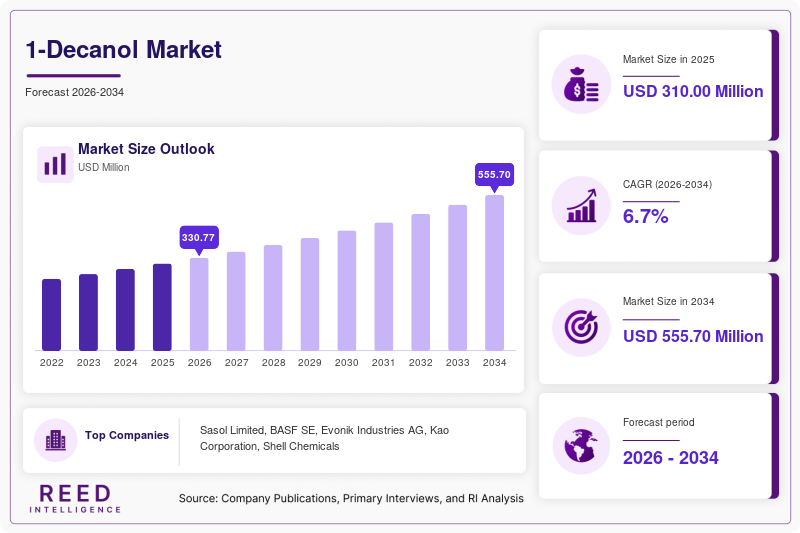
The global 1-Decanol Market size was valued at approximately USD 310 million in 2026 and is projected to reach USD 520 million by 2034, expanding at a CAGR of 6.7% during the forecast period (2026–2034). The market reflects steady growth driven by its increasing use as an intermediate in plasticizers, surfactants, lubricants, and specialty chemicals. 1-Decanol, a fatty alcohol derived primarily from petrochemical and bio-based sources, plays a critical role in industrial formulations due to its stability, hydrophobic properties, and compatibility with various chemical systems. Rising demand for eco-friendly and biodegradable surfactants has further strengthened its market penetration across consumer goods and industrial applications.
A key global factor supporting the expansion of the market is the growing shift toward sustainable and bio-based chemical production. Manufacturers are increasingly investing in renewable feedstocks to produce fatty alcohols such as 1-decanol, aligning with environmental regulations and consumer preferences for greener products. This transition is particularly evident in personal care and household cleaning industries, where bio-based ingredients are gaining traction. In addition, advancements in catalytic processes and production technologies have improved efficiency and cost competitiveness, enabling broader adoption across diverse applications.
Key Highlights
- North America dominated the market with a 33.8% share in 2025.
- Asia Pacific is expected to grow at the fastest CAGR of 7.5% during 2026–2034.
- By type, synthetic 1-decanol accounted for the largest share of 61.2%.
- while bio-based 1-decanol is projected to grow at a CAGR of 8.1%.
- By application, plasticizers led with a 36.9% share, whereas surfactants are expected to expand at a CAGR of 7.8%.
- The United States remained the dominant country, with market values of USD 82 million in 2024 and USD 88 million in 2025.
Market Trends
Rising adoption of bio-based fatty alcohols
A notable trend shaping the 1-Decanol Market is the growing adoption of bio-based fatty alcohols across industries. As sustainability becomes a core focus for manufacturers and regulators, companies are increasingly replacing petrochemical-derived 1-decanol with bio-based alternatives derived from natural oils such as palm kernel and coconut oil. This shift is driven by stricter environmental regulations, especially in developed economies, as well as consumer demand for eco-conscious products. The personal care and home care sectors are at the forefront of this transformation, where ingredient transparency and biodegradability are key purchasing factors. Additionally, bio-based production methods are benefiting from advancements in green chemistry, improving yield and cost efficiency. This trend is expected to continue as companies invest in sustainable supply chains and carbon footprint reduction strategies.
Expansion of specialty chemical applications
Another important trend is the increasing use of 1-decanol in specialty chemical applications. Beyond its traditional role in plasticizers and lubricants, the compound is gaining traction in high-performance coatings, pharmaceuticals, and agrochemical formulations. The versatility of 1-decanol as a solvent and intermediate makes it suitable for customized chemical synthesis, which is essential in advanced industrial processes. The growth of sectors such as automotive coatings and crop protection chemicals has contributed to rising demand for high-purity 1-decanol. Furthermore, innovation in formulation technologies is enabling manufacturers to develop niche applications, enhancing product performance and stability. This trend highlights the evolving role of 1-decanol as a value-added chemical rather than just a commodity input.
Market Drivers
Increasing demand from plasticizers and polymer industries
The expanding use of plasticizers in polymer manufacturing is a key driver for the 1-Decanol Market. Plasticizers improve the flexibility, durability, and workability of plastics, particularly in applications such as PVC products, cables, and flooring materials. 1-Decanol serves as a critical intermediate in the production of these plasticizers, supporting consistent demand from the construction and automotive industries. As infrastructure development and urbanization continue to accelerate globally, the demand for polymer-based materials is rising, thereby boosting the consumption of 1-decanol. In addition, innovations in polymer technology are increasing the need for high-performance plasticizers, further strengthening market growth. The integration of 1-decanol in advanced formulations ensures its continued relevance in industrial applications.
Growth in personal care and home care industries
The rapid expansion of personal care and home care sectors is another major factor driving the market. 1-Decanol is widely used in the production of surfactants, emulsifiers, and fragrances, which are essential components in products such as shampoos, detergents, and lotions. Rising consumer awareness regarding hygiene and grooming, particularly in emerging economies, has led to increased consumption of these products. Additionally, the shift toward premium and specialized formulations is encouraging manufacturers to use high-quality ingredients like 1-decanol. The growth of e-commerce and retail distribution channels has also made personal care products more accessible, further supporting demand. This driver is expected to remain strong as consumer lifestyles evolve and spending on personal care continues to rise.
Market Restraints
Volatility in raw material prices and supply chain disruptions
One of the key challenges facing the 1-Decanol Market is the volatility in raw material prices, particularly for petrochemical feedstocks and natural oils used in bio-based production. Fluctuations in crude oil prices directly impact the cost structure of synthetic 1-decanol, while variability in agricultural output affects the availability and pricing of natural feedstocks. These uncertainties can lead to inconsistent profit margins for manufacturers and may discourage long-term investments. Additionally, supply chain disruptions caused by geopolitical tensions, trade restrictions, and logistical bottlenecks have further complicated procurement and distribution processes. For example, disruptions in palm oil supply chains have affected the production of bio-based fatty alcohols, creating shortages and price spikes. Such challenges can hinder market growth by increasing production costs and limiting the availability of raw materials, especially for small and medium-sized manufacturers.
Market Opportunities
Advancements in green chemistry and sustainable production
The development of green chemistry techniques presents a significant opportunity for the 1-Decanol Market. Innovations in catalytic processes and renewable feedstock utilization are enabling more efficient and environmentally friendly production methods. Companies are investing in research to reduce energy consumption, minimize waste, and improve overall process sustainability. These advancements not only help meet regulatory requirements but also enhance the market appeal of bio-based 1-decanol. As industries increasingly adopt sustainable practices, the demand for eco-friendly chemical intermediates is expected to grow. This creates opportunities for manufacturers to differentiate their products and capture new market segments. The integration of circular economy principles further supports the long-term growth potential of sustainable 1-decanol production.
Expansion in emerging economies and industrial sectors
Emerging economies offer substantial growth opportunities for the 1-Decanol Market due to rapid industrialization and increasing consumer demand. Countries in Asia Pacific, Latin America, and the Middle East are witnessing significant growth in construction, automotive, and consumer goods industries, all of which rely on 1-decanol-based products. The rising middle-class population and improving living standards are driving demand for personal care and household products, further boosting market expansion. Additionally, government initiatives aimed at promoting local manufacturing and reducing import dependency are encouraging investments in chemical production facilities. These factors create a favorable environment for market growth, enabling companies to expand their presence and tap into new revenue streams.
Segmental Analysis
By Type
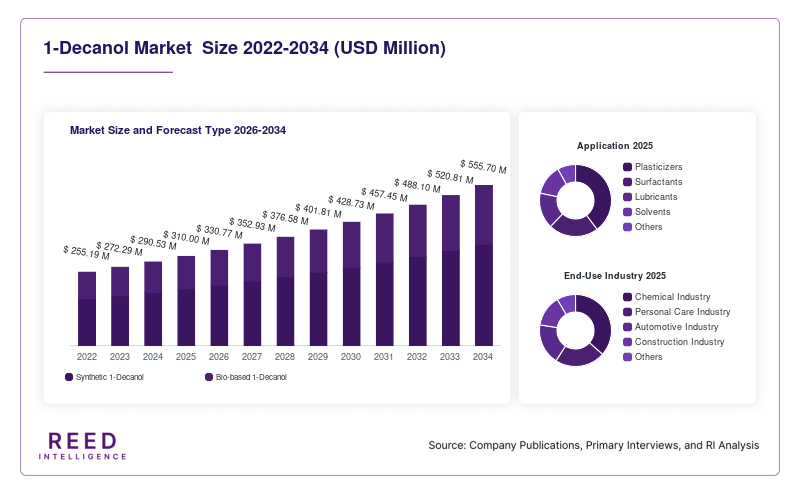
Synthetic 1-decanol dominated the market, accounting for approximately 61.2% of the total share in 2024. This dominance is attributed to its cost efficiency, consistent quality, and large-scale availability. Synthetic production methods, primarily derived from petrochemical feedstocks, enable manufacturers to meet high demand across various industries, including plastics, lubricants, and coatings. The established infrastructure for petrochemical processing further supports the widespread use of synthetic 1-decanol. Additionally, its compatibility with existing industrial processes makes it a preferred choice for manufacturers. Despite growing interest in sustainable alternatives, synthetic 1-decanol continues to maintain its leading position due to its economic advantages and reliable supply chain.
Bio-based 1-decanol is emerging as the fastest-growing subsegment, with a projected CAGR of 8.1% during the forecast period. This growth is driven by increasing environmental awareness and regulatory support for sustainable chemicals. Bio-based production utilizes renewable resources such as vegetable oils, reducing dependence on fossil fuels and lowering carbon emissions. Industries such as personal care and home care are actively adopting bio-based ingredients to meet consumer demand for eco-friendly products. Furthermore, advancements in biotechnology and green chemistry are improving production efficiency, making bio-based 1-decanol more competitive. This shift toward sustainability is expected to significantly influence the future dynamics of the market.
By Application
Plasticizers represented the largest application segment, holding a 36.9% share in 2024. The widespread use of plasticizers in flexible PVC and other polymer products drives this dominance. 1-Decanol serves as a key intermediate in the production of plasticizers, enhancing the flexibility and durability of materials used in construction, automotive, and consumer goods. The growth of infrastructure projects and increasing demand for durable materials have further strengthened this segment. Additionally, innovations in polymer formulations are creating new opportunities for 1-decanol-based plasticizers. The segment’s strong demand base ensures its continued leadership in the market.
Surfactants are the fastest-growing application segment, with a CAGR of 7.8%. The rising demand for cleaning and personal care products is a major factor driving this growth. 1-Decanol is widely used in the production of surfactants due to its excellent emulsifying and foaming properties. The increasing focus on hygiene and sanitation, particularly in developing regions, is boosting the consumption of surfactants. Additionally, the shift toward biodegradable and environmentally friendly products is encouraging the use of bio-based 1-decanol in surfactant formulations. This trend is expected to drive significant growth in the segment over the forecast period.
By End-Use Industry
The chemical industry dominated the market, accounting for a significant share of 42.5% in 2024. This dominance is due to the extensive use of 1-decanol as an intermediate in the production of various chemicals, including plasticizers, lubricants, and solvents. The versatility of 1-decanol makes it a valuable component in multiple industrial processes. The growth of the chemical sector, driven by increasing demand for specialty chemicals, further supports this segment. Additionally, advancements in chemical synthesis and processing technologies are enhancing the efficiency and application scope of 1-decanol.
The personal care industry is the fastest-growing end-use segment, with a CAGR of 7.9%. The increasing demand for skincare, haircare, and hygiene products is driving this growth. 1-Decanol is used in the formulation of emulsifiers, fragrances, and conditioning agents, making it an essential ingredient in personal care products. The rising consumer preference for high-quality and sustainable products is further boosting demand. Additionally, the expansion of the beauty and wellness industry in emerging markets is creating new growth opportunities. This trend is expected to continue as consumer awareness and spending on personal care products increase.
Regional Analysis
North America
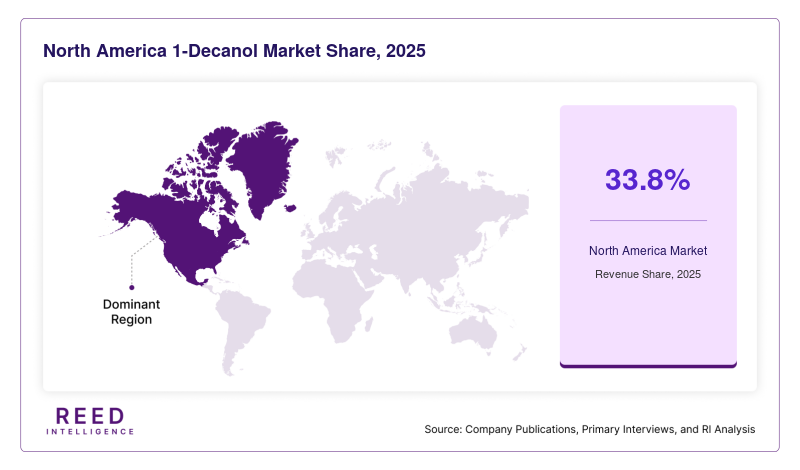
North America held a significant share of the 1-Decanol Market, accounting for approximately 33.8% in 2025, with a projected CAGR of 6.1% during the forecast period. The region’s mature chemical industry and strong demand from end-use sectors such as automotive, construction, and personal care contribute to its market leadership. The presence of established manufacturers and advanced production technologies further supports consistent supply and innovation. Additionally, regulatory frameworks promoting sustainable chemicals are influencing market dynamics, encouraging the adoption of bio-based alternatives.
The United States dominates the regional market, driven by its robust industrial base and high consumption of specialty chemicals. A unique growth factor is the increasing investment in research and development for green chemistry solutions. Companies are focusing on developing eco-friendly formulations to meet regulatory standards and consumer expectations. This emphasis on sustainability is expected to drive the adoption of bio-based 1-decanol, strengthening the country’s position in the global market.
Europe
Europe accounted for around 27.5% of the market share in 2025 and is expected to grow at a CAGR of 6.3% through 2034. The region’s focus on environmental sustainability and stringent regulatory policies has significantly influenced the adoption of bio-based chemicals. Industries such as personal care, automotive, and construction are key contributors to market demand. The presence of leading chemical manufacturers and strong supply chain networks further supports regional growth.
Germany leads the European market, benefiting from its advanced chemical manufacturing sector. A key growth factor is the region’s emphasis on circular economy practices, which encourage the use of renewable resources and recycling. This approach has led to increased demand for bio-based 1-decanol, particularly in applications requiring environmentally friendly inputs. The country’s commitment to innovation and sustainability continues to drive market expansion.
Asia Pacific
Asia Pacific is the fastest-growing region, with a CAGR of 7.5% and a market share of 24.2% in 2025. Rapid industrialization, urbanization, and population growth are key factors driving demand for 1-decanol in this region. The expanding manufacturing sector and increasing consumption of personal care products are contributing to market growth. Additionally, the availability of raw materials and cost-effective production capabilities make Asia Pacific a key hub for chemical manufacturing.
China dominates the regional market due to its large-scale industrial production and strong demand across various sectors. A unique growth factor is the government’s focus on expanding domestic chemical production to reduce import dependency. Investments in infrastructure and manufacturing facilities are further boosting market growth. The increasing adoption of advanced production technologies is also enhancing the efficiency and competitiveness of the regional market.
Middle East & Africa
The Middle East & Africa region held a smaller share of the market, approximately 7.8% in 2025, with a projected CAGR of 6.5%. The region’s growth is supported by the expanding petrochemical industry and increasing investments in industrial development. Countries with abundant oil resources have a strong foundation for chemical production, enabling the growth of synthetic 1-decanol manufacturing.
Saudi Arabia is the dominant country in this region, driven by its well-established petrochemical sector. A key growth factor is the diversification of the economy beyond oil, with increased investments in downstream chemical industries. This strategy is encouraging the development of value-added chemical products, including 1-decanol. The region’s focus on industrial expansion is expected to drive market growth in the coming years.
Latin America
Latin America accounted for around 6.7% of the market share in 2025 and is expected to grow at a CAGR of 6.2%. The region’s growth is driven by increasing demand from the construction and consumer goods sectors. The expansion of manufacturing activities and rising urbanization are contributing to the demand for 1-decanol-based products. Additionally, the availability of natural resources supports the production of bio-based chemicals.
Brazil leads the regional market, supported by its large agricultural base and growing industrial sector. A unique growth factor is the availability of renewable feedstocks, which facilitates the production of bio-based 1-decanol. This advantage positions the country as a key player in sustainable chemical production. The increasing focus on environmental sustainability is expected to further drive market growth in Latin America.
Competitive Landscape
The 1-Decanol Market is moderately competitive, with several global and regional players operating across the value chain. Leading companies are focusing on expanding production capacities, investing in sustainable technologies, and enhancing product portfolios to maintain their market positions. Strategic collaborations, mergers, and acquisitions are common strategies adopted to strengthen market presence and improve operational efficiency. Companies are also investing in research and development to innovate and develop bio-based alternatives.
Sasol Limited is recognized as a key leader in the market, owing to its strong production capabilities and extensive product portfolio. The company has recently invested in expanding its fatty alcohol production facilities to meet growing demand. Other major players are also focusing on sustainability initiatives, including the adoption of renewable feedstocks and energy-efficient processes. The competitive landscape is expected to evolve as companies continue to innovate and respond to changing market dynamics.
Key Players List
- Sasol Limited
- BASF SE
- Evonik Industries AG
- Kao Corporation
- Shell Chemicals
- Ecogreen Oleochemicals
- Procter & Gamble Chemicals
- Arkema Group
- Godrej Industries Limited
- Emery Oleochemicals
- Musim Mas Holdings
- Wilmar International Limited
- KLK OLEO
- Oxiteno
- VVF LLC
Recent Developments
- A leading chemical manufacturer expanded its bio-based fatty alcohol production capacity in 2025 to meet rising demand for sustainable products.
- A major industry player introduced a new range of high-purity 1-decanol for specialty chemical applications, enhancing product performance.
- Strategic collaboration between two global companies focused on developing eco-friendly production technologies for fatty alcohols, including 1-decanol.
1-Decanol Market Segments
Type
- Synthetic 1-Decanol
- Bio-based 1-Decanol
Application
- Plasticizers
- Surfactants
- Lubricants
- Solvents
- Others
End-Use Industry
- Chemical Industry
- Personal Care Industry
- Automotive Industry
- Construction Industry
- Others
By Region
- North America
- Europe
- APAC
- Middle East and Africa
- LATAM