2 3 6 Trimethylphenol Market Size, Share Demand Report By Application (Vitamin E Intermediate, Polymer Additives, Antioxidants, Other Specialty Applications), By Purity Level (Standard Purity, High Purity, Ultra-High Purity), By End-Use Industry (Pharmaceuticals, Chemicals & Polymers, Electronics, Others), By Distribution Channel (Direct Sales, Distributors, Online Platforms), By Region & Segment Forecasts, 2025–2034
USD 3950
Market Overview
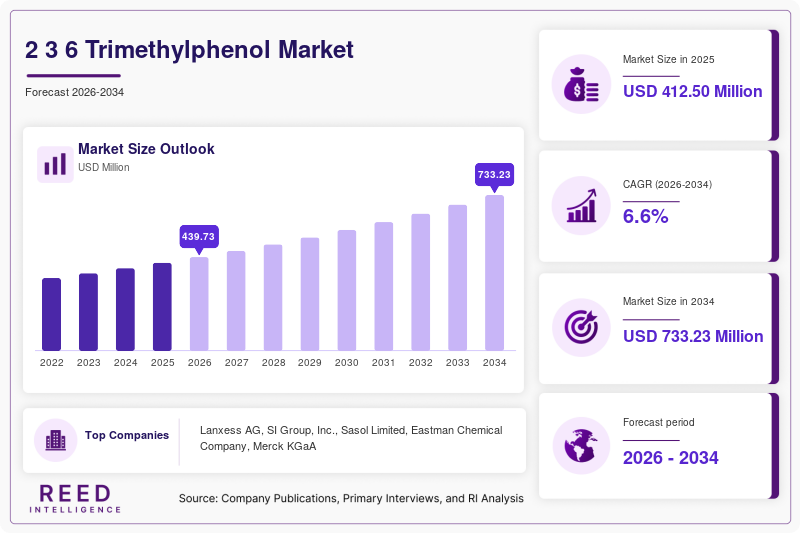
The global 2 3 6 Trimethylphenol Market size was valued at USD 412.5 million in 2025 and is projected to reach USD 735.8 million by 2034, expanding at a CAGR of 6.6% during 2025–2034. The market growth is primarily supported by the rising global demand for specialty chemicals used in antioxidants, vitamin synthesis, and high-performance resins. Increasing industrialization across emerging economies has also strengthened consumption patterns, especially in chemical intermediates used for pharmaceutical and polymer production.
A key global factor contributing to market expansion is the growing demand for vitamin E production, where 2 3 6 trimethylphenol serves as a critical intermediate. This has resulted in consistent demand from pharmaceutical and nutraceutical manufacturers, particularly in regions experiencing population growth and healthcare investments.
Key Highlights
- Dominant Region: Asia Pacific accounted for 41.2% share in 2025; fastest-growing region projected at 7.4% CAGR
- Leading Subsegments:
- By Application: Vitamin E Intermediate held 38.6% share
- Fastest-growing: Polymer Additives projected at 7.8% CAGR
- Dominant Country: China recorded USD 128.4 million in 2025 and is estimated to reach USD 136.9 million in 2026
Market Trends
Rising Adoption in Antioxidant Manufacturing
The increasing utilization of 2 3 6 trimethylphenol in antioxidant formulations has emerged as a prominent trend. Industries such as plastics, rubber, and coatings are integrating antioxidants to enhance product durability and stability. This shift has driven demand for high-purity intermediates, supporting steady growth in the 2 3 6 Trimethylphenol Market. Manufacturers are focusing on product quality enhancements to meet stringent industrial standards.
Shift Toward Sustainable Chemical Processes
Sustainability is shaping production methodologies across the chemical sector. Companies are gradually adopting eco-efficient synthesis techniques to reduce emissions and waste. This trend is influencing the 2 3 6 Trimethylphenol Market by encouraging investment in green chemistry technologies. The development of catalytic processes and recyclable solvents is expected to transform production frameworks while improving cost efficiency over time.
Market Drivers
Expanding Pharmaceutical and Nutraceutical Industries
The rapid expansion of pharmaceutical and nutraceutical sectors is a major driver for the 2 3 6 Trimethylphenol Market. The compound plays a crucial role in synthesizing vitamin E, which is widely used in dietary supplements and therapeutic formulations. Increasing health awareness and demand for preventive healthcare products have significantly boosted consumption.
Growing Demand from Polymer and Resin Applications
The rising need for high-performance polymers and resins has contributed to market growth. 2 3 6 trimethylphenol is used in stabilizers and additives that enhance thermal and oxidative resistance in materials. As industries such as automotive and construction expand, the demand for durable materials continues to rise, indirectly supporting market development.
Market Restraint
Volatility in Raw Material Prices
Fluctuations in raw material costs pose a significant challenge for the 2 3 6 Trimethylphenol Market. The production process depends heavily on petrochemical derivatives, which are subject to price instability due to geopolitical factors and supply-demand imbalances. This volatility impacts profit margins and creates uncertainty for manufacturers. Additionally, small and medium-scale producers face difficulties in maintaining consistent pricing strategies, limiting their competitiveness. Over time, these cost pressures may hinder investment in capacity expansion and innovation.
Market Opportunities
Emerging Demand in Emerging Economies
Developing regions are presenting new growth opportunities due to expanding industrial bases and increasing chemical consumption. Countries in Asia Pacific and Latin America are witnessing growth in pharmaceutical and polymer industries, creating favorable conditions for the 2 3 6 Trimethylphenol Market. Local production capabilities are expected to increase, reducing dependence on imports.
Advancements in Specialty Chemical Applications
Innovation in specialty chemicals is opening new avenues for market expansion. The compound is increasingly being explored for niche applications, including advanced coatings and electronic materials. As research and development activities intensify, manufacturers may unlock new revenue streams, strengthening their market position over the forecast period.
Segmental Analysis
By Application
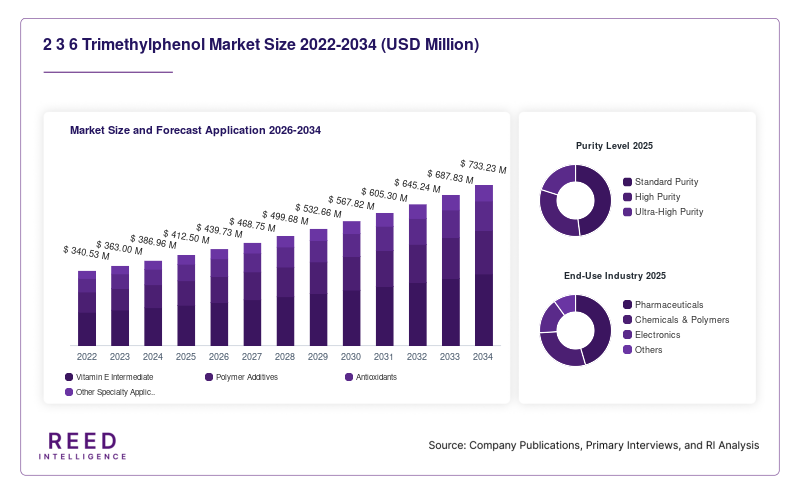
The Vitamin E Intermediate segment dominated the 2 3 6 Trimethylphenol Market with a 38.6% share in 2025, driven by strong demand from pharmaceutical and nutraceutical industries. The compound’s critical role in vitamin synthesis supported consistent consumption.
The Polymer Additives segment is expected to grow at the fastest CAGR of 7.8%, driven by increasing demand for high-performance materials. The need for improved durability and stability in polymers will continue to support growth.
By Purity Level
The High Purity segment (≥99%) accounted for 54.2% share in 2025, as industries increasingly demanded superior-quality intermediates for precise applications.
The Ultra-High Purity segment is projected to grow at a CAGR of 7.2%, supported by its use in specialized applications such as pharmaceuticals and electronics, where quality standards are stringent.
By End-Use Industry
The Pharmaceutical Industry held the largest share at 35.8% in 2025, driven by its reliance on chemical intermediates for drug and supplement production.
The Electronics Industry is expected to register the fastest growth at a CAGR of 7.0%, owing to the increasing use of specialty chemicals in advanced electronic components.
By Distribution Channel
The Direct Sales segment dominated with a 61.5% share in 2025, as large manufacturers preferred direct procurement to ensure supply consistency.
The Online Distribution segment is projected to grow at a CAGR of 8.1%, driven by digital transformation and increased adoption of e-commerce platforms for chemical procurement.
Regional Analysis
North America
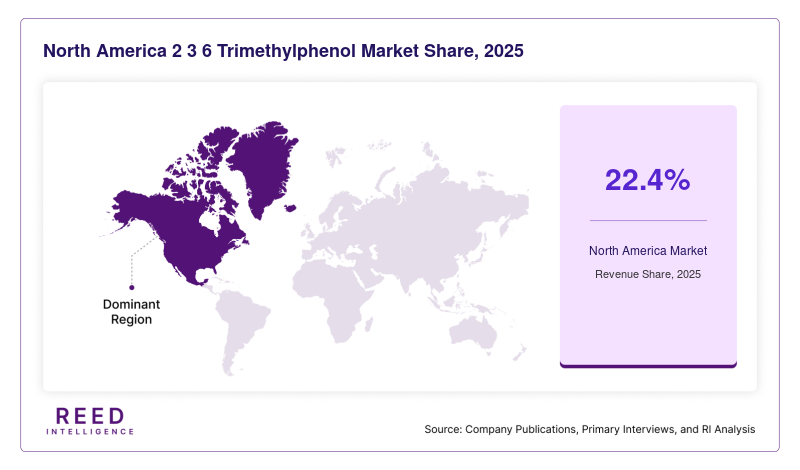
North America held 22.4% of the 2 3 6 Trimethylphenol Market share in 2025 and is expected to grow at a CAGR of 5.8% during the forecast period. The region’s mature chemical industry supported steady demand across pharmaceutical and industrial applications.
The United States dominated the regional market due to its advanced manufacturing infrastructure. The presence of well-established pharmaceutical companies and consistent investment in specialty chemicals contributed to stable consumption patterns.
Europe
Europe accounted for 19.6% market share in 2025 and is projected to expand at a CAGR of 5.5% through 2034. The region demonstrated steady growth supported by regulatory emphasis on chemical safety and sustainability.
Germany led the European market, driven by its strong chemical manufacturing base. The country’s focus on high-quality chemical production and innovation enabled sustained demand for intermediates such as 2 3 6 trimethylphenol.
Asia Pacific
Asia Pacific dominated the global 2 3 6 Trimethylphenol Market with a 41.2% share in 2025 and is expected to grow at the fastest CAGR of 7.4%. Rapid industrialization and expanding end-use industries contributed to strong market performance.
China emerged as the leading country due to large-scale production capacity and cost advantages. The country’s growing pharmaceutical and polymer sectors significantly boosted demand for chemical intermediates.
Middle East & Africa
The Middle East & Africa region held 8.3% share in 2025 and is anticipated to grow at a CAGR of 6.1%. Increasing investments in petrochemical industries supported regional demand.
Saudi Arabia dominated the market, benefiting from abundant raw material availability and ongoing diversification initiatives in the chemical sector.
Latin America
Latin America captured 8.5% of the market share in 2025 and is projected to grow at a CAGR of 6.3%. Industrial growth and rising demand for specialty chemicals contributed to market expansion.
Brazil led the regional market due to its expanding manufacturing sector and increasing adoption of chemical intermediates in industrial applications.
Competitive Landscape
The 2 3 6 Trimethylphenol Market is moderately consolidated, with key players focusing on production efficiency, product quality, and strategic expansions. Leading companies are investing in research and development to improve synthesis processes and expand application areas.
One prominent market leader is Lanxess AG, which has strengthened its position through capacity expansion and innovation in specialty chemicals. The company recently introduced process improvements aimed at enhancing production efficiency and reducing environmental impact.
Other players are adopting strategies such as partnerships, mergers, and geographic expansion to gain a competitive edge. The market remains competitive with both global and regional participants contributing to overall growth.
Key Players List
- Lanxess AG
- SI Group, Inc.
- Sasol Limited
- Eastman Chemical Company
- Merck KGaA
- Tokyo Chemical Industry Co., Ltd.
- Alfa Aesar
- Santa Cruz Biotechnology, Inc.
- Thermo Fisher Scientific Inc.
- Jubilant Ingrevia Limited
- Otto Chemie Pvt. Ltd.
- Central Drug House (P) Ltd.
- LGC Limited
- Parchem Fine & Specialty Chemicals
- Spectrum Chemical Manufacturing Corp.
Recent Developments
- 2024: Lanxess AG expanded its specialty chemicals production capacity to support rising demand.
- 2024: SI Group introduced improved antioxidant intermediates for polymer applications.
- 2023: Eastman Chemical Company invested in process optimization technologies.
- 2023: Merck KGaA enhanced its high-purity chemical portfolio.
- 2023: Jubilant Ingrevia Limited expanded its distribution network in Asia Pacific.
2 3 6 Trimethylphenol Market Segments
Application
- Vitamin E Intermediate
- Polymer Additives
- Antioxidants
- Other Specialty Applications
Purity Level
- Standard Purity
- High Purity
- Ultra-High Purity
End-Use Industry
- Pharmaceuticals
- Chemicals & Polymers
- Electronics
- Others
Distribution Channel
- Direct Sales
- Distributors
- Online Platforms
By Region
- North America
- Europe
- APAC
- Middle East and Africa
- LATAM