2 Phenylethanol Market Size, Share Demand Report By Type (Synthetic 2 Phenylethanol, Natural 2 Phenylethanol), By Application (Fragrance & Cosmetics, Food & Beverages, Pharmaceuticals, Others), By End-Use Industry (Personal Care, Food Industry, Pharmaceutical Industry, Chemical Industry), By Distribution Channel (Direct Sales, Distributors, Online Sales), By Region & Segment Forecasts, 2025–2034
USD 3950
Market Overview
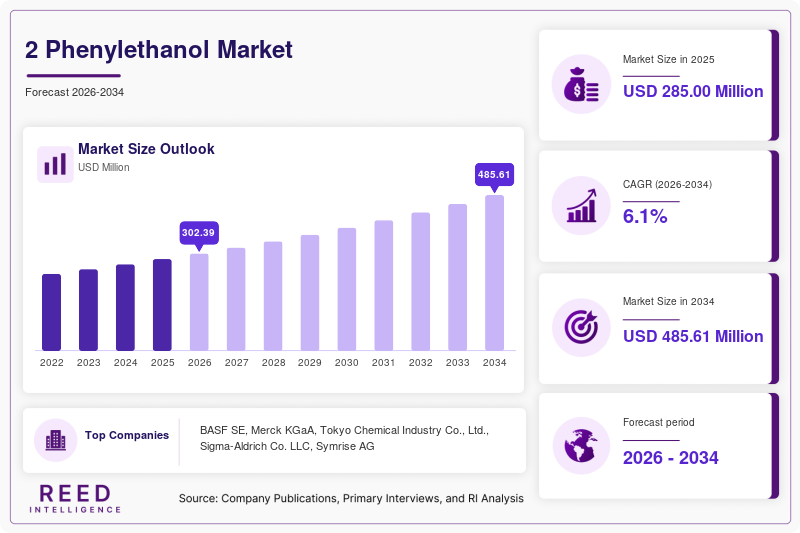
The global 2 Phenylethanol Market size was valued at USD 285 million in 2025 and is projected to reach USD 485 million by 2034, expanding at a CAGR of 6.1% during 2025–2034. The market growth has been steadily supported by rising demand for aromatic compounds across fragrance, cosmetics, and food applications. One of the primary global factors driving expansion is the increasing consumer preference for naturally derived ingredients in personal care products, which has elevated the use of 2 phenylethanol due to its rose-like scent and preservative properties.
2 phenylethanol is widely used as a fragrance ingredient, antimicrobial agent, and flavoring compound. Its compatibility with a wide range of formulations and stability under varying conditions makes it suitable for multiple end-use industries. Manufacturers are also focusing on bio-based production processes, further enhancing market acceptance across regulated regions.
Key Highlights
- Dominant region: Europe accounted for approximately 34% market share in 2025, while Asia Pacific is expected to register the fastest CAGR of 7.4% during the forecast period.
- Leading subsegment: Synthetic 2 phenylethanol dominated with a 62% share in 2025, whereas natural variants are projected to grow at a 7.9% CAGR.
- Application leader: Fragrance & cosmetics held the largest share at 48%, while food & beverages is expected to grow at a 6.8% CAGR.
- Dominant country: Germany recorded a market value of USD 52 million in 2025, rising to USD 55 million in 2026.
Market Trends
Rising Adoption of Bio-Based Production Methods
The 2 Phenylethanol Market is witnessing a shift toward bio-based and fermentation-derived production methods. Manufacturers are investing in microbial synthesis using yeast strains to produce high-purity phenylethanol. This trend is driven by stricter regulations on synthetic chemicals and growing consumer awareness regarding sustainability. Bio-based variants are gaining traction in premium fragrance and organic cosmetic segments due to their natural labeling advantages.
Expanding Applications in Functional Products
Another notable trend shaping the market is the increasing incorporation of 2 phenylethanol in multifunctional formulations. Beyond fragrance, it is being used for its antimicrobial and preservative characteristics in skincare, pharmaceuticals, and food products. The ability of 2 phenylethanol to extend shelf life while maintaining product quality is encouraging its integration into clean-label formulations. This trend is particularly strong in regions with stringent safety standards, where manufacturers are seeking dual-purpose ingredients to streamline formulations.
Market Drivers
Increasing Demand from Personal Care Industry
The rapid expansion of the global personal care and cosmetics sector is a key driver for the 2 Phenylethanol Market. The compound is widely used in perfumes, lotions, creams, and deodorants due to its pleasant aroma and compatibility with other ingredients. Growing urbanization, rising disposable incomes, and changing grooming habits are fueling demand for premium personal care products, thereby supporting market growth.
Growth in Food Flavoring Applications
The increasing use of 2 phenylethanol as a flavoring agent in the food and beverage industry is also driving market expansion. Its floral taste profile makes it suitable for bakery products, beverages, and confectionery items. As the processed food industry continues to grow, manufacturers are incorporating flavor enhancers that comply with safety standards. This has led to consistent demand for phenylethanol, particularly in regulated markets where ingredient safety is a priority.
Market Restraint
Volatility in Raw Material Prices
One of the major restraints affecting the 2 Phenylethanol Market is the fluctuation in raw material prices, particularly for petrochemical-based inputs used in synthetic production. Variability in crude oil prices directly impacts manufacturing costs, leading to pricing uncertainties for end users. Additionally, natural extraction processes involve higher production costs and limited availability of raw materials such as rose petals, further constraining supply.
These cost-related challenges can affect profit margins for manufacturers and limit the adoption of high-quality variants in price-sensitive markets. Small and medium-sized enterprises may face difficulties in maintaining consistent supply chains, which could hinder overall market growth. The need for cost-effective production technologies remains critical to overcoming this restraint.
Market Opportunities
Expansion in Emerging Economies
Emerging markets in Asia Pacific and Latin America present significant growth opportunities for the 2 Phenylethanol Market. Rapid industrialization, increasing consumer awareness, and expanding middle-class populations are driving demand for personal care and food products. Manufacturers are focusing on these regions to establish production facilities and distribution networks, enabling them to tap into new customer bases.
Development of Green Chemistry Solutions
The adoption of green chemistry principles offers a promising opportunity for market players. Innovations in sustainable production methods, including enzymatic synthesis and fermentation technologies, are expected to reduce environmental impact and production costs over time. Companies investing in eco-friendly processes can gain a competitive advantage by meeting regulatory requirements and aligning with consumer preferences for sustainable products.
Segmental Analysis
By Type
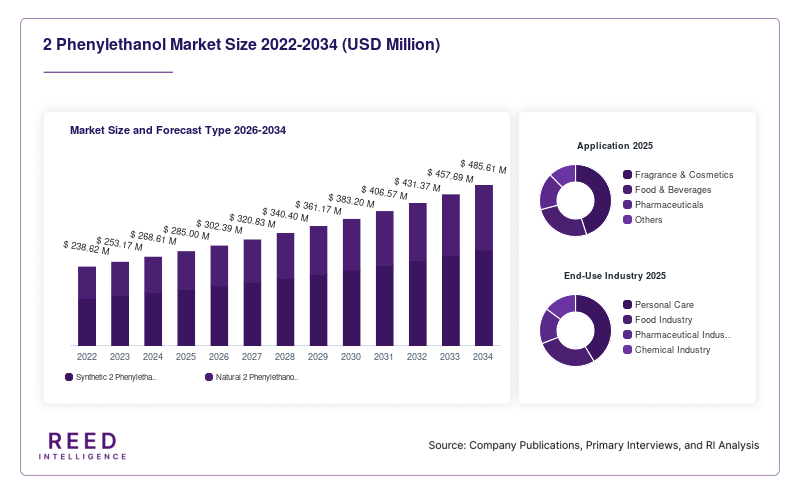
Synthetic 2 phenylethanol dominated the market, accounting for approximately 62% share in 2025. Its widespread use is attributed to cost efficiency, consistent quality, and large-scale production capabilities. Synthetic variants are preferred in industrial applications where high volumes and standardized formulations are required.
Natural 2 phenylethanol is expected to be the fastest-growing subsegment, registering a CAGR of 7.9% during the forecast period. The growth is driven by increasing demand for organic and natural products, particularly in cosmetics and food industries. Consumers are showing a preference for naturally derived ingredients, encouraging manufacturers to invest in sustainable extraction methods.
By Application
The fragrance and cosmetics segment held the largest share of approximately 48% in 2025. The compound’s pleasant aroma and stability make it a key ingredient in perfumes, skincare products, and personal care formulations. Its ability to blend well with other fragrance components further enhances its demand.
The food and beverage segment is projected to grow at a CAGR of 6.8% during the forecast period. The increasing demand for flavoring agents in processed foods and beverages is driving growth. Manufacturers are focusing on enhancing product taste and aroma, which is expected to boost the adoption of phenylethanol.
By End-Use Industry
The personal care industry dominated the market with a share of approximately 45% in 2025. The widespread use of phenylethanol in skincare, haircare, and fragrance products supports its leading position. The growing demand for premium and multifunctional personal care products has further strengthened this segment.
The pharmaceutical industry is expected to witness the fastest growth, with a projected CAGR of 6.5%. The compound’s antimicrobial properties and compatibility with formulations make it suitable for medicinal applications. Increasing research and development activities are likely to drive growth in this segment.
By Distribution Channel
Direct sales accounted for the largest share of approximately 58% in 2025, as manufacturers prefer direct supply to large-scale industrial buyers. This channel ensures better pricing control and long-term contracts with clients.
Online distribution channels are expected to grow at the fastest CAGR of 7.2%. The increasing adoption of digital platforms and ease of procurement are encouraging smaller businesses to purchase raw materials online. This shift is expected to enhance market accessibility.
Regional Analysis
North America
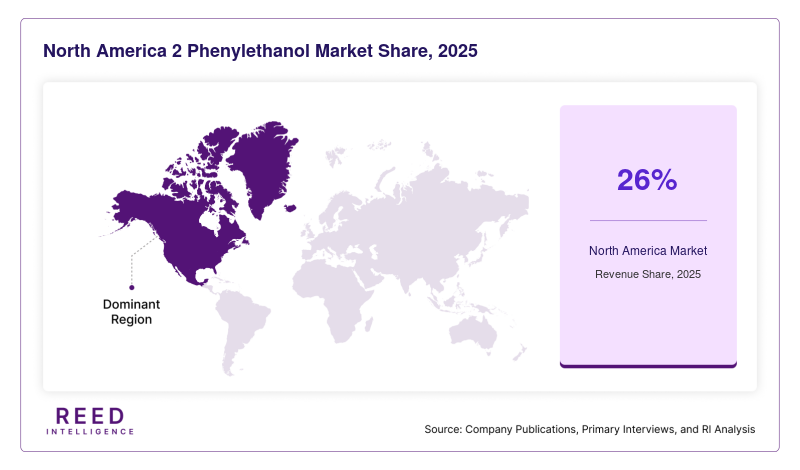
North America accounted for approximately 26% of the 2 Phenylethanol Market share in 2025 and is expected to grow at a CAGR of 5.6% during 2025–2034. The region’s growth is driven by strong demand from the cosmetics and personal care industries, along with increasing usage in food flavoring applications. Regulatory compliance and product safety standards also influence market dynamics, encouraging the use of high-purity compounds.
The United States dominated the regional market due to its advanced manufacturing infrastructure and strong presence of personal care brands. The country’s focus on product innovation and premium formulations has led to increased adoption of phenylethanol in multifunctional applications.
Europe
Europe held the largest share of 34% in 2025 and is projected to grow at a CAGR of 5.8% over the forecast period. The region’s dominance is attributed to stringent regulations favoring safe and approved ingredients, along with a well-established fragrance industry.
Germany emerged as the leading country, supported by its robust chemical manufacturing sector and focus on sustainable production. The demand for eco-friendly and bio-based ingredients has further strengthened the market position in the region.
Asia Pacific
Asia Pacific represented around 22% of the market share in 2025 and is anticipated to grow at the fastest CAGR of 7.4% during the forecast period. The region is witnessing rapid expansion due to increasing industrial activities and rising consumer demand for personal care products.
China led the regional market, driven by large-scale production capabilities and growing exports of fragrance and cosmetic products. The country’s expanding middle-class population is also contributing to higher consumption levels.
Middle East & Africa
The Middle East & Africa accounted for approximately 10% of the market share in 2025 and is expected to grow at a CAGR of 5.2%. Growth in this region is supported by increasing demand for luxury fragrances and perfumes, particularly in Gulf countries.
The United Arab Emirates dominated the market due to its strong perfume industry and high consumer spending on premium products. The region’s cultural preference for fragrances continues to drive demand.
Latin America
Latin America held around 8% share in 2025 and is projected to grow at a CAGR of 5.9% during the forecast period. The market growth is influenced by rising demand for personal care products and expanding food processing industries.
Brazil emerged as the leading country, supported by its growing cosmetics sector and increasing adoption of fragrance ingredients. The country’s focus on local production is also contributing to market development.
Competitive Landscape
The 2 Phenylethanol Market is moderately fragmented, with key players focusing on product innovation, capacity expansion, and sustainable production methods. Leading companies are investing in research and development to improve product quality and reduce environmental impact.
A major market leader is BASF SE, which has strengthened its position through advanced production technologies and a diversified product portfolio. The company recently introduced bio-based variants to cater to growing demand for sustainable ingredients.
Other prominent players are actively expanding their global presence through strategic partnerships and acquisitions. Companies are also focusing on enhancing supply chain efficiency to meet rising demand across regions. Competitive strategies include product differentiation, pricing optimization, and investment in green chemistry solutions.
Key Players
- BASF SE
- Merck KGaA
- Tokyo Chemical Industry Co., Ltd.
- Sigma-Aldrich Co. LLC
- Symrise AG
- Firmenich SA
- Givaudan SA
- Kao Corporation
- Solvay SA
- Alfa Aesar
- Takasago International Corporation
- Yingyang (China) Aroma Chemical Group
- Treatt Plc
- Bedoukian Research Inc.
- Penta Manufacturing Company
Recent Developments
- 2024: BASF SE expanded its production capacity for aroma chemicals to meet growing demand.
- 2024: Givaudan SA introduced a new range of sustainable fragrance ingredients including phenylethanol derivatives.
- 2023: Symrise AG invested in biotechnology-based production methods for aroma compounds.
- 2023: Firmenich SA launched eco-friendly fragrance solutions targeting premium markets.
- 2023: Merck KGaA enhanced its product portfolio with high-purity phenylethanol variants.
2 Phenylethanol Market Segments
Type
- Synthetic 2 Phenylethanol
- Natural 2 Phenylethanol
Application
- Fragrance & Cosmetics
- Food & Beverages
- Pharmaceuticals
- Others
End-Use Industry
- Personal Care
- Food Industry
- Pharmaceutical Industry
- Chemical Industry
Distribution Channel
- Direct Sales
- Distributors
- Online Sales
By Region
- North America
- Europe
- APAC
- Middle East and Africa
- LATAM