3D Graphene Market Size, Share & Demand Report By Type (Graphene Foam, Graphene Aerogel, Graphene Hydrogel), By Production Method (Chemical Vapor Deposition, Hydrothermal Synthesis, Self-Assembly Methods), By Application (Energy Storage, Electronics, Biomedical, Environmental Applications, Catalysis), By End-Use Industry (Electronics, Energy, Aerospace & Defense, Environmental Technology, Healthcare) By Region & Segment Forecasts, 2025–2033
USD 3950
Market Overview
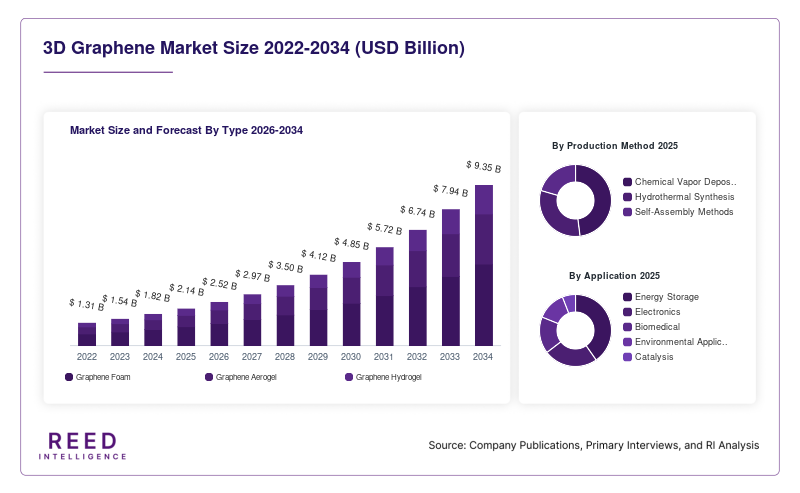
The 3D Graphene Market size was estimated at USD 2.14 billion in 2025 and is projected to reach approximately USD 9.48 billion by 2033, expanding at a compound annual growth rate (CAGR) of 17.8% during the forecast period from 2025 to 2034. Increasing integration of advanced carbon nanomaterials in next-generation electronics, energy storage devices, and structural materials is contributing to steady market expansion. Three-dimensional graphene structures offer advantages such as high electrical conductivity, superior surface area, and enhanced mechanical strength compared with conventional two-dimensional graphene sheets. These characteristics make the material suitable for applications including batteries, supercapacitors, catalysts, sensors, and lightweight composites.
One major global factor that supported market growth was the rising adoption of advanced energy storage technologies across transportation, consumer electronics, and grid-scale energy systems. Manufacturers and research institutions have increasingly explored 3D graphene architectures to improve ion transport, increase electrode surface area, and enhance durability in energy storage devices. The global push toward electrification and renewable energy integration has consequently accelerated research, development, and commercialization activities related to 3D graphene materials.
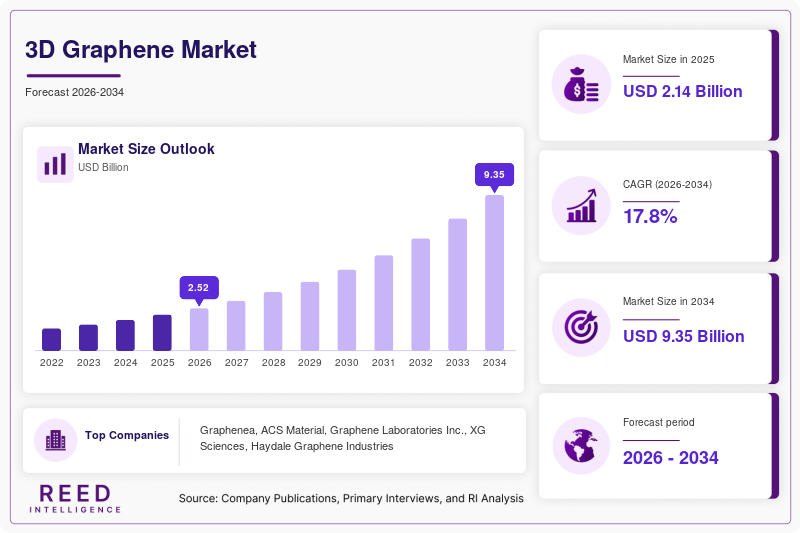
Key Highlights
- Dominant Region: Asia Pacific accounted for 42.6% of global market share in 2025, while North America will register the fastest CAGR of 18.9% during the forecast period.
- Leading Segment: By type, graphene foam held the largest share at 38.4% in 2025, while 3D graphene aerogel will grow fastest at a CAGR of 19.6%.
- Leading Application: Energy storage applications dominated with 34.1% share, while biomedical applications will expand fastest at a CAGR of 20.4%.
- Dominant Country: The United States accounted for USD 0.63 billion in 2025 and will reach USD 0.71 billion in 2026.
Market Trends
Integration of 3D Graphene in Advanced Energy Storage Systems
A major trend shaping the 3D Graphene Market is the increasing incorporation of three-dimensional graphene structures in advanced batteries and supercapacitors. Energy storage manufacturers are exploring 3D graphene materials as electrode frameworks to improve electrical conductivity and increase the active surface area for ion exchange. The porous structure of graphene foams and aerogels enables rapid charge transport and efficient electrolyte penetration, which can enhance energy density and charging speed. As research advances in lithium-sulfur batteries, solid-state batteries, and hybrid capacitors, 3D graphene materials are being studied as enabling components that improve electrode stability and lifespan.
Development of Scalable Manufacturing Techniques
Another notable trend in the 3D Graphene Market analysis is the emergence of scalable production techniques that allow consistent material quality and larger manufacturing volumes. Early graphene research faced challenges related to uniformity and high production costs. However, advancements in processes such as chemical vapor deposition, self-assembly methods, and freeze-drying technologies have improved structural control and manufacturing efficiency. These innovations are encouraging manufacturers to expand pilot production facilities and integrate graphene materials into commercial products across electronics, aerospace, and environmental applications.
Market Drivers
Expanding Applications in Energy Storage Technologies
One key driver supporting 3D Graphene Market growth is the expanding use of advanced materials in energy storage systems. Modern battery and capacitor designs require materials that provide high conductivity, durability, and structural stability. Three-dimensional graphene structures deliver interconnected networks that facilitate efficient electron and ion transport. As industries develop next-generation electric vehicles, renewable energy storage systems, and portable electronics, the demand for materials capable of improving energy storage efficiency is increasing steadily.
Rising Demand for High-Performance Nanomaterials in Electronics
The electronics industry continues to explore nanomaterials that enhance device efficiency and reduce component size. Three-dimensional graphene offers unique structural and electrical properties that support advanced sensing, flexible electronics, and thermal management solutions. Manufacturers developing miniaturized electronic components are investigating 3D graphene structures as conductive frameworks or heat-dissipating materials. Continuous innovation in semiconductor devices and flexible electronics is therefore contributing to broader adoption of graphene-based architectures.
Market Restraints
Restraint: High Production Complexity and Cost
A major restraint affecting the 3D Graphene Market is the complexity associated with large-scale production of high-quality graphene structures. Many synthesis techniques require specialized equipment, controlled environments, and precise material handling processes. These factors can increase production costs and limit commercial scalability for some manufacturers. Additionally, achieving consistent structural properties across large volumes remains a technical challenge. As a result, certain end-use industries remain cautious about large-scale adoption until production methods become more standardized and cost-efficient.
Market Opportunities
Emerging Applications in Biomedical Engineering
The biomedical sector is exploring graphene-based materials for tissue engineering, biosensors, and drug delivery systems. Three-dimensional graphene structures possess high surface area, chemical stability, and biocompatibility characteristics that support advanced biomedical research. These properties allow scientists to develop scaffold structures for cell growth or highly sensitive biosensing platforms. As research progresses and regulatory frameworks evolve, biomedical applications may create new commercial opportunities for graphene manufacturers.
Environmental Applications and Water Treatment Technologies
Environmental engineering represents another promising opportunity within the 3D Graphene Market outlook. Graphene-based porous structures can act as efficient filtration materials capable of removing contaminants from water and air. Their large surface area and tunable pore structures enable adsorption of heavy metals, organic pollutants, and other impurities. As global attention toward sustainable water management and pollution control increases, graphene-based filtration materials may gain greater adoption across municipal and industrial water treatment facilities.
Segmental Analysis
By Type
Graphene foam represented the dominant subsegment in 2025, accounting for 38.4% of the global 3D Graphene Market share. The structure of graphene foam provides a porous network that enhances electrical conductivity and surface area. These characteristics allow the material to function effectively in energy storage systems, catalysts, and filtration technologies. Its mechanical stability and lightweight properties also support usage in structural and functional materials across industrial sectors.
The 3D graphene aerogel subsegment will register the fastest growth with a CAGR of 19.6% during the forecast period. Aerogels possess extremely low density and high porosity, which can support advanced applications requiring lightweight conductive materials. Future demand will be influenced by increasing experimentation with aerogel-based electrodes and thermal insulation components in electronics and aerospace industries.
By Production Method
The chemical vapor deposition (CVD) method held the largest share of 41.2% in 2025 within the 3D Graphene Market analysis. This process allows controlled growth of graphene structures on catalytic substrates, producing high-quality materials with consistent structural properties. CVD techniques are commonly used in research laboratories and pilot production facilities due to their ability to create well-defined graphene frameworks suitable for advanced electronic applications.
The hydrothermal synthesis method will grow fastest at a CAGR of 18.8% through 2034. This method offers advantages in terms of relatively simple processing conditions and the ability to produce porous graphene structures with controlled morphology. Continued experimentation with hydrothermal synthesis techniques is expected to support production scalability and encourage adoption across industrial applications.
By Application
Energy storage dominated the 3D Graphene Market with 34.1% share in 2025. Three-dimensional graphene materials are widely studied for use in battery electrodes, supercapacitors, and hybrid energy storage devices. Their interconnected conductive networks improve ion mobility and charge transfer efficiency. As a result, the material has become an important component in advanced research related to high-performance energy storage systems.
The biomedical application segment will expand fastest at a CAGR of 20.4% during the forecast period. Research institutions are investigating graphene-based materials for biosensing platforms, drug delivery systems, and tissue engineering scaffolds. These applications rely on the high surface area and structural stability of graphene materials to support biological interactions and sensing mechanisms.
By End-Use Industry
The electronics industry accounted for the largest share of 36.7% in 2025 within the 3D Graphene Market size. Graphene materials are being evaluated for flexible electronics, sensors, and thermal management components. The unique electrical conductivity and mechanical properties of graphene support the development of advanced electronic devices that require lightweight and efficient conductive materials.
The environmental technology segment will expand at the fastest CAGR of 18.5% over the forecast period. Increasing research related to filtration systems, air purification technologies, and pollutant removal materials is encouraging experimentation with graphene-based porous structures. As environmental challenges continue to receive global attention, graphene-based filtration materials may gain broader adoption.
Regional Analysis
North America
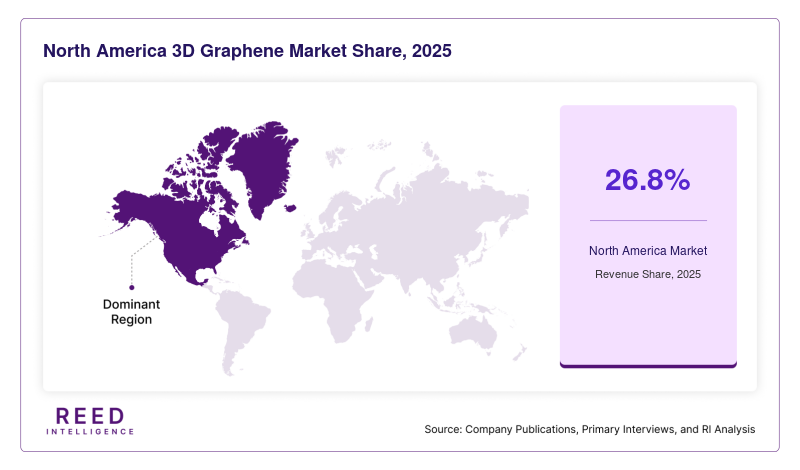
North America held 26.8% share of the global 3D Graphene Market in 2025 and will expand at a CAGR of 18.9% between 2025 and 2034. The region has a well-established ecosystem for nanotechnology research and commercialization. Academic institutions, government laboratories, and advanced materials companies collaborate extensively to develop graphene-based materials and applications. Strong investment in innovation and a mature electronics manufacturing sector continue to support market development across the region.
The United States dominated the North American market due to its strong research infrastructure and advanced manufacturing capabilities. Numerous universities and technology laboratories conduct extensive research on graphene materials, particularly for electronics, aerospace, and energy applications. Government initiatives supporting nanotechnology research have also contributed to technological development and commercialization activities in the country.
Europe
Europe accounted for 23.7% of the global 3D Graphene Market share in 2025 and is expected to expand at a CAGR of 17.1% during the forecast period. The region has an active research environment supported by collaborations between universities, technology institutes, and industrial manufacturers. Several European countries have invested in graphene innovation programs aimed at strengthening advanced materials research and commercialization.
Germany represented the leading market in the region due to its strong advanced manufacturing sector. The country’s automotive, electronics, and industrial equipment industries continue to explore graphene materials to improve product performance. Research collaborations between technical universities and industrial companies have accelerated material testing and prototype development.
Asia Pacific
Asia Pacific dominated the 3D Graphene Market with 42.6% share in 2025 and will grow at a CAGR of 17.6% during the forecast period. The region benefits from a large electronics manufacturing base and strong investments in nanotechnology research. Governments across several countries have supported graphene development programs to strengthen domestic innovation capabilities and advanced material industries.
China led the Asia Pacific market due to significant investment in nanomaterial research and large-scale production infrastructure. The country hosts numerous research institutes and manufacturing facilities focused on graphene synthesis and commercialization. Expanding electronics production and advanced materials research continue to support steady market development.
Middle East & Africa
The Middle East & Africa represented 3.9% of the global market share in 2025 and will register a CAGR of 16.4% through 2034. Although the region remains in the early stages of graphene commercialization, interest in advanced materials research is gradually increasing. Universities and technology institutes in several countries have initiated research programs focused on nanotechnology and advanced materials.
The United Arab Emirates emerged as a leading country in the region due to investments in research infrastructure and technology development initiatives. Innovation hubs and academic institutions are increasingly exploring nanotechnology applications across energy, environmental, and electronics sectors.
Latin America
Latin America accounted for 3.0% of the global 3D Graphene Market in 2025 and is projected to expand at a CAGR of 15.9% during the forecast period. The market remains relatively small but is gradually developing as research institutions explore advanced materials technologies. Increasing collaboration between universities and industrial organizations has supported early-stage graphene research in the region.
Brazil led the Latin American market due to its expanding research ecosystem and growing interest in nanotechnology innovation. Several universities and technology centers are conducting studies related to graphene synthesis and potential industrial applications. These initiatives are expected to contribute to gradual market development in the coming years.
Competitive Landscape
The 3D Graphene Market is characterized by the presence of technology-focused material manufacturers, nanotechnology research companies, and specialized graphene producers. Market participants are actively engaged in research collaborations, technology licensing, and pilot production initiatives to expand graphene manufacturing capabilities.
Several companies are investing in scalable synthesis technologies to improve material consistency and production efficiency. Partnerships between graphene producers and electronics or energy storage manufacturers are also increasing, enabling practical testing of graphene materials in commercial products.
Among the leading companies, Graphenea has established a strong position in the market through advanced graphene production technologies and collaborations with research institutions and industrial partners. The company recently expanded its material portfolio with new graphene foam variants designed for energy storage research applications.
Key Players
- Graphenea
- ACS Material
- Graphene Laboratories Inc.
- XG Sciences
- Haydale Graphene Industries
- Directa Plus
- First Graphene Ltd
- NanoXplore Inc.
- Applied Graphene Materials
- Vorbeck Materials
- Thomas Swan & Co. Ltd.
- Graphene Platform Corporation
- Talga Group Ltd.
- Global Graphene Group
- Sixth Element Materials Technology
Recent Developments
- In 2024, Graphenea introduced new graphene foam materials designed for energy storage electrode research.
- NanoXplore Inc. expanded graphene production capacity to support industrial material supply.
- Haydale Graphene Industries developed new functionalized graphene materials for composite applications.
- Directa Plus announced research collaborations related to graphene-based filtration materials.
- Talga Group continued development of graphene materials intended for battery technology applications.
3D Graphene Market Segments
By Type
- Graphene Foam
- Graphene Aerogel
- Graphene Hydrogel
By Production Method
- Chemical Vapor Deposition
- Hydrothermal Synthesis
- Self-Assembly Methods
By Application
- Energy Storage
- Electronics
- Biomedical
- Environmental Applications
- Catalysis
By End-Use Industry
- Electronics
- Energy
- Aerospace & Defense
- Environmental Technology
- Healthcare
By Region
- North America
- Europe
- APAC
- Middle East and Africa
- LATAM