Absorbable Antibacterial Envelope Market Size, Share & Demand Report By Product Type (Synthetic Absorbable Envelopes, Biologic Absorbable Envelopes), By Application (Cardiac Rhythm Management Devices, Neurostimulator Implants, Others), By End-Use (Hospitals, Ambulatory Surgical Centers, Specialty Clinics) By Region & Segment Forecasts, 2026–2034
USD 3950
Market Overview
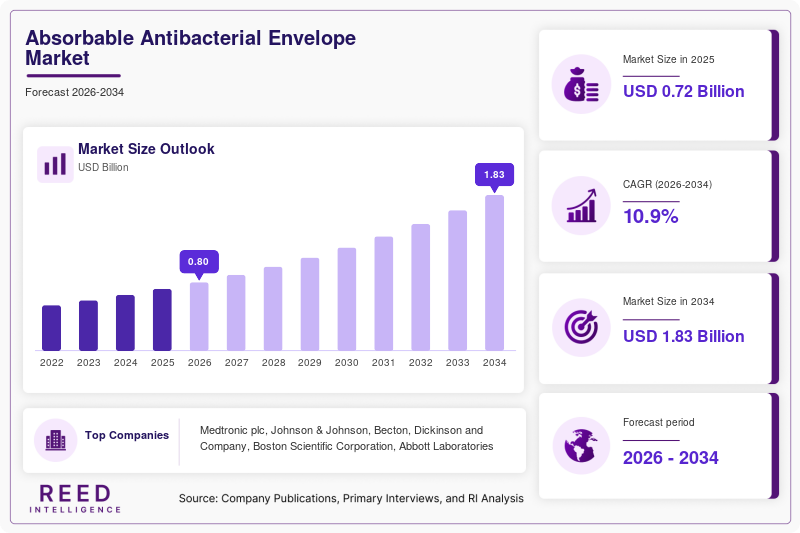
The Absorbable Antibacterial Envelope Market size was valued at approximately USD 0.72 billion in 2026 and is projected to reach USD 1.65 billion by 2034, expanding at a CAGR of 10.9% during the forecast period (2026–2034). The market growth is driven by the rising incidence of cardiovascular diseases and the increasing number of implantable cardiac devices such as pacemakers and defibrillators. These devices require infection control solutions, thereby boosting demand for absorbable antibacterial envelopes designed to reduce surgical site infections.
A significant global factor supporting market growth is the increasing focus on infection prevention in surgical procedures. Healthcare systems worldwide are prioritizing patient safety and reducing hospital-acquired infections, which has accelerated the adoption of antimicrobial solutions in device implantation. In addition, technological advancements in bioabsorbable materials have enhanced the effectiveness and safety of antibacterial envelopes, making them more widely accepted among surgeons and healthcare providers.
Key Highlights
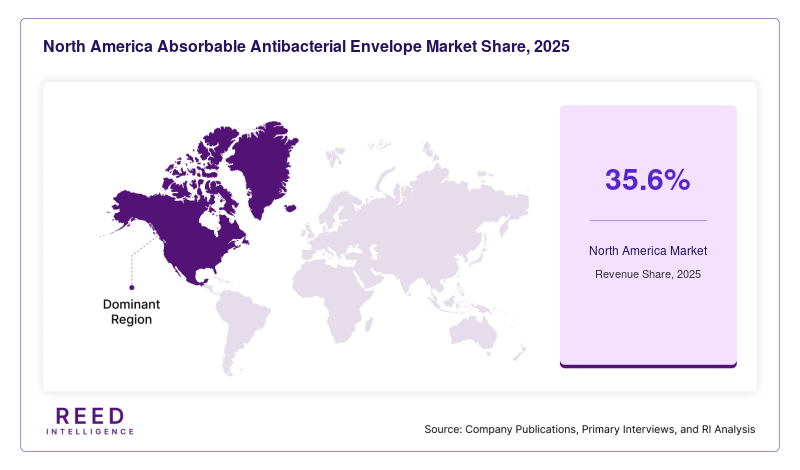
- North America dominated the market with a 35.6% share in 2025.
- Asia Pacific is expected to grow at the fastest CAGR of 12.3% during 2026–2034.
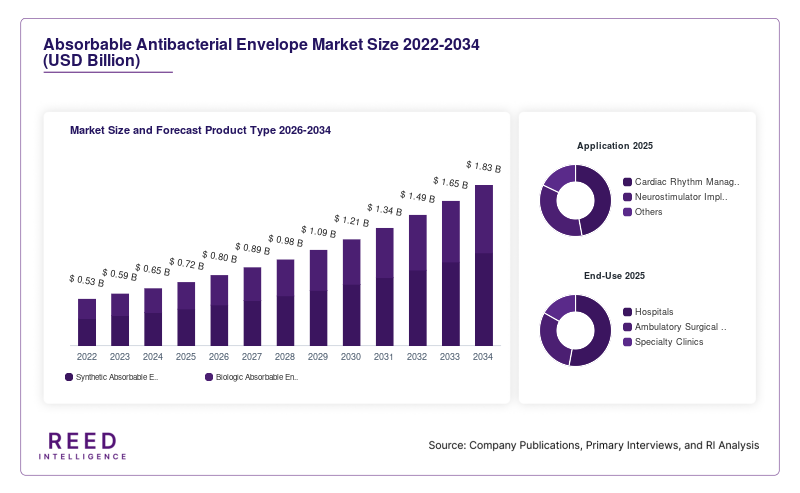
- By product type, synthetic absorbable envelopes accounted for the largest share of 62.4%.
- while biologic absorbable envelopes are projected to grow at a CAGR of 11.7%.
- By application, cardiac rhythm management devices led with a 68.9% share, whereas neurostimulator implants are expected to expand at a CAGR of 11.4%.
- The United States remained the dominant country, with market values of USD 310 million in 2024 and USD 345 million in 2025.
Market Trends
Increasing Adoption of Infection Prevention Technologies in Implantable Devices
Healthcare providers are increasingly integrating infection prevention technologies into surgical workflows, particularly in implantable device procedures. Absorbable antibacterial envelopes are gaining traction due to their ability to release antimicrobial agents locally, reducing infection risks without requiring additional systemic antibiotics. Hospitals are adopting these solutions to improve patient outcomes and reduce readmission rates. Additionally, the growing awareness among clinicians regarding device-related infections is encouraging routine use of antibacterial envelopes in high-risk procedures. This trend is further supported by clinical evidence demonstrating reduced infection rates, making these products a standard adjunct in cardiac implant surgeries.
Advancements in Bioabsorbable Material Technologies
The development of advanced bioabsorbable polymers has significantly improved the performance and safety of antibacterial envelopes. Manufacturers are focusing on materials that provide controlled drug release while maintaining structural integrity during the healing process. Innovations such as dual-antibiotic coatings and extended-release formulations are enhancing product effectiveness. Furthermore, improved biocompatibility and reduced inflammatory response have increased physician confidence in these solutions. These advancements are also enabling customization for different types of implants, thereby broadening the application scope and driving market growth across multiple therapeutic areas.
Market Drivers
Rising Prevalence of Cardiovascular Diseases and Implant Procedures
The increasing prevalence of cardiovascular diseases globally has led to a surge in the number of cardiac implant procedures. Devices such as pacemakers and implantable cardioverter-defibrillators are becoming more common, especially among aging populations. This rise in procedures directly increases the risk of device-related infections, creating a strong demand for preventive solutions like absorbable antibacterial envelopes. Healthcare providers are prioritizing infection control to reduce complications and improve patient outcomes, which further supports the adoption of these products. Additionally, growing healthcare expenditure and improved access to advanced surgical procedures in emerging economies are contributing to the expansion of the market.
Growing Focus on Reducing Hospital-Acquired Infections (HAIs)
Hospital-acquired infections remain a significant challenge for healthcare systems worldwide. Regulatory bodies and healthcare organizations are implementing strict guidelines to minimize infection rates. Absorbable antibacterial envelopes offer an effective solution by providing localized antimicrobial protection at the implant site. This reduces the need for prolonged antibiotic therapy and lowers the risk of antibiotic resistance. Hospitals are increasingly adopting these solutions as part of comprehensive infection prevention strategies. Furthermore, reimbursement policies in developed markets are encouraging the use of advanced infection control technologies, thereby driving market growth.
Market Restraint
High Cost of Advanced Antibacterial Envelopes
One of the primary challenges in the Absorbable Antibacterial Envelope Market is the high cost associated with these advanced products. Compared to conventional infection prevention methods, antibacterial envelopes represent an additional expense in surgical procedures. This cost factor can limit adoption, particularly in developing regions where healthcare budgets are constrained. Hospitals and healthcare providers may hesitate to incorporate these products into routine procedures due to cost concerns, especially when reimbursement policies are not well established.
The high cost also impacts smaller healthcare facilities that operate with limited financial resources. In such settings, priority is often given to essential medical supplies rather than advanced infection prevention technologies. Additionally, price sensitivity among patients in emerging economies can further restrict market penetration. While the long-term benefits of reduced infection rates and lower readmission costs are evident, the initial investment remains a barrier. Manufacturers are attempting to address this issue through cost optimization and strategic pricing, but widespread affordability remains a challenge for the industry.
Market Opportunities
Expansion in Emerging Markets
Emerging economies present significant growth opportunities for the Absorbable Antibacterial Envelope Market. Countries in Asia Pacific, Latin America, and the Middle East are witnessing rapid improvements in healthcare infrastructure and increasing access to advanced medical technologies. Rising awareness about infection prevention and growing adoption of implantable devices are creating a favorable environment for market expansion. Governments in these regions are also investing in healthcare modernization, which supports the adoption of innovative solutions. Manufacturers can leverage these opportunities by establishing local production facilities and forming strategic partnerships to reduce costs and improve accessibility.
Development of Multi-Functional Antimicrobial Solutions
There is a growing demand for multi-functional medical products that offer enhanced performance and convenience. In this context, the development of antibacterial envelopes with additional features such as anti-inflammatory properties and improved tissue integration presents a significant opportunity. Manufacturers are focusing on combining multiple therapeutic benefits into a single product to improve patient outcomes. Such innovations can differentiate products in a competitive market and attract a broader customer base. Furthermore, ongoing research and development activities are expected to lead to the introduction of next-generation products with superior efficacy and safety profiles.
Segmental Analysis
By Product Type
Synthetic absorbable envelopes dominated the market in 2024, accounting for a share of 62.4%. These products are widely used due to their consistent performance, controlled drug release, and cost-effectiveness compared to biologic alternatives. Synthetic materials offer predictable degradation rates, which ensures effective antimicrobial protection during the critical post-implantation period. Additionally, the availability of various formulations allows healthcare providers to select products tailored to specific clinical needs. The widespread adoption of synthetic envelopes is also supported by their ease of manufacturing and scalability, making them a preferred choice among manufacturers and healthcare institutions.
Biologic absorbable envelopes are expected to be the fastest-growing subsegment, with a CAGR of 11.7% during the forecast period. These products are derived from natural materials and offer superior biocompatibility, reducing the risk of adverse reactions. The growing demand for advanced medical solutions with enhanced safety profiles is driving the adoption of biologic envelopes. Furthermore, ongoing research and development activities are leading to the introduction of innovative biologic products with improved performance characteristics. The increasing focus on personalized medicine and patient-specific treatments is also contributing to the growth of this subsegment.
By Application
Cardiac rhythm management devices accounted for the largest share of 68.9% in 2024. The high prevalence of cardiovascular diseases and the increasing number of implant procedures are key factors driving this segment. Absorbable antibacterial envelopes are commonly used in pacemaker and defibrillator implants to reduce infection risks. The strong clinical evidence supporting their effectiveness has led to widespread adoption among healthcare providers. Additionally, the availability of reimbursement policies in developed markets further supports the growth of this segment.
Neurostimulator implants are projected to grow at the fastest CAGR of 11.4% during the forecast period. The increasing prevalence of neurological disorders and the rising adoption of implantable neurostimulation devices are driving this segment. Absorbable antibacterial envelopes are gaining importance in these procedures due to the high risk of infection associated with implantable devices. Technological advancements in neurostimulation devices and increasing awareness about infection prevention are further contributing to the growth of this subsegment.
By End-Use
Hospitals dominated the market in 2024, accounting for a significant share of 71.2%. Hospitals are the primary settings for implantable device procedures, making them the largest consumers of absorbable antibacterial envelopes. The presence of advanced surgical facilities and skilled healthcare professionals supports the adoption of these products. Additionally, hospitals are increasingly implementing infection control protocols, which include the use of antibacterial envelopes to reduce surgical site infections.
Ambulatory surgical centers are expected to be the fastest-growing subsegment, with a CAGR of 11.1% during the forecast period. These centers are gaining popularity due to their cost-effectiveness and shorter hospital stays. The increasing number of outpatient procedures and the growing focus on minimizing healthcare costs are driving the adoption of absorbable antibacterial envelopes in these settings. Furthermore, advancements in minimally invasive surgical techniques are enabling more procedures to be performed in ambulatory centers, contributing to market growth.
Regional Analysis
North America
North America accounted for a dominant share of 35.6% in 2025 and is expected to maintain its leadership position during the forecast period, with a steady CAGR of 10.5% from 2026 to 2034. The region’s growth is driven by advanced healthcare infrastructure, high adoption of innovative medical technologies, and a strong presence of leading market players. The increasing number of cardiac implant procedures and rising awareness about infection prevention further support market expansion.
The United States remains the dominant country in North America, driven by a high volume of implantable device procedures and strong reimbursement frameworks. A unique growth factor in this region is the widespread adoption of evidence-based clinical practices, which encourages the use of antibacterial envelopes to reduce infection rates. Additionally, continuous research and clinical trials contribute to product innovation and market growth.
Europe
Europe held a significant market share of 27.8% in 2025 and is projected to grow at a CAGR of 10.2% during the forecast period. The region benefits from well-established healthcare systems and increasing emphasis on patient safety. Countries such as Germany, France, and the United Kingdom are leading contributors to market growth, supported by rising healthcare expenditure and growing adoption of advanced surgical solutions.
Germany is the dominant country in the European market, driven by its robust healthcare infrastructure and high adoption of medical technologies. A unique growth factor is the strong regulatory framework that promotes the use of infection prevention solutions in surgical procedures. Additionally, increasing collaborations between healthcare providers and research institutions are fostering innovation in antibacterial envelope technologies.
Asia Pacific
Asia Pacific is expected to witness the fastest growth, with a CAGR of 12.3% during 2026–2034, while accounting for a 21.4% market share in 2025. The region’s growth is fueled by rapid urbanization, increasing healthcare investments, and a rising prevalence of chronic diseases. The expanding middle-class population and improving access to healthcare services further contribute to market expansion.
China dominates the Asia Pacific market due to its large patient population and growing healthcare infrastructure. A unique growth factor in this region is the increasing government initiatives aimed at improving healthcare quality and reducing infection rates. Additionally, the rising number of private healthcare facilities adopting advanced medical technologies is driving the demand for absorbable antibacterial envelopes.
Middle East & Africa
The Middle East & Africa region accounted for 8.2% of the market share in 2025 and is expected to grow at a CAGR of 9.8% during the forecast period. The market growth is supported by increasing healthcare investments and improving medical infrastructure in countries such as the UAE and Saudi Arabia. Rising awareness about infection control is also contributing to market expansion.
Saudi Arabia is the dominant country in this region, driven by government initiatives to modernize healthcare systems. A unique growth factor is the increasing number of specialized cardiac care centers, which are adopting advanced infection prevention solutions. Additionally, the growing medical tourism industry is further supporting the demand for high-quality surgical products.
Latin America
Latin America held a market share of 7.0% in 2025 and is projected to grow at a CAGR of 10.1% during the forecast period. The region is experiencing gradual improvements in healthcare infrastructure and increasing adoption of advanced medical technologies. Brazil and Mexico are key contributors to market growth, supported by rising healthcare expenditure and growing awareness about infection prevention.
Brazil is the dominant country in Latin America, driven by its large healthcare system and increasing number of implant procedures. A unique growth factor is the growing focus on public healthcare reforms aimed at improving patient outcomes. Additionally, increasing collaborations with international medical device companies are facilitating the adoption of advanced antibacterial envelope solutions.
Competitive Landscape
The Absorbable Antibacterial Envelope Market is moderately consolidated, with a few key players dominating the global landscape. Companies are focusing on product innovation, strategic partnerships, and mergers to strengthen their market position. The competitive environment is characterized by continuous research and development activities aimed at improving product efficacy and safety.
One of the leading companies in the market is Medtronic plc, which has established a strong presence through its advanced antibacterial envelope products. The company recently introduced an upgraded version of its absorbable envelope with enhanced antimicrobial properties and improved biocompatibility. Other major players are also investing in product development and expanding their geographic presence to capture emerging market opportunities. The increasing competition is expected to drive innovation and improve product accessibility, benefiting the overall market.
Key Players List
- Medtronic plc
- Johnson & Johnson
- Becton, Dickinson and Company
- Boston Scientific Corporation
- Abbott Laboratories
- Cardinal Health
- 3M Company
- Smith & Nephew
- Baxter International Inc.
- Cook Medical
- Edwards Lifesciences Corporation
- Terumo Corporation
- W. L. Gore & Associates
- Stryker Corporation
- Zimmer Biomet Holdings Inc.
Recent Developments
- In 2025, Medtronic plc launched an advanced absorbable antibacterial envelope with extended drug-release capabilities to improve infection prevention.
- In 2024, Boston Scientific Corporation expanded its product portfolio through a strategic partnership with a biomaterials company to develop next-generation envelopes.
- In 2025, Abbott Laboratories invested in research and development to enhance the biocompatibility of its antibacterial envelope solutions.
Absorbable Antibacterial Envelope Market Segments
Product Type
- Synthetic Absorbable Envelopes
- Biologic Absorbable Envelopes
Application
- Cardiac Rhythm Management Devices
- Neurostimulator Implants
- Others
End-Use
- Hospitals
- Ambulatory Surgical Centers
- Specialty Clinics
By Region
- North America
- Europe
- APAC
- Middle East and Africa
- LATAM