Acai Berry Extract Market Size, Share & Demand Report By Form (Powder Extract, Liquid Extract, Capsules/Tablets), By Application (Dietary Supplements, Functional Beverages, Food Products, Cosmetics & Personal Care), By Distribution Channel (Online Retail, Supermarkets & Hypermarkets, Health & Specialty Stores, Pharmacies & Drug Stores) By Region & Segment Forecasts, 2025–2034
USD 3950
Market Overview
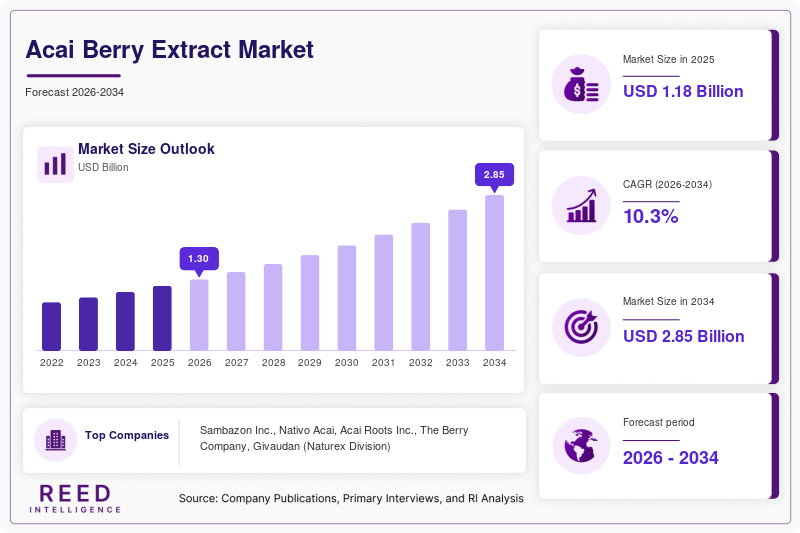
The Acai Berry Extract Market size was valued at USD 1.18 billion in 2025 and is projected to reach USD 2.86 billion by 2034, expanding at a CAGR of 10.3% during the forecast period (2025–2034). The market growth reflects increasing utilization of acai berry extract across dietary supplements, functional foods, and cosmetic formulations. The extract, derived from acai berries native to the Amazon basin, contains antioxidants, polyphenols, and essential fatty acids that support multiple consumer applications.
A key global factor supporting the expansion of the Acai Berry Extract Market size has been the rising demand for natural bioactive ingredients across the nutraceutical and personal care industries. Consumers are increasingly seeking plant-derived extracts that support health and wellness objectives. Acai berry extract aligns with this trend due to its perceived antioxidant capacity and potential health-supporting properties. Manufacturers are incorporating acai extract into product formulations to meet consumer demand for clean-label ingredients and functional nutrition.
Key Highlights
- Dominant Region: North America held 38.2% share in 2025, while Asia Pacific is projected to grow at a CAGR of 12.4% (2025–2034).
- Leading Subsegment: Powder form accounted for 46.7% share in 2025, while liquid extracts are projected to grow fastest at 11.8% CAGR.
- Leading Application: Dietary supplements represented 41.5% share, while functional beverages are expected to expand at 12.1% CAGR.
- Dominant Country: The United States market reached USD 402 million in 2025 and is expected to reach USD 430 million in 2026.
Market Trends
Expansion of Functional Food Applications
A prominent trend shaping the Acai Berry Extract Market is the growing incorporation of acai extract into functional food products. Food manufacturers are introducing acai-based snack bars, smoothies, cereals, and dairy alternatives designed to deliver nutritional benefits alongside conventional food consumption. The increasing focus on preventive nutrition has encouraged brands to highlight antioxidant-rich ingredients such as acai berry extract in product formulations. This trend has also been supported by rising consumer awareness regarding plant-derived nutrients, which has accelerated the integration of acai extract into premium health-focused food categories.
Growth of Botanical Ingredients in Cosmetics
Another notable trend influencing the Acai Berry Extract Market growth is the rising use of botanical extracts in skincare and cosmetic products. Personal care manufacturers are incorporating acai berry extract into creams, serums, and anti-aging formulations due to its antioxidant and moisturizing properties. Consumers increasingly prefer cosmetic products formulated with plant-based ingredients instead of synthetic additives. As a result, cosmetic brands are expanding their botanical ingredient portfolios, with acai extract gaining attention as a functional component that supports skin hydration and protection. The trend is particularly visible in premium skincare segments where natural extracts contribute to product differentiation and brand positioning.
Market Drivers
Increasing Demand for Nutraceutical Products
One of the primary drivers of the Acai Berry Extract Market is the rapid expansion of the global nutraceutical industry. Dietary supplements containing botanical extracts are gaining popularity as consumers pursue convenient solutions to support general wellness. Acai berry extract is widely utilized in capsules, powders, and tablets due to its polyphenol content and perceived antioxidant activity. Nutraceutical companies are integrating the extract into multi-ingredient supplements designed to support immune health, metabolism, and energy balance. This rising demand for plant-derived supplement ingredients continues to support long-term Acai Berry Extract Market growth.
Rising Adoption in Functional Beverages
The increasing popularity of functional beverages represents another important growth driver for the Acai Berry Extract Market size. Beverage manufacturers are developing juices, smoothies, and ready-to-drink drinks that incorporate fruit extracts with nutritional properties. Acai berry extract is frequently used to enhance flavor profiles and deliver antioxidant benefits in beverage formulations. The convenience of liquid consumption combined with the appeal of fruit-derived ingredients has contributed to strong consumer adoption. As beverage companies expand their portfolios of functional drinks, the utilization of acai extract is expected to continue increasing.
Market Restraint
Supply Chain Dependence on Limited Geographic Production
A significant restraint affecting the Acai Berry Extract Market is the reliance on limited geographic sources for raw acai berries. The majority of global acai berry production originates from regions of the Amazon rainforest, primarily within Brazil. This geographic concentration introduces potential supply chain vulnerabilities linked to climatic conditions, agricultural productivity, and transportation infrastructure.
Variability in harvest cycles and weather patterns can influence berry availability, leading to fluctuations in raw material prices. Additionally, transportation from remote harvesting areas to processing facilities may increase operational costs for manufacturers. These supply constraints may affect product pricing and create challenges for companies seeking to maintain consistent supply volumes.
Furthermore, sustainability concerns related to rainforest harvesting practices have prompted stricter sourcing standards. Companies must ensure responsible harvesting and traceability, which can increase compliance costs. These factors collectively create operational complexities that may influence the Acai Berry Extract Market outlook, particularly for manufacturers dependent on stable long-term supply contracts.
Market Opportunities
Development of Organic Acai Extract Products
The growing preference for organic-certified ingredients presents a notable opportunity in the Acai Berry Extract Market. Consumers increasingly seek products produced without synthetic pesticides or chemical fertilizers. Organic acai berry extract aligns with this demand, enabling manufacturers to position their products within premium natural health categories.
Food, beverage, and nutraceutical companies are introducing organic product lines that highlight certified botanical ingredients. As consumer awareness of ingredient sourcing continues to expand, organic acai extract formulations may experience rising demand across global markets.
Expansion of E-Commerce Distribution Channels
The increasing penetration of e-commerce platforms is creating new opportunities for the Acai Berry Extract Market growth. Online retail channels enable manufacturers to reach a broader consumer base while reducing dependence on traditional retail infrastructure. Dietary supplements and powdered extracts are particularly suited for online sales due to their longer shelf life and convenient packaging.
Digital platforms also allow brands to communicate product benefits directly to consumers through detailed product descriptions and targeted marketing campaigns. As online retail continues to expand globally, the accessibility and visibility of acai extract products are expected to increase, supporting market expansion.
Segmental Analysis
By Form
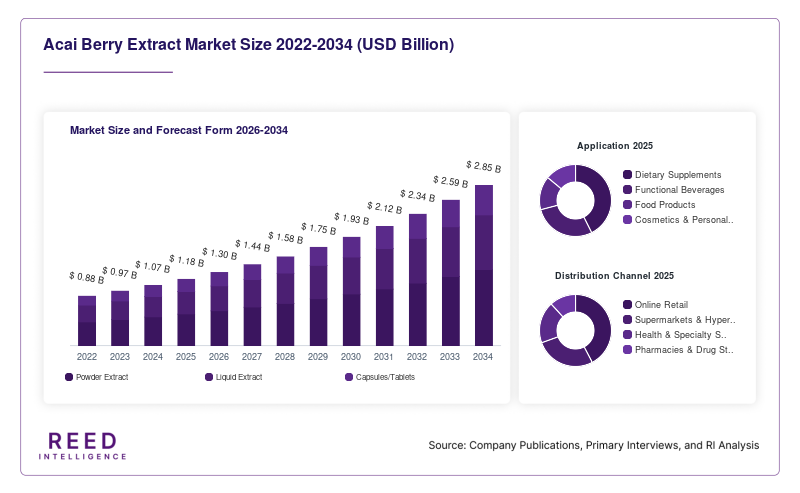
The powder segment dominated the Acai Berry Extract Market and accounted for 46.7% of total revenue in 2025. Powdered extracts are widely utilized across dietary supplements, food products, and beverage mixes due to their longer shelf life and convenient storage properties. Manufacturers often prefer powder formats because they are easy to incorporate into capsules, tablets, smoothies, and functional snack formulations. The ability to maintain stable nutrient concentrations during storage has contributed to the widespread adoption of powdered acai extract across commercial applications.
The liquid extract segment will grow at the fastest CAGR of 11.8% during the forecast period. Liquid extracts provide advantages in beverage formulations and cosmetic products where rapid ingredient solubility is required. Beverage manufacturers increasingly use liquid acai extracts to maintain consistent flavor distribution and simplify processing steps. The growing demand for ready-to-drink functional beverages will contribute to the expansion of liquid extract formats in the coming years.
By Application
The dietary supplements segment accounted for 41.5% share of the Acai Berry Extract Market in 2025, making it the dominant application segment. Nutraceutical manufacturers incorporate acai extract into capsules, powders, and tablets designed to support daily wellness routines. Consumers seeking convenient supplement options often prefer fruit-derived extracts with perceived antioxidant properties. This demand has encouraged supplement manufacturers to integrate acai extract into multi-ingredient formulations targeting various health goals.
The functional beverages segment will expand at the fastest CAGR of 12.1% between 2025 and 2034. Beverage companies are developing smoothies, juices, and ready-to-drink beverages containing fruit extracts that deliver nutritional value. Acai extract is frequently used to enhance both flavor and nutritional positioning in beverage products. The increasing popularity of on-the-go nutrition solutions will support the rapid growth of this segment.
By Distribution Channel
The offline retail segment held the largest Acai Berry Extract Market share of 63.4% in 2025. Traditional retail outlets such as supermarkets, health stores, and pharmacies play a major role in distributing dietary supplements and functional food products containing acai extract. These retail channels allow consumers to evaluate product labels, ingredient lists, and nutritional claims before making purchasing decisions. Established retail networks have therefore remained an important component of the market ecosystem.
The online retail segment is projected to grow at a CAGR of 13.2% during the forecast period. E-commerce platforms allow manufacturers to expand their geographic reach while providing consumers with convenient purchasing options. Online retail also enables brands to introduce niche or premium acai extract products that may not be widely available in physical stores. The increasing reliance on digital shopping platforms will contribute significantly to the expansion of this segment.
Regional Analysis
North America
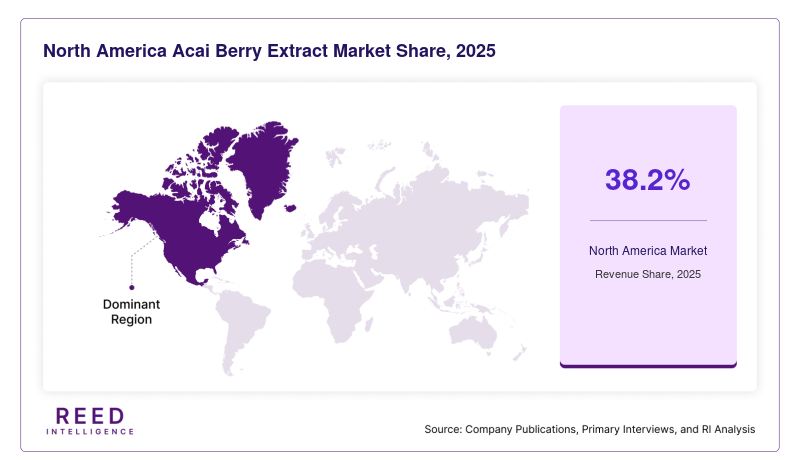
North America accounted for 38.2% of the global Acai Berry Extract Market share in 2025 and represented the largest regional market. The region will expand at a CAGR of 9.6% from 2025 to 2034. Strong demand for dietary supplements and functional food ingredients contributed to regional market growth. The established nutraceutical industry in the United States and Canada supported product innovation and distribution. Additionally, increasing consumer awareness of plant-derived antioxidants encouraged manufacturers to incorporate acai extract into a wide range of health-oriented products.
The United States dominated the North American market due to the widespread adoption of botanical ingredients in dietary supplements. Supplement manufacturers continue to introduce products containing fruit-derived extracts to address consumer interest in wellness and preventive nutrition. The presence of advanced distribution networks, including specialized health stores and online platforms, further strengthens the market position of the country.
Europe
Europe represented 26.4% of the global Acai Berry Extract Market in 2025 and will grow at a CAGR of 9.8% through 2034. The region demonstrated steady demand for plant-based ingredients used in functional foods and cosmetics. Regulatory frameworks supporting ingredient traceability and quality standards have influenced the development of premium acai extract products across European markets.
Germany emerged as the dominant country in the European market. The country's strong dietary supplement sector and growing demand for botanical ingredients supported the adoption of acai berry extract in health-focused products. German consumers increasingly prefer natural ingredients in both food and personal care formulations, encouraging manufacturers to integrate acai extract into product portfolios.
Asia Pacific
Asia Pacific held 21.7% share of the Acai Berry Extract Market in 2025 and is projected to expand at the fastest CAGR of 12.4% during the forecast period. Increasing urbanization and changing dietary patterns have encouraged the adoption of functional foods and nutritional supplements across the region. The expanding middle-class population has also supported demand for premium health ingredients.
China dominated the regional market due to the rapid expansion of its nutraceutical and functional beverage industries. Chinese consumers increasingly seek plant-based ingredients that support wellness and balanced nutrition. The country's growing e-commerce sector has further facilitated product availability, enabling international brands to distribute acai extract-based products through online platforms.
Middle East & Africa
The Middle East & Africa accounted for 6.1% of the Acai Berry Extract Market in 2025 and is projected to grow at a CAGR of 9.1% through 2034. The region's growth is supported by expanding demand for health-oriented food products and rising awareness of functional ingredients. Urban populations in Gulf countries increasingly adopt nutritional supplements as part of their wellness routines.
The United Arab Emirates emerged as the leading country in the region. The country’s expanding retail infrastructure and strong demand for imported health products support the distribution of acai extract-based supplements and beverages. Premium wellness brands have also introduced botanical ingredient formulations targeting health-conscious consumers in urban areas.
Latin America
Latin America represented 7.6% of the global Acai Berry Extract Market in 2025 and will expand at a CAGR of 10.2% during the forecast period. The region plays a strategic role in the global supply chain due to the cultivation of acai berries within Amazonian ecosystems. Local processing industries have increasingly focused on exporting acai extract products to international markets.
Brazil dominated the regional market as the primary producer of acai berries. The country's agricultural infrastructure supports large-scale harvesting and processing operations. Export-oriented production has strengthened Brazil’s position in the global market while encouraging investments in extraction technologies and processing facilities.
Competitive Landscape
The Acai Berry Extract Market is moderately fragmented, with several ingredient manufacturers and nutraceutical companies participating in global supply chains. Companies compete through product quality, sourcing transparency, and extraction technologies. Strategic partnerships with berry suppliers and investment in processing capabilities are common approaches used to maintain stable raw material supply.
Sambazon Inc. remains a leading participant in the market due to its vertically integrated sourcing and processing operations within the Amazon region. The company focuses on sustainable sourcing practices and offers a wide portfolio of acai-based ingredients for food, beverage, and supplement manufacturers.
Other notable companies in the market include Naturex (part of Givaudan), Nativo Acai, Acai Roots, and The Berry Company. These companies emphasize product innovation, organic certification, and global distribution networks to strengthen their market positions.
Recent product launches involving concentrated acai extract powders and beverage ingredients indicate continued industry development.
Key Players List
- Sambazon Inc.
- Nativo Acai
- Acai Roots Inc.
- The Berry Company
- Givaudan (Naturex Division)
- Sunfood Superfoods
- Amazon Power Pty Ltd
- Navitas Organics
- Terrasoul Superfoods
- Nutra Green Biotechnology
- Frooty Acai
- Açaí Exotic
- Organique Acai
- Amafruits
- Acai Berry Foods
Recent Developments
- Several nutraceutical manufacturers introduced high-concentration acai berry extract powders in 2024 designed for functional beverage formulations.
- Ingredient suppliers expanded organic-certified acai extract production to meet growing demand for clean-label products.
- Cosmetic manufacturers incorporated acai extract into plant-based skincare formulations targeting antioxidant protection and hydration.
- E-commerce platforms experienced increased sales of acai extract dietary supplements, supporting broader product accessibility across international markets.
Acai Berry Extract Market Segments
Form
- Powder Extract
- Liquid Extract
- Capsules/Tablets
Application
- Dietary Supplements
- Functional Beverages
- Food Products
- Cosmetics & Personal Care
Distribution Channel
- Online Retail
- Supermarkets & Hypermarkets
- Health & Specialty Stores
- Pharmacies & Drug Stores
By Region
- North America
- Europe
- APAC
- Middle East and Africa
- LATAM