Adrenomyeloneuropathy Treatment Market Size, Share Demand Report By Treatment Type (Drug Therapy, Gene Therapy, Supportive Therapy), By Route of Administration (Oral, Injectable, Others), By Distribution Channel (Hospital Pharmacies, Retail Pharmacies, Online Pharmacies), By End-User (Hospitals, Specialty Clinics, Homecare Settings), By Region & Segment Forecasts, 2025–2034
USD 3950
Market Overview
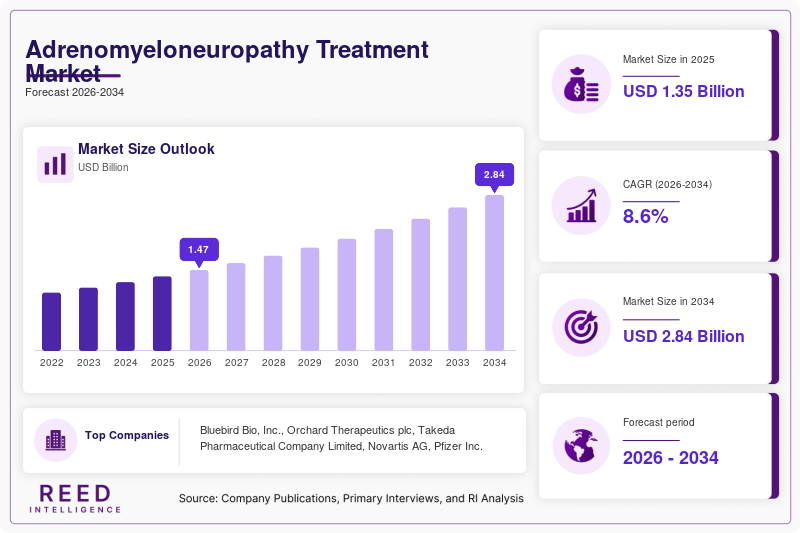
The Adrenomyeloneuropathy Treatment Market size was valued at approximately USD 1.35 billion in 2025 and is projected to reach USD 2.85 billion by 2034, expanding at a CAGR of 8.6% during the forecast period (2025–2034). The market growth is being supported by increasing awareness of rare genetic disorders and advancements in precision medicine, which have improved diagnostic accuracy and treatment accessibility for adrenomyeloneuropathy (AMN), a subtype of X-linked adrenoleukodystrophy.
A key global factor driving expansion is the growing integration of genomic screening programs across developed healthcare systems. Early detection has enabled timely intervention, boosting demand for disease-modifying therapies and supportive care solutions.
Key Highlights
- North America dominated the market with 42.3% share in 2025, while Asia Pacific is expected to grow at the fastest CAGR of 10.2%.
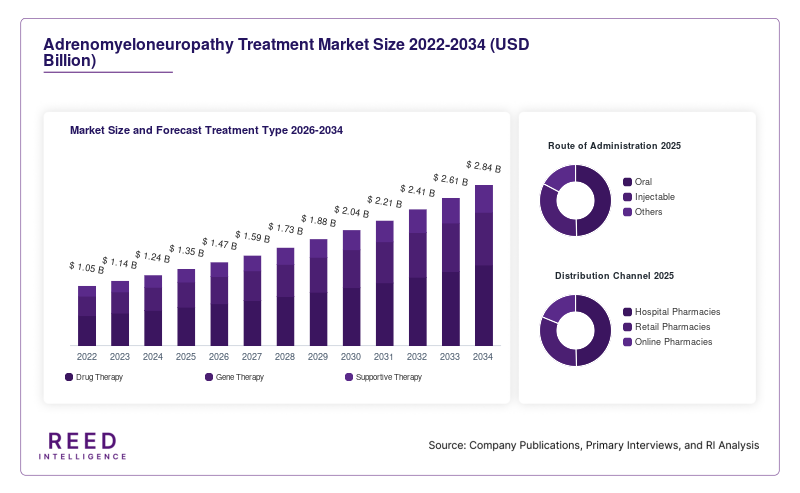
- Drug therapy was the leading segment with 58.6% share, while gene therapy is projected to grow at the fastest CAGR of 11.5%.
- Hospital pharmacies accounted for the largest distribution share at 47.8%, while online pharmacies are expected to grow at 9.8% CAGR.
- The United States led the market with USD 520 million in 2025 and is estimated to reach USD 560 million in 2026.
Market Trends
Rising Adoption of Gene-Based Therapies
The Adrenomyeloneuropathy Treatment Market is witnessing a shift toward gene-based therapeutic approaches. With advancements in viral vector delivery systems and CRISPR-based technologies, companies are exploring long-term corrective treatments rather than symptomatic management. This trend is reshaping treatment paradigms, particularly for younger patient populations where early intervention can significantly delay disease progression.
Expansion of Rare Disease Registries and Digital Monitoring
The development of global patient registries and digital health platforms is improving disease tracking and treatment personalization. These tools allow clinicians to monitor disease progression in real time and adjust treatment strategies accordingly. Integration of wearable devices and telemedicine platforms is also enhancing patient adherence and enabling remote care, especially in regions with limited access to specialized healthcare facilities.
Market Drivers
Increasing Prevalence of Genetic Neurological Disorders
The growing incidence of inherited metabolic and neurological disorders has contributed to the expansion of the Adrenomyeloneuropathy Treatment Market. Improved genetic testing capabilities have led to higher diagnosis rates, particularly in developed economies. This has created a larger patient pool requiring long-term treatment and monitoring.
Advancements in Orphan Drug Development
Government incentives, including tax credits and accelerated approval pathways, have encouraged pharmaceutical companies to invest in rare disease therapies. The development of orphan drugs has significantly improved treatment outcomes for AMN patients. These innovations have also attracted venture capital funding, supporting clinical trials and commercialization efforts.
Market Restraint
High Cost of Treatment and Limited Accessibility
One of the primary challenges in the Adrenomyeloneuropathy Treatment Market is the high cost associated with advanced therapies, particularly gene and enzyme-based treatments. These therapies often require specialized infrastructure and long-term monitoring, making them inaccessible in low- and middle-income countries. Additionally, limited reimbursement policies and lack of awareness in certain regions further restrict patient access to effective treatment options. The complexity of diagnosis and the need for specialized healthcare professionals also contribute to delayed treatment initiation, impacting overall market growth.
Market Opportunities
Expansion in Emerging Markets
Emerging economies in Asia Pacific and Latin America present significant growth opportunities for the Adrenomyeloneuropathy Treatment Market. Improvements in healthcare infrastructure and increasing government initiatives for rare disease management are expected to drive demand. Local manufacturing and partnerships with global pharmaceutical firms can further enhance market penetration.
Development of Combination Therapies
The growing focus on combination therapies involving pharmacological treatment and rehabilitation services is expected to create new avenues for market growth. These integrated approaches aim to improve patient quality of life by addressing both neurological and endocrine symptoms. Continuous research in multi-target treatment strategies is likely to enhance therapeutic outcomes and expand the scope of available treatment options.
Segmental Analysis
By Treatment Type
Drug therapy dominated the Adrenomyeloneuropathy Treatment Market with a 58.6% share in 2025, driven by widespread use of corticosteroids and supportive medications to manage symptoms.
Gene therapy is expected to grow at the fastest CAGR of 11.5%, supported by ongoing clinical trials and increasing investment in curative treatment approaches.
By Route of Administration
Oral administration accounted for the largest share of 46.2% in 2025, due to ease of use and patient compliance.
Injectable therapies are projected to grow at a CAGR of 9.7%, driven by advancements in biologics and targeted treatments requiring precise delivery mechanisms.
By Distribution Channel
Hospital pharmacies held a dominant share of 47.8% in 2025, supported by the need for specialized handling and administration of advanced therapies.
Online pharmacies are expected to grow at a CAGR of 9.8%, driven by increasing digitalization and convenience in medication access.
By End-User
Hospitals accounted for 52.4% share in 2025, as they provide comprehensive care including diagnosis, treatment, and rehabilitation.
Specialty clinics are anticipated to grow at a CAGR of 9.2%, due to increasing demand for targeted and personalized treatment approaches.
Regional Analysis
North America
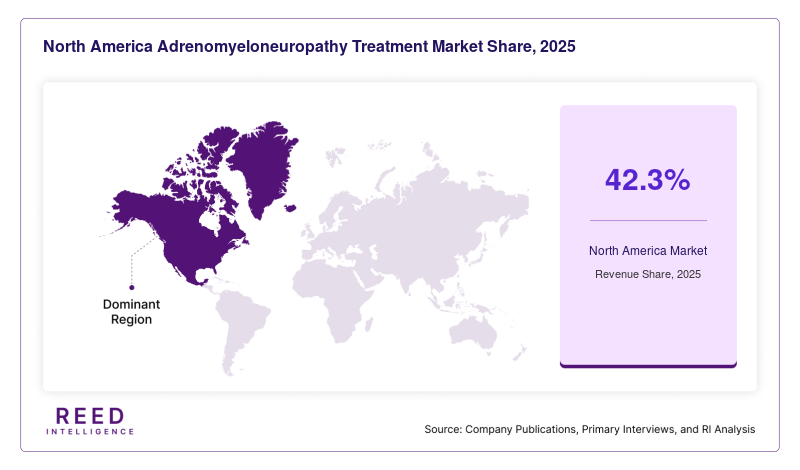
North America accounted for 42.3% of the Adrenomyeloneuropathy Treatment Market share in 2025 and is expected to grow at a CAGR of 8.1% during the forecast period.
The United States dominated the regional market due to strong research infrastructure and high adoption of advanced therapies. The presence of specialized treatment centers and favorable reimbursement policies has contributed to widespread access to innovative treatments.
Europe
Europe held approximately 27.5% share in 2025 and is projected to grow at a CAGR of 7.9% through 2034.
Germany emerged as the leading country, driven by robust healthcare systems and increasing investments in rare disease research. Government-supported screening programs have improved early diagnosis rates, supporting market expansion.
Asia Pacific
Asia Pacific captured 15.8% share in 2025 and is anticipated to grow at the fastest CAGR of 10.2%.
China led the region due to rapid healthcare infrastructure development and rising awareness of genetic disorders. Increasing collaborations between local and international pharmaceutical companies are accelerating treatment availability.
Middle East & Africa
The Middle East & Africa region accounted for 7.2% share in 2025 and is expected to grow at a CAGR of 7.4%.
Saudi Arabia dominated the regional market due to increasing government initiatives aimed at improving rare disease management. Investments in healthcare infrastructure and specialized medical centers are supporting growth.
Latin America
Latin America held 7.2% share in 2025 and is projected to grow at a CAGR of 7.8%.
Brazil led the market owing to expanding healthcare coverage and rising awareness programs. Public-private partnerships are playing a key role in improving access to advanced treatments.
Competitive Landscape
The Adrenomyeloneuropathy Treatment Market is moderately consolidated, with key players focusing on research and development to introduce innovative therapies. Companies are investing in gene therapy pipelines and strategic collaborations to strengthen their market position.
A leading player in the market is Bluebird Bio, which has been actively developing gene therapies for rare genetic disorders. The company recently announced advancements in its clinical trials targeting neurological conditions, enhancing its competitive position.
Other companies are focusing on expanding their product portfolios and geographic presence to capture emerging market opportunities. Partnerships with research institutions and healthcare providers are also playing a crucial role in accelerating innovation.
Key Players List
- Bluebird Bio, Inc.
- Orchard Therapeutics plc
- Takeda Pharmaceutical Company Limited
- Novartis AG
- Pfizer Inc.
- Sanofi S.A.
- Amgen Inc.
- Biogen Inc.
- Sarepta Therapeutics, Inc.
- Ionis Pharmaceuticals, Inc.
- Ultragenyx Pharmaceutical Inc.
- Regenxbio Inc.
- Rocket Pharmaceuticals, Inc.
- Abeona Therapeutics Inc.
- Voyager Therapeutics, Inc.
Recent Developments
- In 2024, several biotechnology firms expanded their gene therapy pipelines targeting rare neurological disorders, including AMN.
- In early 2025, collaborations between pharmaceutical companies and research institutes increased to accelerate clinical trials.
- New regulatory approvals for orphan drugs have improved treatment accessibility in developed markets.
- Advancements in diagnostic technologies have enhanced early detection and patient stratification.
Adrenomyeloneuropathy Treatment Market Segments
Treatment Type
- Drug Therapy
- Gene Therapy
- Supportive Therapy
Route of Administration
- Oral
- Injectable
- Others
Distribution Channel
- Hospital Pharmacies
- Retail Pharmacies
- Online Pharmacies
End-User
- Hospitals
- Specialty Clinics
- Homecare Settings
By Region
- North America
- Europe
- APAC
- Middle East and Africa
- LATAM