Aircraft Hydraulic Seat Actuation System Market Size, Share Demand Report By Type (Hydraulic Systems, Electric Systems, Electric-Hydraulic Hybrid Systems), By Application (Commercial Aviation, Military Aviation, Business Aviation), By End-Use (OEM, Aftermarket), By Region & Segment Forecasts, 2026–2034
USD 3950
Market Overview
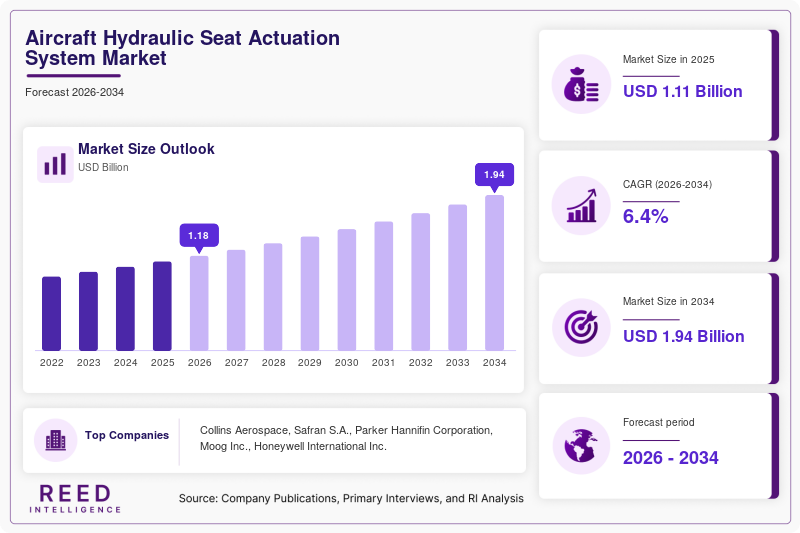
The Aircraft Hydraulic Seat Actuation System Market size is estimated to reach a value of USD 1.18 billion in 2026 and is projected to grow to USD 1.94 billion by 2034, registering a CAGR of 6.4% during the forecast period (2026–2034). This steady expansion reflects the rising demand for advanced cabin comfort systems, increasing aircraft deliveries, and modernization of legacy fleets across commercial and military aviation sectors. Hydraulic seat actuation systems are widely adopted due to their reliability, load-bearing capacity, and precise control capabilities, particularly in premium seating configurations and pilot seats.
A key global factor supporting market growth is the consistent increase in air passenger traffic worldwide. Airlines are investing in enhanced cabin interiors to improve passenger experience, especially in long-haul routes. This has led to a growing emphasis on ergonomics and adjustability in aircraft seating, thereby driving demand for robust actuation systems. Additionally, the expansion of low-cost carriers in emerging economies has encouraged fleet upgrades, further contributing to the adoption of efficient hydraulic systems.
Key Highlights
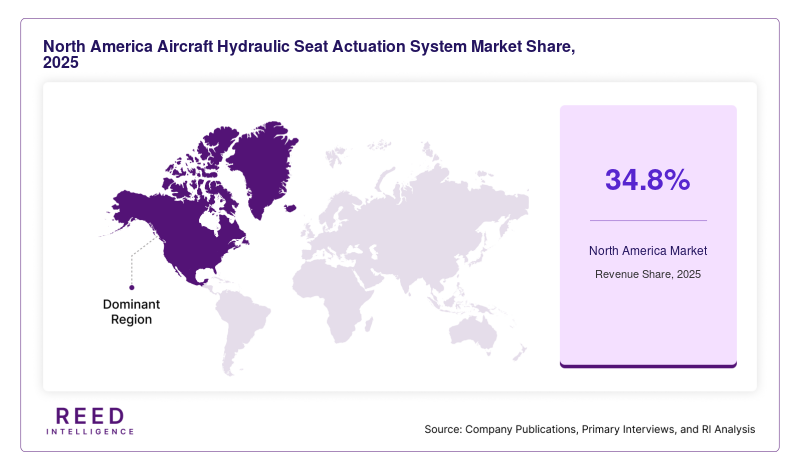
- North America dominated the market with a share of 34.8% in 2025.
- Asia Pacific is expected to register the fastest growth at a CAGR of 7.3%.
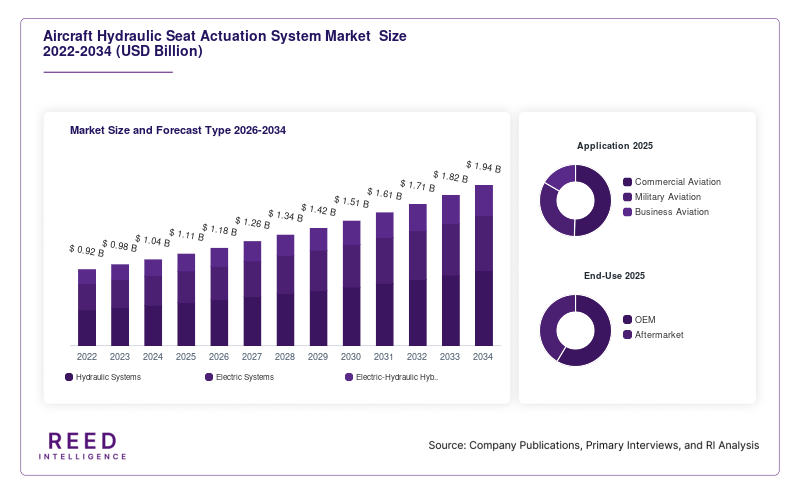
- The commercial aviation segment accounted for the largest share among applications, whereas the electric-hydraulic hybrid systems segment is anticipated to grow at the fastest CAGR of 7.9%. The OEM segment led the end-use category, while aftermarket services are expanding steadily.
- The United States remained the dominant country, with market values estimated at USD 320 million in 2024 and USD 338 million in 2025.
Market Trends
Increasing Integration of Smart Cabin Technologies
Aircraft manufacturers are progressively integrating smart technologies into cabin interiors, transforming traditional seating systems into intelligent, responsive units. Hydraulic seat actuation systems are now being combined with electronic controls and sensors to enable features such as memory positioning, automated adjustments, and passenger-specific comfort settings. This shift aligns with the broader aviation industry’s move toward digitalization and enhanced passenger experience. Airlines are focusing on premium differentiation, especially in business and first-class cabins, where advanced seat functionalities play a key role. The integration of smart systems also improves operational efficiency by reducing manual intervention and enabling predictive maintenance. These advancements are influencing procurement strategies among airlines and aircraft OEMs, thereby supporting consistent demand for technologically enhanced hydraulic actuation systems.
Shift Toward Lightweight and Energy-Efficient Components
Another notable trend shaping the Aircraft Hydraulic Seat Actuation System Market is the increasing focus on weight reduction and energy efficiency. Aircraft operators are actively seeking solutions that reduce fuel consumption and operational costs, prompting manufacturers to develop lightweight hydraulic components without compromising performance. Innovations in material science, such as the use of composite alloys and advanced polymers, are enabling the production of compact and efficient actuation systems. Furthermore, hybrid systems that combine hydraulic and electric mechanisms are gaining traction due to their ability to optimize power usage. This trend is particularly significant in new-generation aircraft programs, where every component is evaluated for efficiency. As environmental regulations tighten and sustainability becomes a priority, the demand for lightweight and efficient seat actuation systems is expected to rise steadily.
Market Drivers
Growth in Global Aircraft Fleet and Deliveries
The expansion of the global aircraft fleet is a major driver for the Aircraft Hydraulic Seat Actuation System Market. Aircraft manufacturers are increasing production rates to meet rising demand from airlines, particularly in emerging markets. Fleet expansion is driven by growing passenger traffic, urbanization, and increasing disposable incomes. As new aircraft are delivered, the demand for advanced seating systems equipped with hydraulic actuation mechanisms rises proportionally. Additionally, airlines are replacing older aircraft with newer models that offer improved efficiency and passenger comfort. This replacement cycle further contributes to market growth. The demand is not limited to commercial aviation but also extends to military and business aviation segments, where high-performance seating systems are essential for safety and comfort.
Rising Demand for Enhanced Passenger Comfort
Passenger expectations regarding comfort and convenience have evolved significantly, influencing airline investment decisions. Hydraulic seat actuation systems play a crucial role in providing smooth and precise adjustments, enabling features such as reclining, leg support, and lumbar control. These features are particularly important in long-haul flights, where passenger comfort directly impacts customer satisfaction and brand loyalty. Airlines are increasingly investing in premium seating configurations to attract high-value customers, leading to higher adoption of advanced actuation systems. Moreover, regulatory standards related to passenger safety and ergonomics are encouraging the use of reliable and durable hydraulic systems. This growing emphasis on passenger-centric design continues to drive innovation and demand in the market.
Market Restraint
High Maintenance and Operational Costs
One of the primary challenges in the Aircraft Hydraulic Seat Actuation System Market is the high maintenance and operational costs associated with hydraulic systems. These systems require regular inspection, fluid replacement, and component servicing to ensure optimal performance and safety compliance. Any leakage or malfunction can lead to operational disruptions and increased downtime, which can be costly for airlines. Additionally, the complexity of hydraulic systems necessitates skilled technicians for maintenance and repair, further increasing operational expenses. For instance, older aircraft equipped with legacy hydraulic systems often require extensive refurbishment, making it less economical for operators. As a result, some airlines are exploring alternative technologies such as electric actuation systems, which offer lower maintenance requirements. This shift may limit the growth potential of hydraulic systems in certain segments.
Market Opportunities
Expansion in Emerging Aviation Markets
Emerging economies present significant growth opportunities for the Aircraft Hydraulic Seat Actuation System Market. Countries in Asia Pacific, the Middle East, and Latin America are witnessing rapid expansion in their aviation sectors, driven by increasing air travel demand and government investments in airport infrastructure. Airlines in these regions are expanding their fleets and introducing new routes, creating demand for modern aircraft equipped with advanced seating systems. Additionally, the rise of regional carriers and low-cost airlines is encouraging the adoption of cost-effective yet reliable hydraulic actuation solutions. Manufacturers are also establishing local production facilities and partnerships to cater to these markets, further enhancing growth prospects.
Advancements in Hybrid Actuation Technologies
Technological advancements in hybrid actuation systems offer promising opportunities for market expansion. These systems combine the benefits of hydraulic and electric mechanisms, providing improved efficiency, reduced weight, and enhanced performance. Hybrid solutions are particularly suitable for next-generation aircraft, where efficiency and sustainability are key considerations. The development of compact and modular designs is enabling easier integration into various aircraft types. Furthermore, ongoing research and development activities are focused on improving system reliability and reducing maintenance requirements. As airlines and manufacturers seek innovative solutions to optimize operations, the adoption of hybrid actuation systems is expected to increase, creating new growth avenues for market players.
Segmental Analysis
By Type
Hydraulic actuation systems dominated the market in 2024, accounting for approximately 58.6% of the total share. These systems are widely preferred due to their high load capacity, durability, and precise control capabilities. They are extensively used in pilot seats and premium passenger seating, where reliability and smooth operation are critical. The widespread adoption of hydraulic systems in commercial and military aircraft further strengthens their dominance. Additionally, advancements in hydraulic technology, such as improved sealing mechanisms and enhanced fluid efficiency, are contributing to their continued relevance in the market.
Electric-hydraulic hybrid systems are expected to grow at the fastest CAGR of 7.9% during the forecast period. The growth is driven by the increasing demand for energy-efficient and lightweight solutions. Hybrid systems offer a balance between performance and efficiency, making them suitable for next-generation aircraft. Their ability to reduce power consumption and maintenance requirements is attracting attention from aircraft manufacturers and airlines. As sustainability becomes a priority, the adoption of hybrid actuation systems is expected to increase significantly.
By Application
The commercial aviation segment held the largest share of 62.3% in 2024, driven by the high volume of aircraft deliveries and the growing emphasis on passenger comfort. Airlines are investing in advanced seating systems to enhance customer experience and differentiate their services. Hydraulic seat actuation systems are essential for providing smooth and reliable seat adjustments, particularly in long-haul flights. The increasing demand for premium seating options further supports the dominance of this segment.
The military aviation segment is anticipated to grow at a CAGR of 6.8%, supported by increasing defense budgets and modernization programs. Military aircraft require robust and reliable seating systems that can withstand extreme conditions. Hydraulic actuation systems are well-suited for these requirements due to their durability and performance. Additionally, the integration of advanced technologies in military aircraft is driving demand for innovative actuation solutions.
By End-Use
The OEM segment dominated the market in 2024, accounting for 65.1% of the total share. Aircraft manufacturers are incorporating advanced seat actuation systems during the production phase to meet evolving customer requirements. The growing number of aircraft orders and deliveries is a key factor supporting the dominance of this segment. OEMs are also collaborating with system suppliers to develop customized solutions that enhance performance and efficiency.
The aftermarket segment is expected to grow at a CAGR of 6.6%, driven by the increasing need for maintenance, repair, and overhaul services. Airlines are investing in retrofitting and upgrading existing aircraft to improve passenger comfort and comply with regulatory standards. Hydraulic seat actuation systems require regular maintenance and replacement, creating steady demand in the aftermarket. The expansion of MRO facilities and services further supports the growth of this segment.
Regional Analysis
North America
North America accounted for a market share of 34.8% in 2025 and is expected to grow at a CAGR of 5.9% during the forecast period. The region’s dominance is attributed to the presence of major aircraft manufacturers, advanced aerospace infrastructure, and high adoption of innovative cabin technologies. Airlines in the region are continuously upgrading their fleets to enhance passenger experience, driving demand for advanced seat actuation systems.
The United States remains the leading country in this region, supported by strong defense spending and a well-established commercial aviation sector. A unique growth factor is the increasing investment in aircraft retrofitting programs, where older aircraft are upgraded with modern seating systems. This trend is boosting the demand for hydraulic seat actuation systems in the aftermarket segment.
Europe
Europe held a significant share of the Aircraft Hydraulic Seat Actuation System Market in 2025 and is projected to grow at a CAGR of 5.7%. The region benefits from a strong aerospace manufacturing base and a focus on sustainability. Airlines are adopting energy-efficient components, including lightweight hydraulic systems, to comply with environmental regulations.
Germany is the dominant country in Europe, driven by its robust aerospace industry and technological expertise. A unique growth factor is the region’s emphasis on research and development, particularly in advanced materials and hybrid actuation technologies. This focus is enabling the development of innovative solutions that enhance system efficiency and performance.
Asia Pacific
Asia Pacific is expected to register the fastest CAGR of 7.3% during the forecast period, driven by rapid growth in air passenger traffic and expanding airline fleets. The region’s increasing urbanization and rising middle-class population are contributing to higher demand for air travel, thereby boosting the market for seat actuation systems.
China leads the market in this region, supported by large-scale aircraft procurement and domestic manufacturing initiatives. A unique growth factor is the government’s focus on developing indigenous aircraft programs, which is driving demand for locally produced components, including hydraulic seat actuation systems.
Middle East & Africa
The Middle East & Africa region is experiencing steady growth, with a CAGR of 6.1% forecasted over the study period. The region’s strategic location as a global aviation hub and the presence of major international airlines are key factors supporting market growth. Investments in airport infrastructure and fleet expansion further contribute to demand.
The United Arab Emirates stands out as the dominant country, driven by its leading airlines and focus on premium passenger experience. A unique growth factor is the emphasis on luxury cabin configurations, which require advanced and reliable seat actuation systems, thereby boosting market demand.
Latin America
Latin America is projected to grow at a CAGR of 5.5%, supported by gradual recovery in the aviation sector and increasing regional connectivity. Airlines are focusing on fleet modernization to improve operational efficiency and passenger comfort, which drives demand for hydraulic seat actuation systems.
Brazil is the leading country in this region, benefiting from its strong aviation industry and presence of regional aircraft manufacturers. A unique growth factor is the expansion of regional air travel networks, which is encouraging airlines to invest in modern aircraft equipped with advanced seating systems.
Competitive Landscape
The Aircraft Hydraulic Seat Actuation System Market is moderately consolidated, with several key players focusing on innovation, strategic partnerships, and product development to strengthen their market positions. Companies are investing in research and development to introduce advanced and efficient actuation systems that meet evolving industry requirements. The competitive environment is characterized by collaborations between aircraft manufacturers and component suppliers to develop integrated solutions.
One of the leading companies in the market is Collins Aerospace, known for its comprehensive portfolio of aerospace systems. The company has recently focused on developing lightweight and energy-efficient actuation systems to align with industry trends. Other prominent players are also expanding their product offerings and global presence to capture emerging opportunities. Continuous innovation and technological advancements remain key strategies for maintaining competitiveness in this market.
Key Players
- Collins Aerospace
- Safran S.A.
- Parker Hannifin Corporation
- Moog Inc.
- Honeywell International Inc.
- Eaton Corporation
- Liebherr Group
- Triumph Group
- Woodward Inc.
- Crane Aerospace & Electronics
- UTC Aerospace Systems
- Meggitt PLC
- Astronics Corporation
- Curtiss-Wright Corporation
- Senior plc
Recent Developments
- Collins Aerospace introduced a new lightweight hydraulic actuation system designed for next-generation aircraft cabins, focusing on improved efficiency and reduced maintenance requirements.
- Safran S.A. expanded its manufacturing capabilities in Asia Pacific to meet growing demand for advanced aircraft seating components, including hydraulic actuation systems.
- Parker Hannifin Corporation developed an innovative hybrid actuation solution that combines hydraulic and electric technologies to enhance performance and reduce energy consumption.
Aircraft Hydraulic Seat Actuation System Market Segments
Type
- Hydraulic Systems
- Electric Systems
- Electric-Hydraulic Hybrid Systems
Application
- Commercial Aviation
- Military Aviation
- Business Aviation
End-Use
- OEM
- Aftermarket
By Region
- North America
- Europe
- APAC
- Middle East and Africa
- LATAM