Aircraft Pushback Tug Market Size, Share & Demand Report By Type (Towbar Pushback Tugs, Towbarless Pushback Tugs), By Power Source (Diesel, Electric, Hybrid), By End-Use (Commercial Airports, Military & Defense, Cargo & Logistics) By Region & Segment Forecasts, 2025–2034
USD 3950
Market Overview
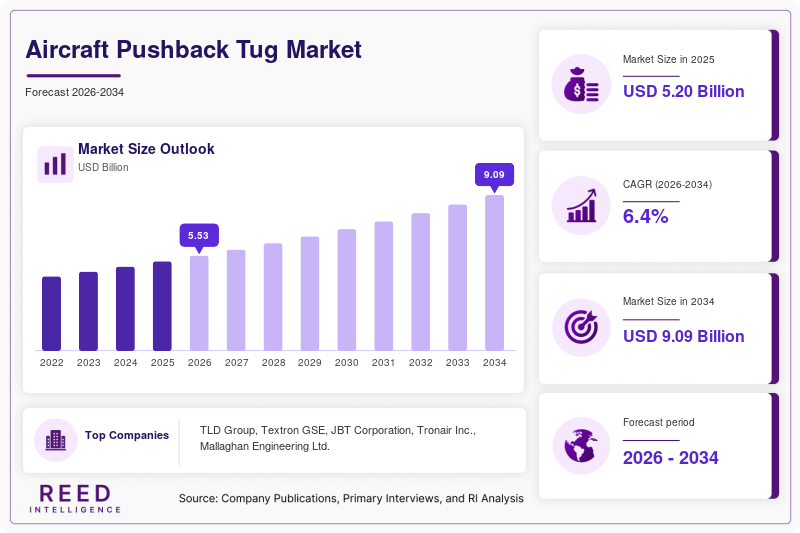
The Aircraft Pushback Tug Market size is estimated at approximately USD 5.2 billion in 2025 and is expected to reach around USD 5.6 billion in 2026. With continuous modernization of airport infrastructure and rising air passenger traffic, the market is projected to grow to nearly USD 9.8 billion by 2034, registering a compound annual growth rate (CAGR) of 6.4% during the forecast period from 2025 to 2034.
Aircraft pushback tugs are essential ground support equipment used to maneuver aircraft safely on airport aprons without engaging aircraft engines. The demand for these vehicles is increasing due to expanding airline fleets and growing airport congestion. As global aviation rebounds and surpasses pre-pandemic levels, airports are investing in advanced pushback solutions to improve turnaround efficiency and reduce operational delays.
Key Highlights
- Market size estimated at USD 5.2 billion in 2025 and expected to reach USD 5.6 billion in 2026, reflecting steady expansion driven by increasing air traffic and operational demand. Continued investments in airport infrastructure and fleet upgrades are supporting consistent year-on-year growth.
- The market is projected to reach USD 9.8 billion by 2034, registering a CAGR of 6.4% during the forecast period. Long-term growth is supported by modernization initiatives, technological advancements, and increasing global aviation activity.
- Increasing aircraft fleet expansion is driving demand for advanced ground handling equipment, including pushback tugs. Airlines are adding new aircraft to meet passenger demand, which is directly increasing the need for efficient ground operations.
- Rising airport modernization projects are boosting adoption of technologically advanced pushback tugs. Expansion of airport capacity and smart airport initiatives are creating demand for high-performance and automated equipment.
- The growing shift toward electric and automated pushback tugs is transforming market dynamics. Sustainability goals and operational efficiency are encouraging airports to adopt low-emission and smart ground handling solutions.
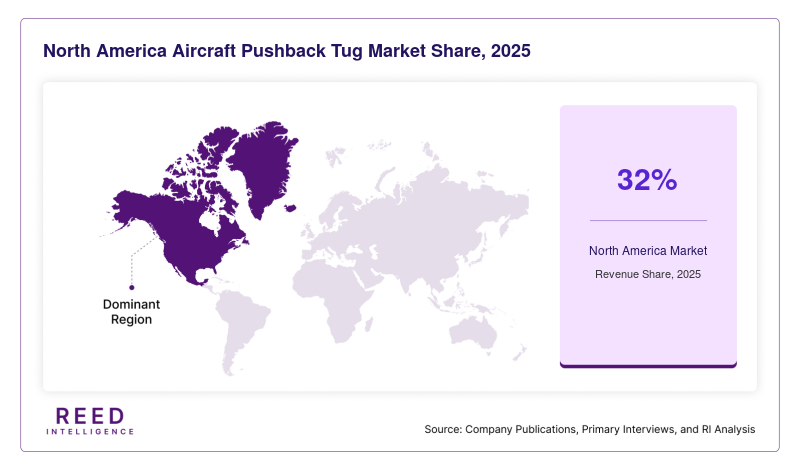
- North America dominates the Aircraft Pushback Tug Market, accounting for approximately 32% share in 2025. The region’s strong aviation infrastructure and early adoption of advanced technologies support its leading position.
- Asia Pacific is the fastest-growing region, expected to register a CAGR of 7.5% during the forecast period. Rapid airport expansion and rising air passenger traffic are key factors driving regional growth.
Market Trends
Increasing Adoption of Electric Pushback Tugs
The transition toward electric pushback tugs is becoming a defining trend in the Aircraft Pushback Tug Market. Airports and airlines are prioritizing sustainability, leading to a gradual replacement of diesel-powered equipment with battery-operated alternatives. Electric tugs offer reduced emissions, lower noise levels, and decreased maintenance costs compared to conventional models. Additionally, regulatory pressures to reduce carbon footprints are encouraging airports to adopt greener technologies. The integration of fast-charging infrastructure and improved battery efficiency is further supporting this shift. As environmental regulations tighten globally, the adoption of electric pushback tugs is expected to accelerate significantly.
Emergence of Autonomous and Smart Ground Handling Equipment
Automation is transforming airport ground operations, and pushback tugs are no exception. The introduction of autonomous and semi-autonomous pushback systems is enhancing operational efficiency and safety. These advanced tugs utilize sensors, artificial intelligence, and GPS technologies to navigate aircraft movement with precision. Automation reduces human error and improves turnaround time, which is critical for busy airports. Furthermore, remote-controlled pushback systems are gaining traction, allowing operators to control equipment from a distance. As airports continue to digitize operations, the integration of smart technologies into pushback tugs is expected to gain momentum.
Market Drivers
Growth in Global Air Traffic and Fleet Expansion
The rapid increase in global air passenger traffic is a key driver for the Aircraft Pushback Tug Market. Airlines are expanding their fleets to meet growing demand, leading to higher aircraft movement at airports. This increase in operations requires efficient ground handling equipment to maintain timely departures and arrivals. Pushback tugs play a crucial role in ensuring smooth aircraft maneuvering, especially in congested airports. Additionally, the rise of low-cost carriers has intensified flight frequency, further boosting the demand for reliable pushback solutions. As air travel continues to grow, the need for advanced pushback equipment will increase steadily.
Expansion and Modernization of Airport Infrastructure
Ongoing investments in airport infrastructure development are significantly driving market growth. Governments and private stakeholders are upgrading existing airports and constructing new terminals to accommodate rising passenger volumes. These developments require modern ground support equipment, including advanced pushback tugs. Airports are focusing on improving operational efficiency and minimizing turnaround time, which directly increases the demand for technologically advanced tugs. Moreover, smart airport initiatives are integrating digital solutions with ground handling operations, enhancing the functionality of pushback systems. This trend is expected to sustain strong demand over the forecast period.
Market Restraint
High Initial Investment and Maintenance Costs
One of the primary restraints in the Aircraft Pushback Tug Market is the high initial cost associated with acquiring advanced pushback equipment. Electric and automated tugs, while efficient, require significant capital investment, which can be challenging for small airports and ground handling service providers. In addition to procurement costs, maintenance and battery replacement expenses can further increase the total cost of ownership.
This financial burden may delay adoption, particularly in developing regions where budget constraints are more pronounced. For instance, smaller regional airports may continue to rely on older diesel-powered tugs due to affordability issues. Furthermore, the need for charging infrastructure and skilled personnel to operate advanced systems adds to operational complexity. These factors collectively limit market penetration, especially in cost-sensitive markets, and may slow down the transition to next-generation pushback solutions.
Market Opportunities
Development of Smart Airports and Digital Integration
The rise of smart airport initiatives presents significant growth opportunities for the Aircraft Pushback Tug Market. Airports are increasingly integrating digital technologies such as IoT, AI, and real-time data analytics into their operations. This transformation enables seamless coordination between aircraft, ground equipment, and control systems. Pushback tugs equipped with smart features can communicate with airport management systems to optimize movement and reduce delays. This level of integration enhances efficiency and safety while minimizing operational costs. As more airports adopt smart technologies, the demand for advanced pushback solutions is expected to grow substantially.
Growth in Emerging Markets and Regional Aviation
Emerging economies are witnessing rapid growth in aviation infrastructure, creating new opportunities for market expansion. Countries in Asia Pacific, Latin America, and Africa are investing heavily in airport development to support increasing air travel demand. Regional aviation is also expanding, with smaller aircraft requiring efficient ground handling solutions. Pushback tugs designed for narrow-body and regional aircraft are gaining popularity in these markets. Additionally, government initiatives to improve connectivity and boost tourism are driving airport expansion projects. These factors collectively create a favorable environment for the growth of the Aircraft Pushback Tug Market in emerging regions.
Segmental Analysis
By Type
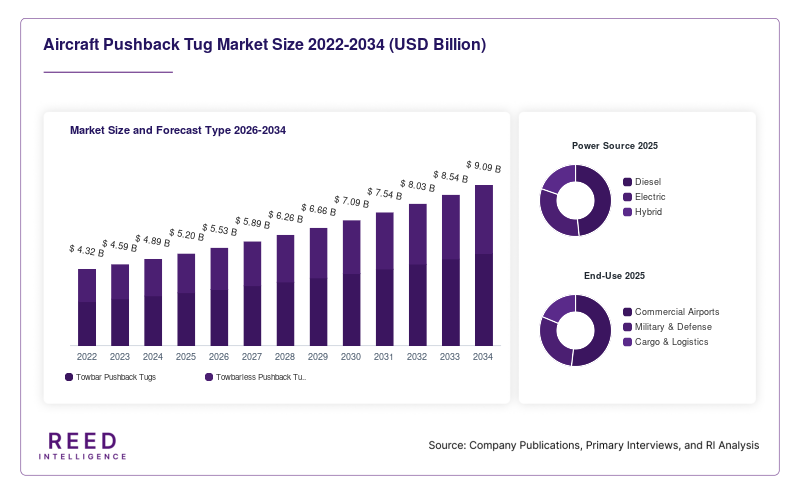
The towbar pushback tug segment dominated the Aircraft Pushback Tug Market in 2024, accounting for approximately 58% of the total market share. These tugs are widely used due to their compatibility with various aircraft types and lower initial costs compared to towbarless alternatives. Towbar tugs provide reliable performance and are preferred by many airports for routine operations. Their widespread adoption is also attributed to ease of maintenance and availability of spare parts. Despite technological advancements, many airports continue to rely on towbar tugs due to their cost-effectiveness and operational familiarity, ensuring their continued dominance in the market.
The towbarless pushback tug segment is expected to be the fastest-growing, registering a CAGR of 7.2% during the forecast period. These tugs offer improved efficiency and faster aircraft handling by eliminating the need for separate towbar equipment. A key growth factor is their ability to reduce turnaround time, which is critical for busy airports. Additionally, towbarless tugs enhance safety by minimizing the risk of equipment failure. As airports focus on optimizing operations and reducing delays, the adoption of towbarless pushback tugs is expected to increase significantly.
By Power Source
The diesel-powered segment held the largest market share in 2024, accounting for around 62% of the total market. Diesel tugs are widely used due to their high power output and ability to handle heavy aircraft. They are particularly preferred in large airports with high operational demands. The established infrastructure for diesel equipment and lower upfront costs contribute to their dominance. However, environmental concerns and emission regulations are gradually influencing the shift toward alternative power sources.
The electric-powered segment is projected to grow at the fastest CAGR of 8.1% during the forecast period. The primary growth factor is the increasing emphasis on sustainability and reducing carbon emissions. Electric tugs offer lower operating costs and reduced environmental impact compared to diesel counterparts. Advances in battery technology and charging infrastructure are further supporting their adoption. As airports aim to achieve carbon neutrality, the demand for electric pushback tugs is expected to rise significantly.
By End-Use
The commercial airports segment dominated the market in 2024, accounting for approximately 70% of the total share. The high volume of passenger traffic and aircraft movements in commercial airports drives the demand for efficient pushback equipment. These airports require reliable and high-performance tugs to manage frequent operations. Continuous investments in infrastructure and modernization further support the growth of this segment.
The military and defense segment is expected to grow at a CAGR of 6.9% during the forecast period. The increasing focus on defense aviation and modernization of military airbases is driving demand for specialized pushback equipment. A key growth factor is the need for robust and versatile tugs capable of handling different aircraft types. As defense budgets increase globally, the adoption of advanced pushback solutions in military applications is expected to expand.
Regional Analysis
North America
North America accounted for approximately 32% of the Aircraft Pushback Tug Market share in 2025 and is expected to grow at a CAGR of 5.8% during the forecast period. The region benefits from a well-established aviation industry and a high volume of aircraft operations. Major airports are continuously upgrading their ground handling equipment to enhance efficiency and reduce turnaround time, contributing to steady market growth.
The United States dominates the regional market due to its extensive network of commercial airports and high passenger traffic. A key growth factor is the strong emphasis on sustainability, leading to increased adoption of electric pushback tugs. Airports are investing in eco-friendly equipment to comply with environmental regulations and reduce emissions, further driving market demand.
Europe
Europe held around 27% of the market share in 2025 and is projected to grow at a CAGR of 6.1%. The region is characterized by stringent environmental regulations and a strong focus on reducing carbon emissions in aviation operations. These factors are encouraging airports to adopt electric and hybrid pushback tugs.
Germany leads the European market, supported by advanced airport infrastructure and technological innovation. A unique growth factor is the region’s commitment to green aviation initiatives, which is accelerating the transition to zero-emission ground support equipment. This focus is expected to drive consistent demand for advanced pushback tugs.
Asia Pacific
Asia Pacific captured approximately 24% of the market share in 2025 and is expected to register the highest CAGR of 7.4% during the forecast period. Rapid urbanization and increasing air travel demand are driving significant investments in airport infrastructure across the region.
China dominates the market due to its large-scale airport expansion projects. A key growth factor is the rising number of new airports and terminals, which require modern ground handling equipment. This ongoing development is creating strong demand for pushback tugs in the region.
Middle East & Africa
The Middle East & Africa region accounted for about 10% of the market share in 2025 and is projected to grow at a CAGR of 6.7%. The region’s aviation sector is expanding rapidly, supported by increasing passenger traffic and strategic investments in airport infrastructure.
The United Arab Emirates leads the regional market, driven by its position as a global aviation hub. A unique growth factor is the focus on luxury and high-efficiency airport operations, which requires advanced pushback equipment. This emphasis on operational excellence is fueling market growth.
Latin America
Latin America held nearly 7% of the market share in 2025 and is expected to grow at a CAGR of 6.3%. The region is experiencing gradual growth in air travel, supported by improving economic conditions and increasing tourism.
Brazil dominates the market due to its large number of airports and growing airline operations. A key growth factor is the expansion of regional aviation networks, which is driving demand for efficient ground handling equipment. This trend is expected to support steady market growth in the coming years.
Competitive Landscape
The Aircraft Pushback Tug Market is moderately fragmented, with several global and regional players competing based on technology, product innovation, and service capabilities. Leading companies are focusing on developing electric and autonomous pushback solutions to gain a competitive edge. Strategic partnerships, mergers, and product launches are common strategies adopted by market participants.
TLD Group is recognized as a market leader due to its extensive product portfolio and strong global presence. The company has recently introduced advanced electric pushback tugs aimed at reducing emissions and improving efficiency. Other major players are also investing in research and development to enhance product performance and meet evolving customer requirements. Competition is expected to intensify as new technologies reshape the market landscape.
Key Players List
- TLD Group
- Textron GSE
- JBT Corporation
- Tronair Inc.
- Mallaghan Engineering Ltd.
- Goldhofer AG
- Mulag Fahrzeugwerk
- AERO Specialties Inc.
- Eagle Tugs
- Kalmar Motor AB
- Weihai Guangtai Airport Equipment Co. Ltd.
- Alvest Group
- Charlatte Manutention
- Douglas Equipment Ltd.
- Nandan GSE Pvt. Ltd.
Recent Developments
- A leading manufacturer launched a new range of electric pushback tugs with enhanced battery capacity and fast-charging capabilities to support sustainable airport operations.
- A major airport authority entered into a partnership with a ground support equipment provider to deploy autonomous pushback tugs for improved efficiency and safety.
- Several companies expanded their production facilities in Asia Pacific to meet rising demand from emerging markets and strengthen regional supply chains.
Aircraft Pushback Tug Market Segments
Type
- Towbar Pushback Tugs
- Towbarless Pushback Tugs
Power Source
- Diesel
- Electric
- Hybrid
End-Use
- Commercial Airports
- Military & Defense
- Cargo & Logistics
By Region
- North America
- Europe
- APAC
- Middle East and Africa
- LATAM