Aircraft Weighing Scale Market Size, Share & Demand Report By Type (Portable Aircraft Weighing Scales, Fixed Aircraft Weighing Scales, Wireless Aircraft Weighing Scales), By Application (MRO Services, OEM, Research & Testing), By End-Use (Commercial Aviation, Defense Aviation, General Aviation) By Region & Segment Forecasts, 2026–2034
USD 3950
Market Overview
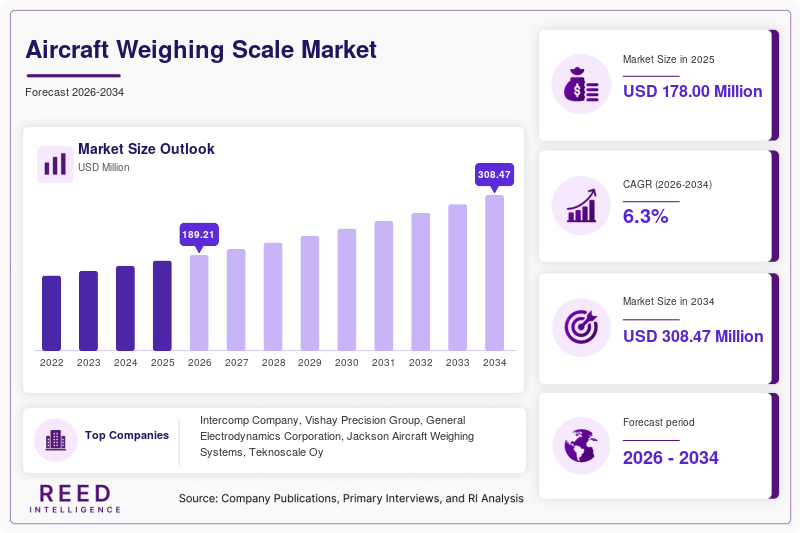
The Aircraft Weighing Scale Market size was valued at approximately USD 178 million in 2026 and is projected to reach USD 289 million by 2034, expanding at a compound annual growth rate (CAGR) of 6.3% during the forecast period (2026–2034). This growth reflects increasing demand for precise weight measurement systems in aviation operations, including maintenance, repair, and overhaul (MRO), as well as manufacturing and regulatory compliance activities. Aircraft weighing scales are essential for ensuring optimal aircraft performance, safety, and fuel efficiency, as accurate weight distribution directly impacts flight dynamics.
A major global factor supporting market growth is the rising emphasis on aviation safety standards and compliance regulations across both commercial and defense sectors. Regulatory authorities continue to mandate periodic aircraft weighing procedures, especially after maintenance or modifications, which is driving consistent demand for advanced weighing systems with digital integration and enhanced accuracy.
Key Highlights
- North America dominated the market with a 34% share in 2025.
- Asia Pacific is projected to grow at the fastest CAGR of 7.2%.
- In the type segment, portable aircraft weighing scales led with a 58% share, whereas wireless weighing systems are expected to grow at a CAGR of 7.8%.
- By application, MRO services accounted for the largest share at 46%, while OEM applications are anticipated to expand at a CAGR of 6.9%.
- The United States remained the dominant country, with market values of USD 52 million in 2024 and USD 55 million in 2025.
Market Trends
Integration of Digital and Wireless Technologies
The Aircraft Weighing Scale Market is witnessing a notable transition toward digital and wireless-enabled weighing systems. Traditional wired systems are increasingly being replaced by wireless platforms that allow real-time data transmission, remote monitoring, and integration with maintenance software systems. This trend is driven by the need for efficiency in aircraft maintenance operations, where time-sensitive processes demand seamless data handling. Wireless scales reduce setup time, minimize cabling complexities, and improve operational flexibility in hangars. Furthermore, digital systems enhance accuracy through automated calibration and error detection features. As aviation stakeholders adopt Industry 4.0 practices, the integration of IoT-based solutions into weighing systems is becoming more common, supporting predictive maintenance and data-driven decision-making across airline and MRO operations.
Growing Demand from Military Aviation Modernization Programs
Another important trend shaping the Aircraft Weighing Scale Market is the increasing demand from defense aviation modernization initiatives. Governments across regions are investing in upgrading their military fleets, including transport aircraft, fighter jets, and surveillance systems. These upgrades require precise weight measurement during retrofitting, equipment installation, and structural modifications. Aircraft weighing scales play a critical role in ensuring balance and compliance with operational requirements. Additionally, military applications often demand rugged, high-capacity weighing systems capable of handling large and complex aircraft. This trend is particularly prominent in regions such as North America, Europe, and Asia Pacific, where defense budgets continue to rise, supporting sustained demand for specialized weighing solutions.
Market Drivers
Increasing Air Traffic and Fleet Expansion
The steady growth in global air passenger traffic is a major driver for the Aircraft Weighing Scale Market. Airlines are expanding their fleets to accommodate rising demand, particularly in emerging economies. This expansion leads to increased aircraft deliveries and higher frequency of maintenance activities, both of which require accurate weighing systems. As fleets grow in size and diversity, the need for reliable weight measurement becomes more critical to ensure operational efficiency and safety. Moreover, airlines are focusing on optimizing fuel consumption, which is directly influenced by aircraft weight distribution. This has encouraged the adoption of advanced weighing technologies that offer high precision and ease of use, further supporting market growth.
Stringent Regulatory Compliance Requirements
Regulatory frameworks imposed by aviation authorities are another key driver for the Aircraft Weighing Scale Market. Aircraft operators are required to conduct periodic weighing to ensure compliance with safety and performance standards. These regulations apply to both commercial and military aircraft and are enforced globally. Failure to comply can result in penalties and operational restrictions. As a result, airlines and MRO service providers are investing in modern weighing systems that meet regulatory standards and offer traceability and documentation features. The increasing complexity of aircraft systems and modifications also necessitates more frequent weighing procedures, thereby driving consistent demand for accurate and efficient weighing solutions.
Market Restraint
High Initial Investment and Maintenance Costs
One of the primary restraints in the Aircraft Weighing Scale Market is the high cost associated with acquiring and maintaining advanced weighing systems. High-precision aircraft weighing scales, particularly those with wireless and digital capabilities, require significant upfront investment. Smaller airlines and independent MRO providers often face budget constraints, limiting their ability to adopt these systems. Additionally, maintenance costs, including calibration, software updates, and periodic servicing, add to the total cost of ownership.
This financial barrier can slow down the adoption of advanced technologies, especially in developing regions where cost sensitivity is higher. For instance, smaller regional carriers may continue to rely on older or manual weighing systems due to cost considerations, despite the benefits of modern solutions. Furthermore, training personnel to operate advanced systems adds another layer of expense. These challenges can impact market penetration and slow overall growth, particularly in price-sensitive segments. Manufacturers are addressing this restraint by offering modular systems and leasing options, but cost remains a critical factor influencing purchasing decisions.
Market Opportunities
Expansion of MRO Facilities in Emerging Markets
The expansion of maintenance, repair, and overhaul (MRO) facilities in emerging markets presents a strong growth opportunity for the Aircraft Weighing Scale Market. Countries in Asia Pacific, the Middle East, and Latin America are investing in aviation infrastructure to reduce dependence on foreign MRO services. This expansion is driven by increasing aircraft fleets and government initiatives to develop local aviation ecosystems. As new MRO facilities are established, the demand for aircraft weighing scales is expected to rise significantly. These facilities require modern equipment to meet international standards, creating opportunities for manufacturers to supply advanced weighing systems. Additionally, partnerships between global OEMs and local service providers are further accelerating the adoption of high-quality weighing solutions in these regions.
Adoption of Smart Maintenance and Predictive Analytics
The growing adoption of smart maintenance practices and predictive analytics offers another promising opportunity for the Aircraft Weighing Scale Market. Airlines and MRO providers are increasingly leveraging data analytics to optimize maintenance schedules and reduce downtime. Integrating weighing systems with digital platforms enables real-time data collection and analysis, supporting predictive maintenance strategies. This integration allows operators to identify weight anomalies and potential issues before they escalate, improving operational efficiency and safety. As digital transformation continues across the aviation industry, the demand for connected and intelligent weighing systems is expected to grow, creating new avenues for innovation and market expansion.
Segmental Analysis
By Type
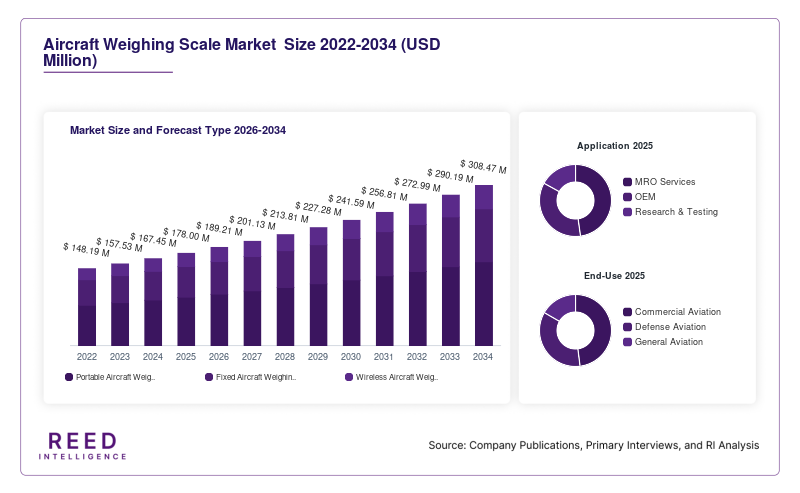
Portable aircraft weighing scales dominated the market in 2024, accounting for approximately 58% of the total share. These systems are widely used due to their flexibility, ease of transportation, and suitability for various aircraft types. Portable scales are particularly popular in MRO operations, where mobility is essential. Their ability to provide accurate measurements without requiring permanent installation makes them a preferred choice for many operators. Additionally, advancements in lightweight materials and battery technology have improved the performance and usability of portable systems, further supporting their dominance.
Wireless aircraft weighing scales are expected to be the fastest-growing subsegment, with a projected CAGR of 7.8%. The growth is driven by increasing demand for efficient and user-friendly systems that reduce setup time and enhance data management. Wireless systems eliminate the need for extensive cabling, making them ideal for modern hangars and remote operations. Their ability to integrate with digital platforms and provide real-time data insights is a key factor driving adoption. As airlines and MRO providers continue to embrace digital transformation, the demand for wireless weighing solutions is expected to rise significantly.
By Application
MRO services represented the largest application segment in 2024, with a share of 46%. Aircraft weighing is a critical component of maintenance activities, ensuring compliance with safety standards and optimal performance. MRO providers rely on accurate weighing systems to support routine inspections, repairs, and modifications. The growing number of aging aircraft and the need for frequent maintenance are key factors driving demand in this segment. Additionally, the expansion of MRO facilities globally is further supporting market growth.
OEM applications are anticipated to grow at the fastest CAGR of 6.9% during the forecast period. Aircraft manufacturers require precise weighing systems during production and assembly processes to ensure proper weight distribution and balance. The increasing number of aircraft deliveries and the introduction of new models are driving demand in this segment. Furthermore, advancements in manufacturing technologies and the adoption of automation are expected to enhance the use of weighing systems in OEM operations.
By End-Use
Commercial aviation dominated the end-use segment in 2024, accounting for approximately 62% of the market share. The segment’s growth is driven by increasing air travel demand and fleet expansion by airlines. Commercial aircraft require regular maintenance and compliance checks, including weighing procedures. The need for fuel efficiency and operational optimization further emphasizes the importance of accurate weight measurement. Airlines are investing in advanced weighing systems to improve performance and reduce operational costs.
The defense aviation segment is expected to be the fastest-growing, with a CAGR of 6.7%. The growth is driven by increasing defense budgets and modernization programs across various countries. Military aircraft require specialized weighing systems capable of handling complex configurations and heavy loads. Additionally, the need for precise weight measurement during upgrades and maintenance activities is driving demand in this segment. As defense aviation continues to evolve, the adoption of advanced weighing technologies is expected to increase.
Regional Analysis
North America
North America accounted for approximately 34% of the Aircraft Weighing Scale Market share in 2025 and is expected to grow at a CAGR of 5.8% during the forecast period. The region benefits from a well-established aviation industry, extensive MRO infrastructure, and strong regulatory frameworks. The presence of major aircraft manufacturers and airlines supports consistent demand for advanced weighing systems. Additionally, technological advancements and early adoption of digital solutions contribute to market stability and growth.
The United States dominates the North American market due to its large commercial and defense aviation sectors. A key growth factor is the continuous modernization of military aircraft fleets, which requires precise weighing systems during upgrades and maintenance. The country’s focus on safety compliance and operational efficiency further drives the adoption of advanced weighing technologies.
Europe
Europe held a market share of around 26% in 2025 and is projected to grow at a CAGR of 5.9% through 2034. The region’s aviation sector is characterized by strong regulatory oversight and a high concentration of MRO facilities. European airlines are focused on sustainability and fuel efficiency, which increases the importance of accurate aircraft weight measurement. This trend supports steady demand for advanced weighing systems.
Germany is a leading market within Europe, driven by its robust aerospace manufacturing industry. A unique growth factor is the region’s emphasis on environmental sustainability, encouraging airlines to optimize aircraft performance through precise weight management. This focus is expected to drive the adoption of high-accuracy weighing solutions across the region.
Asia Pacific
Asia Pacific captured approximately 22% of the market share in 2025 and is expected to grow at the fastest CAGR of 7.2%. Rapid growth in air passenger traffic and increasing aircraft deliveries are key factors driving the market. Governments in the region are investing heavily in aviation infrastructure, including new airports and MRO facilities, creating significant demand for weighing systems.
China is the dominant country in the region, supported by its expanding aviation sector. A major growth factor is the government’s focus on developing domestic aerospace capabilities, including manufacturing and maintenance services. This initiative is expected to drive the adoption of advanced weighing technologies in the coming years.
Middle East & Africa
The Middle East & Africa region accounted for about 10% of the market share in 2025 and is projected to grow at a CAGR of 6.1%. The region’s strategic location as a global aviation hub supports steady demand for aircraft maintenance services. Airlines in the Middle East are known for operating large fleets, which require regular maintenance and weighing procedures.
The United Arab Emirates leads the regional market, driven by its advanced aviation infrastructure. A unique growth factor is the presence of major international airlines that prioritize operational efficiency and safety. This focus drives the adoption of modern weighing systems to support high-performance operations.
Latin America
Latin America held a market share of approximately 8% in 2025 and is expected to grow at a CAGR of 5.7%. The region’s aviation sector is gradually expanding, supported by increasing passenger traffic and fleet modernization efforts. Governments are investing in airport infrastructure and maintenance facilities, contributing to market growth.
Brazil is the dominant country in Latin America, supported by its large domestic aviation market. A key growth factor is the expansion of regional airlines, which increases the demand for maintenance services and associated equipment. This trend is expected to drive the adoption of aircraft weighing scales across the region.

Competitive Landscape
The Aircraft Weighing Scale Market is moderately competitive, with a mix of established players and emerging companies focusing on technological innovation and product differentiation. Key players are investing in research and development to enhance accuracy, portability, and digital integration capabilities. Strategic partnerships with MRO providers and airlines are also common, enabling companies to expand their market presence.
Intercomp Company is considered a leading player in the market, known for its advanced portable and wireless weighing systems. The company recently introduced a new range of digital aircraft scales with enhanced connectivity features, supporting real-time data analysis. Other companies are focusing on expanding their product portfolios and entering emerging markets to capitalize on growth opportunities. The competitive landscape is expected to remain dynamic, driven by continuous innovation and evolving customer requirements.
Key Players
- Intercomp Company
- Vishay Precision Group
- General Electrodynamics Corporation
- Jackson Aircraft Weighing Systems
- Teknoscale Oy
- Haenni Instruments Inc.
- Aircraft Weighing Systems Ltd.
- Henk Maas Weighing Systems
- Hydraulex Global
- Eilersen Electric A/S
- Avery Weigh-Tronix
- Cardinal Scale Manufacturing Company
- Flintec Group AB
- Vishay Celtron Technologies
- TLD Group
Recent Developments
- In 2025, Intercomp Company launched a next-generation wireless aircraft weighing system with improved battery life and cloud connectivity features.
- In 2024, Vishay Precision Group expanded its aerospace product line by introducing high-capacity load cells designed for large aircraft weighing applications.
- In 2025, Avery Weigh-Tronix partnered with an MRO service provider to supply customized aircraft weighing solutions for regional airlines.
Aircraft Weighing Scale Market Segments
Type
- Portable Aircraft Weighing Scales
- Fixed Aircraft Weighing Scales
- Wireless Aircraft Weighing Scales
Application
- MRO Services
- OEM
- Research & Testing
End-Use
- Commercial Aviation
- Defense Aviation
- General Aviation
By Region
- North America
- Europe
- APAC
- Middle East and Africa
- LATAM