Aircraft Windshield Wiper And Washer System Market Size, Share & Demand Report By Type (Electric Wiper Systems, Hydraulic Wiper Systems, Hybrid Wiper Systems), By Component (Wiper Blades, Wiper Motors, Washer Pumps, Fluid Reservoirs), By Aircraft Type (Commercial Aircraft, Military Aircraft, General Aviation), By Sales Channel (OEM, Aftermarket), By Region & Segment Forecasts, 2025–2034
USD 3950
Market Overview
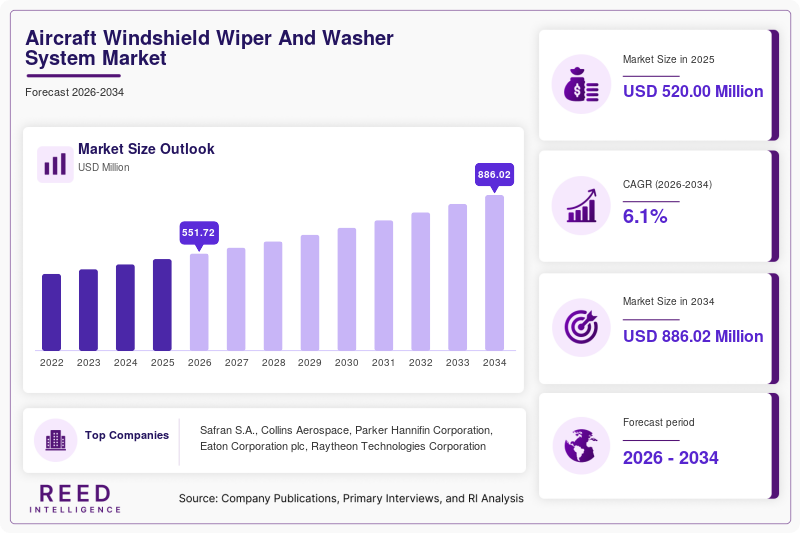
The global Aircraft Windshield Wiper And Washer System Market size was valued at approximately USD 520 million in 2025 and is projected to reach USD 890 million by 2034, expanding at a CAGR of 6.1% during 2025–2034. The market is witnessing steady expansion driven by increasing aircraft production, rising air passenger traffic, and the need for enhanced cockpit visibility systems under adverse weather conditions. Aircraft windshield wiper and washer systems are critical safety components, particularly for commercial and military aircraft operating in rain, snow, and debris-prone environments.
A key global factor supporting market growth is the continuous expansion of the aviation industry, particularly the increasing fleet size of narrow-body aircraft used in regional and low-cost carrier operations. Airlines are focusing on operational safety and regulatory compliance, driving the adoption of efficient and durable windshield wiper systems. Furthermore, advancements in lightweight materials and electric actuation systems are improving system efficiency and reliability, supporting broader integration across aircraft types.
Key Highlights:
- North America dominated the market with a 34% share in 2025, while Asia Pacific is expected to register the fastest CAGR of 7.4% during the forecast period.
- The electric wiper system segment led with a share of 58%, while hybrid washer systems are projected to grow at a CAGR of 6.9%.
- The commercial aircraft segment held the largest share, while the military aircraft segment is expected to witness a CAGR of 6.7%.
- The United States remained the dominant country, with market values of USD 145 million in 2024 and USD 152 million in 2025.
Market Trends
Integration of Advanced Electric Wiper Technologies
The market is increasingly shifting toward electric-driven windshield wiper systems due to their improved reliability, lower maintenance requirements, and compatibility with modern aircraft architectures. Electric systems offer precise control and reduced weight compared to traditional pneumatic or hydraulic systems. This trend aligns with the aviation industry’s broader move toward more-electric aircraft designs, improving fuel efficiency and reducing overall system complexity.
Focus on Enhanced Durability and Weather Resistance
Manufacturers are emphasizing the development of wiper blades and washer systems capable of operating under extreme environmental conditions, including high altitudes, freezing temperatures, and heavy precipitation. Advanced coatings, corrosion-resistant materials, and improved blade designs are being introduced to extend lifecycle performance. This trend is particularly relevant for aircraft operating in polar and monsoon-prone regions, where consistent visibility is essential for flight safety.
Market Drivers
Increasing Aircraft Production and Fleet Expansion
The rising demand for new aircraft, particularly narrow-body and regional jets, is a major driver of the Aircraft Windshield Wiper And Washer System Market. Aircraft manufacturers are ramping up production to meet growing passenger demand and replace aging fleets. Each aircraft requires high-performance visibility systems, thereby directly contributing to market growth. Additionally, retrofitting older aircraft with improved systems is further supporting demand.
Stringent Aviation Safety Regulations
Global aviation authorities mandate strict visibility and safety standards for cockpit operations. Aircraft windshield wiper and washer systems play a vital role in ensuring compliance with these regulations, especially during takeoff and landing phases. Regulatory bodies require systems that function effectively under adverse weather conditions, prompting airlines and OEMs to invest in reliable and advanced solutions. Continuous updates to safety standards are further driving innovation and adoption across the industry.
Market Restraint
High Maintenance and Replacement Costs
One of the key challenges in the Aircraft Windshield Wiper And Washer System Market is the high cost associated with maintenance, repair, and replacement of system components. Aircraft windshield wipers operate under extreme conditions, leading to wear and tear that requires frequent servicing. Replacement of blades, motors, and washer components can be costly, especially for large fleets. Additionally, maintenance downtime can affect airline operations and increase operational expenses.
The complexity of integrating advanced systems with existing aircraft platforms also adds to the cost burden. Airlines operating in cost-sensitive markets may delay upgrades or opt for basic systems, limiting market penetration of advanced technologies. These factors collectively restrain market growth, particularly in developing regions with limited aviation budgets.
Market Opportunities
Growth in Emerging Aviation Markets
Emerging economies are witnessing rapid growth in air travel, leading to increased aircraft procurement and infrastructure development. Countries in Asia Pacific, the Middle East, and Latin America are investing in aviation expansion, creating significant opportunities for windshield wiper and washer system manufacturers. The demand for cost-effective and durable systems is expected to rise as airlines expand their fleets to cater to regional connectivity.
Development of Smart and Sensor-Based Systems
The integration of smart technologies, such as rain sensors and automated control systems, presents a promising opportunity for market growth. These systems can automatically adjust wiper speed and washer fluid usage based on environmental conditions, improving efficiency and reducing pilot workload. The adoption of such intelligent systems aligns with the broader trend of cockpit automation, offering enhanced safety and operational efficiency.
Segmental Analysis
By Type
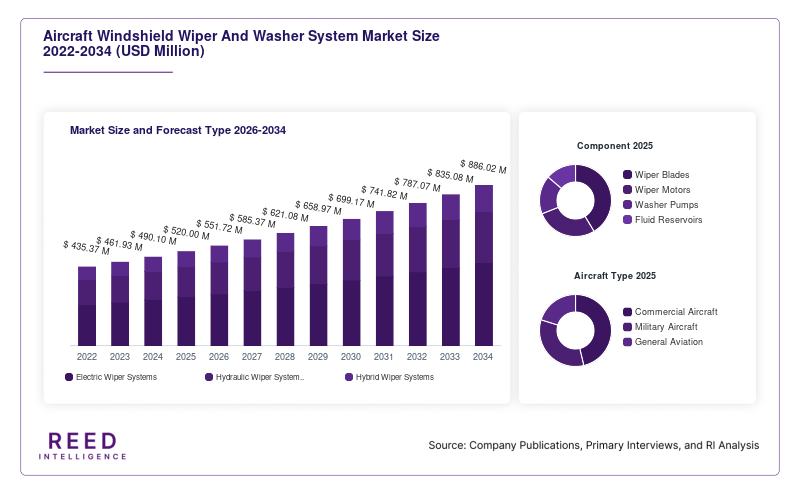
The electric wiper system segment dominated the Aircraft Windshield Wiper And Washer System Market, accounting for approximately 58% share in 2024. This dominance was attributed to its reliability, reduced maintenance requirements, and compatibility with modern aircraft systems. Electric systems offer improved efficiency and are widely adopted in commercial aircraft.
The hybrid wiper system segment is expected to grow at the fastest CAGR of 6.9% during the forecast period. This growth will be driven by the combination of electric and hydraulic functionalities, offering enhanced performance and flexibility. The increasing demand for advanced systems in next-generation aircraft will support this segment’s expansion.
By Component
The wiper blade segment held the largest share of around 42% in 2024, as it is a frequently replaced component due to wear and tear. High demand for durable and weather-resistant blades contributed to its dominance.
The washer pump segment is projected to grow at a CAGR of 6.5%, driven by advancements in fluid delivery systems. Improved pump efficiency and integration with automated systems will support segment growth.
By Aircraft Type
The commercial aircraft segment dominated the market with a share of approximately 61% in 2024. This was due to the high volume of commercial aircraft operations and the need for reliable visibility systems.
The military aircraft segment is expected to grow at a CAGR of 6.7%, supported by increased defense spending and modernization programs. Military aircraft require high-performance systems capable of operating in extreme conditions.
By Sales Channel
The OEM segment accounted for the largest share of around 65% in 2024, driven by direct integration of systems during aircraft manufacturing. OEM partnerships ensure consistent demand and technological advancements.
The aftermarket segment is anticipated to grow at a CAGR of 6.3%, as airlines focus on maintenance and replacement of existing systems. The aging aircraft fleet will contribute to increased aftermarket demand.
Regional Analysis
North America
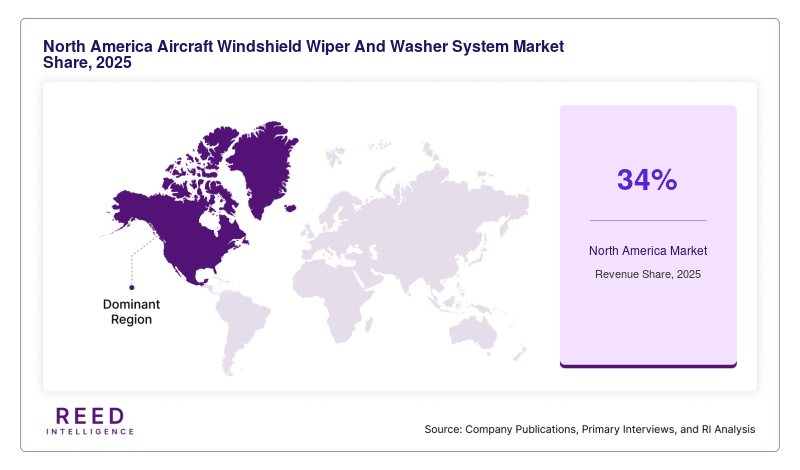
North America accounted for approximately 34% of the Aircraft Windshield Wiper And Washer System Market share in 2025 and is expected to grow at a CAGR of 5.6% during 2025–2034. The region has a well-established aviation industry with a high concentration of aircraft manufacturers and suppliers.
The United States dominated the regional market due to its large commercial and military aircraft fleet. A key growth factor is the strong presence of OEMs and MRO service providers, which ensures consistent demand for replacement and upgraded systems. Continuous investment in aviation safety technologies further supports market growth.
Europe
Europe held around 27% market share in 2025 and is projected to expand at a CAGR of 5.8% over the forecast period. The region benefits from advanced aerospace engineering capabilities and stringent regulatory frameworks.
Germany emerged as the dominant country, driven by its strong aerospace manufacturing base. The country’s focus on innovation and high-quality components has supported the adoption of advanced windshield systems, contributing to steady market growth.
Asia Pacific
Asia Pacific captured nearly 22% share in 2025 and is anticipated to grow at the fastest CAGR of 7.4% during the forecast period. The region is experiencing rapid aviation expansion driven by rising passenger traffic and low-cost carrier growth.
China led the regional market due to increasing aircraft production and government support for aviation infrastructure. The expansion of domestic airlines and airport networks is a key factor driving demand for windshield wiper and washer systems.
Middle East & Africa
The Middle East & Africa region accounted for about 10% share in 2025 and is expected to grow at a CAGR of 6.2%. The region’s aviation sector is expanding, particularly in the Middle East, where airlines are investing in modern fleets.
The United Arab Emirates dominated the market, supported by its position as a global aviation hub. The presence of major international airlines and ongoing fleet modernization initiatives contribute to market growth.
Latin America
Latin America held approximately 7% market share in 2025 and is projected to grow at a CAGR of 5.9%. The region’s aviation market is gradually expanding, supported by improving economic conditions.
Brazil led the regional market due to its growing aviation industry and domestic aircraft manufacturing capabilities. Increasing investments in regional connectivity and fleet upgrades are driving demand for advanced windshield systems.
Competitive Landscape
The Aircraft Windshield Wiper And Washer System Market is moderately consolidated, with several global and regional players competing based on technology, reliability, and pricing. Companies are focusing on product innovation, partnerships with aircraft manufacturers, and expansion of aftermarket services.
A leading player in the market is Safran S.A., which has a strong presence in aircraft systems and components. The company recently introduced an advanced electric wiper system designed for improved durability and reduced maintenance requirements. This development highlights the growing emphasis on efficiency and reliability in the market.
Other key players are investing in research and development to enhance product performance and meet evolving regulatory standards. Strategic collaborations with OEMs and airlines are also a common approach to strengthen market position.
Key Players
- Safran S.A.
- Collins Aerospace
- Parker Hannifin Corporation
- Eaton Corporation plc
- Raytheon Technologies Corporation
- Meggitt PLC
- Woodward Inc.
- ITT Inc.
- Honeywell International Inc.
- Liebherr Group
Recent Developments
- Safran S.A. launched a next-generation electric windshield wiper system focused on lightweight design and improved efficiency.
- Collins Aerospace expanded its aftermarket services for aircraft visibility systems, enhancing global service coverage.
- Honeywell International Inc. introduced advanced washer systems with optimized fluid management technology.
- Parker Hannifin Corporation developed corrosion-resistant components to improve system durability.
- Eaton Corporation plc invested in R&D to enhance electric actuation technologies for aircraft systems.
Aircraft Windshield Wiper And Washer System Market Segments
Type
- Electric Wiper Systems
- Hydraulic Wiper Systems
- Hybrid Wiper Systems
Component
- Wiper Blades
- Wiper Motors
- Washer Pumps
- Fluid Reservoirs
Aircraft Type
- Commercial Aircraft
- Military Aircraft
- General Aviation
Sales Channel
- OEM
- Aftermarket
By Region
- North America
- Europe
- APAC
- Middle East and Africa
- LATAM