Airport Runway Foreign Object Debris Detection System Market Size, Share Demand Report By Component (Hardware, Software, Services), By Technology (Radar-Based Systems, Electro-Optical Systems, Hybrid Systems), By End-Use (Commercial Airports, Military Airports) & Segment Forecasts, 2025–2034
USD 3950
Market Overview
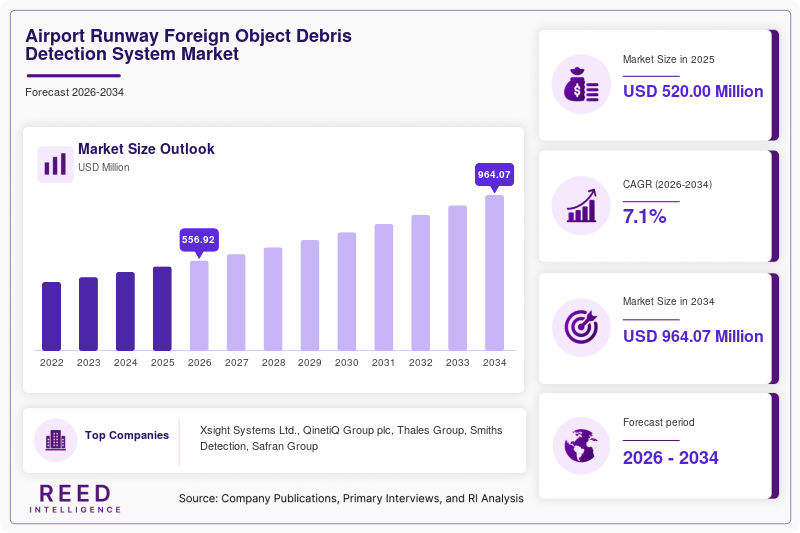
The Airport Runway Foreign Object Debris Detection System Market size is witnessing steady expansion as aviation safety regulations become more stringent and global air traffic continues to rise. The market size was valued at approximately USD 520 million in 2025 and is projected to reach around USD 565 million in 2026. Over the forecast period from 2025 to 2034, the market is expected to grow to nearly USD 1.05 billion, registering a compound annual growth rate (CAGR) of 7.1%. This growth trajectory reflects increasing investments in airport infrastructure modernization and the rising need to prevent runway incidents caused by foreign object debris (FOD).
One of the primary growth factors is the increasing frequency of air travel, which has resulted in higher runway utilization rates. As airport operations intensify, the probability of debris accumulation also rises, necessitating advanced detection systems. Secondly, regulatory authorities across major aviation markets are mandating stricter safety compliance measures, compelling airports to adopt automated FOD detection solutions. Thirdly, technological advancements in radar, electro-optical systems, and artificial intelligence have enhanced the accuracy and reliability of these systems, making them more attractive to airport operators.
Key Highlights
- Market size reached USD 520 million in 2025 and is projected to surpass USD 1.05 billion by 2034
- CAGR of 7.1% during the forecast period (2025–2034)
- Increasing air traffic and airport expansions driving demand
- Regulatory mandates boosting adoption of automated detection systems
- Technological advancements enhancing system efficiency and reliability
Market Trends
Integration of Artificial Intelligence and Machine Learning
The integration of artificial intelligence (AI) and machine learning (ML) into FOD detection systems is transforming the Airport Runway Foreign Object Debris Detection System Market. Modern systems are increasingly equipped with intelligent algorithms capable of distinguishing between harmless objects and potentially dangerous debris. This reduces false alarms and enhances operational efficiency. AI-driven systems can also analyze historical data to predict debris patterns and optimize runway inspection schedules. These capabilities are particularly valuable in high-traffic airports where manual inspection is impractical. As AI technologies become more affordable and scalable, their adoption in runway safety systems is expected to grow steadily, contributing to improved detection accuracy and reduced operational costs.
Shift Toward Integrated Airport Safety Platforms
Another key trend is the shift toward integrated airport safety platforms that combine FOD detection with other monitoring systems such as wildlife detection, perimeter security, and weather monitoring. Airports are increasingly seeking unified solutions that provide a comprehensive view of operational safety. This integration allows for centralized control and real-time data sharing across multiple systems, improving decision-making and response times. Vendors are developing modular platforms that can be customized based on airport size and requirements. This trend is particularly prominent in newly constructed airports and major expansion projects, where integrated systems are easier to implement from the outset.
Market Drivers
Rising Air Traffic and Runway Utilization
The continuous increase in global air passenger and cargo traffic is a significant driver for the Airport Runway Foreign Object Debris Detection System Market. As airports handle more aircraft movements, the likelihood of debris accumulation on runways increases. This creates a higher risk of accidents, including tire damage and engine ingestion incidents. To mitigate these risks, airport authorities are investing in advanced detection systems that provide real-time monitoring. High runway utilization also limits the time available for manual inspections, making automated systems a necessity. This growing operational complexity is expected to drive sustained demand for FOD detection technologies.
Stringent Aviation Safety Regulations
Stringent safety regulations imposed by aviation authorities are another major factor driving market growth. Regulatory bodies are emphasizing proactive safety measures to reduce the risk of runway incidents. Compliance with these regulations often requires the implementation of advanced monitoring systems capable of detecting even small debris. Airports that fail to meet these standards may face penalties or operational restrictions. As a result, both international and regional airports are prioritizing investments in FOD detection systems. The increasing alignment of global safety standards is further accelerating adoption across different regions.
Market Restraints
High Initial Investment and Maintenance Costs
One of the primary restraints in the Airport Runway Foreign Object Debris Detection System Market is the high initial investment required for system installation and ongoing maintenance. Advanced detection systems, particularly those using radar and high-resolution cameras, involve significant capital expenditure. Smaller airports and those in developing regions may find it challenging to allocate sufficient budgets for these technologies. Additionally, maintenance costs, including system calibration, software updates, and component replacements, can add to the financial burden.
This cost factor can delay adoption, especially in regions where regulatory enforcement is less stringent. For example, regional airports with lower traffic volumes may rely on manual inspection methods instead of investing in automated systems. The high cost also affects return on investment calculations, making decision-makers cautious about large-scale deployments. As a result, vendors are focusing on developing cost-effective and scalable solutions to address this restraint and expand their market reach.
Market Opportunities
Expansion of Smart Airports
The development of smart airports presents a significant opportunity for the Airport Runway Foreign Object Debris Detection System Market. Smart airports leverage digital technologies to enhance operational efficiency, passenger experience, and safety. FOD detection systems are a critical component of this ecosystem, providing real-time data and integration with other airport systems. Governments and private investors are increasingly funding smart airport projects, particularly in emerging economies. These projects often prioritize advanced safety solutions, creating a favorable environment for market growth. The integration of FOD detection systems with IoT platforms further enhances their value proposition.
Growth in Emerging Markets
Emerging markets in Asia Pacific, the Middle East, and Latin America offer substantial growth opportunities for FOD detection system providers. Rapid urbanization and economic development in these regions are driving investments in airport infrastructure. New airport projects and expansions often include modern safety systems as part of their design. Additionally, increasing awareness about aviation safety and the economic impact of runway incidents is encouraging adoption. Vendors that can offer cost-effective and scalable solutions are well-positioned to capture market share in these regions. Strategic partnerships with local stakeholders can further enhance market penetration.
Segmental Analysis
By Component
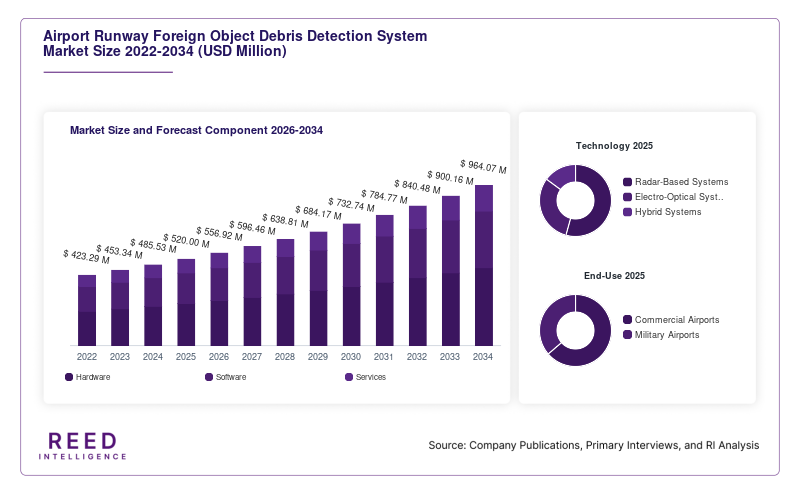
The hardware segment dominated the Airport Runway Foreign Object Debris Detection System Market in 2024, accounting for approximately 58% of the total market share. This dominance is attributed to the essential role of radar systems, cameras, and sensors in detecting debris on runways. Hardware components form the backbone of FOD detection systems, providing real-time data and enabling accurate identification of potential hazards. Airports prioritize investments in high-quality hardware to ensure reliable performance and compliance with safety standards. The increasing adoption of advanced radar and imaging technologies is further strengthening the position of this segment.
The software segment is expected to be the fastest-growing, with a projected CAGR of 8.5% during the forecast period. This growth is driven by the increasing integration of AI and data analytics in FOD detection systems. Software solutions enhance system capabilities by enabling predictive analysis, automated alerts, and seamless integration with other airport systems. As airports seek to improve operational efficiency, the demand for advanced software solutions is expected to rise significantly. The ability to customize software based on specific airport requirements is also contributing to its rapid growth.
By Technology
Radar-based systems held the largest market share in 2024, accounting for around 45% of the total market. These systems are widely used due to their ability to detect debris in various weather conditions and over long distances. Radar technology provides continuous monitoring and high accuracy, making it a preferred choice for large airports. The reliability and effectiveness of radar systems in detecting even small objects are key factors driving their dominance in the market.
Electro-optical systems are expected to be the fastest-growing segment, with a CAGR of 8.9% during the forecast period. These systems use high-resolution cameras and advanced imaging technologies to detect debris with greater precision. The growing demand for visual confirmation and reduced false alarms is driving the adoption of electro-optical systems. Additionally, advancements in imaging technologies and declining costs are making these systems more accessible to a wider range of airports.
By End-Use
Commercial airports dominated the market in 2024, accounting for approximately 70% of the total share. The high volume of passenger and cargo traffic in commercial airports increases the need for advanced safety systems. These airports have the financial resources to invest in modern technologies, including FOD detection systems. The focus on enhancing passenger safety and minimizing operational disruptions is driving the adoption of these systems in commercial airports.
Military airports are expected to be the fastest-growing segment, with a CAGR of 7.8% during the forecast period. The need to ensure the safety of high-value aircraft and sensitive operations is driving the adoption of FOD detection systems in military airports. Governments are investing in advanced technologies to enhance defense capabilities and reduce operational risks. This focus on safety and efficiency is expected to drive growth in the military segment.
Regional Analysis
North America
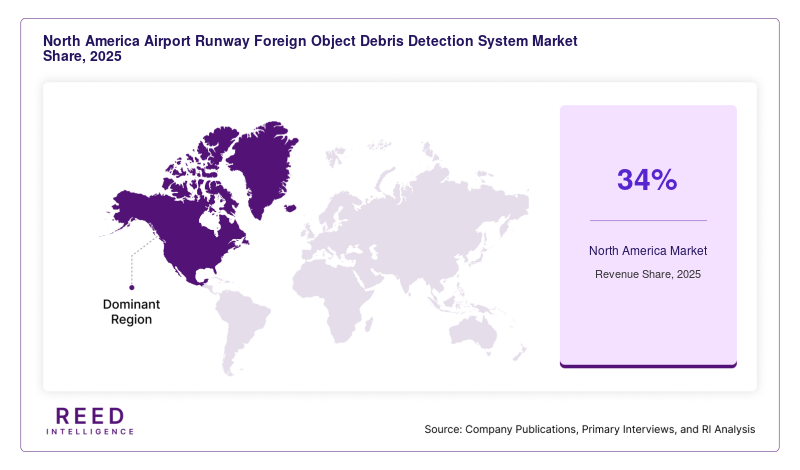
North America accounted for the largest share of the Airport Runway Foreign Object Debris Detection System Market in 2025, with an estimated market share of 34%. The region is expected to maintain steady growth with a CAGR of around 6.5% during the forecast period. The presence of well-established aviation infrastructure and strict safety regulations are key factors supporting market growth. Airports in the region are early adopters of advanced technologies, including automated FOD detection systems.
The United States dominates the regional market due to its extensive network of commercial and military airports. A unique growth factor in this region is the continuous modernization of aging airport infrastructure. Federal funding programs and initiatives aimed at improving aviation safety are encouraging airports to upgrade their systems. This focus on modernization is expected to sustain demand for advanced detection technologies.
Europe
Europe held a significant market share of approximately 26% in 2025 and is projected to grow at a CAGR of 6.8% over the forecast period. The region’s growth is driven by stringent regulatory frameworks and a strong emphasis on aviation safety. European airports are increasingly adopting automated systems to comply with safety standards and improve operational efficiency.
Germany is a key contributor to the regional market, supported by its advanced aviation infrastructure and technological expertise. A unique growth factor in Europe is the focus on sustainability and efficient airport operations. Airports are integrating FOD detection systems with other smart technologies to optimize resource utilization and reduce environmental impact. This approach is expected to drive further adoption.
Asia Pacific
Asia Pacific is expected to witness the highest growth rate, with a CAGR of 8.2% during the forecast period. The region accounted for around 22% of the market share in 2025. Rapid urbanization, increasing air travel, and significant investments in airport infrastructure are driving market growth. Countries in the region are focusing on building new airports and expanding existing ones.
China leads the regional market due to its large-scale airport development projects. A unique growth factor is the government’s focus on enhancing aviation safety standards to support growing air traffic. The integration of advanced technologies in new airport projects is creating strong demand for FOD detection systems, making Asia Pacific a key growth region.
Middle East & Africa
The Middle East & Africa region accounted for approximately 10% of the market share in 2025 and is expected to grow at a CAGR of 7.5%. The region’s growth is driven by investments in airport infrastructure and the development of aviation hubs. Countries in the Middle East are particularly focused on enhancing airport safety and efficiency.
The United Arab Emirates is a major contributor to the regional market. A unique growth factor is the region’s focus on becoming a global aviation hub. Airports are investing in advanced technologies, including FOD detection systems, to maintain high safety standards and support increasing passenger traffic. This trend is expected to drive market growth.
Latin America
Latin America held a market share of around 8% in 2025 and is projected to grow at a CAGR of 6.9%. The region is gradually adopting advanced airport technologies to improve safety and efficiency. Economic development and increasing air travel are contributing to market growth.
Brazil is the leading market in the region, supported by its large airport network. A unique growth factor is the increasing focus on public-private partnerships in airport development. These partnerships are enabling investments in modern safety systems, including FOD detection technologies, thereby supporting market expansion.
Competitive Landscape
The Airport Runway Foreign Object Debris Detection System Market is moderately consolidated, with several key players competing based on technology, innovation, and strategic partnerships. The leading companies are focusing on developing advanced systems with improved accuracy and integration capabilities. Continuous investment in research and development is a common strategy among market participants.
One of the leading players in the market is Xsight Systems Ltd., known for its advanced radar-based FOD detection solutions. The company has recently introduced enhanced AI-driven features to improve detection accuracy and reduce false alarms. Other major players are also focusing on expanding their product portfolios and entering new markets through partnerships and collaborations. The competitive landscape is expected to evolve as new technologies emerge and demand for integrated safety solutions increases.
Key Players List
- Xsight Systems Ltd.
- QinetiQ Group plc
- Thales Group
- Smiths Detection
- Safran Group
- Moog Inc.
- L3Harris Technologies
- Raytheon Technologies
- Indra Sistemas
- NEC Corporation
- Hitachi Ltd.
- HENSOLDT AG
- ERA a.s.
- Rheinmetall AG
- Leonardo S.p.A.
Recent Developments
- In 2024, a major airport in Asia Pacific deployed an AI-enabled FOD detection system to enhance runway safety and reduce inspection time.
- In 2023, a leading company launched a hybrid detection system combining radar and optical technologies for improved accuracy.
- In 2025, a European airport authority entered into a partnership with a technology provider to implement an integrated safety platform including FOD detection systems.
Airport Runway Foreign Object Debris Detection System Market Segments
Component
- Hardware
- Software
- Services
Technology
- Radar-Based Systems
- Electro-Optical Systems
- Hybrid Systems
End-Use
- Commercial Airports
- Military Airports
By Region
- North America
- Europe
- APAC
- Middle East and Africa
- LATAM