Airport Supply Chain Market Size, Share & Demand Report By Component (Logistics Software, Warehouse Automation Systems, Cargo Handling Equipment, RFID and Tracking Solutions, Analytics and Monitoring Platforms), By Airport Type (International Airports, Domestic Airports, Regional Airports), By Application (Cargo Handling, Baggage Tracking, Inventory Management, Maintenance Logistics, Retail and Catering Supply Management), By Region & Segment Forecasts, 2026–2034
USD 3950
Market Overview
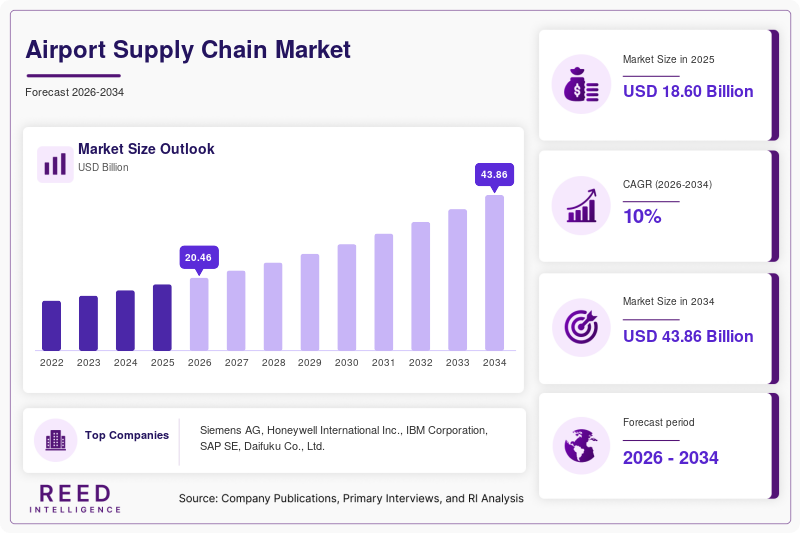
The global Airport Supply Chain Market size was valued at USD 18.6 billion in 2026 and is projected to reach USD 39.8 billion by 2034, expanding at a CAGR of 10.0% during the forecast period from 2026 to 2034. The market continues to witness stable expansion due to increasing airport modernization projects, rising passenger traffic, and growing investments in cargo management infrastructure across international and regional airports. Airport supply chain systems are becoming critical for efficient movement of goods, baggage, aviation components, catering materials, and maintenance equipment within airport ecosystems. The integration of digital tracking systems, automation platforms, and predictive analytics solutions has improved operational visibility and inventory optimization for airport operators and logistics providers.
The increasing growth of global air freight transportation has remained a major factor supporting market expansion. E-commerce growth, cross-border trade activities, and the rapid movement of time-sensitive goods have encouraged airports to upgrade supply chain networks and warehouse management systems. Airports are increasingly deploying automated cargo handling systems, robotics, RFID-enabled inventory tracking, and cloud-based logistics software to reduce delays and improve turnaround efficiency. Governments in emerging economies are also investing in smart airport infrastructure, creating favorable conditions for airport supply chain technology providers.
Key Highlights
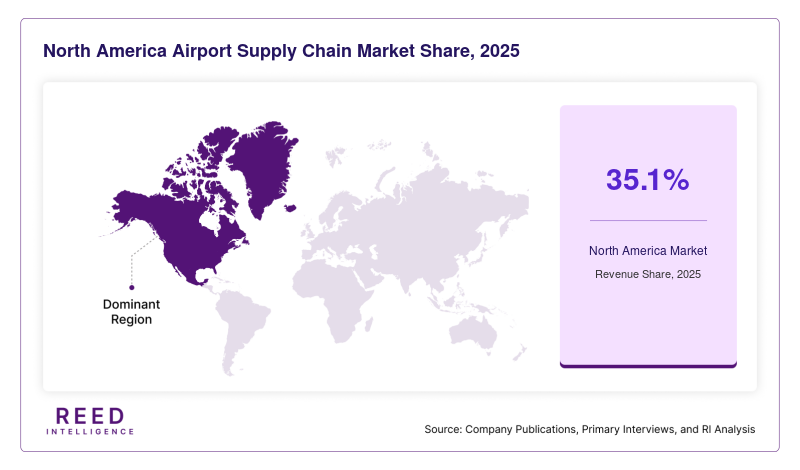
- North America dominated the market with a 35.1% share in 2025.
- Asia Pacific is expected to grow at the fastest CAGR of 11.8% during 2026–2034.
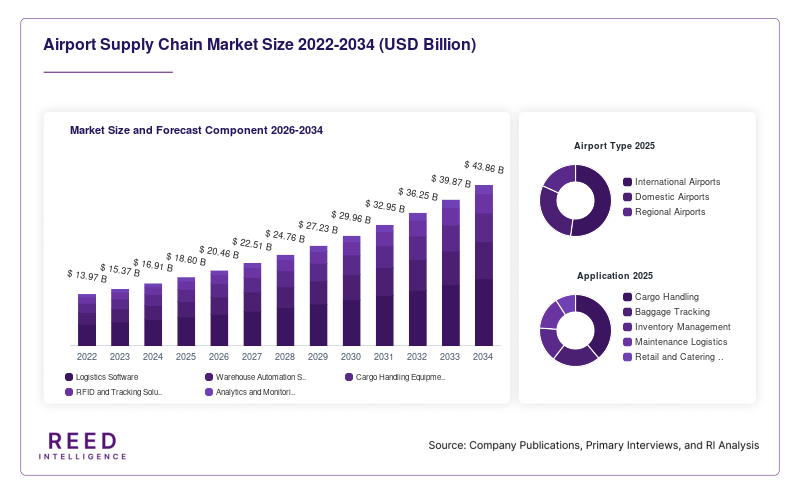
- By component, logistics software accounted for the largest share of 39.4%, while warehouse automation systems are projected to grow at a CAGR of 12.6%.
- By airport type, international airports led with a 57.8% share, whereas regional airports are expected to expand at a CAGR of 11.4%.
- By application, cargo handling dominated with a 42.6% share, while baggage tracking solutions are projected to grow at a CAGR of 12.1%.
- The United States remained the dominant country, with market values of USD 4.2 billion in 2024 and USD 4.6 billion in 2025.
Market Trends
Expansion of AI-Driven Airport Logistics Platforms
Airports across developed and emerging economies are increasingly integrating artificial intelligence into supply chain operations to improve efficiency and reduce operational disruptions. AI-enabled logistics systems are being used for predictive inventory management, cargo route optimization, automated warehouse planning, and baggage flow monitoring. These technologies help airport authorities identify supply bottlenecks, forecast maintenance requirements, and reduce delays in cargo movement. Major international airports are deploying digital twin technology and AI-powered analytics platforms to improve operational visibility across terminals, warehouses, and cargo centers. The growing demand for real-time monitoring and operational transparency has accelerated investments in intelligent airport supply chain infrastructure. Airlines and airport operators are also using machine learning tools to forecast passenger demand and optimize supply procurement activities. The trend is expected to continue as airports prioritize data-driven operational models and cost reduction strategies.
Growing Adoption of Sustainable Airport Supply Chain Practices
Sustainability initiatives are becoming an important trend shaping the airport supply chain market. Airports are implementing eco-friendly logistics strategies to reduce carbon emissions associated with transportation, warehousing, and cargo handling operations. Electric ground support vehicles, automated energy-efficient warehouses, and sustainable packaging solutions are increasingly being adopted by airport authorities and logistics providers. Several airports are also investing in renewable energy-powered cargo terminals and low-emission supply chain infrastructure. Environmental regulations related to aviation emissions and waste management are encouraging operators to modernize traditional logistics processes. Airports are further focusing on reducing fuel consumption through optimized route planning and automated cargo scheduling systems. The growing emphasis on green airport development projects in Europe, North America, and Asia Pacific is expected to create long-term opportunities for sustainable supply chain solution providers operating within airport ecosystems.
Market Drivers
Increasing Global Air Cargo Transportation Volumes
The rapid growth of global air cargo transportation is significantly supporting the expansion of the airport supply chain market. Increasing international trade, e-commerce deliveries, pharmaceutical transportation, and perishable goods shipments are generating strong demand for efficient airport logistics infrastructure. Airports are upgrading cargo terminals and warehouse facilities to accommodate rising freight volumes and improve turnaround times. Advanced supply chain technologies such as RFID tracking systems, automated sorting equipment, and real-time inventory management platforms are being adopted to improve operational performance. The demand for faster and more reliable freight movement has encouraged airport authorities to strengthen supply chain coordination among airlines, freight forwarders, customs agencies, and warehouse operators. Additionally, the increasing movement of high-value goods requiring temperature-controlled logistics solutions has accelerated investments in smart cargo management systems across major international airports.
Rising Investments in Smart Airport Infrastructure
Governments and private airport operators are investing heavily in smart airport infrastructure projects, driving demand for advanced supply chain management solutions. Airport modernization programs in countries such as China, India, the United Arab Emirates, and the United States are creating opportunities for logistics software providers, automation equipment manufacturers, and warehouse technology developers. Smart airport projects focus on improving operational efficiency through digital integration, automation, and connected infrastructure systems. Supply chain technologies are becoming essential for managing airport inventories, maintenance supplies, retail logistics, and passenger baggage movement. The expansion of airport terminals and cargo hubs has also increased the requirement for centralized warehouse management platforms and automated transportation systems. Investments in cloud computing, IoT-enabled sensors, and predictive analytics are helping airports improve operational coordination and reduce supply chain disruptions, contributing to long-term market growth.
Market Restraint
High Infrastructure Modernization and Integration Costs
The high cost associated with airport supply chain modernization remains a major challenge limiting market expansion, particularly in developing economies and smaller regional airports. Implementing advanced logistics software, automated cargo handling systems, robotics, and smart warehouse infrastructure requires substantial capital investment. Many airport operators face financial constraints when upgrading legacy systems and integrating new technologies into existing operational networks. The complexity of integrating supply chain solutions with airport security systems, customs operations, airline platforms, and air traffic management infrastructure further increases deployment expenses. Delays in infrastructure financing and long approval cycles for airport modernization projects can also slow technology adoption. Smaller airports often struggle to justify large-scale investments due to limited cargo traffic and operational budgets. In addition, workforce training requirements and ongoing maintenance expenses create additional operational burdens for airport authorities attempting to transition toward fully automated supply chain ecosystems.
Market Opportunities
Development of Smart Cargo Hubs in Emerging Economies
Emerging economies are increasingly investing in large-scale airport cargo infrastructure projects, creating substantial opportunities for airport supply chain solution providers. Countries across Asia Pacific, the Middle East, and Latin America are focusing on strengthening air freight capabilities to support international trade and manufacturing exports. Governments are developing integrated logistics parks and smart cargo hubs connected with airports, seaports, and railway systems. These projects require advanced warehouse management platforms, automated material handling systems, and real-time cargo monitoring technologies. The expansion of pharmaceutical exports, electronics manufacturing, and e-commerce trade in emerging economies is increasing demand for temperature-controlled logistics and rapid cargo clearance systems. Airport operators are also partnering with private technology providers to deploy AI-enabled cargo tracking and automated inventory management solutions. The rising number of greenfield airport projects in developing regions is expected to generate long-term growth opportunities for market participants.
Increasing Demand for Real-Time Visibility and Supply Chain Analytics
The growing focus on operational transparency and predictive logistics management is creating new opportunities for analytics and cloud-based supply chain providers in the airport industry. Airport operators are increasingly adopting digital platforms capable of providing real-time visibility into cargo movement, baggage handling, warehouse inventory, and supplier performance. Advanced analytics tools help airports identify operational inefficiencies, optimize labor allocation, and reduce shipment delays. The rising complexity of international supply chains and customs compliance requirements has accelerated the demand for centralized data management systems. Cloud-enabled airport supply chain solutions are allowing stakeholders to share operational data across airlines, logistics providers, customs authorities, and ground handling agencies. Predictive analytics and IoT-enabled monitoring systems are also improving risk management and operational resilience. As airports continue to digitalize operational workflows, demand for intelligent analytics-driven supply chain systems is expected to rise steadily.
Segmental Analysis
By Component
Logistics software accounted for the dominant share of approximately 39.4% in 2024 due to the growing need for centralized supply chain visibility and operational coordination across airport ecosystems. Airports increasingly rely on software platforms for inventory management, cargo tracking, supplier coordination, and warehouse operations. Cloud-based logistics management systems help airport operators improve efficiency while reducing operational delays and manual processing errors. The adoption of integrated software platforms has also increased due to the expansion of international cargo transportation and rising passenger traffic. Airlines, airport authorities, and logistics providers are focusing on real-time operational monitoring and predictive analytics to improve supply chain performance. Additionally, the increasing use of digital dashboards and AI-driven operational tools is strengthening the demand for logistics software solutions across international and regional airports.
Warehouse automation systems are projected to register the fastest CAGR of 12.6% during the forecast period due to increasing investments in smart cargo terminals and automated logistics infrastructure. Airports are deploying robotics, automated guided vehicles, conveyor systems, and AI-enabled sorting technologies to improve cargo handling efficiency and reduce labor dependency. The growth of e-commerce shipments and time-sensitive freight transportation is creating demand for high-speed automated warehouse operations. Airport operators are also adopting automation technologies to address workforce shortages and improve operational accuracy. Automated systems help reduce cargo processing times and improve inventory management efficiency across airport logistics centers. The expansion of smart airport projects in Asia Pacific and the Middle East is expected to accelerate demand for advanced warehouse automation solutions over the coming years.
By Airport Type
International airports held the largest market share of nearly 57.8% in 2024 due to their high cargo volumes, extensive passenger traffic, and large-scale logistics operations. These airports require advanced supply chain infrastructure to manage baggage systems, maintenance inventories, retail supply networks, and cargo handling operations efficiently. International airports are increasingly investing in integrated warehouse management platforms, automated freight systems, and digital inventory tracking technologies. The growing movement of pharmaceutical products, perishables, and electronics through international air routes has strengthened the need for temperature-controlled logistics infrastructure. Large airports also benefit from higher financial resources and government support for infrastructure modernization projects. The expansion of global airline networks and international trade agreements continues to support long-term demand for airport supply chain solutions across major international airports worldwide.
Regional airports are anticipated to witness the fastest CAGR of 11.4% during the forecast period due to increasing regional connectivity initiatives and rising domestic air transportation demand. Governments in emerging economies are investing in regional airport development programs to improve transportation accessibility and economic growth. These airports are adopting cost-effective logistics software and automated baggage handling systems to improve operational efficiency. The expansion of low-cost airlines and regional cargo transportation services has increased supply chain management requirements within smaller airports. Additionally, regional airports are focusing on improving operational resilience and reducing cargo handling delays through digital technologies. The growing development of secondary airports in Asia Pacific, Latin America, and Africa is expected to create strong growth opportunities for airport supply chain technology providers.
By Application
Cargo handling represented the largest market share of approximately 42.6% in 2024 due to increasing international freight transportation and growing demand for efficient cargo processing operations. Airports are focusing on improving cargo throughput capacity through automated handling systems, digital documentation platforms, and AI-driven logistics management technologies. The rising transportation of pharmaceuticals, electronics, and e-commerce shipments has increased the need for advanced cargo infrastructure. Cargo handling operations also require integrated warehouse systems, customs coordination platforms, and real-time shipment tracking capabilities. Airports with large cargo volumes are increasingly investing in smart logistics technologies to reduce operational bottlenecks and improve shipment turnaround times. The ongoing expansion of global trade routes and air freight transportation networks continues to support demand for cargo handling solutions across major airport hubs.
Baggage tracking solutions are projected to grow at the fastest CAGR of 12.1% during the forecast period due to increasing passenger expectations for seamless travel experiences and operational transparency. Airports and airlines are adopting RFID-enabled baggage tracking systems and cloud-based monitoring platforms to reduce lost luggage incidents and improve operational efficiency. The increasing growth of international tourism and passenger traffic has accelerated investments in automated baggage handling technologies. Real-time tracking systems allow passengers and airport operators to monitor baggage movement throughout the travel process, improving customer satisfaction and reducing operational disruptions. Airports are also integrating baggage tracking platforms with mobile applications and AI-powered analytics systems to improve route optimization and operational accuracy. The expansion of smart airport infrastructure projects globally is expected to drive strong demand for advanced baggage tracking technologies.
Regional Analysis
North America
North America accounted for approximately 35.1% of the global airport supply chain market share in 2025 and maintained its leading position due to advanced airport infrastructure and high cargo transportation volumes. The region is expected to register a CAGR of 9.2% during the forecast period. Airports across the United States and Canada continue to invest in automation technologies, warehouse modernization, and digital logistics systems to improve operational efficiency. The presence of large international cargo hubs and established aviation supply chain networks further supports regional market expansion.
The United States remained the dominant contributor within North America due to increasing investments in airport modernization and smart logistics infrastructure. Major airports are implementing AI-driven cargo tracking systems and automated baggage handling solutions to improve passenger and freight operations. Growth is also supported by strong e-commerce activity and rising pharmaceutical transportation demand. Government infrastructure funding programs and public-private partnerships are encouraging airport expansion projects, creating favorable conditions for airport supply chain solution providers operating in the country.
Europe
Europe represented nearly 24.3% of the global airport supply chain market share in 2025 and is expected to witness a CAGR of 8.7% between 2026 and 2034. The region has experienced increasing demand for sustainable airport logistics systems and low-emission cargo handling operations. Airports in Germany, France, and the United Kingdom are investing in digital warehouse management solutions and energy-efficient supply chain technologies. Strong regulatory emphasis on environmental sustainability continues to influence airport infrastructure development across the region.
Germany emerged as the leading country within the European airport supply chain market due to its extensive air cargo network and strong industrial export activities. German airports are adopting automated freight handling systems and IoT-enabled monitoring technologies to improve operational productivity. The country’s advanced manufacturing sector and growing pharmaceutical exports are supporting air freight demand. Additionally, increasing investments in green logistics infrastructure and carbon reduction initiatives are encouraging airports to deploy sustainable supply chain management solutions across cargo and passenger operations.
Asia Pacific
Asia Pacific held approximately 22.6% of the global airport supply chain market share in 2025 and is projected to expand at the fastest CAGR of 11.8% during the forecast period. Rapid airport construction projects, rising passenger traffic, and growing international trade activities are supporting regional market growth. Countries across the region are investing heavily in smart airport infrastructure and integrated logistics hubs. Increasing cargo transportation volumes associated with e-commerce and electronics exports are accelerating the deployment of advanced warehouse automation systems.
China dominated the Asia Pacific market due to large-scale airport infrastructure expansion and strong government support for logistics modernization. Chinese airports are increasingly implementing AI-enabled cargo management systems and automated warehouse platforms to improve operational efficiency. The growth of cross-border e-commerce and manufacturing exports has significantly increased air cargo demand within the country. In addition, rising investments in regional airport development and smart transportation corridors continue to create growth opportunities for airport supply chain technology providers operating across China.
Middle East & Africa
The Middle East & Africa region accounted for nearly 10.2% of the global airport supply chain market share in 2025 and is expected to register a CAGR of 10.1% during the forecast period. The region is witnessing increasing investments in aviation infrastructure, cargo terminals, and international transit hubs. Airports in the Gulf countries are focusing on becoming global logistics gateways by integrating advanced cargo management systems and automated warehouse technologies. Rising tourism activities and expanding international trade routes are supporting market expansion.
The United Arab Emirates remained the dominant country in the regional market due to its strategic position in global air transportation networks. Airports in Dubai and Abu Dhabi are investing heavily in digital logistics infrastructure and smart cargo handling systems. The country’s strong focus on international trade, aviation connectivity, and logistics diversification is driving demand for advanced airport supply chain solutions. Government-led economic diversification initiatives and free trade zone developments are further contributing to regional airport infrastructure growth.
Latin America
Latin America captured approximately 7.8% of the global airport supply chain market share in 2025 and is projected to grow at a CAGR of 8.9% during the forecast period. The region is gradually improving airport cargo infrastructure to support expanding trade and tourism activities. Countries such as Brazil and Mexico are modernizing airport terminals and warehouse facilities to improve operational efficiency. Investments in digital logistics systems and automated baggage handling solutions are increasing across major regional airports.
Brazil dominated the Latin American airport supply chain market due to rising air cargo transportation and ongoing airport expansion projects. Brazilian airports are focusing on improving cargo throughput capacity and reducing operational delays through automated logistics platforms. The increasing movement of agricultural exports and pharmaceutical products has generated demand for advanced supply chain technologies. Public infrastructure investments and partnerships with private airport operators are also supporting the deployment of modern cargo handling and warehouse management systems throughout the country.
Competitive Landscape
The airport supply chain market is moderately competitive, with several global technology providers and logistics companies competing through product innovation, strategic partnerships, and airport modernization contracts. Leading companies are investing in automation technologies, AI-enabled logistics platforms, and cloud-based warehouse management systems to strengthen their market positions. Market participants are also expanding regional operations to support growing airport infrastructure projects in Asia Pacific, the Middle East, and Latin America.
Siemens AG remains one of the leading companies in the market due to its strong portfolio of airport automation and digital logistics solutions. The company has focused on integrating smart infrastructure technologies with airport cargo management systems to improve operational efficiency. Honeywell International Inc., IBM Corporation, SAP SE, and Daifuku Co., Ltd. are also actively expanding airport supply chain capabilities through strategic collaborations and software innovations. In 2025, Daifuku Co., Ltd. introduced an upgraded automated baggage and cargo handling platform designed for high-capacity international airports. Companies are increasingly prioritizing AI integration, predictive analytics, and sustainability-focused logistics solutions to address evolving airport operational requirements.
Key Players
- Siemens AG
- Honeywell International Inc.
- IBM Corporation
- SAP SE
- Daifuku Co., Ltd.
- Amadeus IT Group
- Vanderlande Industries
- Beumer Group
- SITA
- Unisys Corporation
- Oracle Corporation
- Wipro Limited
- L3Harris Technologies
- Leonardo S.p.A.
- Toshiba Infrastructure Systems & Solutions Corporation
Recent Developments
- In February 2026, Siemens AG announced the deployment of an AI-enabled airport logistics monitoring platform for large international cargo hubs in Europe.
- In September 2025, Honeywell International Inc. launched an upgraded cloud-based baggage tracking solution designed to improve operational visibility across smart airports.
- In November 2025, Daifuku Co., Ltd. expanded its automated cargo handling system portfolio for high-capacity airports in Asia Pacific and the Middle East.
- In January 2026, SAP SE partnered with multiple airport operators to implement predictive supply chain analytics solutions for cargo and warehouse management operations.
Airport Supply Chain Market Segments
Component
- Logistics Software
- Warehouse Automation Systems
- Cargo Handling Equipment
- RFID and Tracking Solutions
- Analytics and Monitoring Platforms
Airport Type
- International Airports
- Domestic Airports
- Regional Airports
Application
- Cargo Handling
- Baggage Tracking
- Inventory Management
- Maintenance Logistics
- Retail and Catering Supply Management
By Region
- North America
- Europe
- APAC
- Middle East and Africa
- LATAM