Alcohol Dehydrogenase Enzyme Market Size, Share & Demand Report By Type (Yeast-Derived Alcohol Dehydrogenase, Recombinant Alcohol Dehydrogenase, Plant-Derived Alcohol Dehydrogenase), By Application (Pharmaceutical Manufacturing, Research and Biotechnology), By End Use (Pharmaceutical and Biotechnology Companies, Diagnostic Laboratories, Academic and Research Institutes), By Region & Segment Forecasts, 2026–2034
USD 3950
Market Overview
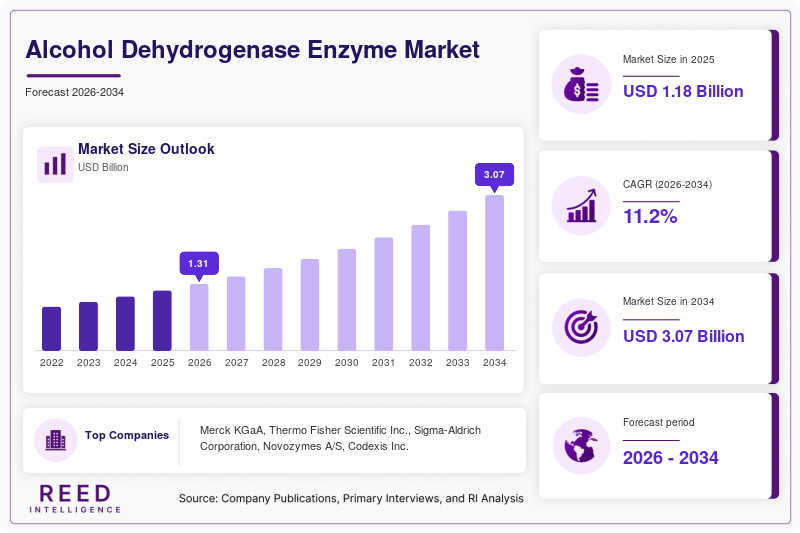
The global Alcohol Dehydrogenase Enzyme Market size was valued at approximately USD 1.18 billion in 2026 and is projected to reach nearly USD 2.76 billion by 2034, expanding at a CAGR of 11.2% during the forecast period from 2026 to 2034. Alcohol dehydrogenase enzymes are widely used in pharmaceutical research, biotechnology applications, clinical diagnostics, food processing, and biofuel production. Rising demand for enzyme-based industrial processes and increasing investments in biocatalysis technologies continue to support long-term market expansion across developed and emerging economies.
The market has experienced steady momentum due to the growing adoption of enzyme engineering in pharmaceutical manufacturing and industrial biotechnology. Alcohol dehydrogenase enzymes play a major role in oxidation-reduction reactions, making them highly valuable for sustainable production methods and environmentally safer chemical processing. Pharmaceutical companies are increasingly utilizing these enzymes in drug synthesis and metabolic research because they improve process efficiency while reducing harmful chemical residues. In addition, advancements in synthetic biology and precision fermentation technologies have increased the commercial value of enzyme-based solutions across multiple industries.
Key Highlights
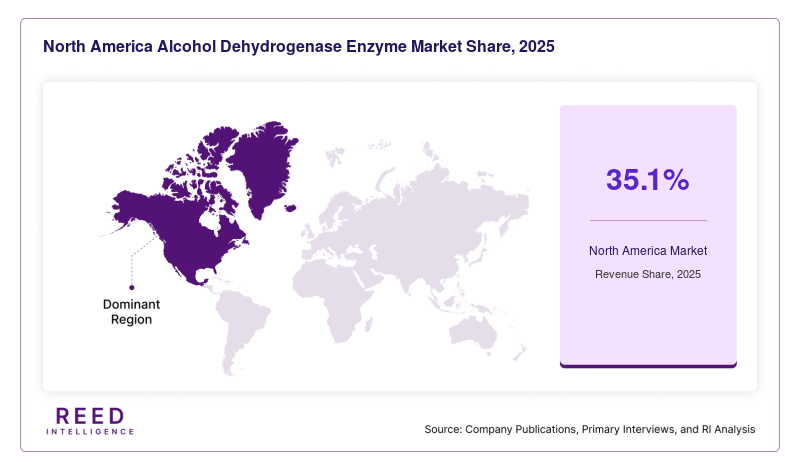
- North America dominated the market with a 35.1% share in 2025.
- while Asia Pacific is expected to grow at the fastest CAGR of 12.3% during 2026–2034.
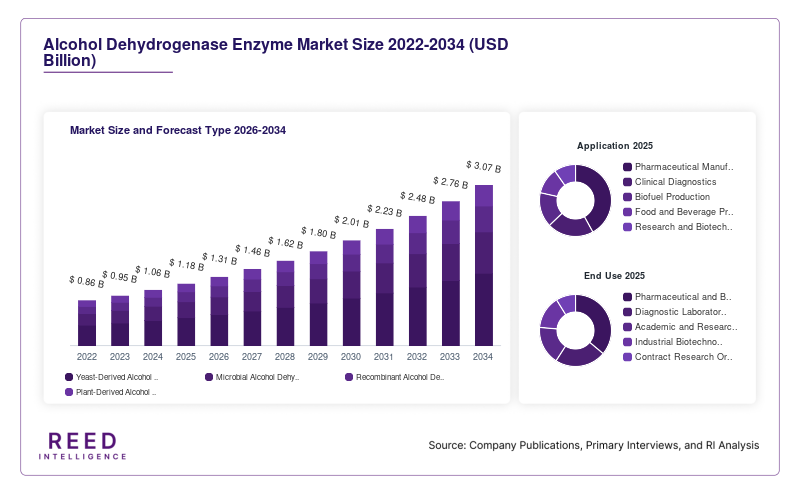
- By type, yeast-derived alcohol dehydrogenase accounted for the largest share of 39.4%.
- while recombinant alcohol dehydrogenase is projected to grow at a CAGR of 13.1%.
- By application, pharmaceutical manufacturing led with a 42.8% share.
- whereas biofuel production is expected to expand at a CAGR of 12.7%.
- The United States remained the dominant country, with market values of USD 312 million in 2024 and USD 346 million in 2025.
Market Trends
Growing Adoption of Recombinant Enzyme Technology
The Alcohol Dehydrogenase Enzyme Market is witnessing significant growth in recombinant enzyme technology due to increasing demand for highly stable and efficient enzymes in pharmaceutical and industrial applications. Recombinant alcohol dehydrogenase enzymes offer better catalytic activity, longer shelf life, and improved process consistency compared to conventional enzymes. Biotechnology companies are investing in advanced genetic engineering methods to produce customized enzymes for targeted industrial processes. The trend is especially visible in pharmaceutical manufacturing, where recombinant enzymes are used for stereoselective synthesis and drug intermediate production. Rising emphasis on sustainable manufacturing and reduced chemical waste is further supporting the transition toward recombinant enzyme platforms across developed economies.
In addition, research institutions are increasingly collaborating with biotechnology companies to develop novel recombinant alcohol dehydrogenase variants with enhanced thermal stability and broader substrate compatibility. The growing use of artificial intelligence in enzyme engineering is also helping manufacturers improve production efficiency and reduce operational costs. This trend is expected to reshape competitive dynamics in the enzyme industry over the next decade.
Expansion of Enzyme Applications in Biofuel Production
The increasing focus on renewable energy and carbon reduction targets has accelerated the use of alcohol dehydrogenase enzymes in biofuel production processes. Bioethanol manufacturers are integrating enzyme-based conversion technologies to improve fermentation efficiency and maximize yield. Alcohol dehydrogenase enzymes support oxidation and reduction reactions essential for biofuel synthesis, making them important components in industrial-scale renewable fuel production. Governments across North America, Europe, and Asia Pacific are promoting cleaner energy technologies through subsidies and environmental regulations, which has positively influenced enzyme demand.
Another important aspect of this trend is the growing use of agricultural waste and biomass feedstock in biofuel production. Alcohol dehydrogenase enzymes enable more efficient conversion of renewable raw materials into commercially viable fuel products. Several biotechnology firms are also developing enzyme blends optimized for second-generation biofuel production. As global industries continue prioritizing sustainability and lower carbon emissions, the use of alcohol dehydrogenase enzymes in renewable energy applications is expected to increase steadily.
Market Drivers
Rising Demand for Biocatalysis in Pharmaceutical Manufacturing
The growing use of biocatalysis in pharmaceutical manufacturing is a major factor driving the Alcohol Dehydrogenase Enzyme Market. Pharmaceutical companies increasingly prefer enzyme-based synthesis methods because they improve reaction selectivity, reduce toxic waste, and enhance manufacturing efficiency. Alcohol dehydrogenase enzymes are commonly used in the synthesis of active pharmaceutical ingredients and chiral intermediates, which are essential for advanced drug development. Rising global healthcare expenditure and increasing investment in precision medicine have strengthened demand for high-performance enzyme solutions.
In addition, regulatory agencies are encouraging environmentally responsible manufacturing practices, prompting pharmaceutical companies to replace conventional chemical catalysts with enzyme-based alternatives. Alcohol dehydrogenase enzymes support cleaner production processes and lower energy consumption, making them attractive for sustainable pharmaceutical operations. Continuous advancements in enzyme stabilization and process optimization are expected to further increase adoption rates during the forecast period.
Increasing Investments in Biotechnology Research and Diagnostics
Growing investments in biotechnology research and clinical diagnostics are supporting expansion of the Alcohol Dehydrogenase Enzyme Market. Research laboratories and academic institutions are increasingly using alcohol dehydrogenase enzymes in metabolic studies, biosensor development, and disease diagnostics. The enzymes are widely applied in alcohol metabolism analysis and liver disease testing, particularly in advanced clinical research settings. Increasing prevalence of chronic liver disorders and rising awareness regarding preventive diagnostics have expanded the demand for enzyme-based testing technologies.
Government funding for molecular biology research and biotechnology innovation has also contributed to higher enzyme consumption globally. Biotechnology startups are developing new diagnostic tools based on enzyme reactions, while established healthcare companies are expanding their research capabilities in precision diagnostics. Growing adoption of automated laboratory systems and high-throughput screening technologies is further increasing the need for stable and reliable enzyme products. These factors collectively continue to strengthen market growth.
Market Restraint
High Production Costs and Enzyme Stability Challenges
One of the primary restraints affecting the Alcohol Dehydrogenase Enzyme Market is the high production cost associated with enzyme purification, stabilization, and large-scale manufacturing. Producing high-quality alcohol dehydrogenase enzymes requires advanced fermentation technologies, controlled environmental conditions, and extensive downstream processing. These requirements significantly increase operational expenses for manufacturers, especially smaller biotechnology companies with limited infrastructure capabilities.
Another major challenge involves enzyme stability under industrial processing conditions. Alcohol dehydrogenase enzymes can lose catalytic activity when exposed to high temperatures, varying pH levels, or prolonged storage conditions. This limitation affects product efficiency and increases replacement costs for end users in pharmaceutical manufacturing and biofuel production. Companies must invest heavily in protein engineering and stabilization technologies to improve enzyme durability, which further increases research and development expenditure.
Market Opportunities
Emerging Demand for Sustainable Industrial Processing
The increasing focus on sustainable industrial processing presents strong growth opportunities for the Alcohol Dehydrogenase Enzyme Market. Manufacturers across chemical, pharmaceutical, and food processing industries are shifting toward environmentally safer production methods that reduce energy consumption and hazardous waste generation. Alcohol dehydrogenase enzymes support green chemistry principles by enabling efficient biochemical reactions under mild operating conditions. This capability makes them highly attractive for companies seeking compliance with evolving environmental regulations.
Industrial biotechnology companies are actively investing in enzyme-based manufacturing platforms to reduce dependency on traditional chemical catalysts. The demand for low-carbon industrial solutions is particularly strong in Europe and North America, where sustainability targets continue influencing procurement decisions. In addition, multinational corporations are integrating enzyme technologies into long-term environmental strategies to improve operational efficiency and strengthen brand positioning. These developments are expected to create favorable opportunities for enzyme suppliers over the coming years.
Expansion of Precision Diagnostics and Biosensor Technologies
The rapid development of precision diagnostics and biosensor technologies is creating new commercial opportunities for alcohol dehydrogenase enzyme manufacturers. Alcohol dehydrogenase enzymes are increasingly incorporated into biosensors used for alcohol detection, metabolic monitoring, and clinical diagnostics. Rising demand for portable diagnostic devices and point-of-care testing systems is encouraging healthcare companies to develop highly sensitive enzyme-based technologies.
Technological advancements in nanotechnology and microfluidics are also improving the performance of enzyme-based biosensors. Healthcare providers are adopting advanced diagnostic platforms that deliver faster and more accurate results for metabolic disorders and liver disease monitoring. Emerging economies are witnessing increased healthcare infrastructure investments, which further supports the adoption of modern diagnostic technologies. As demand for rapid testing and personalized healthcare solutions continues to increase, enzyme manufacturers are expected to benefit from expanding application areas.
Segmental Analysis
By Type
Yeast-derived alcohol dehydrogenase represented the dominant subsegment within the Alcohol Dehydrogenase Enzyme Market and accounted for approximately 39.4% of the global share in 2024. The segment maintains a strong market position because yeast-derived enzymes offer high catalytic efficiency, reliable substrate specificity, and cost-effective production capabilities. Pharmaceutical manufacturers and research laboratories widely utilize these enzymes for oxidation-reduction reactions and metabolic studies. Their extensive commercial availability and compatibility with multiple industrial applications continue supporting widespread adoption.
The segment also benefits from the long-established use of yeast fermentation technologies in industrial biotechnology. Manufacturers prefer yeast-derived alcohol dehydrogenase enzymes because they are relatively easier to scale for large-volume production compared to some microbial alternatives. Increasing demand from academic research institutions and clinical diagnostic laboratories has further strengthened consumption patterns. In addition, enzyme suppliers continue introducing improved formulations with enhanced stability and purification levels to meet evolving customer requirements.
By Application
Pharmaceutical manufacturing dominated the application segment of the Alcohol Dehydrogenase Enzyme Market and accounted for nearly 42.8% of the global share in 2024. The segment benefits from extensive use of alcohol dehydrogenase enzymes in active pharmaceutical ingredient synthesis, metabolic pathway analysis, and stereoselective chemical reactions. Pharmaceutical companies increasingly utilize enzyme-based production methods because they improve process accuracy while reducing toxic chemical waste. Rising global demand for advanced therapeutics and specialty drugs has strengthened enzyme consumption within the pharmaceutical industry.
Another factor supporting segment growth is the increasing regulatory emphasis on sustainable and environmentally responsible drug manufacturing practices. Alcohol dehydrogenase enzymes help pharmaceutical companies achieve cleaner production standards and lower operational energy requirements. The growing use of biocatalysis in precision medicine and advanced therapeutic development further supports long-term market expansion. In addition, ongoing investments in biotechnology research infrastructure are increasing demand for high-purity enzyme formulations across global pharmaceutical markets.
By End Use
Pharmaceutical and biotechnology companies accounted for the largest share of the Alcohol Dehydrogenase Enzyme Market in 2024, representing approximately 46.3% of total revenue. These organizations rely heavily on alcohol dehydrogenase enzymes for drug development, enzyme engineering, molecular biology research, and industrial biocatalysis applications. The growing complexity of pharmaceutical manufacturing processes has increased the need for highly efficient and selective enzyme systems. Large biotechnology firms are also investing in recombinant enzyme technologies to improve production scalability and operational efficiency.
The dominance of this end-use segment is supported by rising healthcare expenditure and increasing research investments in precision therapeutics and advanced diagnostics. Pharmaceutical companies continue expanding enzyme-based manufacturing capabilities to reduce environmental impact and improve regulatory compliance. In addition, the expansion of biotechnology startups and contract research organizations has created additional demand for specialized enzyme products used in research and industrial applications.
Regional Analysis
North America
North America accounted for approximately 35.1% of the global Alcohol Dehydrogenase Enzyme Market in 2025 and continues to maintain a leading position due to advanced biotechnology infrastructure and strong pharmaceutical research activities. The region is projected to expand at a CAGR of 10.4% during the forecast period. High investments in enzyme engineering, molecular diagnostics, and industrial biotechnology have supported consistent product demand across the United States and Canada. In addition, increasing adoption of sustainable manufacturing technologies among pharmaceutical companies has strengthened the regional market outlook.
The United States remains the dominant country in North America because of its established pharmaceutical sector and extensive biotechnology research ecosystem. A major growth factor for the country is the rising integration of enzyme-based biocatalysis in drug development and specialty chemical manufacturing. Several domestic biotechnology firms are focusing on recombinant enzyme production and advanced protein engineering technologies, supporting innovation and commercial expansion within the regional market.
Europe
Europe represented nearly 27.6% of the global Alcohol Dehydrogenase Enzyme Market in 2025 and is expected to grow at a CAGR of 10.8% through 2034. The regional market benefits from strong regulatory support for environmentally sustainable industrial processing and increased adoption of green chemistry solutions. Countries across Western Europe are encouraging enzyme-based manufacturing processes to reduce industrial emissions and improve operational efficiency. Growing investments in renewable energy and biofuel production also continue supporting enzyme demand.
Germany remains the leading country within the European market due to its advanced industrial biotechnology capabilities and strong pharmaceutical manufacturing sector. One unique growth factor in Germany is the rapid expansion of bio-based chemical production facilities using enzyme-driven synthesis methods. Research collaborations between academic institutions and industrial manufacturers have accelerated innovation in recombinant alcohol dehydrogenase enzyme development, further enhancing the country’s competitive position.
Asia Pacific
Asia Pacific is projected to register the fastest CAGR of 12.3% during the forecast period, supported by expanding biotechnology industries and increasing healthcare investments. The region accounted for around 24.8% of the global Alcohol Dehydrogenase Enzyme Market in 2025. Rapid industrialization, rising pharmaceutical manufacturing activities, and increasing adoption of enzyme technologies in food processing and biofuel production have strengthened regional demand. Governments in several Asian countries are actively promoting biotechnology innovation through research funding and favorable industrial policies.
China dominates the Asia Pacific market due to its large-scale pharmaceutical manufacturing base and growing investments in biotechnology infrastructure. A unique growth factor for the country is the rapid expansion of domestic enzyme production capabilities aimed at reducing dependency on imported biotechnology products. Chinese companies are increasingly focusing on large-scale recombinant enzyme manufacturing and industrial fermentation technologies, which continue supporting market growth across the region.
Middle East & Africa
The Middle East & Africa region accounted for approximately 6.2% of the global Alcohol Dehydrogenase Enzyme Market in 2025 and is expected to expand at a CAGR of 8.9% over the forecast period. Although the regional market remains comparatively smaller, increasing investments in healthcare infrastructure and industrial biotechnology are supporting gradual growth. Several countries are exploring enzyme-based solutions for food processing, biofuel development, and clinical diagnostics to diversify economic activities beyond traditional industries.
Saudi Arabia remains the dominant country in the region due to its increasing focus on biotechnology research and industrial diversification initiatives. One important growth factor is the government’s investment in bioeconomy projects and sustainable industrial technologies under long-term economic transformation programs. Expansion of healthcare diagnostics facilities and growing collaboration with international biotechnology companies are further supporting the adoption of alcohol dehydrogenase enzymes across the country.
Latin America
Latin America held nearly 6.3% of the global Alcohol Dehydrogenase Enzyme Market in 2025 and is projected to grow at a CAGR of 9.5% during the forecast period. Rising demand for biofuel production and increasing biotechnology investments are supporting regional market expansion. Countries across Latin America are adopting enzyme-based industrial processes to improve agricultural productivity and renewable energy output. The growing pharmaceutical manufacturing sector is also contributing to higher demand for enzyme-based synthesis technologies.
Brazil remains the leading market within Latin America because of its strong bioethanol industry and expanding biotechnology research activities. A unique growth factor for Brazil is the widespread use of sugarcane biomass for renewable fuel production, which has increased demand for advanced fermentation enzymes. Domestic research institutes and industrial companies are collaborating to develop cost-efficient enzyme technologies suitable for large-scale agricultural and industrial applications.
Competitive Landscape
The Alcohol Dehydrogenase Enzyme Market remains moderately consolidated, with several biotechnology and life sciences companies competing through product innovation, recombinant enzyme development, and strategic collaborations. Leading market participants are investing in enzyme engineering technologies, advanced fermentation systems, and high-purity enzyme production to strengthen their competitive positions. Companies are also expanding manufacturing capacities and regional distribution networks to meet increasing global demand from pharmaceutical, diagnostic, and biofuel industries.
Merck KGaA continues to maintain a leading position in the market due to its extensive enzyme portfolio, global biotechnology presence, and strong research capabilities. The company recently expanded its industrial enzyme development program to support sustainable pharmaceutical manufacturing and advanced biocatalysis applications. Other major players are focusing on partnerships with academic institutions and biotechnology startups to accelerate innovation and commercialization of recombinant alcohol dehydrogenase enzymes.
Thermo Fisher Scientific, Sigma-Aldrich, Codexis, and Novozymes are also actively investing in research and development initiatives aimed at improving enzyme stability and catalytic efficiency. Several companies are launching specialized enzyme formulations for diagnostic and renewable energy applications. Competitive intensity is expected to increase further as emerging biotechnology firms enter the market with customized enzyme solutions designed for high-performance industrial applications.
Key Players
- Merck KGaA
- Thermo Fisher Scientific Inc.
- Sigma-Aldrich Corporation
- Novozymes A/S
- Codexis Inc.
- Amano Enzyme Inc.
- Roche Diagnostics
- Bio-Rad Laboratories Inc.
- Advanced Enzyme Technologies
- Sekisui Diagnostics
- Creative Enzymes
- AB Enzymes GmbH
- GenScript Biotech Corporation
Recent Developments
- Merck KGaA expanded its recombinant enzyme manufacturing facility in 2025 to increase production capacity for pharmaceutical biocatalysis applications.
- Novozymes A/S introduced a new high-stability alcohol dehydrogenase enzyme platform designed for industrial biofuel production and sustainable fermentation processes in 2024.
- Codexis Inc. partnered with a pharmaceutical research organization in 2025 to develop customized alcohol dehydrogenase enzymes for stereoselective drug synthesis.
- Thermo Fisher Scientific launched advanced enzyme assay kits in 2024 targeting diagnostic laboratories and metabolic research institutions.
Alcohol Dehydrogenase Enzyme Market Segments
Type
- Yeast-Derived Alcohol Dehydrogenase
- Microbial Alcohol Dehydrogenase
- Recombinant Alcohol Dehydrogenase
- Plant-Derived Alcohol Dehydrogenase
Application
- Pharmaceutical Manufacturing
- Clinical Diagnostics
- Biofuel Production
- Food and Beverage Processing
- Research and Biotechnology
End Use
- Pharmaceutical and Biotechnology Companies
- Diagnostic Laboratories
- Academic and Research Institutes
- Industrial Biotechnology Companies
- Contract Research Organizations
By Region
- North America
- Europe
- APAC
- Middle East and Africa
- LATAM