Alcohol To Jet ATJ Fuel Market Size, Share & Demand Report By Feedstock Type (Ethanol, Isobutanol, Other Alcohol Feedstocks), By Technology (Catalytic Conversion, Gasification and Synthesis, Integrated Biorefinery Technology), By Application (Commercial Aviation, Military Aviation, Cargo Aviation), By Region & Segment Forecasts, 2025–2034
USD 3950
Market Overview
The global Alcohol To Jet ATJ Fuel Market size was estimated at USD 1.42 billion in 2025 and is projected to reach USD 6.85 billion by 2033, expanding at a CAGR of 19.4% from 2025 to 2034. Alcohol-to-jet (ATJ) fuel is a type of sustainable aviation fuel (SAF) produced by converting alcohols such as ethanol and isobutanol into jet fuel through catalytic processing. The technology offers a pathway to reduce lifecycle greenhouse gas emissions in aviation while utilizing existing biomass and industrial alcohol supply chains.
One global factor supporting the growth of the Alcohol To Jet ATJ Fuel Market has been the expansion of sustainable aviation fuel mandates and voluntary airline commitments to decarbonization. Airlines, fuel producers, and governments are investing in alternative fuel technologies to meet long-term carbon neutrality targets. ATJ fuel production aligns with these objectives because it can be integrated with existing refining infrastructure and feedstock networks. Several commercial demonstration plants and partnerships between technology providers and aviation companies have accelerated industry adoption.
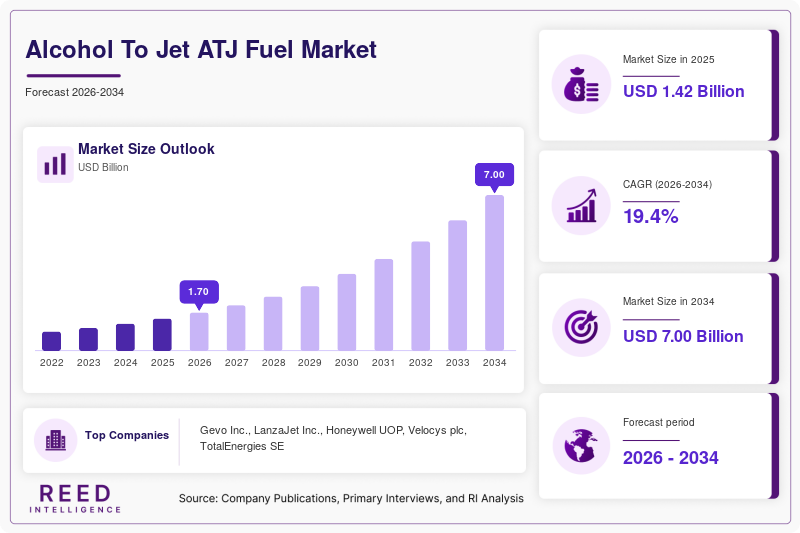
Key Highlights
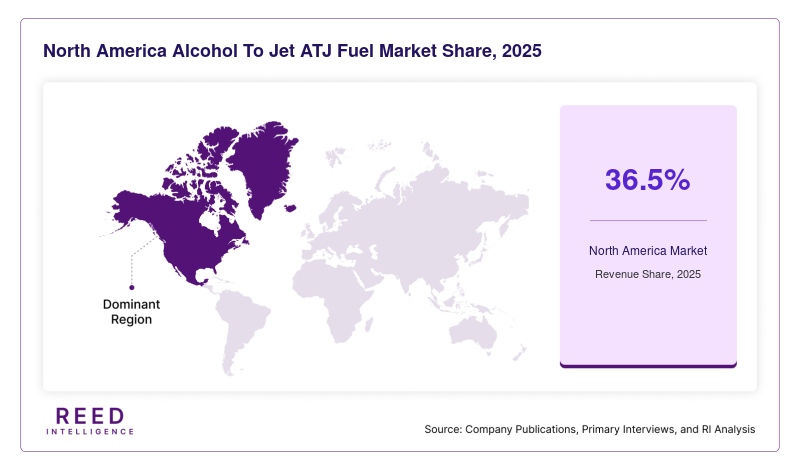
- Dominant Region: North America held 36.5% share in 2025, while Asia Pacific will register the fastest CAGR of 21.1% through 2034.
- Leading Segment: Ethanol-based ATJ fuel accounted for 52.8% share in 2025, while isobutanol-based ATJ will grow at a CAGR of 22.3%.
- Dominant Application: Commercial aviation held 64.2% share in 2025, while cargo aviation will expand at a CAGR of 20.6%.
- Dominant Country: The United States Alcohol To Jet ATJ Fuel Market was valued at USD 420 million in 2025 and is estimated to reach USD 498 million in 2026.
Market Trends
Expansion of Sustainable Aviation Fuel Production Capacity
A significant trend shaping the Alcohol To Jet ATJ Fuel Market is the expansion of commercial-scale sustainable aviation fuel production facilities. Fuel producers and technology developers are investing in ATJ conversion plants capable of producing jet fuel from industrial alcohol feedstocks. This expansion supports airlines seeking long-term supply agreements for SAF to meet emissions targets. The growing number of ATJ production facilities has improved supply chain reliability and strengthened the role of alcohol-based pathways within the sustainable aviation fuel ecosystem.
Strategic Partnerships Across the Aviation Value Chain
Another notable trend in the Alcohol To Jet ATJ Fuel Market is the increase in partnerships between airlines, biofuel producers, and technology providers. Collaborative agreements focus on feedstock sourcing, refining technology licensing, and long-term offtake contracts. These partnerships help reduce investment risk while accelerating commercialization. The integration of ethanol producers, agricultural supply chains, and aviation fuel distributors is gradually building a scalable ATJ ecosystem capable of supporting the aviation industry’s sustainability goals.
Market Drivers
Rising Demand for Low-Carbon Aviation Fuels
Growing pressure to reduce aviation emissions has increased demand for low-carbon aviation fuels, creating a favorable environment for the Alcohol To Jet ATJ Fuel Market. Governments and international aviation bodies are promoting sustainable aviation fuel adoption through emission reduction targets and blending mandates. ATJ fuels offer lifecycle emission reductions compared with conventional jet fuel, making them a viable solution for airlines aiming to meet sustainability commitments.
Availability of Alcohol Feedstock Supply Chains
Another important driver is the availability of large-scale ethanol and alcohol production infrastructure. Countries with established bioethanol industries can leverage existing feedstock supply chains for ATJ fuel production. This reduces capital investment requirements and accelerates commercialization timelines. The integration of agricultural feedstocks, fermentation technology, and refining processes has created a foundation for scalable alcohol-to-jet fuel production.
Market Restraint
High Production Costs and Technology Complexity
A major restraint affecting the Alcohol To Jet ATJ Fuel Market is the high cost of production and complex conversion processes. ATJ fuel production requires multiple chemical processing stages including dehydration, oligomerization, and hydrogenation. These processes demand specialized catalysts and capital-intensive infrastructure. Additionally, the price of feedstock alcohol and energy inputs influences overall production economics. As a result, ATJ fuel can remain more expensive than conventional jet fuel, limiting large-scale adoption in cost-sensitive aviation markets.
Market Opportunities
Development of Advanced Catalytic Conversion Technologies
Technological advancements in catalytic conversion and refining processes present a major opportunity for the Alcohol To Jet ATJ Fuel Market. Research institutions and industrial technology providers are developing catalysts that improve conversion efficiency and reduce energy consumption. Enhanced processing technologies may lower production costs and increase yield, making ATJ fuel more competitive with other sustainable aviation fuel pathways.
Expansion of Bio-Refinery Infrastructure
The expansion of integrated bio-refinery facilities offers another growth opportunity for the Alcohol To Jet ATJ Fuel Market. Bio-refineries capable of producing ethanol, chemicals, and aviation fuel within a single facility can optimize resource utilization. This integrated model allows producers to diversify revenue streams and improve operational efficiency. As more bio-refineries adopt ATJ conversion modules, global production capacity for alcohol-based aviation fuels is expected to increase.
Segmental Analysis
By Feedstock Type
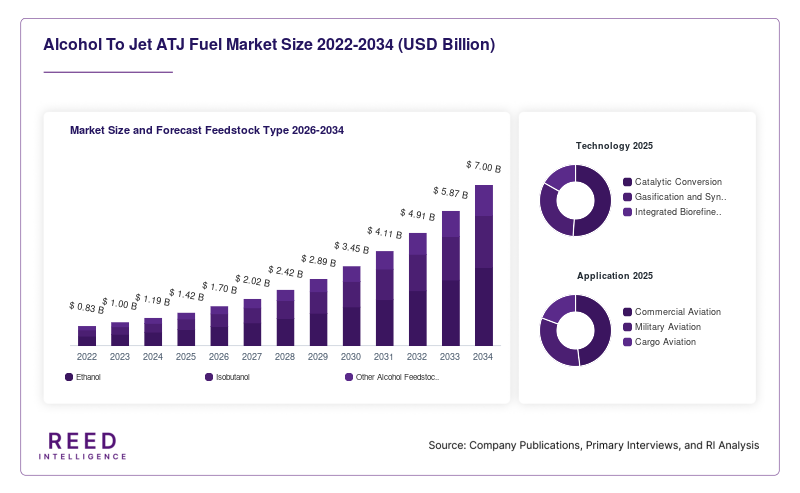
Ethanol-based ATJ fuel represented the largest share of 52.8% in the Alcohol To Jet ATJ Fuel Market in 2025. The dominance of this subsegment was attributed to the widespread availability of ethanol production infrastructure across major biofuel-producing regions. Ethanol can be produced from corn, sugarcane, and other biomass sources, enabling flexible supply chains for ATJ conversion. Established fermentation and distillation processes have also supported the integration of ethanol into ATJ fuel production pathways.
The isobutanol-based ATJ fuel segment will grow at the fastest CAGR of 22.3% through 2034. This growth will occur due to the higher energy density and improved conversion efficiency associated with isobutanol feedstocks. Several fuel technology developers are focusing on advanced fermentation processes to produce isobutanol from biomass. As these production technologies scale commercially, isobutanol-based ATJ fuel will gain greater adoption within sustainable aviation fuel supply chains.
By Technology
The catalytic conversion process accounted for 61.5% of the Alcohol To Jet ATJ Fuel Market share in 2025. This technology pathway has been widely used in ATJ production because it efficiently converts alcohol molecules into hydrocarbon chains suitable for aviation fuel. Catalytic processes are compatible with existing refinery infrastructure, which has allowed producers to integrate ATJ fuel manufacturing into traditional fuel production facilities.
The integrated biorefinery technology segment will grow at a CAGR of 20.8% during the forecast period. Integrated facilities combine feedstock processing, fermentation, and fuel conversion operations within a single plant. This approach improves operational efficiency and reduces transportation costs associated with feedstock supply chains. As bio-refinery investments increase globally, the adoption of integrated ATJ production facilities will expand.
By Application
Commercial aviation represented the largest application segment with 64.2% share in 2025. Airlines have increasingly incorporated sustainable aviation fuels into their fuel procurement strategies to reduce carbon emissions. Commercial aviation fleets operate on a large scale, creating strong demand for alternative fuel sources capable of reducing environmental impact.
The cargo aviation segment will grow at a CAGR of 20.6% through 2034. Air cargo operators will increasingly adopt sustainable aviation fuels to align with environmental regulations and corporate sustainability strategies. The expansion of global e-commerce logistics networks will also increase cargo flight activity, creating demand for lower-emission aviation fuels such as ATJ fuel.
Regional Analysis
North America
North America accounted for 36.5% of the global Alcohol To Jet ATJ Fuel Market share in 2025. The regional market had developed rapidly due to early adoption of sustainable aviation fuel technologies and strong investment in alternative fuel infrastructure. The market in North America will expand at a CAGR of 18.2% from 2025 to 2034.
The United States dominated the regional Alcohol To Jet ATJ Fuel Market. The country has a large bioethanol production industry that supports feedstock availability for ATJ conversion. In addition, the presence of advanced fuel technology companies and established aviation fuel distribution networks has supported commercial-scale ATJ development. Federal initiatives encouraging sustainable aviation fuel production have also strengthened the national market outlook.
Europe
Europe held approximately 27.4% of the global Alcohol To Jet ATJ Fuel Market share in 2025. The regional market has expanded steadily as European aviation companies increasingly adopt sustainable fuel strategies. Europe will grow at a CAGR of 18.9% during the forecast period.
The United Kingdom represented the dominant national market in the region. The country has supported aviation decarbonization through research funding, pilot production plants, and collaborations between universities and energy companies. The presence of advanced chemical engineering expertise and a strong aviation sector has enabled the development of ATJ fuel technology within the national market.
Asia Pacific
Asia Pacific represented 21.3% of the Alcohol To Jet ATJ Fuel Market share in 2025. The regional market has been expanding as aviation demand rises across emerging economies. Asia Pacific will grow at the fastest CAGR of 21.1% through 2034.
China led the regional market due to its expanding aviation industry and significant investment in alternative energy technologies. The country has prioritized renewable fuel research and has established pilot facilities for advanced biofuel production. Increasing domestic air travel and industrial-scale biofuel initiatives have supported the growth of ATJ fuel research and commercialization within the country.
Middle East & Africa
The Middle East & Africa accounted for 8.1% of the Alcohol To Jet ATJ Fuel Market share in 2025. The market in this region has remained relatively smaller but has gradually expanded as aviation hubs explore sustainable fuel options. The regional market will grow at a CAGR of 17.6% during the forecast period.
The United Arab Emirates represented the leading country in the regional market. The country has developed initiatives to diversify its energy portfolio and support sustainable aviation solutions. Research partnerships between aviation companies and renewable energy developers have contributed to the development of pilot ATJ fuel production projects within the national market.
Latin America
Latin America captured 6.7% of the Alcohol To Jet ATJ Fuel Market share in 2025. The region has benefited from a strong agricultural sector capable of producing biofuel feedstocks. The Latin American market will grow at a CAGR of 18.4% through 2034.
Brazil dominated the regional market due to its large ethanol production industry. The country has developed extensive sugarcane ethanol infrastructure, which provides a reliable feedstock base for ATJ fuel production. Research initiatives focusing on advanced biofuel conversion have also supported market development.
Competitive Landscape
The Alcohol To Jet ATJ Fuel Market features a combination of biofuel technology developers, energy companies, and aviation fuel producers focusing on sustainable fuel innovation. Market participants have invested in pilot plants, technology licensing agreements, and partnerships with airlines to expand ATJ fuel production capacity.
Gevo Inc. has emerged as a leading company in the Alcohol To Jet ATJ Fuel Market due to its proprietary isobutanol-to-jet conversion technology. The company has focused on scaling commercial production and forming long-term supply agreements with aviation companies. A recent development includes the expansion of its renewable hydrocarbon production facilities aimed at increasing ATJ fuel output for commercial aviation.
Other companies in the market are focusing on research collaborations, pilot projects, and refining technology advancements to strengthen their position within the sustainable aviation fuel sector.
Key Players in the Alcohol To Jet ATJ Fuel Market
- Gevo Inc.
- LanzaJet Inc.
- Honeywell UOP
- Velocys plc
- TotalEnergies SE
- Shell plc
- SkyNRG
- Fulcrum BioEnergy
- Aemetis Inc.
- Sasol Limited
- Neste Corporation
- BP plc
- Axens Group
- Alder Fuels
- Lanzatech Global Inc.
Recent Developments
- Several fuel technology companies have expanded pilot ATJ fuel production plants to validate commercial-scale conversion processes.
- Aviation companies have entered long-term sustainable aviation fuel offtake agreements with ATJ fuel producers.
- Biofuel technology developers have introduced advanced catalysts to improve alcohol-to-jet conversion efficiency.
- Integrated bio-refinery projects have been announced to combine ethanol production with aviation fuel refining operations.
- Industry participants have increased collaborative research programs focused on next-generation sustainable aviation fuel technologies.
Alcohol To Jet ATJ Fuel Market Segments
Feedstock Type
- Ethanol
- Isobutanol
- Other Alcohol Feedstocks
Technology
- Catalytic Conversion
- Gasification and Synthesis
- Integrated Biorefinery Technology
Application
- Commercial Aviation
- Military Aviation
- Cargo Aviation
By Region
- North America
- Europe
- APAC
- Middle East and Africa
- LATAM