Alcoholic Tea Market Size, Share, Growth Demand Report By Product Type (Hard Iced Tea, Kombucha-Based Alcoholic Tea, Tea-Infused Spirits), By Alcohol Content (Low Alcohol, Medium Alcohol, High Alcohol), By Distribution Channel (On-Trade, Off-Trade, Online Retail), By Region & Segment Forecasts, 2026–2034
USD 3950
Market Overview
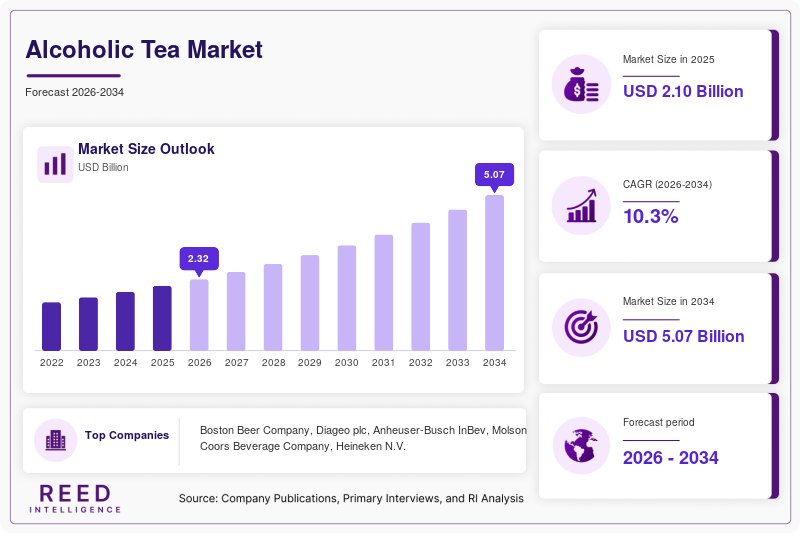
The Alcoholic Tea Market size was valued at approximately USD 2.1 billion in 2026 and is projected to reach USD 4.6 billion by 2034, expanding at a compound annual growth rate (CAGR) of 10.3% during the forecast period (2026–2034). The market is witnessing consistent expansion due to the rising consumer preference for low-alcohol and functional beverages that combine traditional flavors with modern consumption patterns. Alcoholic tea products, including hard iced teas, tea-infused spirits, and ready-to-drink (RTD) alcoholic tea beverages, are gaining traction among urban consumers seeking variety and wellness-oriented alternatives.
One global factor supporting market growth is the increasing demand for hybrid beverages that blend health-conscious ingredients with alcohol. Tea, known for its antioxidant properties and cultural significance, offers a familiar and perceived healthier base compared to traditional alcoholic drinks. This positioning has encouraged both established beverage companies and startups to innovate and expand their product portfolios, particularly in premium and flavored segments.
Key Highlights
- North America dominated the market with a 36.8% share in 2025.
- Asia Pacific is expected to grow at the fastest CAGR of 11.9% during 2026–2034.
- By product type, hard iced tea accounted for the largest share of 42.6%, while kombucha-based alcoholic tea is projected to grow at a CAGR of 12.7%.
- By distribution channel, off-trade sales led with a 58.3% share, whereas online retail is expected to expand at a CAGR of 13.2%.
- The United States remained the dominant country, with market values of USD 640 million in 2024 and USD 705 million in 2025.
Market Trends
Premiumization and Craft Beverage Innovation
The Alcoholic Tea Market is increasingly shaped by the premiumization trend, where consumers are willing to pay higher prices for unique, high-quality beverages. Craft alcoholic tea brands are experimenting with exotic tea varieties such as matcha, oolong, and herbal infusions combined with premium spirits or natural fermentation processes. This trend is particularly visible in urban markets where consumers seek artisanal experiences and differentiated flavor profiles. Small-batch production, organic ingredients, and transparent sourcing are becoming key selling points, helping brands establish a niche identity.
Additionally, collaborations between tea producers and craft breweries or distilleries are fueling innovation. These partnerships enable the creation of distinctive blends that appeal to both tea enthusiasts and alcohol consumers. Packaging innovation, including eco-friendly cans and visually appealing labels, further supports brand positioning. The premium segment is expected to expand steadily as consumers prioritize quality over quantity and shift toward experiential consumption patterns.
Expansion of Ready-to-Drink (RTD) Alcoholic Tea Products
The rapid growth of ready-to-drink alcoholic beverages is a major trend influencing the Alcoholic Tea Market. RTD alcoholic teas offer convenience, portability, and consistent taste, making them popular among younger consumers and working professionals. These products are widely available in supermarkets, convenience stores, and online platforms, contributing to their accessibility and market penetration. The RTD format also aligns with changing lifestyles that favor quick and easy consumption without preparation.
Flavor innovation plays a central role in this trend, with manufacturers introducing variants such as lemon, peach, raspberry, and tropical blends. Low-calorie and low-sugar formulations are also gaining attention as consumers become more health-conscious. The integration of functional ingredients, such as adaptogens and botanicals, further enhances the appeal of RTD alcoholic teas. This segment is expected to maintain strong growth momentum due to its alignment with modern consumption habits and evolving retail dynamics.
Market Drivers
Rising Demand for Health-Oriented Alcohol Alternatives
A significant driver of the Alcoholic Tea Market is the growing demand for beverages perceived as healthier alternatives to traditional alcoholic drinks. Consumers are increasingly aware of the health implications associated with high-alcohol and high-calorie beverages, leading to a shift toward lighter options. Alcoholic tea products, particularly those with lower alcohol content and natural ingredients, cater to this demand by offering a balanced combination of taste and perceived wellness benefits.
Tea’s association with antioxidants and natural ingredients enhances its appeal, especially among millennials and health-conscious individuals. Brands are leveraging this perception by emphasizing clean-label ingredients, reduced sugar content, and functional benefits. This trend is also supported by the broader movement toward mindful drinking, where consumers prioritize moderation and quality. As a result, alcoholic tea products are positioned as a suitable choice for social occasions without compromising on health considerations.
Growing Popularity of Innovative Flavor Profiles
The increasing consumer interest in diverse and innovative flavor profiles is another key driver of the Alcoholic Tea Market. Traditional alcoholic beverages often offer limited flavor variation, whereas alcoholic teas provide a wide range of taste experiences by combining different tea bases with fruits, herbs, and spices. This versatility enables manufacturers to cater to varied consumer preferences and regional tastes.
Flavor experimentation is particularly appealing to younger demographics who seek novelty and personalization in their beverage choices. Seasonal and limited-edition releases further enhance consumer engagement and drive repeat purchases. The ability to introduce new flavors quickly and adapt to changing trends gives alcoholic tea brands a competitive advantage. This continuous innovation cycle supports market growth by attracting new consumers and retaining existing ones.
Market Restraint
Regulatory Challenges and Alcohol Content Restrictions
One of the primary restraints affecting the Alcoholic Tea Market is the complex regulatory landscape governing alcoholic beverages. Different countries and regions have varying rules regarding alcohol content, labeling, distribution, and taxation. These regulations can create barriers for manufacturers, particularly when expanding into new markets. Compliance with multiple regulatory frameworks increases operational costs and may limit product innovation.
For instance, certain markets impose strict limits on alcohol content in RTD beverages, which can restrict the formulation of alcoholic tea products. Additionally, marketing and advertising restrictions on alcoholic beverages can hinder brand visibility and consumer awareness. Smaller companies may find it challenging to navigate these regulatory requirements, impacting their ability to compete with established players. Overall, regulatory complexities can slow market expansion and create uncertainties for industry participants.
Market Opportunities
Expansion in Emerging Markets
Emerging markets present significant growth opportunities for the Alcoholic Tea Market due to rising disposable incomes, urbanization, and changing consumer preferences. Countries in Asia Pacific and Latin America are witnessing increased demand for innovative beverages, driven by a growing middle-class population and exposure to global trends. Alcoholic tea products, with their unique positioning, can tap into this demand by offering a blend of tradition and modernity.
Localizing flavors to suit regional tastes is a key strategy for success in these markets. For example, incorporating traditional tea varieties or local fruits can enhance product acceptance. Expanding distribution networks, including online channels and modern retail formats, further supports market penetration. As consumer awareness and purchasing power continue to rise, emerging markets are expected to contribute significantly to overall market growth.
Integration of Functional and Wellness Ingredients
The integration of functional and wellness ingredients into alcoholic tea products offers a promising opportunity for market expansion. Consumers are increasingly seeking beverages that provide additional benefits beyond basic refreshment, such as stress relief, improved digestion, or enhanced energy levels. Incorporating ingredients like adaptogens, probiotics, and botanical extracts can differentiate products and attract health-conscious consumers.
This trend aligns with the broader wellness movement, where consumers prioritize holistic well-being. Manufacturers can leverage this opportunity by developing products that combine moderate alcohol content with functional benefits, creating a unique value proposition. Clear labeling and effective marketing of these benefits are essential to build consumer trust. As the demand for functional beverages continues to grow, this segment is expected to play a crucial role in shaping the future of the Alcoholic Tea Market.
Segmental Analysis
By Product Type
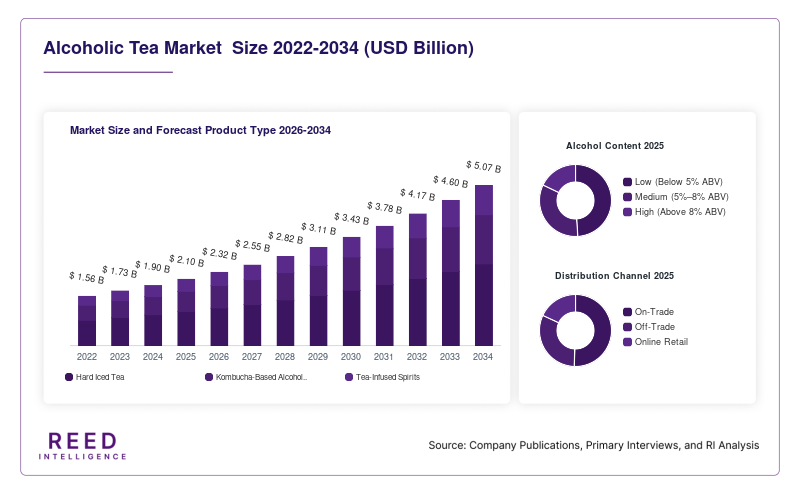
Hard iced tea dominated the Alcoholic Tea Market in 2024, accounting for a share of 42.6%. This subsegment benefits from strong consumer familiarity and widespread availability across retail channels. Hard iced tea combines traditional iced tea flavors with moderate alcohol content, making it an accessible entry point for new consumers. Its popularity is further supported by extensive marketing campaigns and the presence of established brands.
Kombucha-based alcoholic tea is expected to be the fastest-growing subsegment, registering a CAGR of 12.7% during the forecast period. The growth is driven by increasing consumer interest in fermented beverages and gut health. Kombucha’s probiotic properties, combined with alcohol, create a unique product offering that appeals to health-conscious consumers seeking functional benefits.
By Distribution Channel
Off-trade distribution channels, including supermarkets and liquor stores, held the largest share of 58.3% in 2024. These channels provide convenience and a wide range of product options, enabling consumers to explore different brands and flavors. The dominance of off-trade channels is also supported by competitive pricing and promotional activities.
Online retail is the fastest-growing distribution channel, with a projected CAGR of 13.2%. The growth is driven by increasing internet penetration and the convenience of home delivery. E-commerce platforms offer detailed product information and customer reviews, helping consumers make informed purchasing decisions. This channel is particularly popular among younger consumers.
By Alcohol Content
Products with low alcohol content (below 5% ABV) accounted for the largest share in 2024, reflecting the growing preference for lighter beverages. These products are suitable for casual consumption and align with the trend of mindful drinking. Their lower alcohol content also allows for broader distribution in certain markets.
Mid-range alcohol content products (5%–8% ABV) are expected to grow at the fastest CAGR of 11.5%. This growth is driven by consumers seeking a balance between flavor intensity and alcohol strength. These products offer a more robust taste while maintaining moderate alcohol levels, making them appealing for social occasions.
Regional Analysis
North America
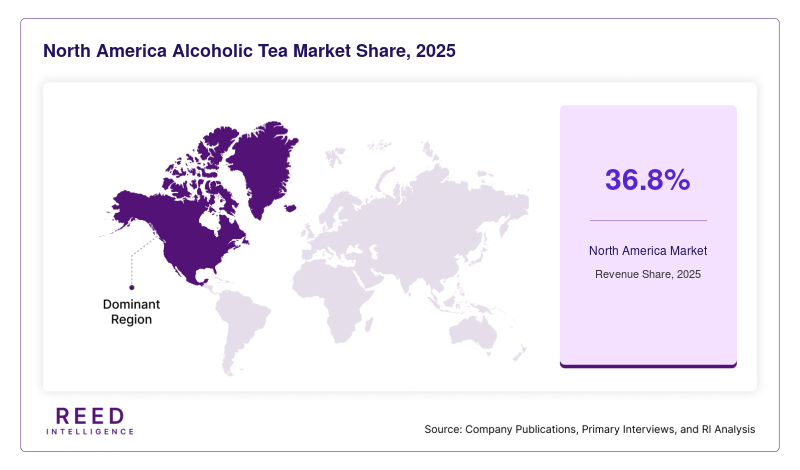
North America accounted for a 36.8% share of the Alcoholic Tea Market in 2025 and is projected to grow at a CAGR of 9.8% during the forecast period. The region’s dominance is attributed to high consumer awareness, established distribution networks, and the popularity of ready-to-drink alcoholic beverages. The presence of major beverage companies and continuous product innovation further support market growth in this region.
The United States remains the dominant country in North America, driven by strong demand for flavored and low-alcohol beverages. A unique growth factor is the widespread adoption of RTD alcoholic teas among millennials and Gen Z consumers, who prefer convenient and diverse beverage options. This demographic trend continues to shape product development and marketing strategies.
Europe
Europe held a significant share of the Alcoholic Tea Market in 2025 and is expected to grow at a CAGR of 9.5% through 2034. The region’s growth is supported by a strong tradition of tea consumption combined with an increasing interest in innovative alcoholic beverages. Countries such as the United Kingdom and Germany are key contributors to market expansion.
The United Kingdom stands out as the dominant country, with a well-established tea culture and a growing craft beverage industry. A unique growth factor is the rising demand for premium and artisanal alcoholic tea products, driven by consumer interest in quality and authenticity. This trend encourages local producers to experiment with new blends and formulations.
Asia Pacific
Asia Pacific is anticipated to register the fastest CAGR of 11.9% during the forecast period, driven by increasing urbanization and evolving consumer preferences. The region’s large population and strong tea heritage provide a favorable environment for the growth of alcoholic tea products. Expanding retail infrastructure further supports market development.
China is the dominant country in the region, benefiting from its deep-rooted tea culture and growing middle-class population. A unique growth factor is the integration of traditional tea varieties into modern alcoholic beverages, creating products that resonate with local consumers. This fusion approach enhances market acceptance and drives innovation.
Middle East & Africa
The Middle East & Africa region is expected to experience moderate growth, with a CAGR of 8.7% during the forecast period. Market expansion is influenced by changing consumer lifestyles and increasing exposure to global beverage trends. However, regulatory restrictions on alcohol consumption in certain countries may limit growth.
South Africa emerges as the dominant country, with a relatively open market for alcoholic beverages. A unique growth factor is the growing popularity of flavored and low-alcohol drinks among younger consumers. This trend encourages manufacturers to introduce innovative products tailored to local preferences.
Latin America
Latin America is projected to grow at a CAGR of 10.1% during the forecast period, supported by rising disposable incomes and a growing interest in premium beverages. The region’s vibrant culture and preference for flavored drinks create opportunities for alcoholic tea products.
Brazil is the leading country in the region, driven by a large consumer base and increasing urbanization. A unique growth factor is the demand for refreshing and tropical-flavored alcoholic beverages, which aligns well with alcoholic tea offerings. This preference supports the introduction of localized flavors and product variations.
Competitive Landscape
The Alcoholic Tea Market is characterized by the presence of both established beverage companies and emerging startups. Key players focus on product innovation, strategic partnerships, and expanding distribution networks to strengthen their market position. The competitive landscape is moderately fragmented, with companies competing on flavor diversity, branding, and pricing strategies.
A leading player in the market is Boston Beer Company, known for its extensive portfolio of alcoholic beverages and strong brand recognition. The company recently expanded its hard iced tea product line to include new flavors and low-calorie variants, catering to evolving consumer preferences. Other companies are also investing in research and development to introduce functional ingredients and premium offerings. Strategic collaborations between tea producers and alcohol manufacturers are becoming increasingly common, enabling companies to leverage expertise and enhance product quality.
Key Players List
- Boston Beer Company
- Diageo plc
- Anheuser-Busch InBev
- Molson Coors Beverage Company
- Heineken N.V.
- Pabst Brewing Company
- New Belgium Brewing Company
- Suntory Holdings Limited
- Asahi Group Holdings
- Constellation Brands
- Carlsberg Group
- Kirin Holdings Company
- White Claw Hard Seltzer
- Arizona Beverage Company
- Canarchy Craft Brewery Collective
Recent Developments
- Several companies have introduced new flavored variants of alcoholic tea, focusing on natural ingredients and reduced sugar content to attract health-conscious consumers.
- Strategic partnerships between tea brands and beverage companies have increased, enabling the development of innovative products that combine traditional tea with modern alcohol formulations.
- Expansion of online retail channels has allowed manufacturers to reach a wider audience, with many companies launching direct-to-consumer platforms to enhance customer engagement and sales.
Alcoholic Tea Market Segments
Product Type
- Hard Iced Tea
- Kombucha-Based Alcoholic Tea
- Tea-Infused Spirits
Alcohol Content
- Low (Below 5% ABV)
- Medium (5%–8% ABV)
- High (Above 8% ABV)
Distribution Channel
- On-Trade
- Off-Trade
- Online Retail
By Region
- North America
- Europe
- APAC
- Middle East and Africa
- LATAM