Algae Based Food Additive Market Size, Share & Demand Report By Type (Hydrocolloids, Protein Concentrates, Natural Colorants, Antioxidants, Flavor Enhancers), By Application (Food and Beverages, Nutritional Supplements, Bakery and Confectionery, Dairy Alternatives, Functional Beverages), By Source (Red Algae, Brown Algae, Green Algae, Microalgae), By Region & Segment Forecasts, 2026–2034
USD 3950
Market Overview
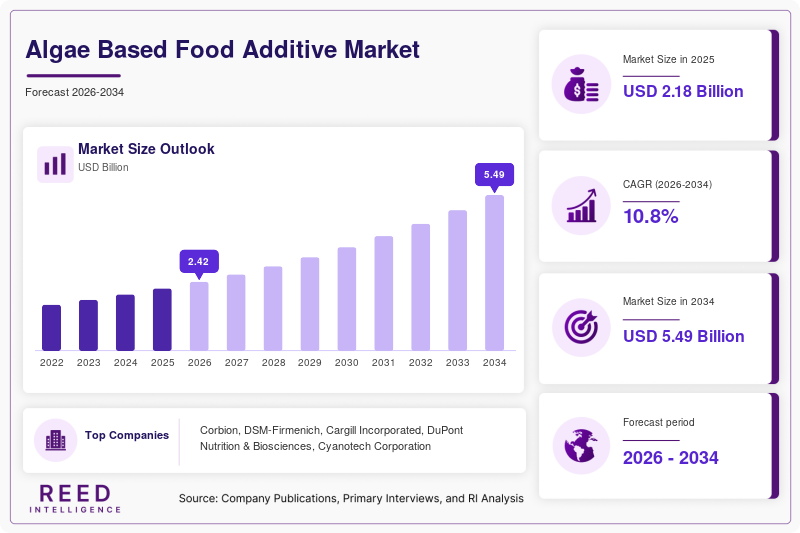
The global Algae Based Food Additive Market size was valued at USD 2.18 billion in 2026 and is projected to reach USD 4.96 billion by 2034, expanding at a CAGR of 10.8% during the forecast period from 2026 to 2034. The market is witnessing consistent expansion due to increasing demand for sustainable food ingredients, clean-label formulations, and plant-derived nutritional compounds across processed food and beverage applications. Food manufacturers are increasingly adopting algae-based additives because of their functional benefits in texture enhancement, natural coloring, preservation, emulsification, and nutritional fortification. Rising consumer awareness regarding synthetic additive alternatives has also encouraged food processors to integrate algae-derived ingredients into bakery products, dairy alternatives, beverages, confectionery, and nutritional supplements.
One of the major global factors supporting market growth is the rising transition toward sustainable food production systems. Governments, food manufacturers, and ingredient suppliers are focusing on reducing environmental impact associated with conventional food additives and animal-derived ingredients. Algae cultivation requires comparatively lower land resources and can be produced in controlled environments, making it a viable solution for long-term food ingredient security. In addition, ongoing innovation in microalgae extraction technologies and large-scale cultivation methods is improving production efficiency and commercial scalability. Several companies are investing in advanced processing methods to enhance the stability, taste profile, and nutrient concentration of algae-based additives.
Key Highlights
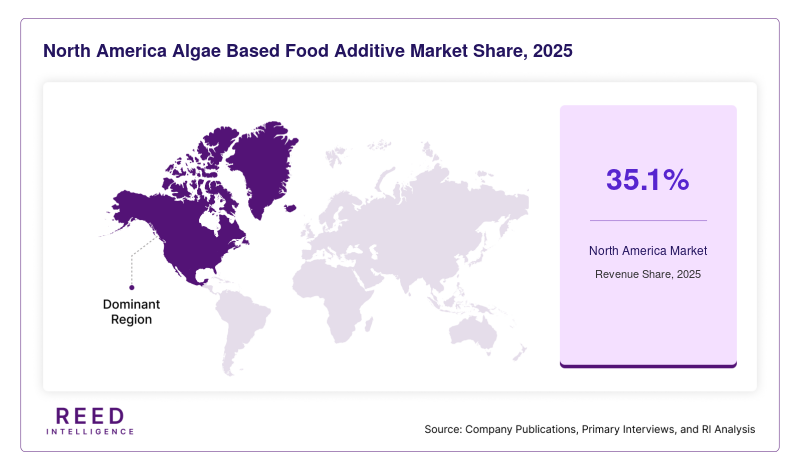
- North America dominated the market with a 35.1% share in 2025, while Asia Pacific is expected to grow at the fastest CAGR of 11.9% during 2026–2034.
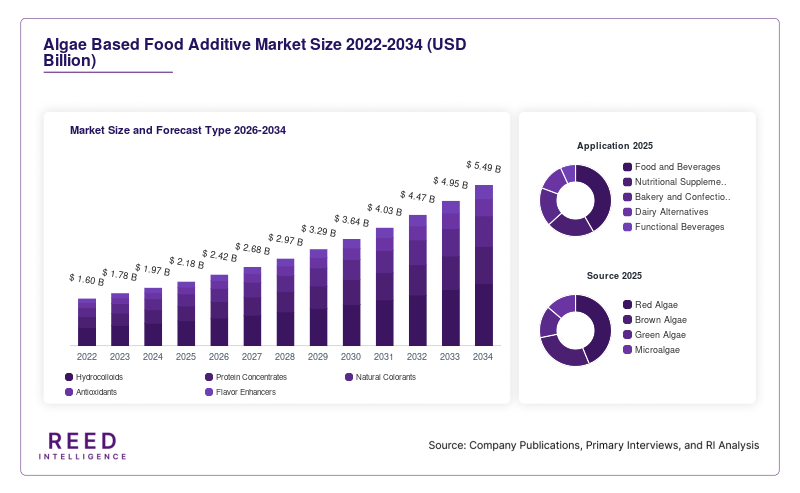
- By type, hydrocolloids accounted for the largest share of 39.4%, while protein concentrates are projected to grow at a CAGR of 12.3%.
- By application, food and beverages led with a 44.7% share, whereas nutritional supplements are expected to expand at a CAGR of 12.7%.
- By source, red algae dominated with a 42.6% share, while microalgae are anticipated to grow at a CAGR of 13.1% during the forecast period.
- The United States remained the dominant country, with market values of USD 480 million in 2024 and USD 532 million in 2025.
Market Trends
Rising Integration of Natural Colorants in Processed Foods
Food manufacturers are increasingly incorporating algae-derived pigments such as spirulina extract, phycocyanin, and chlorophyll into processed foods and beverages. The demand for naturally sourced colorants has increased significantly as consumers continue to avoid synthetic dyes and artificial ingredients. Algae-based color additives are being used across confectionery, dairy alternatives, ready-to-drink beverages, bakery fillings, and frozen desserts due to their stability and visual appeal. Regulatory support for natural ingredient labeling in several developed economies has further strengthened demand for algae-derived pigments. In addition, companies are investing in advanced stabilization technologies to improve shelf life and maintain color consistency under varying temperature conditions. Product launches featuring clean-label blue and green coloring agents have expanded significantly across premium food categories.
Expansion of Functional and Fortified Food Products
The growing demand for functional foods is contributing to increased utilization of algae-based additives across mainstream and specialty nutrition categories. Algae ingredients contain proteins, antioxidants, omega fatty acids, vitamins, and minerals that enhance the nutritional profile of packaged foods. Food producers are introducing fortified snacks, plant-based dairy alternatives, sports beverages, and meal replacement products enriched with algae-derived compounds. Consumer preference for preventive healthcare and nutrient-dense diets is also supporting the adoption of algae additives in daily food consumption. In addition, advancements in flavor masking technologies have improved the commercial feasibility of algae ingredients in mass-market food applications. Several multinational food companies are collaborating with biotechnology firms to develop customized algae formulations for specific health-focused product portfolios.
Market Drivers
Increasing Demand for Plant-Based and Sustainable Ingredients
The increasing popularity of plant-based food consumption is creating substantial growth opportunities for the Algae Based Food Additive Market. Consumers are actively seeking environmentally responsible ingredients that align with vegan, vegetarian, and flexitarian dietary preferences. Algae-derived additives offer a sustainable alternative to synthetic stabilizers, animal-derived emulsifiers, and artificial flavor enhancers. Food manufacturers are incorporating algae extracts into plant-based dairy products, bakery goods, processed meals, and protein beverages to improve texture, nutritional value, and shelf stability. Rising investment in sustainable agriculture and circular food production systems is also supporting commercial algae cultivation. Additionally, governments and regulatory agencies are encouraging the adoption of renewable ingredient sources to reduce environmental pressure associated with traditional agricultural production.
Technological Advancements in Algae Cultivation and Extraction
Continuous innovation in algae cultivation systems and extraction technologies is accelerating market expansion across industrial food applications. Companies are adopting photobioreactor systems, closed-loop cultivation facilities, and advanced fermentation methods to improve production efficiency and reduce operational costs. These technological improvements are enhancing the consistency, purity, and scalability of algae-based food additives. Improved extraction techniques have also increased the commercial viability of proteins, hydrocolloids, pigments, and bioactive compounds derived from algae sources. Food manufacturers are benefiting from better ingredient stability and standardized quality profiles that support large-scale production requirements. In addition, ongoing research activities focused on strain optimization and nutrient concentration are enabling producers to develop high-performance additives suitable for specialized food formulations.
Market Restraint
High Production Costs and Supply Chain Limitations
The Algae Based Food Additive Market continues to face challenges related to high production costs and limited supply chain scalability. Commercial algae cultivation requires controlled environmental conditions, specialized harvesting equipment, and advanced processing technologies that increase overall operational expenses. The extraction and purification of functional compounds from algae also involve complex processing stages, which can raise final ingredient pricing compared to conventional food additives. Small and medium-sized food manufacturers often face difficulties in integrating algae-based ingredients into cost-sensitive product categories.
Supply chain limitations further affect market penetration, particularly in emerging economies where large-scale algae cultivation infrastructure remains underdeveloped. Seasonal fluctuations, contamination risks, and inconsistent biomass yields can influence production stability and ingredient availability. In addition, some consumers remain sensitive to the taste and aroma associated with algae-derived ingredients, requiring additional formulation investments by food companies. These factors collectively create pricing pressure across the value chain and may limit adoption in low-cost mass-market food segments.
Market Opportunities
Growth Potential in Personalized Nutrition Products
The rising popularity of personalized nutrition is creating new opportunities for algae-based food additives across functional food and dietary supplement categories. Consumers are increasingly seeking customized nutrition solutions that address specific health concerns related to immunity, digestion, energy, and cardiovascular wellness. Algae-derived ingredients provide high concentrations of proteins, antioxidants, minerals, and omega fatty acids that support targeted nutritional formulations. Companies are developing customized algae-based ingredient blends for sports nutrition, elderly nutrition, pediatric formulations, and medical food applications. The growing integration of digital health platforms and nutrition tracking technologies is also encouraging food producers to launch personalized products featuring algae-derived compounds. This trend is expected to increase demand for specialized algae formulations with enhanced bioavailability and nutrient density.
Expansion of Algae Applications in Clean-Label Bakery and Beverage Products
Clean-label product innovation within bakery and beverage industries is opening significant commercial opportunities for algae-based additives. Food companies are actively replacing artificial stabilizers, emulsifiers, and preservatives with natural alternatives to satisfy evolving consumer expectations. Algae-derived hydrocolloids and functional proteins are increasingly being used in bread, cakes, dairy-free beverages, smoothies, and flavored drinks to improve texture, consistency, and nutritional value. Beverage manufacturers are also incorporating spirulina and chlorella extracts into wellness drinks and fortified beverages targeted at health-conscious consumers. Increasing retail shelf availability of natural ingredient products is expected to support wider adoption of algae-based additives. In addition, premium food brands are investing in innovative formulations that highlight sustainability and plant-based ingredient sourcing as part of their brand positioning strategies.
Segmental Analysis
By Type
Hydrocolloids accounted for the largest share of the Algae Based Food Additive Market in 2024, representing 39.4% of total revenue. These ingredients are widely used in food processing applications due to their ability to improve texture, viscosity, stability, and moisture retention. Carrageenan and alginate derived from red and brown algae are extensively utilized in dairy products, processed meats, confectionery, sauces, and bakery items. Food manufacturers prefer algae-derived hydrocolloids because they offer natural functionality while supporting clean-label product positioning. The increasing replacement of synthetic stabilizers and emulsifiers with plant-derived alternatives has strengthened demand for hydrocolloids across mainstream food applications. In addition, rising demand for convenience foods and ready-to-eat products has accelerated the adoption of algae-derived texturizing ingredients in large-scale food manufacturing.
By Application
Food and beverages represented the dominant application segment in 2024, accounting for 44.7% of the global market revenue. The widespread utilization of algae-based additives across processed foods, beverages, confectionery, bakery products, and dairy alternatives has contributed significantly to segment growth. Algae-derived ingredients are used for coloring, stabilization, emulsification, and nutritional enhancement in a broad range of commercial food products. Growing consumer preference for clean-label ingredients and natural formulations has encouraged manufacturers to replace synthetic additives with algae-derived alternatives. In addition, rising demand for fortified foods containing proteins, antioxidants, and omega fatty acids has strengthened commercial adoption across mainstream food categories. Large multinational food companies are also increasing investments in algae ingredient partnerships to expand sustainable product portfolios.
By Source
Red algae accounted for the largest share of the Algae Based Food Additive Market in 2024, contributing 42.6% of global revenue. Red algae are widely utilized in commercial food ingredient production due to their rich hydrocolloid content, particularly carrageenan and agar. These compounds are extensively used as thickening and stabilizing agents across dairy products, desserts, processed foods, and confectionery applications. The high commercial availability and established supply chains associated with red algae cultivation have supported their dominant market position. Food manufacturers continue to prefer red algae-derived ingredients because of their versatility, functional stability, and compatibility with clean-label product development. In addition, increasing consumer demand for plant-based formulations has encouraged greater use of red algae ingredients across vegetarian and vegan food products.
Regional Analysis
North America
North America accounted for 35.1% of the global Algae Based Food Additive Market in 2025 and is expected to maintain a stable growth trajectory during the forecast period. The regional market is projected to expand at a CAGR of 10.2% from 2026 to 2034 due to strong consumer demand for clean-label and plant-based food products. Food manufacturers across the United States and Canada are increasingly adopting algae-derived hydrocolloids, pigments, and proteins in packaged foods, dairy alternatives, and nutritional beverages. The region also benefits from advanced biotechnology infrastructure and high investment levels in sustainable food ingredient development.
Europe
Europe represented 27.8% of the global market in 2025 and is anticipated to grow at a CAGR of 9.8% during the forecast period. The regional market is supported by strong regulatory emphasis on natural ingredients and sustainable food production systems. Countries across Western Europe are witnessing increased demand for natural food colorants, emulsifiers, and nutritional enhancers derived from algae. Food processing companies are actively reformulating existing products to align with evolving consumer preferences for minimally processed and environmentally responsible ingredients. In addition, rising awareness regarding food transparency is supporting market expansion across premium packaged food categories.
Asia Pacific
Asia Pacific accounted for 22.4% of the global Algae Based Food Additive Market in 2025 and is projected to record the fastest CAGR of 11.9% through 2034. Rapid urbanization, expanding middle-class populations, and rising health awareness are supporting regional market growth. Food manufacturers across China, Japan, India, and South Korea are increasing investments in functional food products and nutritional beverages containing algae-derived compounds. The region also benefits from abundant algae cultivation resources and improving production capabilities. Rising demand for fortified packaged foods is further contributing to commercial expansion.
Middle East & Africa
The Middle East & Africa region held 7.3% of the global market in 2025 and is expected to grow at a CAGR of 8.7% during the forecast period. The market is gradually expanding due to rising demand for functional food products and increasing consumer awareness regarding natural nutrition ingredients. Food manufacturers in the region are incorporating algae-derived additives into beverages, dairy products, and nutritional supplements to enhance product differentiation. Growing investment in food security initiatives and sustainable agriculture technologies is also supporting interest in algae cultivation and food ingredient applications.
Latin America
Latin America accounted for 7.4% of the global Algae Based Food Additive Market in 2025 and is projected to expand at a CAGR of 9.1% through 2034. The regional market is benefiting from increasing demand for natural food ingredients and growing adoption of functional nutrition products. Food and beverage companies across Brazil, Mexico, and Argentina are incorporating algae-derived stabilizers, pigments, and nutritional compounds into packaged foods and beverages. Rising awareness regarding healthy eating habits and preventive nutrition is also contributing to market growth across urban consumer populations.
Competitive Landscape
The Algae Based Food Additive Market is characterized by moderate competition, with several multinational ingredient manufacturers and biotechnology companies focusing on product innovation, sustainable sourcing, and strategic partnerships. Leading market participants are investing in advanced algae cultivation systems, extraction technologies, and large-scale manufacturing capabilities to strengthen their competitive positions. Companies are also expanding research activities related to natural pigments, protein concentrates, hydrocolloids, and bioactive compounds for food applications.
Corbion emerged as one of the leading companies in the market due to its diversified algae ingredient portfolio and strong global distribution network. The company continues to invest in sustainable ingredient development and collaborative partnerships with food manufacturers. In 2025, Corbion announced the expansion of its algae-derived food ingredient production facility to meet growing demand for natural additives and plant-based nutrition solutions.
Key Players
- Corbion
- DSM-Firmenich
- Cargill Incorporated
- DuPont Nutrition & Biosciences
- Cyanotech Corporation
- E.I.D. Parry Limited
- Algaia SA
- BASF SE
- Ingredion Incorporated
- Kerry Group plc
- Gelymar SA
- Archer Daniels Midland Company
- CP Kelco
- Roquette Freres
- DIC Corporation
Recent Developments
- In February 2025, DSM-Firmenich introduced a new algae-derived natural coloring solution designed for beverage and confectionery applications with improved heat stability.
- In August 2025, Cargill Incorporated expanded its partnership with biotechnology firms to develop sustainable algae protein ingredients for plant-based food products.
- In November 2024, Cyanotech Corporation launched an enhanced spirulina extract product targeted at functional beverages and nutritional supplement manufacturers.
- In March 2025, Kerry Group plc announced investments in clean-label ingredient research focused on algae-derived emulsifiers and texture enhancers.
- In January 2026, Ingredion Incorporated introduced a new range of algae-based stabilizers developed for dairy-free beverage formulations.
Algae Based Food Additive Market Segments
Type
- Hydrocolloids
- Protein Concentrates
- Natural Colorants
- Antioxidants
- Flavor Enhancers
Application
- Food and Beverages
- Nutritional Supplements
- Bakery and Confectionery
- Dairy Alternatives
- Functional Beverages
Source
- Red Algae
- Brown Algae
- Green Algae
- Microalgae
By Region
- North America
- Europe
- APAC
- Middle East and Africa
- LATAM