Almond-Based Spread Market Size, Share Demand Report By Product Type (Creamy Almond Spread, Crunchy Almond Spread, Flavored Almond Spread), By Application (Household Consumption, Foodservice), By Distribution Channel (Supermarkets/Hypermarkets, Convenience Stores, Online Retail, Specialty Stores), By Region & Segment Forecasts, 2026–2034
USD 3950
Market Overview
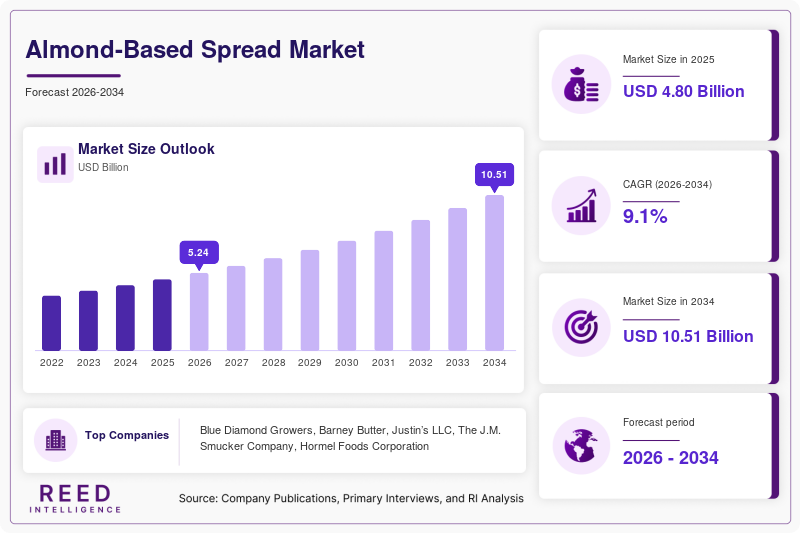
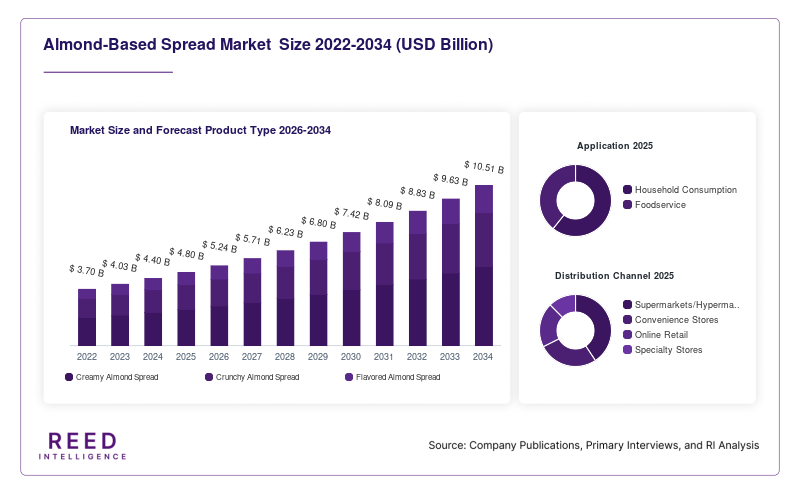
The global Almond-Based Spread Market was valued at approximately USD 4.8 billion in 2026 and is projected to reach USD 9.6 billion by 2034, expanding at a CAGR of 9.1% during 2026–2034. The market has experienced steady growth due to increasing consumer demand for plant-based, nutrient-rich, and clean-label food products. Almond-based spreads, commonly positioned as alternatives to peanut butter and dairy-based spreads, have gained traction across retail and foodservice channels.
A key global factor supporting market expansion is the shift toward healthier dietary patterns, particularly the adoption of plant-based diets. Consumers are increasingly seeking spreads that offer high protein, healthy fats, and low sugar content. Almond-based spreads meet these preferences while also appealing to lactose-intolerant and gluten-sensitive populations. In addition, rising awareness of sustainable agriculture and eco-conscious sourcing has further strengthened demand for almond-derived products.
Key Highlights
- North America dominated the market with a 36.4% share in 2025.
- Asia Pacific is expected to grow at the fastest CAGR of 10.8% during 2026–2034.
- By type, creamy almond spread accounted for the largest share of 44.1%.
- while flavored almond spread is projected to grow at a CAGR of 11.6%.
- By application, household consumption led with a 48.7% share, whereas foodservice applications are expected to expand at a CAGR of 10.9%.
- The United States remained the dominant country, with market values of USD 1.2 billion in 2024 and USD 1.35 billion in 2025.
Market Trends
Rising Demand for Clean-Label and Organic Almond Spreads
Consumers are increasingly prioritizing transparency in food ingredients, driving demand for clean-label almond-based spreads. Products that are free from artificial preservatives, added sugars, and hydrogenated oils are gaining higher acceptance across global markets. Organic almond spreads, in particular, are witnessing strong growth due to their perceived health benefits and sustainable sourcing practices. Retailers are expanding shelf space for certified organic and non-GMO products, further boosting visibility. This trend is especially prominent in developed regions where consumers are willing to pay a premium for quality assurance. Additionally, brands are emphasizing minimal processing techniques to retain natural flavor and nutritional value, which aligns with consumer expectations for wholesome food products.
Product Innovation Through Flavors and Functional Ingredients
Manufacturers are actively innovating to differentiate almond-based spreads through unique flavors and functional enhancements. Flavored variants such as chocolate, honey, cinnamon, and vanilla are attracting younger consumers and expanding usage occasions beyond breakfast. Furthermore, functional ingredients like protein isolates, probiotics, and omega-3 fatty acids are being incorporated to enhance nutritional profiles. These innovations are positioning almond spreads as versatile products suitable for fitness enthusiasts and health-conscious individuals. Companies are also experimenting with texture variations, including crunchy and whipped formats, to cater to diverse preferences. This trend is contributing to higher repeat purchases and brand loyalty, while also supporting premium pricing strategies.
Market Drivers
Growing Adoption of Plant-Based Diets
The increasing popularity of plant-based diets is a primary driver of the almond-based spread market. Consumers are reducing their intake of animal-derived products due to health, ethical, and environmental considerations. Almond-based spreads offer a plant-derived alternative that is rich in nutrients such as healthy fats, protein, and vitamins. This shift is particularly evident among younger demographics and urban populations. Food manufacturers and retailers are capitalizing on this trend by expanding their plant-based product portfolios. Additionally, the rise of vegan and flexitarian lifestyles is creating sustained demand for almond spreads as a staple pantry item. This driver is expected to continue supporting long-term market growth.
Increasing Health Awareness and Nutritional Benefits
Rising awareness regarding the health benefits of almonds is significantly contributing to market growth. Almond-based spreads are perceived as healthier alternatives due to their low carbohydrate content, high fiber levels, and absence of trans fats. Consumers are increasingly seeking functional foods that support heart health, weight management, and overall wellness. Marketing campaigns highlighting the nutritional advantages of almond products are influencing purchasing decisions. Furthermore, the growing prevalence of lifestyle-related diseases is encouraging consumers to switch to healthier food options. This driver is further strengthened by endorsements from nutritionists and health experts, which enhance consumer trust and adoption rates.
Market Restraint
High Cost of Almond-Based Products Compared to Alternatives
One of the major challenges limiting the growth of the almond-based spread market is the relatively high cost of almond products compared to other spreads such as peanut butter. Almond cultivation requires significant water resources and is subject to climatic conditions, which can impact supply and pricing. As a result, fluctuations in almond prices directly affect the cost structure of almond-based spreads. This price sensitivity can deter cost-conscious consumers, particularly in developing regions where affordability plays a critical role in purchasing decisions.
Additionally, premium positioning of almond spreads may limit their accessibility to middle-income consumers. Retailers often price these products higher due to their perceived health benefits and organic certifications. This creates a barrier to widespread adoption, especially in price-sensitive markets. For example, in emerging economies, consumers may opt for more affordable alternatives despite being aware of the nutritional benefits of almond-based spreads. To address this restraint, manufacturers are exploring cost optimization strategies such as local sourcing and efficient production processes. However, balancing cost reduction with quality maintenance remains a significant challenge for industry participants.
Market Opportunities
Expansion in Emerging Markets
Emerging economies present significant growth opportunities for the almond-based spread market. Rising disposable incomes, urbanization, and increasing awareness of healthy eating habits are driving demand for premium food products. Countries in Asia Pacific and Latin America are witnessing a shift toward Western dietary patterns, which include spreads and breakfast staples. Manufacturers are entering these markets through strategic partnerships, localized product offerings, and targeted marketing campaigns. Additionally, the expansion of modern retail infrastructure and e-commerce platforms is improving product availability. This opportunity is expected to contribute substantially to market growth over the forecast period.
Growth of E-commerce and Direct-to-Consumer Channels
The rapid expansion of e-commerce platforms is creating new avenues for market growth. Online retail channels enable manufacturers to reach a broader consumer base without the limitations of physical shelf space. Direct-to-consumer models are also gaining traction, allowing brands to establish stronger relationships with customers and gather valuable insights into purchasing behavior. Subscription-based services and personalized product offerings are further enhancing consumer engagement. Moreover, digital marketing strategies, including social media promotions and influencer collaborations, are driving brand awareness and product visibility. This opportunity is particularly beneficial for small and medium-sized enterprises seeking to compete with established players.
Segmental Analysis
By Type
The creamy almond spread segment dominated the market in 2024, accounting for approximately 44.1% of the total share. This dominance is attributed to its smooth texture, versatility, and widespread consumer preference. Creamy variants are commonly used in breakfast applications such as toast and smoothies, making them a staple in households. Manufacturers focus on improving consistency and flavor profiles to maintain consumer interest. The availability of both sweetened and unsweetened options further enhances product appeal. Additionally, creamy almond spreads are often positioned as premium products, which supports higher profit margins and brand differentiation.
Flavored almond spreads are the fastest-growing subsegment, projected to expand at a CAGR of 11.6% during the forecast period. Growth is driven by increasing demand for innovative and indulgent food options. Consumers are seeking unique taste experiences, leading to the introduction of flavors such as chocolate, caramel, and berry blends. These products are particularly popular among younger demographics and urban consumers. Manufacturers are leveraging limited-edition launches and seasonal offerings to attract attention. The integration of functional ingredients in flavored variants also enhances their nutritional value, further boosting demand.
By Application
Household consumption was the dominant application segment in 2024, capturing 48.7% of the market share. Almond-based spreads are widely used in home kitchens for breakfast and snack preparation. The convenience and nutritional benefits of these products make them a preferred choice for busy consumers. Increasing awareness of healthy eating habits is encouraging households to replace traditional spreads with almond-based alternatives. Retail availability and attractive packaging also contribute to the segment's growth. Furthermore, the rise of home cooking trends has increased the usage of almond spreads in various recipes.
The foodservice segment is the fastest-growing application, with a projected CAGR of 10.9% during 2026–2034. Growth is driven by the increasing incorporation of almond-based spreads in cafes, restaurants, and bakeries. These establishments use almond spreads in sandwiches, desserts, and specialty dishes to cater to health-conscious customers. The trend of premiumization in the foodservice industry is further supporting demand. Additionally, collaborations between manufacturers and foodservice providers are expanding product reach and visibility.
By Distribution Channel
The supermarket and hypermarket segment dominated the distribution channel in 2024, accounting for 52.3% of the market share. These retail formats offer a wide range of products, enabling consumers to compare options and make informed purchasing decisions. The presence of dedicated health food sections and promotional activities enhances product visibility. Supermarkets also provide opportunities for in-store sampling and brand engagement, which influence consumer behavior. Established supply chains and strategic partnerships with manufacturers further strengthen this segment.
Online retail is the fastest-growing distribution channel, expected to grow at a CAGR of 12.1% during the forecast period. The convenience of online shopping and the availability of diverse product options are key factors driving growth. Consumers can access detailed product information and reviews, which aid decision-making. Subscription services and discounts offered by e-commerce platforms are also encouraging repeat purchases. Additionally, digital marketing strategies are increasing product awareness and attracting new customers.
Regional Analysis
North America
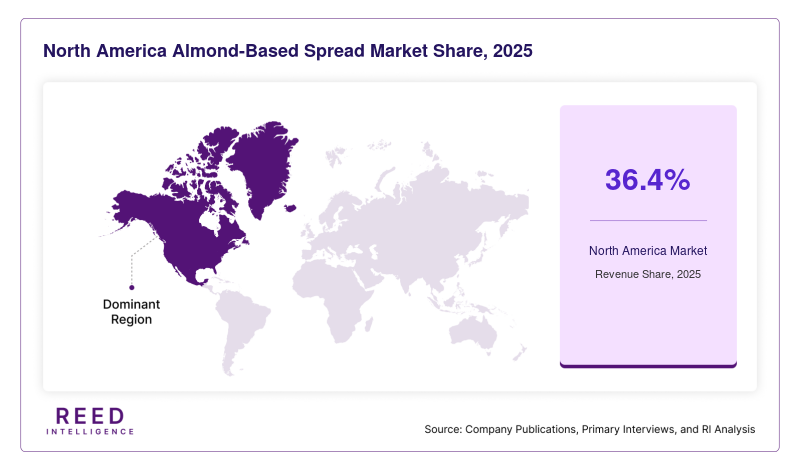
North America accounted for the largest share of the almond-based spread market, representing 36.4% in 2025, and is expected to grow at a CAGR of 8.7% during 2026–2034. The region benefits from high consumer awareness regarding plant-based nutrition and a well-established retail infrastructure. Demand is driven by the increasing popularity of healthy breakfast options and snack alternatives. The presence of leading brands and continuous product innovation further supports market expansion in this region.
The United States dominates the North American market due to strong consumer demand for organic and clean-label products. A unique growth factor is the widespread adoption of fitness-oriented diets, which emphasize protein-rich and low-sugar foods. Almond-based spreads align with these preferences, making them a popular choice among health-conscious consumers. Additionally, extensive marketing campaigns and product availability across supermarkets and online platforms contribute to sustained growth.
Europe
Europe held a market share of approximately 25.8% in 2025 and is projected to grow at a CAGR of 8.5% during the forecast period. The region's growth is supported by increasing demand for vegan and vegetarian food products. Consumers in Europe are highly conscious of food quality and sustainability, which drives the adoption of almond-based spreads. Regulatory support for organic and non-GMO products also enhances market growth.
Germany is the leading country in the European market, driven by a strong preference for natural and organic foods. A unique growth factor is the rising trend of sustainable consumption, with consumers favoring products that have a lower environmental impact. This has encouraged manufacturers to adopt eco-friendly packaging and sourcing practices, further boosting market demand.
Asia Pacific
Asia Pacific is the fastest-growing region, with a market share of 20.6% in 2025 and a projected CAGR of 10.8% during 2026–2034. Rapid urbanization, changing dietary habits, and increasing disposable incomes are key factors driving growth. The adoption of Western food trends and the expansion of retail chains are also contributing to market development.
China leads the Asia Pacific market due to its large population and growing middle class. A unique growth factor is the increasing influence of digital platforms and social media on consumer behavior. Online marketing campaigns and product endorsements are significantly impacting purchasing decisions, leading to higher adoption of almond-based spreads.
Middle East & Africa
The Middle East & Africa region accounted for a 9.1% market share in 2025 and is expected to grow at a CAGR of 7.9% during the forecast period. Growth in this region is driven by increasing awareness of healthy eating habits and the expansion of modern retail channels. The demand for premium food products is gradually rising, particularly in urban areas.
The United Arab Emirates is the dominant country in this region, supported by a high expatriate population and strong demand for imported food products. A unique growth factor is the growing hospitality sector, which incorporates almond-based spreads into diverse culinary applications. This trend is enhancing product visibility and driving market growth.
Latin America
Latin America held a market share of 8.1% in 2025 and is projected to grow at a CAGR of 8.2% during 2026–2034. The region is witnessing increasing adoption of healthier food alternatives as consumers become more aware of nutritional benefits. Retail expansion and improving economic conditions are also supporting market growth.
Brazil is the leading country in Latin America, driven by a growing middle-class population and rising health awareness. A unique growth factor is the increasing popularity of fitness and wellness trends, which encourage the consumption of nutrient-rich foods. Almond-based spreads are gaining traction as a healthier alternative to traditional spreads, contributing to market expansion.
Competitive Landscape
The almond-based spread market is moderately fragmented, with a mix of established players and emerging brands competing on product quality, innovation, and pricing. Leading companies focus on expanding their product portfolios and strengthening distribution networks to maintain market position. Strategic initiatives such as mergers, acquisitions, and partnerships are commonly adopted to enhance market presence.
One of the leading players in the market is Blue Diamond Growers, known for its extensive range of almond-based products. The company has recently introduced new flavored variants to cater to evolving consumer preferences. Other key players are investing in research and development to improve product formulations and extend shelf life. Sustainability initiatives, including eco-friendly packaging and responsible sourcing, are also gaining importance among competitors. Overall, the competitive landscape is characterized by continuous innovation and a focus on meeting changing consumer demands.
Key Players List
- Blue Diamond Growers
- Barney Butter
- Justin’s LLC
- Nutty Novelties
- Once Again Nut Butter
- Wild Friends Foods
- The J.M. Smucker Company
- Pip & Nut
- Meridian Foods Limited
- Hormel Foods Corporation
- Kraft Heinz Company
- Alpino Health Foods
- Urban Platter
- DiSano Foods
- Rigoni di Asiago
Recent Developments
- In 2025, Blue Diamond Growers launched a new line of organic almond spreads with enhanced nutritional profiles.
- In 2024, Justin’s LLC expanded its distribution network in Asia Pacific through strategic retail partnerships.
- In 2025, Hormel Foods Corporation introduced a plant-based product line featuring almond-based spreads with functional ingredients
Almond-Based Spread Market Segments
Product Type
- Creamy Almond Spread
- Crunchy Almond Spread
- Flavored Almond Spread
Application
- Household Consumption
- Foodservice
Distribution Channel
- Supermarkets/Hypermarkets
- Convenience Stores
- Online Retail
- Specialty Stores
By Region
- North America
- Europe
- APAC
- Middle East and Africa
- LATAM