Aluminum Beverage Bag Market Size, Share & Demand Report By Type (Flat Aluminum Beverage Bags, Stand-Up Aluminum Beverage Bags), By Application (Alcoholic Beverages, Non-Alcoholic Beverages), By End-Use (Retail, Foodservice) By Region & Segment Forecasts, 2025–2034
USD 3950
Market Overview
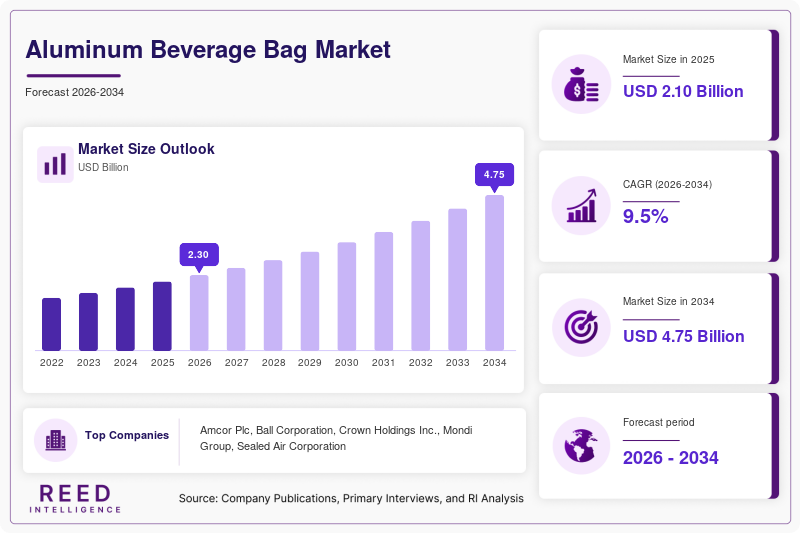
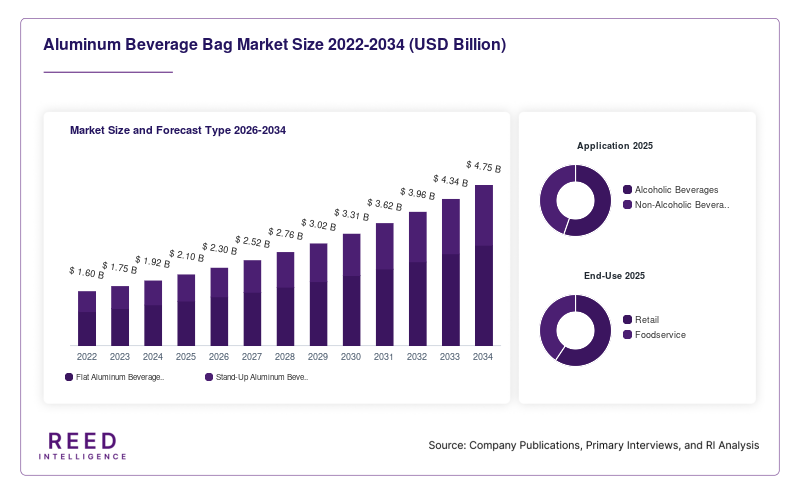
The Aluminum Beverage Bag Market size is experiencing steady expansion as packaging innovation aligns with sustainability and convenience trends across global beverage industries. The market size was valued at approximately USD 2.1 billion in 2025 and is estimated to reach USD 2.3 billion in 2026. With increasing demand for lightweight, recyclable, and portable packaging solutions, the market is projected to grow to USD 4.8 billion by 2034, registering a compound annual growth rate (CAGR) of 9.5% from 2025 to 2034.
Aluminum beverage bags are gaining traction due to their superior barrier properties, which help maintain product freshness, extend shelf life, and protect against external contamination. These characteristics make them suitable for a wide range of applications, including alcoholic beverages, juices, energy drinks, and ready-to-drink (RTD) products. Additionally, their lightweight nature reduces transportation costs and carbon emissions, further supporting adoption among environmentally conscious manufacturers.
Key Highlights
- Market size reached USD 2.1 billion in 2025 and is projected to reach USD 4.8 billion by 2034
- Expected CAGR of 9.5% from 2025 to 2034
- Strong demand driven by sustainability and lightweight packaging trends
- Increasing adoption across alcoholic and non-alcoholic beverage segments
- Technological advancements enhancing barrier properties and durability
Market Trends
Increasing Adoption of Sustainable and Recyclable Packaging
Sustainability has become a central focus in the packaging industry, and aluminum beverage bags are emerging as a viable solution to reduce environmental impact. Manufacturers are increasingly adopting aluminum-based flexible packaging due to its recyclability and lower carbon footprint compared to traditional plastic alternatives. Consumers are also becoming more environmentally aware, preferring products packaged in materials that align with their values. This shift is encouraging beverage companies to redesign packaging strategies and invest in eco-friendly materials. Additionally, regulatory frameworks in several regions are imposing stricter guidelines on single-use plastics, further accelerating the transition toward aluminum-based solutions. The trend is expected to continue as companies aim to meet sustainability goals while maintaining product quality and performance.
Growth of Ready-to-Drink and Portable Beverage Formats
The rise of busy lifestyles and urbanization has led to increased demand for ready-to-drink (RTD) beverages that offer convenience and portability. Aluminum beverage bags are well-suited for this trend, as they are lightweight, easy to carry, and require less storage space. Beverage manufacturers are leveraging these advantages to target consumers seeking quick and convenient consumption options. The flexibility of aluminum bags also allows for innovative packaging designs, including resealable features and ergonomic shapes. This trend is particularly strong in emerging markets, where urban populations are expanding rapidly. As consumer preferences shift toward convenience-driven products, the demand for aluminum beverage bags is expected to grow steadily.
Market Drivers
Rising Demand for Lightweight and Cost-Efficient Packaging
The increasing need to reduce transportation and logistics costs is driving the adoption of lightweight packaging solutions such as aluminum beverage bags. Compared to traditional glass bottles or rigid containers, aluminum bags significantly reduce weight, which lowers fuel consumption during transportation. This not only reduces operational costs but also contributes to environmental sustainability. Additionally, the compact design of aluminum bags allows for efficient storage and distribution, making them an attractive option for manufacturers and retailers. As global supply chains become more cost-sensitive, the demand for efficient packaging solutions is expected to drive market growth.
Expansion of Beverage Industry and Product Innovation
The global beverage industry is witnessing significant expansion, driven by increasing consumer demand for diverse and innovative products. From functional beverages to premium alcoholic drinks, manufacturers are constantly introducing new offerings to capture market share. Aluminum beverage bags provide a flexible packaging option that supports product innovation, including unique shapes, sizes, and branding opportunities. Furthermore, advancements in printing technologies enable high-quality graphics and customization, enhancing product appeal. As the beverage industry continues to evolve, the need for versatile and adaptable packaging solutions will contribute to the growth of the aluminum beverage bag market.
Market Restraint
High Production Costs and Technical Limitations
Despite the advantages of aluminum beverage bags, high production costs remain a significant restraint for market growth. The manufacturing process involves advanced technologies and multi-layer structures, which can increase overall production expenses compared to traditional packaging materials. Additionally, the integration of aluminum with other materials to enhance barrier properties can complicate recycling processes, limiting widespread adoption. Small and medium-sized enterprises may find it challenging to invest in such technologies, restricting market penetration.
Furthermore, technical limitations such as potential leakage issues and limited compatibility with certain beverages can affect product performance. For instance, highly carbonated drinks may require specialized packaging solutions to maintain pressure and prevent deformation. These challenges can impact consumer confidence and hinder market growth. To overcome these restraints, manufacturers need to invest in research and development to improve production efficiency and product performance while reducing costs.
Market Opportunities
Growth in Emerging Markets
Emerging markets present significant growth opportunities for the aluminum beverage bag market due to rising disposable incomes and changing consumer lifestyles. Countries in Asia Pacific, Latin America, and Africa are witnessing rapid urbanization and an increasing preference for convenient beverage options. This shift is creating demand for innovative packaging solutions that cater to on-the-go consumption. Additionally, the expansion of retail infrastructure and e-commerce platforms is improving product accessibility, further supporting market growth. Manufacturers can capitalize on these opportunities by introducing affordable and region-specific products tailored to local preferences.
Technological Advancements in Packaging Design
Advancements in packaging technologies are opening new avenues for innovation in aluminum beverage bags. Developments such as improved sealing techniques, enhanced barrier layers, and smart packaging features are enhancing product performance and consumer experience. For example, the integration of QR codes and digital printing enables interactive marketing and traceability. These innovations not only improve functionality but also provide opportunities for brand differentiation. As technology continues to evolve, manufacturers can leverage these advancements to create high-performance packaging solutions that meet the changing needs of consumers and regulatory requirements.
Segmental Analysis
By Type
The flat aluminum beverage bag segment dominated the market in 2024, accounting for approximately 58% of the total share. These bags are widely used due to their simplicity, cost-effectiveness, and ease of manufacturing. They offer efficient storage and transportation benefits, making them suitable for large-scale distribution. Additionally, flat bags provide excellent barrier properties, ensuring product freshness and quality. Their widespread adoption across both alcoholic and non-alcoholic beverage categories further supports their dominance. Manufacturers prefer flat designs due to their compatibility with existing production lines and lower material usage, which reduces overall costs.
The stand-up aluminum beverage bag segment is expected to be the fastest-growing, with a CAGR of 11.2% during the forecast period. These bags offer enhanced convenience and visual appeal, making them popular among premium beverage brands. Features such as resealable closures and ergonomic designs improve user experience. The growing demand for innovative and attractive packaging solutions is driving the adoption of stand-up bags. Additionally, advancements in manufacturing technologies are enabling the production of high-quality stand-up bags with improved durability and functionality, further supporting market growth.
By Application
The alcoholic beverages segment held the largest share of around 52% in 2024. Aluminum beverage bags are increasingly used for packaging wine, cocktails, and other alcoholic drinks due to their ability to preserve flavor and extend shelf life. The lightweight nature of these bags makes them ideal for outdoor events and travel, where traditional glass bottles may not be practical. Additionally, the flexibility of aluminum packaging allows for creative branding and design, which enhances product appeal in competitive markets.
The non-alcoholic beverages segment is expected to grow at the fastest rate, with a CAGR of 10.8%. This growth is driven by the increasing demand for juices, energy drinks, and functional beverages. Consumers are seeking convenient and portable packaging options, which is boosting the adoption of aluminum beverage bags. The rising health consciousness among consumers is also contributing to the growth of this segment, as manufacturers introduce innovative products that require high-quality packaging solutions.
By End-Use
The retail segment dominated the market in 2024, accounting for approximately 60% of the total share. Retail channels, including supermarkets and convenience stores, are major distribution points for packaged beverages. Aluminum beverage bags are gaining popularity in retail due to their compact design and ease of handling. Additionally, the growing presence of organized retail chains is supporting the distribution of these products. Manufacturers are focusing on attractive packaging designs to enhance product visibility and consumer engagement in retail environments.
The foodservice segment is expected to grow at the highest CAGR of 10.6% during the forecast period. The increasing demand for convenient beverage packaging in restaurants, cafes, and catering services is driving this growth. Aluminum beverage bags offer advantages such as easy storage, reduced waste, and improved portion control. The expansion of the foodservice industry, particularly in urban areas, is further supporting the adoption of these packaging solutions.
Regional Analysis
North America
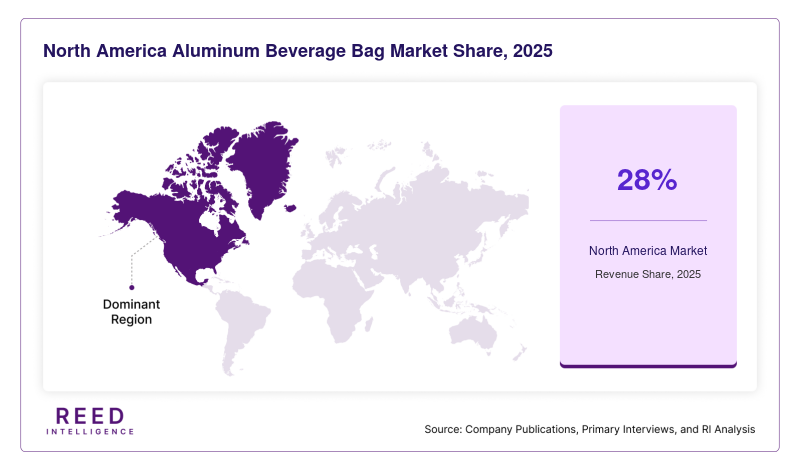
North America accounted for approximately 28% of the global Aluminum Beverage Bag Market share in 2025 and is expected to grow at a CAGR of 8.7% during the forecast period. The region benefits from a well-established beverage industry and strong demand for sustainable packaging solutions. Increasing environmental awareness and regulatory initiatives aimed at reducing plastic waste are encouraging manufacturers to adopt aluminum-based packaging.
The United States dominates the North American market due to its advanced packaging infrastructure and high consumption of ready-to-drink beverages. A key growth factor in the region is the increasing demand for premium and functional beverages, which require high-quality packaging solutions. This trend is driving innovation in aluminum beverage bag designs.
Europe
Europe held a market share of around 24% in 2025 and is projected to grow at a CAGR of 8.9% through 2034. The region’s strong emphasis on sustainability and circular economy practices is driving the adoption of recyclable packaging materials. Stringent regulations on single-use plastics are further accelerating the shift toward aluminum beverage bags.
Germany leads the European market, supported by its robust manufacturing sector and focus on environmental sustainability. A unique growth factor in the region is the widespread implementation of recycling programs, which enhances the appeal of aluminum packaging. This supports long-term market growth.
Asia Pacific
Asia Pacific emerged as the largest regional market, accounting for approximately 32% of the global share in 2025, with a projected CAGR of 10.5%. Rapid urbanization, population growth, and increasing disposable incomes are driving demand for convenient beverage packaging solutions in the region.
China dominates the Asia Pacific market due to its large consumer base and expanding beverage industry. A key growth factor is the rise of e-commerce platforms, which are increasing the availability of packaged beverages. This is encouraging manufacturers to adopt lightweight and durable packaging formats such as aluminum beverage bags.
Middle East & Africa
The Middle East & Africa region accounted for around 8% of the market share in 2025 and is expected to grow at a CAGR of 9.1%. The region is witnessing increasing demand for packaged beverages due to changing lifestyles and urbanization.
The United Arab Emirates leads the market in this region, driven by a growing tourism sector and high consumption of premium beverages. A unique growth factor is the expansion of hospitality and foodservice industries, which is increasing the demand for innovative packaging solutions.
Latin America
Latin America held a market share of approximately 8% in 2025 and is projected to grow at a CAGR of 9.3%. The region is experiencing steady growth in the beverage industry, supported by increasing consumer spending and urbanization.
Brazil dominates the Latin American market, benefiting from a large population and growing demand for convenient beverage options. A key growth factor is the increasing popularity of portable and single-serve packaging formats, which is driving the adoption of aluminum beverage bags.
Competitive Landscape
The Aluminum Beverage Bag Market is moderately competitive, with several global and regional players focusing on innovation and sustainability. Companies are investing in research and development to enhance product performance and reduce environmental impact. Strategic partnerships, mergers, and acquisitions are common strategies to expand market presence and improve technological capabilities.
Amcor Plc is recognized as a leading player in the market, known for its advanced packaging solutions and strong global presence. The company has recently introduced a new range of recyclable aluminum-based flexible packaging, aimed at reducing environmental impact and meeting regulatory requirements. Other key players are also focusing on expanding their product portfolios and improving manufacturing processes to gain a competitive edge.
Key Players List
- Amcor Plc
- Ball Corporation
- Crown Holdings Inc.
- Mondi Group
- Sealed Air Corporation
- Sonoco Products Company
- Constantia Flexibles
- Huhtamaki Oyj
- Berry Global Inc.
- Winpak Ltd.
- Smurfit Kappa Group
- Coveris Holdings S.A.
- ProAmpac LLC
- Clondalkin Group
- Glenroy Inc.
Recent Developments
- In 2025, Amcor Plc launched a new recyclable aluminum beverage bag designed to enhance sustainability and reduce carbon footprint.
- In 2024, Mondi Group expanded its production capacity for flexible aluminum packaging to meet rising demand in Europe and Asia.
- In 2025, Berry Global Inc. introduced advanced printing technology for aluminum beverage bags, enabling improved branding and customization.
Aluminum Beverage Bag Market Segments
Type
- Flat Aluminum Beverage Bags
- Stand-Up Aluminum Beverage Bags
Application
- Alcoholic Beverages
- Non-Alcoholic Beverages
End-Use
- Retail
- Foodservice
By Region
- North America
- Europe
- APAC
- Middle East and Africa
- LATAM