Anal Fistula Treatment Market Size, Share Demand Report By Treatment Type (Surgical Treatment, Minimally Invasive Treatment), By Product Type (Biologics, Stem Cell-Based Products), By End-Use (Hospitals, Ambulatory Surgical Centers) By Region & Segment Forecasts, 2026–2034
USD 3950
Market Overview
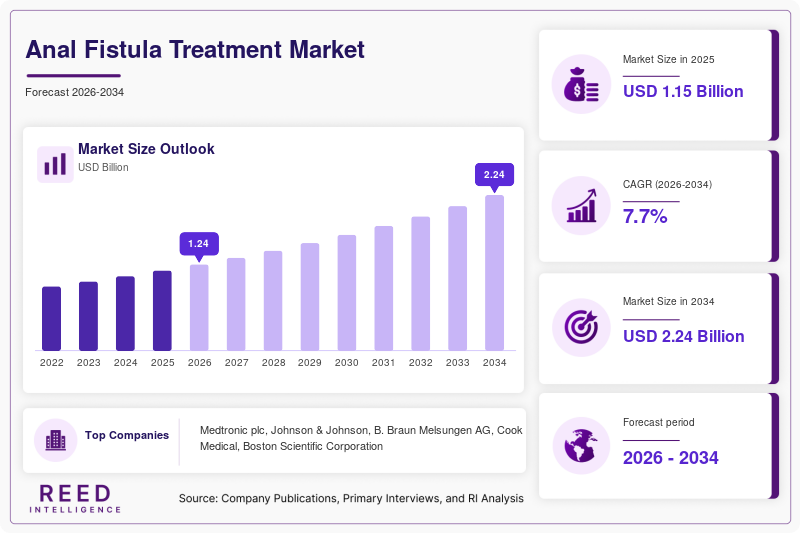
The Anal Fistula Treatment Market size was valued at approximately USD 1.15 billion in 2026 and is projected to reach USD 2.08 billion by 2034, growing at a CAGR of 7.7% during the forecast period (2026–2034). The market is driven by the increasing prevalence of anorectal disorders, including fistula-in-ano, particularly among aging populations and individuals with chronic gastrointestinal conditions such as Crohn’s disease. The rising awareness of minimally invasive surgical options and improvements in healthcare infrastructure are contributing to steady market expansion.
A significant global factor supporting market growth is the increasing adoption of advanced surgical technologies. Innovations such as laser-based procedures, fibrin glue therapy, and bioprosthetic plugs are reducing recovery time and improving patient outcomes. These advancements are encouraging both patients and healthcare providers to opt for early intervention, thereby boosting procedural volumes across hospitals and specialty clinics.
Key Highlights
- North America dominated the market with a 38% share in 2025.
- Asia Pacific is expected to register the fastest CAGR of 9.1%.
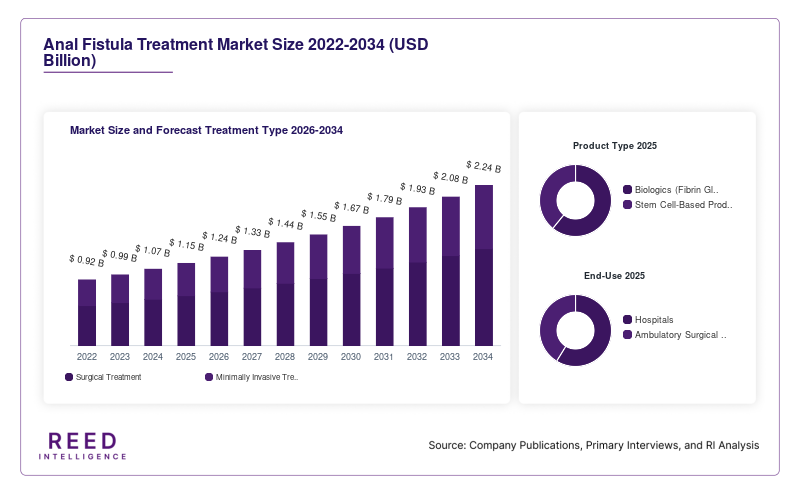
- Surgical treatment segment led with a 62% share, while minimally invasive procedures are projected to grow at a CAGR of 8.9%.
- Hospitals accounted for the largest end-use segment share of 54%, while ambulatory surgical centers are the fastest growing with a CAGR of 8.5%.
- The U.S. market was valued at USD 410 million in 2024 and USD 438 million in 2025.
Market Trends
Rising Adoption of Minimally Invasive Procedures
The increasing preference for minimally invasive procedures is a prominent trend in the Anal Fistula Treatment Market. Techniques such as video-assisted anal fistula treatment (VAAFT), laser ablation, and ligation of intersphincteric fistula tract (LIFT) are gaining traction due to their reduced postoperative pain and faster recovery times. These procedures also lower the risk of complications such as incontinence, which has historically been a concern with conventional surgery. Healthcare providers are increasingly integrating these advanced techniques into their treatment protocols, particularly in developed regions where technological adoption is high.
Moreover, patient awareness regarding these procedures is increasing due to digital health platforms and physician outreach programs. The growing demand for outpatient procedures is further accelerating this trend, as minimally invasive options often require shorter hospital stays. This shift is expected to influence healthcare delivery models and encourage investment in advanced surgical equipment.
Growing Use of Biologic Therapies and Regenerative Medicine
Another key trend is the emergence of biologic therapies and regenerative medicine in treating anal fistulas. Stem cell therapy and platelet-rich plasma (PRP) treatments are being explored as alternatives to traditional surgical methods. These therapies aim to promote tissue regeneration and reduce recurrence rates, addressing a major limitation of conventional treatments.
Pharmaceutical companies and research institutions are increasingly investing in clinical trials to validate the efficacy of these treatments. The integration of biologics is particularly beneficial for patients with complex or recurrent fistulas. As regulatory approvals expand and clinical outcomes improve, these therapies are expected to gain wider acceptance, contributing to long-term market growth.
Market Drivers
Increasing Prevalence of Gastrointestinal Disorders
The rising incidence of gastrointestinal diseases, particularly Crohn’s disease and ulcerative colitis, is a major driver for the Anal Fistula Treatment Market. These conditions significantly increase the risk of developing anal fistulas, especially in chronic cases. As the global burden of inflammatory bowel diseases continues to grow, the demand for effective treatment solutions is also increasing.
Additionally, lifestyle factors such as poor diet, sedentary habits, and rising obesity rates contribute to anorectal complications. Early diagnosis and improved screening methods are enabling timely intervention, further boosting treatment volumes. Healthcare systems are prioritizing the management of chronic gastrointestinal conditions, indirectly supporting market expansion.
Advancements in Surgical Technologies
Technological advancements in surgical procedures are another key driver of market growth. The development of precision-based instruments and imaging techniques has improved the accuracy and success rates of fistula treatments. Laser therapy and robotic-assisted surgery are gaining popularity due to their ability to minimize tissue damage and enhance patient outcomes.
Hospitals and surgical centers are investing in these technologies to improve efficiency and patient satisfaction. Training programs for surgeons are also expanding, ensuring the adoption of advanced techniques across regions. These innovations are reducing recurrence rates and increasing patient confidence, thereby driving market demand.
Market Restraint
High Treatment Costs and Limited Accessibility
One of the primary restraints in the Anal Fistula Treatment Market is the high cost associated with advanced treatment options. Minimally invasive procedures, biologic therapies, and specialized surgical interventions often require expensive equipment and highly skilled professionals. This increases the overall cost of treatment, making it less accessible to patients in low- and middle-income regions.
The financial burden is particularly significant in countries with limited insurance coverage or inadequate healthcare infrastructure. Patients may delay or avoid treatment due to cost concerns, leading to complications and increased disease severity. Additionally, the lack of trained colorectal specialists in rural areas further limits access to advanced care.
For example, while laser-based treatments are widely available in developed regions, their adoption in emerging economies remains slow due to cost constraints. This disparity creates an uneven market landscape and restricts overall growth potential. Addressing affordability and improving healthcare access will be critical to overcoming this restraint.
Market Opportunities
Expansion in Emerging Markets
Emerging economies present significant growth opportunities for the Anal Fistula Treatment Market. Countries in Asia Pacific, Latin America, and parts of Africa are witnessing improvements in healthcare infrastructure and increasing investments in medical technology. Rising disposable incomes and growing awareness about anorectal conditions are driving demand for advanced treatment options.
Governments in these regions are also focusing on expanding healthcare coverage and improving surgical capabilities. Public-private partnerships are facilitating the establishment of specialized treatment centers, enhancing accessibility. As a result, market players are increasingly targeting these regions for expansion, offering cost-effective solutions tailored to local needs.
Development of Non-Surgical Treatment Options
The development of non-surgical and minimally invasive treatment options represents another promising opportunity. Patients often seek alternatives to conventional surgery due to concerns about pain, recovery time, and complications. Innovations such as injectable therapies, biologic agents, and regenerative medicine are addressing these concerns.
Research and development activities are intensifying in this area, with several clinical trials underway. These treatments have the potential to reduce recurrence rates and improve patient outcomes, making them attractive options for both patients and healthcare providers. As these technologies mature, they are expected to open new revenue streams and expand the market scope.
Segmental Analysis
By Treatment Type
The surgical treatment segment dominated the Anal Fistula Treatment Market, accounting for approximately 62% of the market share in 2024. Conventional surgical methods, including fistulotomy and seton placement, remain widely used due to their effectiveness in treating simple fistulas. These procedures are often preferred in hospital settings where experienced surgeons are available. The high success rates and established clinical guidelines further support the dominance of this segment.
In addition, surgical treatments are often covered by insurance in developed regions, making them accessible to a larger patient population. Hospitals continue to invest in advanced surgical tools to improve outcomes and reduce complications. This sustained demand ensures the continued dominance of surgical treatments in the market.
Minimally invasive treatments are the fastest-growing subsegment, expected to grow at a CAGR of 8.9% during the forecast period. Techniques such as laser therapy and VAAFT are gaining popularity due to their reduced recovery time and lower risk of complications. These procedures are particularly beneficial for complex or recurrent fistulas.
The growth of this subsegment is driven by increasing patient preference for less invasive options and advancements in medical technology. Healthcare providers are also adopting these techniques to improve efficiency and patient satisfaction. As awareness increases, minimally invasive treatments are expected to gain a larger share of the market.
By Product Type
The biologics segment held the largest share of the product type segment in 2024, accounting for approximately 48% of the market. Products such as fibrin glue and anal fistula plugs are widely used due to their ability to promote healing and reduce recurrence rates. These products are often used in conjunction with surgical procedures to enhance outcomes.
The increasing adoption of biologics is supported by ongoing research and development activities. Pharmaceutical companies are focusing on developing innovative products that improve efficacy and safety. This trend is expected to sustain the dominance of the biologics segment in the coming years.
Stem cell-based products represent the fastest-growing subsegment, with a projected CAGR of 9.3%. These products offer a promising alternative to traditional treatments by promoting tissue regeneration and reducing recurrence rates. Clinical trials are demonstrating positive outcomes, encouraging adoption among healthcare providers.
The growth of this subsegment is driven by advancements in regenerative medicine and increasing investment in research. As regulatory approvals expand, stem cell-based products are expected to play a significant role in the future of anal fistula treatment.
By End-Use
Hospitals dominated the end-use segment in 2024, accounting for approximately 54% of the market share. Hospitals are the primary centers for surgical procedures due to their advanced infrastructure and availability of skilled professionals. They also handle complex cases that require specialized care.
The dominance of hospitals is further supported by insurance coverage and government funding in many regions. Patients often prefer hospitals for their comprehensive care and access to advanced technologies. This ensures the continued leadership of this segment in the market.
Ambulatory surgical centers are the fastest-growing subsegment, with a CAGR of 8.5%. These centers offer cost-effective and convenient treatment options, particularly for minimally invasive procedures. Shorter hospital stays and lower costs make them an attractive option for patients.
The growth of this subsegment is driven by the increasing demand for outpatient procedures and the expansion of healthcare facilities. As technology advances, ambulatory surgical centers are expected to play a larger role in the treatment of anal fistulas.
Regional Analysis
North America
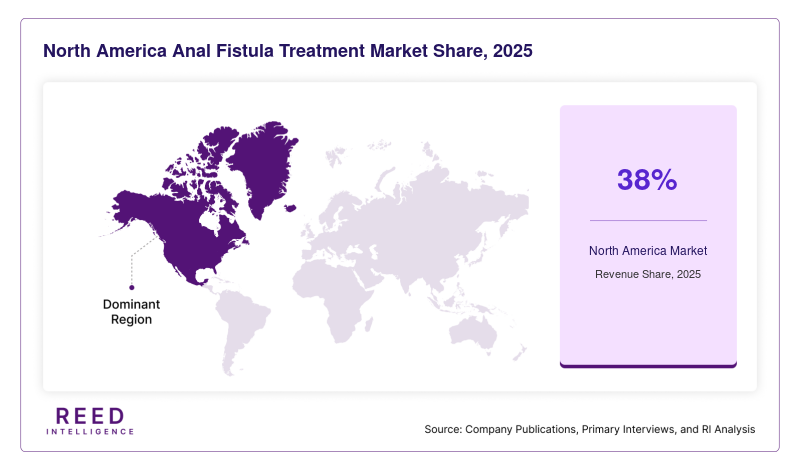
North America held the largest share of the Anal Fistula Treatment Market in 2025, accounting for approximately 38% of global revenue. The region is expected to grow at a CAGR of 6.8% during the forecast period. High healthcare expenditure, advanced medical infrastructure, and the presence of leading market players contribute to this dominance. The widespread adoption of minimally invasive procedures further supports market growth.
The United States is the dominant country in this region, driven by a high prevalence of gastrointestinal disorders and strong reimbursement frameworks. A unique growth factor is the rapid adoption of robotic-assisted surgical systems, which enhance precision and reduce recovery times, thereby increasing patient preference for advanced treatments.
Europe
Europe accounted for around 27% of the market share in 2025 and is projected to grow at a CAGR of 7.2%. The region benefits from well-established healthcare systems and increasing awareness about anorectal health. Government initiatives to improve surgical outcomes and patient care are also contributing to market growth.
Germany leads the European market due to its advanced healthcare infrastructure and strong focus on medical innovation. A unique growth factor is the increasing adoption of biologic therapies, supported by favorable regulatory frameworks and ongoing clinical research in regenerative medicine.
Asia Pacific
Asia Pacific held a 22% market share in 2025 and is expected to register the fastest CAGR of 9.1%. Rapid urbanization, improving healthcare access, and rising awareness about anal fistula treatments are driving market growth. The region also benefits from a large patient pool and increasing investments in healthcare infrastructure.
China dominates the region due to its expanding healthcare system and growing number of specialized surgical centers. A unique growth factor is the rising adoption of cost-effective minimally invasive procedures, which cater to a large population while maintaining affordability.
Middle East & Africa
The Middle East & Africa region accounted for approximately 7% of the market share in 2025 and is projected to grow at a CAGR of 6.5%. The market is driven by improving healthcare infrastructure and increasing government investments in medical facilities. However, limited access to advanced treatments remains a challenge.
Saudi Arabia is the leading country in this region, supported by government initiatives to modernize healthcare services. A unique growth factor is the increasing establishment of specialized surgical centers, which enhances access to advanced treatment options and improves patient outcomes.
Latin America
Latin America held a market share of around 6% in 2025 and is expected to grow at a CAGR of 7.0%. The region is witnessing gradual improvements in healthcare infrastructure and increasing awareness about anorectal disorders. Economic development and healthcare reforms are supporting market expansion.
Brazil leads the region due to its large population and improving healthcare facilities. A unique growth factor is the growing adoption of outpatient surgical procedures, which reduce treatment costs and improve accessibility for patients.
Competitive Landscape
The Anal Fistula Treatment Market is moderately fragmented, with several global and regional players competing based on product innovation, pricing strategies, and technological advancements. Leading companies are focusing on expanding their product portfolios and investing in research and development to gain a competitive edge.
Medtronic plc is a leading player in the market, known for its advanced surgical solutions and strong global presence. The company has recently introduced innovative minimally invasive devices aimed at improving treatment outcomes and reducing recovery time. Other major players are also adopting similar strategies, including partnerships and acquisitions, to strengthen their market position.
Companies are increasingly focusing on emerging markets to expand their customer base. The competitive landscape is characterized by continuous innovation and strategic collaborations, which are expected to drive market growth over the forecast period.
Key Players
- Medtronic plc
- Johnson & Johnson
- B. Braun Melsungen AG
- Cook Medical
- Boston Scientific Corporation
- Coloplast A/S
- Smith & Nephew plc
- Integra LifeSciences
- Stryker Corporation
- ConvaTec Group plc
- KARL STORZ SE & Co. KG
- Olympus Corporation
- Ethicon Inc.
- Baxter International Inc.
- Zimmer Biomet Holdings Inc.
Recent Developments
- In 2025, Medtronic plc launched a new laser-based device for minimally invasive anal fistula treatment, enhancing procedural precision.
- In 2024, Johnson & Johnson expanded its surgical portfolio with advanced biologic products aimed at improving healing outcomes.
- In 2025, B. Braun Melsungen AG invested in research focused on regenerative therapies, including stem cell-based treatments for complex fistulas.
Anal Fistula Treatment Market Segments
Treatment Type
- Surgical Treatment
- Minimally Invasive Treatment
Product Type
- Biologics (Fibrin Glue, Anal Fistula Plugs)
- Stem Cell-Based Products
End-Use
- Hospitals
- Ambulatory Surgical Centers
By Region
- North America
- Europe
- APAC
- Middle East and Africa
- LATAM