Anaplastic Astrocytoma Market Size, Share, Growth & Forecast Report by Treatment Type (Chemotherapy, Radiotherapy, Targeted Therapy, Surgery), By Diagnosis Method (MRI, CT Scan, Molecular Diagnostics, Biopsy), By End-Use (Hospitals, Specialty Clinics, Research Institutes, Diagnostic Centers), By Region (North America, Europe, Asia Pacific, Middle East & Africa, Latin America), Industry Trends & Global Forecast 2025–2034
USD 3950
Market Overview
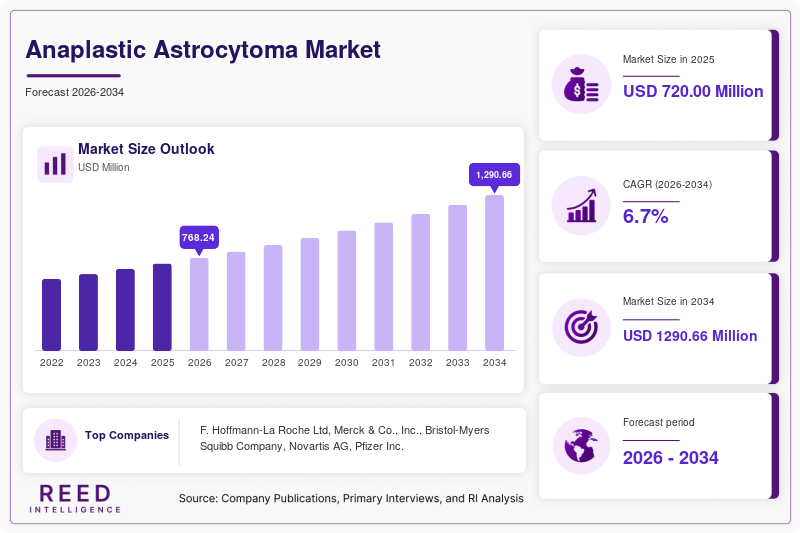
The Anaplastic Astrocytoma Market size is estimated to reach approximately USD 720 million, rising to around USD 760 million in 2026. The market is projected to achieve a value of nearly USD 1.28 billion by 2034, expanding at a compound annual growth rate (CAGR) of 6.7% during the forecast period (2025–2034). This growth trajectory reflects ongoing developments in targeted therapies, improved diagnostic capabilities, and rising awareness regarding early detection of central nervous system tumors.
One of the primary growth factors is the increasing prevalence of brain tumors, particularly malignant gliomas such as anaplastic astrocytoma. The growing geriatric population globally contributes significantly to the rising disease burden, as age remains a major risk factor. Additionally, advancements in imaging technologies such as MRI and PET scans have enhanced diagnostic accuracy, enabling earlier detection and intervention.
Key Highlights
- North America dominated the Anaplastic Astrocytoma Market in 2025, accounting for approximately 38% market share, supported by advanced healthcare infrastructure and strong R&D presence.
- Asia Pacific is projected to be the fastest-growing region, registering a CAGR of 7.5% (2025–2034) due to increasing healthcare investments and rising awareness.
- The global market size was valued at USD 720 million in 2025 and is expected to reach USD 1.28 billion by 2034, growing at a CAGR of 6.7%.
- By treatment type, chemotherapy dominated the segment with around 42% share in 2024, owing to its widespread adoption in standard treatment protocols.
- Targeted therapy is the fastest-growing segment, driven by advancements in precision medicine and increasing focus on genetic-based treatments.
- Rising prevalence of brain tumors and continuous advancements in diagnostic technologies are significantly supporting overall market growth.
Market Trends
Rising Adoption of Targeted and Precision Therapies
A significant trend in the Anaplastic Astrocytoma Market is the growing adoption of targeted and precision therapies. These therapies focus on specific molecular and genetic characteristics of tumors, improving treatment outcomes while minimizing damage to healthy tissues. Advances in genomic profiling have enabled clinicians to identify biomarkers associated with anaplastic astrocytoma, leading to more personalized treatment approaches. Pharmaceutical companies are increasingly developing drugs that target mutations such as IDH1 and IDH2, which are commonly observed in gliomas. This trend is reshaping the treatment paradigm and contributing to improved patient survival rates and quality of life.
Integration of Artificial Intelligence in Diagnosis and Treatment Planning
Another emerging trend is the integration of artificial intelligence (AI) and machine learning technologies in diagnosis and treatment planning. AI-based tools are being used to analyze imaging data, predict tumor progression, and assist in surgical planning. These technologies enhance diagnostic accuracy and help clinicians make informed decisions regarding treatment strategies. Additionally, AI-driven clinical trials are accelerating drug discovery and development processes. The increasing adoption of digital health technologies is expected to streamline workflows in oncology centers, reduce diagnostic errors, and improve overall patient outcomes in the coming years.
Market Drivers
Increasing Incidence of High-Grade Gliomas
The rising incidence of high-grade gliomas, including anaplastic astrocytoma, is a major driver of market growth. Factors such as aging populations, environmental influences, and improved diagnostic capabilities have contributed to the growing number of diagnosed cases. As awareness about neurological disorders increases, more patients are seeking medical evaluation for symptoms, leading to higher detection rates. This surge in patient population is creating a sustained demand for effective treatment options, including surgery, chemotherapy, and advanced radiotherapy techniques. Healthcare systems are also prioritizing oncology services, further supporting market expansion.
Advancements in Therapeutic Technologies
Technological advancements in therapeutic approaches are significantly driving the Anaplastic Astrocytoma Market. Innovations such as stereotactic radiosurgery, proton therapy, and combination drug regimens have improved treatment efficacy. The development of novel chemotherapeutic agents and immunotherapies has expanded the range of available treatment options. Clinical trials focusing on new drug candidates and treatment combinations are continuously enhancing the standard of care. These advancements not only improve survival rates but also reduce treatment-related side effects, making therapies more accessible and acceptable to patients.
Market Restraint
High Cost of Treatment and Limited Accessibility
One of the primary restraints in the Anaplastic Astrocytoma Market is the high cost associated with treatment and limited accessibility in certain regions. Advanced therapies such as targeted treatments, proton therapy, and precision medicine approaches often involve substantial expenses, making them less affordable for patients in low- and middle-income countries. Additionally, the requirement for specialized infrastructure and skilled healthcare professionals further limits the availability of these treatments. For instance, access to advanced radiotherapy equipment and neuro-oncology expertise is often concentrated in urban centers, leaving rural populations underserved. This disparity can delay diagnosis and treatment, negatively impacting patient outcomes and slowing overall market growth.
Market Opportunities
Expansion of Clinical Trials and Drug Development
The expansion of clinical trials presents a significant opportunity in the Anaplastic Astrocytoma Market. Pharmaceutical and biotechnology companies are increasingly investing in research to develop novel therapies targeting specific genetic mutations and tumor pathways. The growing number of clinical trials focusing on immunotherapies and combination treatments is expected to yield promising results. These developments can lead to the introduction of innovative drugs with improved efficacy and safety profiles. Additionally, regulatory agencies are providing support through accelerated approval pathways, encouraging companies to bring new treatments to market more quickly.
Growth in Emerging Markets
Emerging markets offer substantial growth opportunities due to improving healthcare infrastructure and increasing awareness about cancer treatment. Countries in Asia Pacific, Latin America, and the Middle East are witnessing rising investments in healthcare facilities and oncology services. Governments and private organizations are working to expand access to advanced diagnostic and treatment options. This expansion is expected to increase the number of diagnosed cases and improve treatment rates. As a result, market players have the opportunity to establish a strong presence in these regions by offering cost-effective solutions and forming strategic partnerships with local healthcare providers.
Segmental Analysis
By Treatment Type
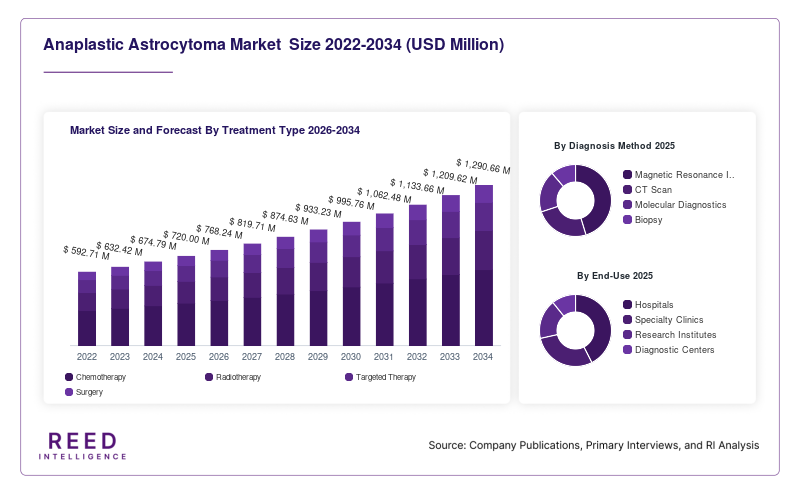
The treatment type segment is dominated by chemotherapy, which accounted for approximately 42% of the market share in 2024. Chemotherapy remains a standard treatment option for anaplastic astrocytoma, often used in combination with surgery and radiotherapy. The widespread use of established chemotherapeutic agents and their availability across healthcare settings contribute to their dominance. Additionally, ongoing research aimed at improving drug efficacy and reducing side effects is further supporting the growth of this segment.
Targeted therapy is the fastest-growing subsegment, expected to register a CAGR of 7.8% during the forecast period. The growth is driven by advancements in molecular biology and the identification of specific genetic mutations associated with anaplastic astrocytoma. Targeted therapies offer improved precision and reduced toxicity compared to traditional treatments. Increasing investments in research and development and the growing number of clinical trials are expected to drive the adoption of these therapies.
By Diagnosis Method
The diagnosis method segment is led by magnetic resonance imaging (MRI), which held a market share of approximately 48% in 2024. MRI is widely used for the diagnosis and monitoring of brain tumors due to its high resolution and ability to provide detailed images of brain structures. The increasing availability of advanced imaging technologies and the growing emphasis on early diagnosis contribute to the dominance of this segment.
Molecular diagnostics is the fastest-growing subsegment, with a projected CAGR of 8.2% during the forecast period. The growth is attributed to the increasing use of genetic and biomarker testing in cancer diagnosis. Molecular diagnostics enable the identification of specific tumor characteristics, facilitating personalized treatment approaches. The rising adoption of precision medicine and advancements in genomic technologies are expected to drive the expansion of this segment.
By End-Use
Hospitals represent the dominant end-use segment, accounting for approximately 55% of the market share in 2024. Hospitals are the primary centers for the diagnosis and treatment of anaplastic astrocytoma, offering comprehensive healthcare services including surgery, radiotherapy, and chemotherapy. The availability of specialized medical professionals and advanced treatment facilities contributes to the dominance of this segment.
Specialty clinics are the fastest-growing subsegment, expected to grow at a CAGR of 7.3% during the forecast period. The growth is driven by the increasing number of specialized oncology centers focusing on brain tumor treatment. These clinics offer targeted and personalized care, attracting patients seeking advanced treatment options. The expansion of private healthcare services and increasing patient preference for specialized care are supporting the growth of this segment.
Regional Analysis
North America
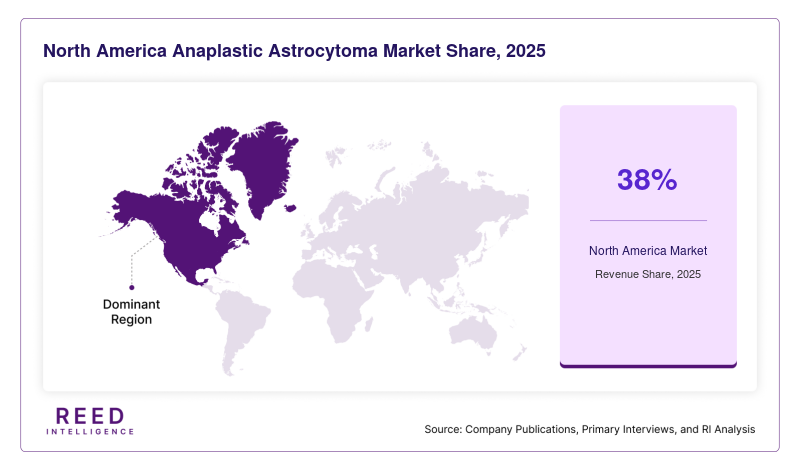
North America held the largest share of the Anaplastic Astrocytoma Market in 2025, accounting for approximately 38% of the global market. The region is expected to maintain its dominance throughout the forecast period, with a CAGR of 6.2%. The presence of advanced healthcare infrastructure, high healthcare expenditure, and strong research and development activities contribute to market growth. Additionally, favorable reimbursement policies and early adoption of innovative therapies support the expansion of the market in this region.
The United States dominates the North American market due to its well-established oncology ecosystem and extensive clinical research activities. A key growth factor is the strong presence of leading pharmaceutical companies and academic institutions engaged in neuro-oncology research. Continuous investments in precision medicine and personalized treatment approaches further enhance the region’s leadership position.
Europe
Europe accounted for around 27% of the global market share in 2025 and is projected to grow at a CAGR of 6.5% during the forecast period. The region benefits from a robust healthcare system and increasing government initiatives aimed at cancer research and treatment. The growing adoption of advanced diagnostic tools and treatment technologies is contributing to market growth across European countries.
Germany is a leading contributor to the European market, supported by its advanced healthcare infrastructure and strong focus on medical innovation. A unique growth factor is the increasing collaboration between research institutions and pharmaceutical companies, which accelerates the development of novel therapies and enhances treatment outcomes for patients.
Asia Pacific
Asia Pacific is expected to witness the fastest growth in the Anaplastic Astrocytoma Market, with a CAGR of 7.5% during the forecast period. The region accounted for approximately 20% of the global market share in 2025. Rapid economic development, increasing healthcare investments, and growing awareness about cancer diagnosis and treatment are driving market expansion.
China dominates the Asia Pacific market due to its large patient population and expanding healthcare infrastructure. A key growth factor is the increasing government focus on improving cancer care services, including the establishment of specialized oncology centers and the promotion of early diagnosis programs.
Middle East & Africa
The Middle East & Africa region held a smaller share of the global market, approximately 8% in 2025, but is expected to grow at a CAGR of 5.8% during the forecast period. The market growth is supported by improving healthcare infrastructure and increasing investments in medical facilities across the region.
Saudi Arabia leads the market in this region, driven by significant government spending on healthcare development. A unique growth factor is the expansion of public healthcare programs aimed at improving access to cancer treatment services, which is gradually increasing the diagnosis and treatment rates of brain tumors.
Latin America
Latin America accounted for around 7% of the global market share in 2025 and is projected to grow at a CAGR of 6.1% during the forecast period. The region is experiencing gradual improvements in healthcare infrastructure and increasing awareness about cancer treatment options.
Brazil dominates the Latin American market due to its large population and growing healthcare sector. A key growth factor is the increasing investment in oncology care facilities and the expansion of private healthcare services, which are enhancing access to advanced treatment options for patients.
Competitive Landscape
The Anaplastic Astrocytoma Market is moderately competitive, with several pharmaceutical and biotechnology companies actively engaged in research and development. Key players are focusing on developing innovative therapies and expanding their product portfolios through strategic collaborations and acquisitions. The market is characterized by the presence of both established companies and emerging players working on novel treatment approaches.
One of the leading companies in the market is F. Hoffmann-La Roche Ltd, which has a strong presence in oncology and continues to invest in targeted therapies and immuno-oncology research. A recent development includes the expansion of its clinical trial pipeline for brain tumor treatments, aiming to improve patient outcomes. Other companies are also focusing on advancing their research capabilities and strengthening their market position through partnerships and product launches.
Key Players
- F. Hoffmann-La Roche Ltd
- Merck & Co., Inc.
- Bristol-Myers Squibb Company
- Novartis AG
- Pfizer Inc.
- AstraZeneca plc
- Eli Lilly and Company
- Amgen Inc.
- Bayer AG
- GlaxoSmithKline plc
- Sanofi S.A.
- Teva Pharmaceutical Industries Ltd.
- Sun Pharmaceutical Industries Ltd.
- Dr. Reddy’s Laboratories Ltd.
- Cipla Ltd.
Recent Developments
- In 2024, a major pharmaceutical company initiated a Phase III clinical trial for a targeted therapy aimed at treating high-grade gliomas, including anaplastic astrocytoma.
- In 2025, a biotechnology firm announced positive results from a clinical study evaluating an immunotherapy drug for brain tumors, showing improved survival rates.
- In 2025, a global healthcare company expanded its neuro-oncology research program by partnering with academic institutions to accelerate the development of personalized treatment approaches.
Anaplastic Astrocytoma Market Segments
By Treatment Type
- Chemotherapy
- Radiotherapy
- Targeted Therapy
- Surgery
By Diagnosis Method
- Magnetic Resonance Imaging (MRI)
- CT Scan
- Molecular Diagnostics
- Biopsy
By End-Use
- Hospitals
- Specialty Clinics
- Research Institutes
- Diagnostic Centers
By Region
- North America
- Europe
- APAC
- Middle East and Africa
- LATAM