Animal Anti Rabies Vaccine Market Size, Share & Demand Report By Type (Inactivated Vaccines, Recombinant Vaccines), By Application (Companion Animals, Livestock), By End-Use (Veterinary Clinics, Animal Shelters), By Region & Segment Forecasts, 2025–2034
USD 3950
Market Overview
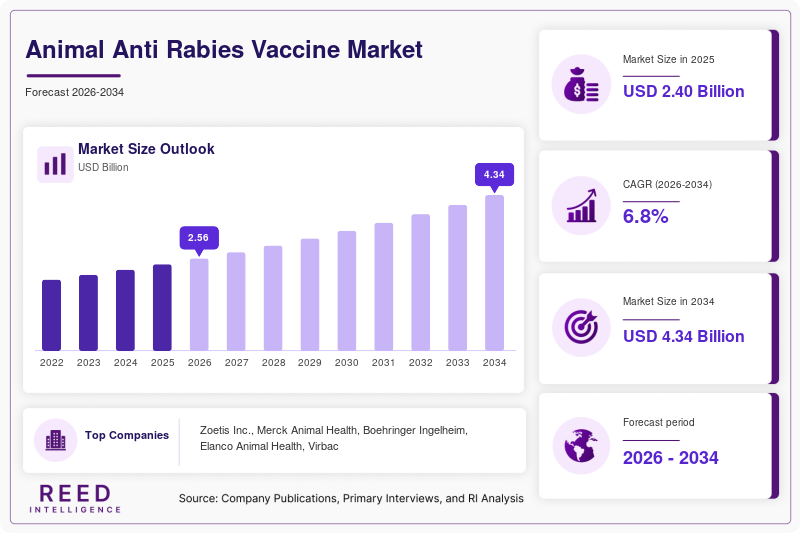
The Animal Anti Rabies Vaccine Market size is witnessing steady expansion driven by increasing awareness of zoonotic diseases, rising pet ownership, and supportive government vaccination programs. The global market size was estimated at USD 2.4 billion in 2025 and is projected to reach USD 2.6 billion in 2026. Over the forecast period from 2025 to 2034, the market is expected to grow at a compound annual growth rate (CAGR) of 6.8%, reaching approximately USD 4.5 billion by 2034.
Rabies remains a critical public health concern in many regions, particularly in developing economies where animal vaccination coverage is still evolving. Vaccination of companion animals and livestock plays a key role in controlling transmission to humans. The rising prevalence of rabies cases in stray and wild animals has increased demand for effective and accessible vaccines. In addition, regulatory frameworks promoting mandatory pet vaccination have supported consistent market demand.
Key Highlights
- Market size estimated at USD 2.4 billion in 2025
- Expected to reach USD 4.5 billion by 2034
- CAGR of 6.8% from 2025 to 2034
- Increasing government initiatives for rabies eradication
- Rising pet ownership and veterinary care expenditure
Market Trends
Increasing Adoption of Advanced Vaccine Technologies
The Animal Anti Rabies Vaccine Market is experiencing a shift toward advanced vaccine technologies, including recombinant vaccines and cell culture-based formulations. These vaccines offer improved safety, reduced adverse effects, and enhanced immune response compared to traditional nerve tissue vaccines. Manufacturers are focusing on developing vaccines with longer duration of immunity, reducing the need for frequent booster doses. This trend is particularly significant in developed markets where regulatory standards demand higher safety profiles. Additionally, the adoption of thermostable vaccines is gaining attention, especially in regions with limited cold chain infrastructure. These innovations are expected to improve vaccination coverage in rural and remote areas.
Expansion of Mass Vaccination Programs
Governments and international organizations are increasingly implementing large-scale animal vaccination campaigns to eliminate rabies. These programs are particularly prominent in Asia Pacific and Africa, where rabies incidence remains high. Mass dog vaccination initiatives are being supported by public-private partnerships, funding from global health agencies, and awareness campaigns. The integration of digital tools for tracking vaccination coverage is also becoming more common. These programs not only increase vaccine demand but also improve public awareness about preventive healthcare for animals. As a result, consistent vaccination practices are becoming more widespread, supporting long-term market growth.
Market Drivers
Rising Prevalence of Rabies and Zoonotic Diseases
The increasing incidence of rabies across several regions is a major driver for the Animal Anti Rabies Vaccine Market. Rabies continues to pose a serious health threat, particularly in countries with large populations of stray animals. The transmission of rabies from animals to humans has intensified the need for preventive measures, including widespread vaccination. Governments are prioritizing rabies elimination programs, which has led to increased procurement of animal vaccines. Veterinary clinics and animal shelters are also emphasizing routine vaccination as part of standard care. This growing awareness among pet owners and livestock handlers is significantly contributing to market expansion.
Growth in Pet Ownership and Veterinary Care Spending
The global rise in pet ownership, particularly in urban areas, is fueling demand for animal vaccines. Companion animals such as dogs and cats are increasingly considered part of the family, leading to higher spending on their healthcare. Veterinary services are becoming more accessible, and pet owners are more willing to invest in preventive care. This trend is supported by rising disposable incomes and changing lifestyles. In addition, the availability of pet insurance in developed markets is encouraging regular vaccination. These factors collectively drive consistent demand for anti rabies vaccines across various regions.
Market Restraint
Limited Access to Veterinary Services in Rural Areas
One of the key challenges facing the Animal Anti Rabies Vaccine Market is the limited availability of veterinary healthcare infrastructure in rural and remote regions. In many developing countries, access to veterinary professionals, clinics, and cold chain facilities remains inadequate. This restricts the distribution and administration of vaccines, leading to lower vaccination coverage. Additionally, lack of awareness about rabies prevention among rural populations further exacerbates the issue.
The impact of this restraint is particularly evident in regions with high stray animal populations, where mass vaccination campaigns are difficult to implement effectively. For example, in certain parts of Africa and Asia, logistical challenges such as poor transportation networks and limited funding hinder vaccination efforts. This results in continued transmission of rabies and slower market penetration. Addressing these challenges requires coordinated efforts from governments, non-governmental organizations, and private stakeholders to improve infrastructure and awareness.
Market Opportunities
Expansion in Emerging Markets
Emerging economies present significant growth opportunities for the Animal Anti Rabies Vaccine Market. Countries in Asia Pacific, Latin America, and Africa are investing in public health initiatives aimed at controlling rabies. These regions have large populations of both domestic and stray animals, creating substantial demand for vaccines. Governments are increasingly collaborating with international organizations to implement vaccination programs. The expansion of veterinary infrastructure and rising awareness among animal owners further support market growth. Companies entering these markets can benefit from untapped potential and growing demand for cost-effective vaccines.
Development of Cost-Effective and Thermostable Vaccines
The development of affordable and thermostable vaccines represents a major opportunity for market players. Cost remains a significant barrier in low-income regions, where large-scale vaccination programs require budget-friendly solutions. Thermostable vaccines that do not require strict cold chain conditions can significantly improve distribution efficiency. These innovations are particularly beneficial in remote areas with limited infrastructure. Manufacturers focusing on research and development in this area can gain a competitive advantage. Additionally, partnerships with government agencies can facilitate large-scale adoption of such vaccines.
Segmental Analysis
By Type
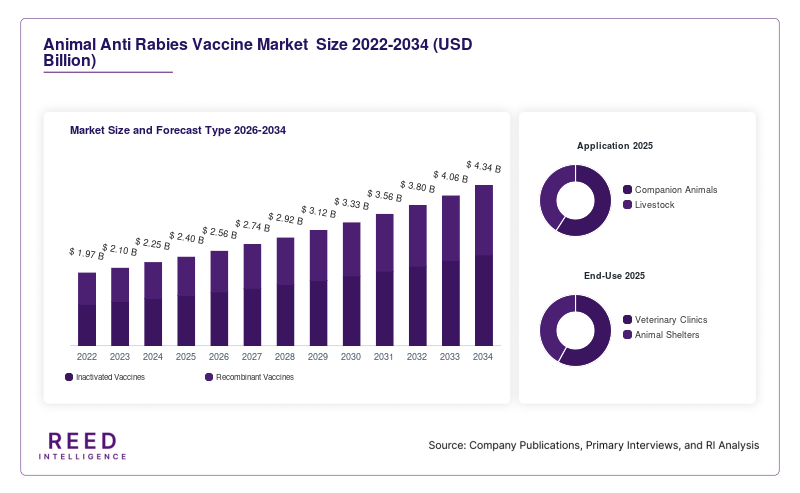
The inactivated vaccine segment dominated the Animal Anti Rabies Vaccine Market in 2024, accounting for approximately 58% of the market share. These vaccines are widely used due to their established safety profile and effectiveness in preventing rabies. Inactivated vaccines are commonly administered to both companion animals and livestock, making them a preferred choice among veterinary practitioners. Their widespread availability and regulatory approval across multiple regions further support their dominance. Additionally, these vaccines are suitable for mass vaccination programs, which contributes to their high adoption rate.
The recombinant vaccine segment is expected to be the fastest-growing, with a projected CAGR of 7.5% during the forecast period. These vaccines offer improved immunogenicity and reduced risk of adverse effects, making them an attractive alternative to traditional vaccines. The growing focus on advanced vaccine technologies and increasing investments in research and development are driving the growth of this segment. Additionally, recombinant vaccines are gaining traction in developed markets where higher safety standards are required.
By Application
The companion animals segment held the largest share of the market in 2024, accounting for approximately 62% of total revenue. This dominance is driven by the increasing number of pet owners and the growing emphasis on preventive healthcare. Dogs and cats are the primary recipients of anti rabies vaccines, as they are more likely to come into contact with humans. Veterinary clinics play a crucial role in administering these vaccines, and regular vaccination schedules are widely followed in developed regions.
The livestock segment is expected to grow at the fastest CAGR of 6.9% over the forecast period. The increasing importance of animal health in the agricultural sector is driving demand for vaccines among livestock owners. Rabies outbreaks in farm animals can result in significant economic losses, which encourages preventive vaccination. Government initiatives to protect livestock health and improve food security are also supporting the growth of this segment.
By End-Use
Veterinary clinics accounted for the largest share of the market in 2024, contributing approximately 55% of total revenue. These clinics serve as the primary point of contact for animal healthcare services, including vaccination. The presence of trained professionals and access to a wide range of vaccines make veterinary clinics the preferred choice for pet owners. Additionally, clinics often provide vaccination packages and reminders, which improve compliance among animal owners.
Animal shelters are projected to be the fastest-growing end-use segment, with a CAGR of 7.1%. The increasing number of stray animals and the need for population control are driving demand for vaccines in shelters. These facilities play a critical role in mass vaccination campaigns, particularly in urban areas. Support from government agencies and non-profit organizations is enabling shelters to expand their vaccination efforts, contributing to market growth.
Regional Analysis
North America
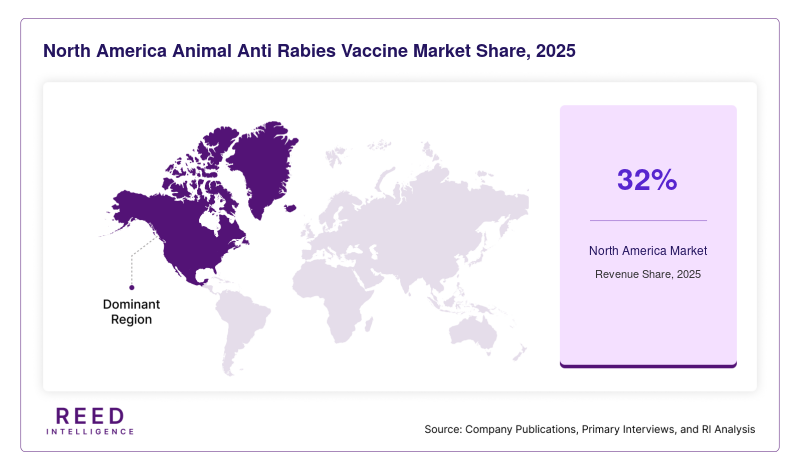
North America accounted for approximately 32% of the Animal Anti Rabies Vaccine Market share in 2025 and is expected to grow at a CAGR of 5.9% during the forecast period. The region benefits from well-established veterinary infrastructure, high pet ownership rates, and strict regulatory requirements for animal vaccination. The presence of advanced healthcare systems and strong awareness about zoonotic diseases supports consistent demand for rabies vaccines. In addition, government regulations mandating pet vaccination contribute to stable market growth.
The United States dominates the regional market due to its large pet population and strong veterinary care ecosystem. A key growth factor is the widespread adoption of pet insurance, which encourages regular vaccination and preventive care. This has led to increased visits to veterinary clinics and higher vaccine uptake. The presence of leading pharmaceutical companies further supports innovation and product availability in the region.
Europe
Europe held around 25% of the global market share in 2025 and is projected to grow at a CAGR of 6.1%. The region has a strong regulatory framework for animal health, including mandatory vaccination programs in several countries. Increasing awareness about rabies prevention and the presence of well-developed veterinary services contribute to steady market growth. Additionally, cross-border regulations for pet travel require vaccination, further driving demand.
Germany is a leading market within Europe, supported by its advanced veterinary infrastructure and high pet ownership rates. A unique growth factor is the increasing focus on animal welfare and government-supported vaccination campaigns. These initiatives ensure consistent vaccine demand and contribute to the overall expansion of the market.
Asia Pacific
Asia Pacific accounted for approximately 28% of the market share in 2025 and is expected to grow at the fastest CAGR of 7.8%. The region faces a high burden of rabies cases, particularly in developing countries. Governments are implementing mass vaccination programs to control the disease, which is driving market growth. Increasing awareness and improving veterinary infrastructure further support demand.
India dominates the regional market due to its large population of stray animals and ongoing rabies control initiatives. A key growth factor is government-led vaccination drives targeting stray dogs, which significantly increases vaccine demand. Public awareness campaigns are also improving vaccination coverage across urban and rural areas.
Middle East & Africa
The Middle East & Africa region held around 8% of the market share in 2025 and is projected to grow at a CAGR of 7.2%. The region faces challenges such as limited veterinary infrastructure and high prevalence of rabies. However, increasing investments in public health programs and support from international organizations are driving market growth. Efforts to improve vaccination coverage are gradually expanding the market.
South Africa is a key market within the region, supported by government initiatives to control rabies outbreaks. A unique growth factor is the involvement of non-governmental organizations in conducting vaccination campaigns in remote areas. These efforts are improving access to vaccines and increasing market penetration.
Latin America
Latin America accounted for approximately 7% of the market share in 2025 and is expected to grow at a CAGR of 6.5%. The region has made significant progress in reducing rabies cases through vaccination programs. Governments are continuing to invest in preventive measures, which supports steady market growth. Increasing pet ownership and improving veterinary services also contribute to demand.
Brazil leads the regional market, driven by its large animal population and strong government support for vaccination programs. A key growth factor is the implementation of nationwide rabies control initiatives, which ensure consistent demand for vaccines. These programs are helping to maintain high vaccination coverage across the country.
Competitive Landscape
The Animal Anti Rabies Vaccine Market is moderately consolidated, with several global and regional players competing based on product quality, pricing, and distribution networks. Companies are focusing on expanding their product portfolios and investing in research and development to introduce advanced vaccines. Strategic collaborations with government agencies and non-governmental organizations are also common, particularly for mass vaccination programs.
Zoetis Inc. is considered a leading player in the market, owing to its extensive portfolio of animal health products and strong global presence. The company continues to invest in innovative vaccine technologies and expand its reach in emerging markets. Other key players are also focusing on strengthening their distribution networks to improve product accessibility.
A recent development in the market includes the launch of new recombinant vaccines with improved safety profiles, which are gaining traction among veterinary professionals. Companies are also engaging in partnerships to support rabies elimination programs, which enhances their market presence and contributes to overall growth.
Key Players
- Zoetis Inc.
- Merck Animal Health
- Boehringer Ingelheim
- Elanco Animal Health
- Virbac
- Ceva Santé Animale
- Indian Immunologicals Ltd.
- Vetoquinol
- HIPRA
- Biogenesis Bago
- Hester Biosciences
- Phibro Animal Health
- Neogen Corporation
- Zydus Animal Health
- Kyoritsu Seiyaku Corporation
Recent Developments
- A leading manufacturer introduced a recombinant anti rabies vaccine with extended immunity duration to reduce booster frequency.
- Several companies partnered with government agencies to support large-scale dog vaccination campaigns in Asia and Africa.
- Expansion of production facilities by key players to meet rising global demand for animal vaccines.
Animal Anti Rabies Vaccine Market Segments
Type
- Inactivated Vaccines
- Recombinant Vaccines
Application
- Companion Animals
- Livestock
End-Use
- Veterinary Clinics
- Animal Shelters
By Region
- North America
- Europe
- APAC
- Middle East and Africa
- LATAM