Animal Ortho Prosthetics Market Size, Share & Demand Report By Product Type (Prosthetics, Orthotics), By Animal Type (Canine, Equine, Other Animals), By Material Type (Carbon Fiber, Thermoplastics, Metal Alloys, Composite Materials), By End Use (Veterinary Hospitals, Veterinary Rehabilitation Centers, Veterinary Clinics), By Region & Segment Forecasts, 2025–2033
USD 3950
Market Overview
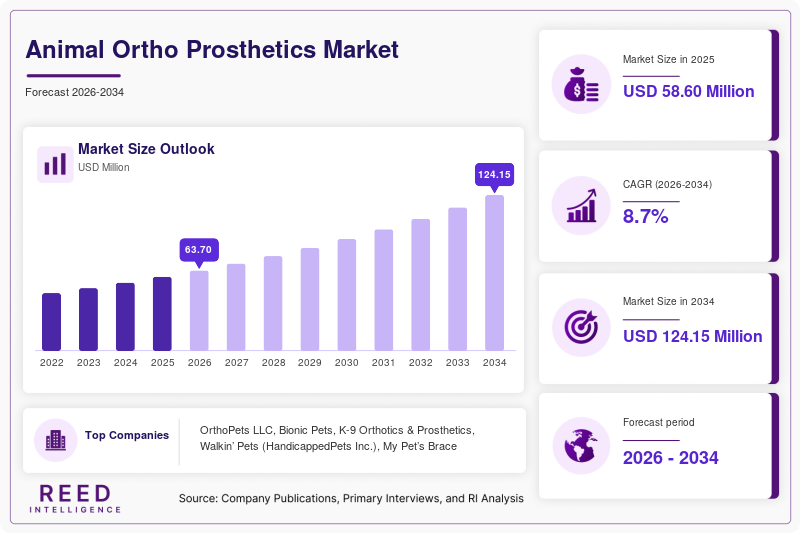
The Animal Ortho Prosthetics Market size was valued at USD 58.6 million in 2024 and is projected to reach USD 123.4 million by 2033, expanding at a compound annual growth rate (CAGR) of 8.7% from 2025 to 2033. The market size is increasing steadily as veterinary healthcare continues to integrate advanced rehabilitation technologies designed for companion and working animals. Animal orthotic and prosthetic devices help restore mobility for animals suffering from limb loss, congenital deformities, trauma injuries, or degenerative orthopedic disorders. Increasing veterinary treatment expenditures and rising awareness regarding animal rehabilitation are key factors contributing to market expansion.
A global factor supporting the growth of the Animal Ortho Prosthetics Market is the increasing humanization of companion animals. Pet owners are allocating higher budgets toward specialized veterinary procedures and long-term rehabilitation solutions. Veterinary hospitals and rehabilitation centers are increasingly incorporating customized prosthetics and orthotic devices to improve mobility outcomes in dogs, horses, and other animals. Technological progress in 3D printing, lightweight materials, and biomechanical design has also improved the precision and comfort of prosthetic devices, supporting wider adoption across veterinary clinics.
Key Highlights
- North America accounted for 41.3% of the global market share in 2025, while Asia Pacific is projected to register the fastest CAGR of 9.6% from 2025 to 2033.
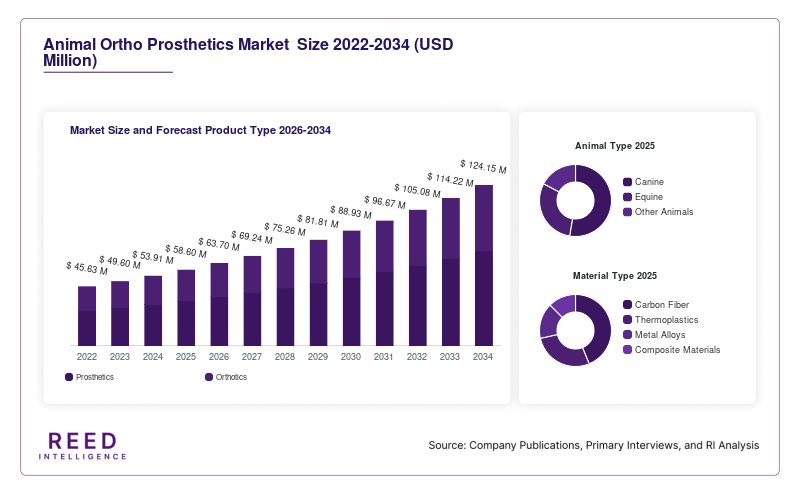
- By product type, prosthetics held the leading share of 56.8% in 2024, while orthotics are projected to grow at a 9.2% CAGR during the forecast period.
- By animal type, canine applications dominated with 63.5% share, whereas equine applications are forecast to expand at 9.4% CAGR.
- The United States remained the dominant country with a market size of USD 20.7 million in 2024, rising to USD 22.3 million in 2025.
Market Trends
Integration of 3D Printing in Veterinary Prosthetics
The integration of 3D printing technologies is transforming the Animal Ortho Prosthetics Market by enabling customized prosthetic limbs tailored to the anatomy of individual animals. Traditional prosthetic manufacturing often involved lengthy design cycles and manual adjustments, which limited accessibility. With additive manufacturing, veterinary prosthetic specialists can rapidly produce precise and lightweight devices based on digital scans of injured limbs.
This trend is particularly relevant in canine rehabilitation, where accurate limb alignment is critical for mobility restoration. Veterinarians are collaborating with biomedical engineers to design prosthetic limbs that replicate natural movement patterns. As scanning technologies and modeling software become more accessible, 3D-printed orthotic braces and prosthetic limbs are expected to become increasingly common in veterinary practices.
Expansion of Veterinary Rehabilitation Centers
Another key trend shaping the Animal Ortho Prosthetics Market is the expansion of veterinary rehabilitation and physiotherapy centers. These facilities focus on post-surgical recovery, injury rehabilitation, and long-term mobility management for animals. Orthotic braces and prosthetic devices are becoming standard components of rehabilitation programs.
Rehabilitation centers are increasingly adopting hydrotherapy, physiotherapy, and prosthetic fitting services as integrated treatment solutions. The growing number of specialized veterinary rehabilitation facilities worldwide is expected to increase demand for animal prosthetics and orthotics in the coming years.
Market Drivers
Increasing Incidence of Orthopedic Injuries in Companion Animals
The rising incidence of orthopedic injuries among companion animals is driving the Animal Ortho Prosthetics Market. Dogs and horses frequently experience ligament injuries, fractures, and degenerative joint disorders that may require prosthetic or orthotic intervention.
Trauma from accidents, congenital limb deformities, and post-surgical rehabilitation needs are contributing to increasing demand for orthopedic devices. Veterinary surgeons increasingly recommend orthotic braces to stabilize injured limbs and reduce recovery times.
As the global population of companion animals grows, the demand for veterinary orthopedic solutions continues to expand, supporting market growth.
Growth in Veterinary Healthcare Spending
Veterinary healthcare spending has increased significantly in recent years, particularly in developed markets. Pet owners are seeking advanced medical treatments similar to those available in human healthcare.
This shift in consumer behavior is supporting the adoption of prosthetic limbs and orthopedic braces for injured animals. Veterinary clinics and specialty hospitals are investing in advanced prosthetic fitting services and rehabilitation technologies.
As veterinary healthcare infrastructure improves globally, the Animal Ortho Prosthetics Market is expected to benefit from higher spending on advanced treatment options.
Market Restraint
High Cost of Customized Prosthetic Devices
One of the key restraints affecting the Animal Ortho Prosthetics Market is the high cost associated with customized prosthetic devices. Animal prosthetics often require individualized measurements, biomechanical analysis, and specialized manufacturing processes.
These devices may require multiple fittings and adjustments to achieve optimal comfort and functionality. As a result, the total treatment cost can be significant for pet owners, limiting accessibility in price-sensitive regions.
In addition, the limited availability of trained veterinary prosthetic specialists in some markets restricts widespread adoption of these devices.
Market Opportunities
Increasing Adoption of Digital Limb Scanning Technologies
Digital limb scanning technologies are creating new opportunities in the Animal Ortho Prosthetics Market. Veterinary clinics are beginning to use advanced imaging and scanning systems to create accurate digital models of injured limbs.
These models allow prosthetic manufacturers to design devices with improved fit and functionality. Digital workflows also reduce production times and allow veterinarians to offer customized prosthetic solutions more efficiently.
As digital scanning technologies become more affordable, their adoption in veterinary orthopedic practices is expected to expand.
Expansion of Veterinary Prosthetics in Emerging Economies
Emerging economies represent significant growth potential for the Animal Ortho Prosthetics Market. Countries in Asia Pacific and Latin America are witnessing increased pet ownership and improving veterinary infrastructure.
Veterinary hospitals in these regions are gradually adopting specialized orthopedic treatment options, including prosthetic limbs and orthotic braces. The entry of international prosthetics providers and local manufacturing initiatives could further accelerate market expansion in developing markets.
Segmental Analysis
By Product Type
Prosthetic devices represented the largest segment of the Animal Ortho Prosthetics Market, accounting for 56.8% of the market share in 2024. Prosthetic limbs are widely used for animals that have undergone limb amputation due to trauma or disease. Veterinary prosthetics specialists design custom devices to restore balance and mobility. Dogs represent the largest group receiving prosthetic limbs due to their active lifestyle and high injury incidence.
Orthotic devices will emerge as the fastest-growing segment, expanding at a CAGR of 9.2% from 2025 to 2033. Orthotics are commonly used to stabilize joints and support injured limbs without requiring amputation. These devices help manage ligament injuries, arthritis, and post-surgical recovery. Increasing awareness among veterinarians regarding the benefits of orthotic braces will support segment growth.
By Animal Type
The canine segment dominated the Animal Ortho Prosthetics Market with a 63.5% share in 2024. Dogs are the most common recipients of prosthetic limbs and orthotic braces due to their high susceptibility to ligament injuries and traumatic accidents. Veterinary hospitals frequently provide prosthetic solutions for dogs recovering from limb amputation caused by tumors or severe fractures.
The equine segment is projected to grow at a CAGR of 9.4% during the forecast period. Horses often experience limb injuries related to racing, training, or working activities. Orthotic support devices and prosthetic limbs are increasingly being used in equine veterinary medicine to support rehabilitation and mobility recovery.
By Material Type
Carbon fiber-based devices accounted for the largest share of 42.1% in 2024. Carbon fiber offers high strength, durability, and lightweight properties that make it suitable for prosthetic limb construction. These materials provide structural support while maintaining comfort for animals during movement.
The thermoplastic materials segment will grow at a CAGR of 9.3% through 2033. Thermoplastics allow flexible customization and improved fitting for orthotic braces. Veterinary prosthetics manufacturers are increasingly adopting thermoplastic materials due to their adaptability and cost advantages.
By End Use
Veterinary hospitals held the dominant share of 48.9% in 2024 within the Animal Ortho Prosthetics Market. These facilities provide specialized orthopedic treatment services and advanced surgical procedures. Veterinary surgeons often collaborate with prosthetics specialists to design custom devices for injured animals.
Veterinary rehabilitation centers will expand at the fastest CAGR of 9.5% from 2025 to 2033. These centers specialize in long-term mobility recovery programs involving physiotherapy, hydrotherapy, and orthotic support devices. The growing number of dedicated rehabilitation clinics will support increasing demand for prosthetics and orthotics.
Regional Analysis
North America
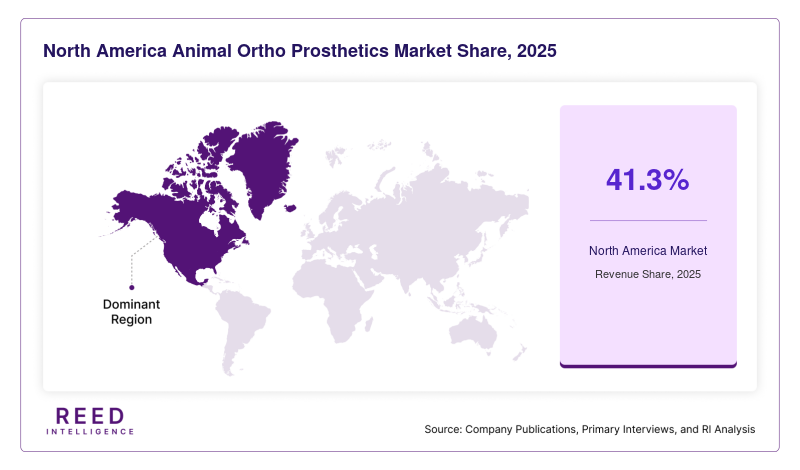
North America accounted for 41.3% of the global Animal Ortho Prosthetics Market share in 2025, representing the largest regional market. The region’s market will expand at a CAGR of 8.2% between 2025 and 2033. High adoption of advanced veterinary treatment solutions and a strong presence of specialized prosthetics providers contributed to regional leadership.
The United States dominated the North American market due to its large companion animal population and well-developed veterinary specialty hospitals. Veterinary orthopedic surgeons in the country increasingly recommend orthotic braces and prosthetic limbs for animals undergoing amputation or recovering from ligament injuries. Additionally, collaborations between veterinary clinics and biomedical engineering firms have supported innovation in animal prosthetics design.
Europe
Europe held 26.7% of the global Animal Ortho Prosthetics Market share in 2025 and will grow at a CAGR of 8.1% during the forecast period. Increasing adoption of animal rehabilitation therapies across veterinary hospitals supported regional growth.
Germany remained the dominant country within the European market. The presence of advanced veterinary research institutions and specialized rehabilitation clinics contributed to the expansion of prosthetic treatment services. German veterinary hospitals are increasingly integrating orthopedic prosthetics within multidisciplinary treatment programs for injured companion animals.
Asia Pacific
Asia Pacific represented 18.4% of the global market share in 2025 and will register the fastest growth with a CAGR of 9.6% through 2033. Rising pet ownership and expanding veterinary healthcare infrastructure are supporting market expansion across the region.
China led the Asia Pacific market due to rapid growth in veterinary clinics and increasing awareness regarding animal mobility treatments. Veterinary hospitals in major Chinese cities are incorporating advanced orthopedic rehabilitation services, including prosthetic limb fitting and orthotic support devices.
Middle East & Africa
The Middle East & Africa region accounted for 7.2% of the Animal Ortho Prosthetics Market share in 2025 and is expected to grow at a CAGR of 7.8% from 2025 to 2033. Growing investment in veterinary healthcare services is supporting regional development.
United Arab Emirates emerged as the dominant country in the region. Veterinary specialty clinics in the UAE are introducing advanced treatment services for companion animals, including prosthetic limbs and orthopedic braces. Increasing interest in specialized animal care services among pet owners has contributed to demand growth.
Latin America
Latin America held 6.4% of the global Animal Ortho Prosthetics Market share in 2025 and will grow at a CAGR of 8.0% through 2033. Expansion of veterinary clinics and increasing pet adoption rates are contributing to regional market growth.
Brazil remained the leading country in the region. The presence of large veterinary hospitals and growing availability of orthopedic treatment services has supported adoption of prosthetic solutions for injured animals. Veterinary professionals in Brazil are increasingly focusing on rehabilitation therapies aimed at improving mobility outcomes.
Competitive Landscape
The Animal Ortho Prosthetics Market is moderately fragmented with the presence of specialized veterinary prosthetics manufacturers and rehabilitation service providers. Market participants are focusing on product customization, material innovation, and partnerships with veterinary hospitals to strengthen their market position.
OrthoPets LLC is recognized as a leading player in the market, offering a wide portfolio of custom prosthetic limbs and orthotic braces for companion animals. The company collaborates with veterinary surgeons globally to develop tailored prosthetic solutions.
Other companies are expanding their presence through new product development and service expansion. Increasing investment in digital modeling and additive manufacturing technologies is enabling manufacturers to improve device design and production efficiency.
Key Players List
- OrthoPets LLC
- Bionic Pets
- K-9 Orthotics & Prosthetics
- Animal Ortho Care
- WIMBA
- My Pet’s Brace
- Walkin’ Pets (HandicappedPets Inc.)
- Hero Braces
- Paw Prosper
- BioMedtrix
Recent Developments
- In 2024, OrthoPets introduced an upgraded 3D scanning system designed to improve prosthetic limb fitting accuracy for dogs.
- In 2023, Bionic Pets expanded its veterinary orthotics distribution network across Europe.
- In 2024, Walkin’ Pets launched a modular prosthetic limb system designed for adjustable animal mobility support.
- In 2023, K-9 Orthotics & Prosthetics partnered with veterinary rehabilitation clinics to expand orthopedic device access in North America.
- In 2024, My Pet’s Brace introduced a new thermoplastic orthotic brace for ligament injury recovery in companion animals.
Animal Ortho Prosthetics Market Segments
Product Type
- Prosthetics
- Orthotics
Animal Type
- Canine
- Equine
- Other Animals
Material Type
- Carbon Fiber
- Thermoplastics
- Metal Alloys
- Composite Materials
End Use
- Veterinary Hospitals
- Veterinary Rehabilitation Centers
- Veterinary Clinics
By Region
- North America
- Europe
- APAC
- Middle East and Africa
- LATAM