Animal Sedative Market Size, Share & Demand Report By Drug Type (Alpha-2 Adrenergic Agonists, Phenothiazines, Benzodiazepines, Others), By Animal Type (Companion Animals, Livestock Animals), By Route of Administration (Injectable, Oral, Inhalation), By End-Use (Veterinary Hospitals & Clinics, Homecare Settings) & Segment Forecasts, 2025–2034
USD 3950
Market Overview
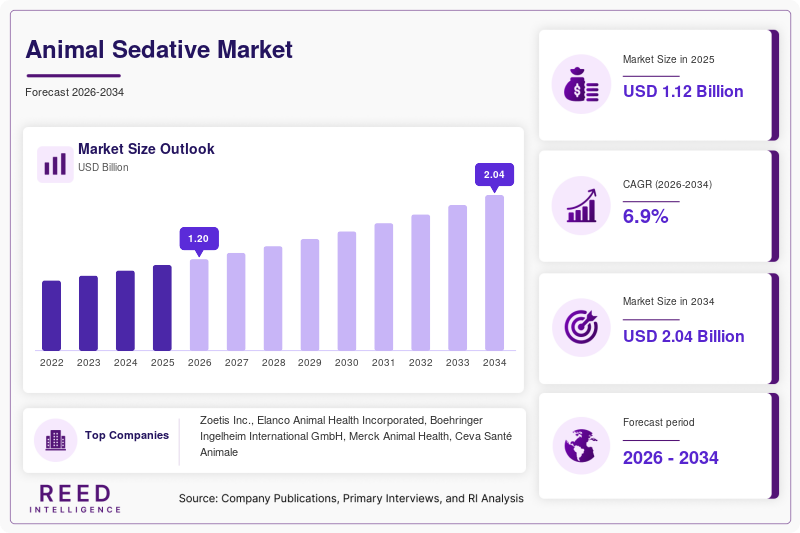
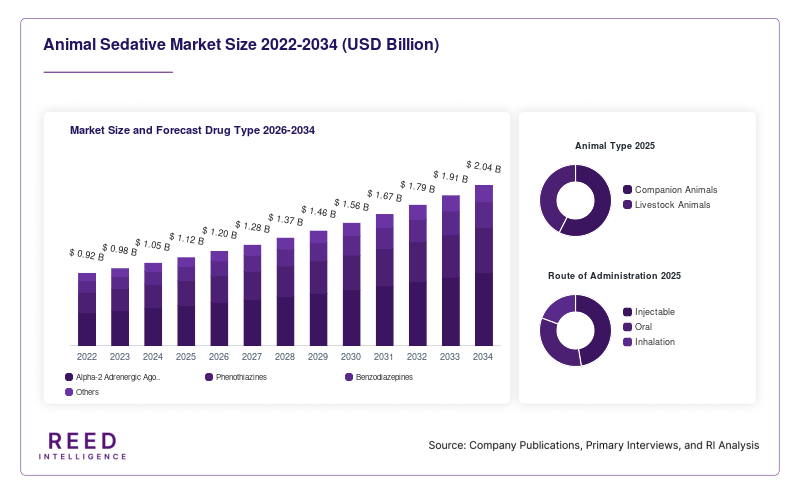
The global Animal Sedative Market size was valued at USD 1.12 billion in 2025 and is projected to reach approximately USD 2.05 billion by 2034, expanding at a CAGR of 6.9% during the forecast period (2025–2034). The market is witnessing steady growth due to increasing veterinary procedures, rising pet ownership, and growing demand for safe and effective sedation in both companion and livestock animals.
A key global factor supporting the growth of the Animal Sedative Market is the expansion of veterinary healthcare infrastructure worldwide. Increasing investments in veterinary clinics, animal hospitals, and mobile care units have enhanced access to animal care services. This has led to a higher volume of surgical and diagnostic procedures requiring sedation, thereby boosting demand for animal sedatives.
Key Highlights:
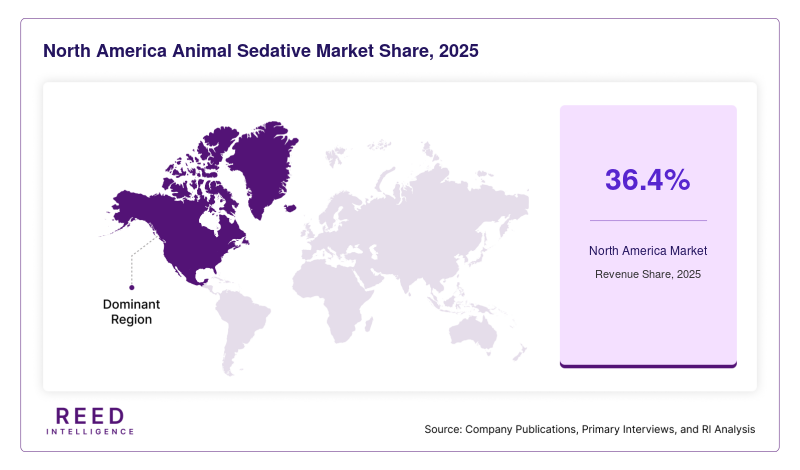
- North America dominated the market with a 36.4% share in 2025, while Asia Pacific is expected to register the fastest CAGR of 8.3%.
- Alpha-2 adrenergic agonists led the drug type segment with a 38.7% share, while benzodiazepines are projected to grow fastest at a CAGR of 7.8%.
- Companion animals accounted for the largest end-use segment, while livestock animals are expected to grow at a CAGR of 7.4%.
- The United States led the market with USD 395 million in 2025 and is projected to reach USD 420 million in 2026.
Market Trends
Increasing Adoption of Combination Sedation Protocols
The Animal Sedative Market is witnessing a shift toward combination sedation techniques that involve the use of multiple drugs to achieve balanced anesthesia. This approach allows veterinarians to minimize drug dosage while enhancing safety and efficacy. Combination protocols are particularly useful in complex surgical procedures and are gaining traction in advanced veterinary practices. The trend reflects a broader movement toward precision veterinary medicine.
Growth of Companion Animal Healthcare Services
The rising demand for specialized healthcare services for companion animals is another key trend shaping the Animal Sedative Market. Pet owners are increasingly willing to spend on advanced treatments, including surgical interventions and diagnostic procedures that require sedation. The expansion of pet insurance coverage and specialized veterinary clinics has further supported this trend, contributing to increased use of sedatives in routine and complex procedures.
Market Drivers
Rising Pet Ownership and Humanization of Animals
The growing trend of pet humanization is a major driver of the Animal Sedative Market. Pet owners are increasingly treating animals as family members, leading to higher spending on veterinary care. This includes preventive care, surgeries, and diagnostic procedures that often require sedation. The increasing adoption of pets in urban areas has further fueled demand for veterinary services and associated pharmaceutical products.
Increase in Veterinary Surgical Procedures
The rising number of veterinary surgeries is significantly driving the Animal Sedative Market. Procedures such as spaying, neutering, dental treatments, and orthopedic surgeries require effective sedation to ensure animal safety and procedural success. Advances in veterinary surgical techniques have expanded the range of treatable conditions, leading to higher demand for sedatives across various animal categories.
Market Restraints
Stringent Regulatory Approval Processes
Strict regulatory requirements for the approval and use of veterinary sedatives pose a challenge to the Animal Sedative Market. Regulatory authorities impose rigorous safety and efficacy standards to ensure animal welfare and minimize risks associated with sedative drugs. These processes often lead to longer approval timelines and increased development costs for manufacturers.
Additionally, variations in regulatory frameworks across regions create complexities for companies operating in multiple markets. Compliance with different guidelines and standards can hinder product launches and limit market expansion. The need for extensive clinical trials and documentation further adds to the cost burden, impacting profitability. These factors collectively act as a restraint, particularly for smaller companies with limited resources.
Market Opportunities
Expansion of Veterinary Telemedicine and Mobile Clinics
The growth of veterinary telemedicine and mobile clinics presents new opportunities in the Animal Sedative Market. These services are improving access to animal healthcare in remote and underserved areas. Mobile veterinary units often require portable and easy-to-administer sedatives for on-site procedures, driving demand for innovative formulations.
Development of Species-Specific Sedatives
The increasing focus on species-specific drug formulations is creating growth opportunities in the Animal Sedative Market. Different animal species have unique physiological responses to sedatives, prompting the development of tailored products. Companies investing in research to develop targeted formulations for companion animals, livestock, and exotic species are expected to gain a competitive advantage in the market.
Segmental Analysis
By Drug Type
Alpha-2 adrenergic agonists dominated the Animal Sedative Market in 2025, accounting for 38.7% of the total share. These drugs are widely used due to their effectiveness in providing sedation, analgesia, and muscle relaxation. Their versatility across different animal species has contributed to their widespread adoption in veterinary practices.
Benzodiazepines are expected to be the fastest-growing subsegment, registering a CAGR of 7.8% during the forecast period. Their safety profile and minimal cardiovascular effects make them suitable for a wide range of procedures. Increasing use in combination sedation protocols is expected to drive growth.
By Animal Type
Companion animals held the largest share of the Animal Sedative Market in 2025. The increasing adoption of pets and rising expenditure on pet healthcare contributed to the dominance of this segment. Veterinary procedures for companion animals often require sedation, supporting demand.
Livestock animals are projected to grow at the fastest CAGR of 7.4%. The growth is driven by increasing demand for animal-derived food products and the need for efficient livestock management. Sedatives are widely used in procedures such as transportation and surgical interventions.
By Route of Administration
Injectable sedatives dominated the Animal Sedative Market in 2025 due to their rapid onset of action and precise dosage control. These formulations are commonly used in clinical settings for surgical and diagnostic procedures.
Oral sedatives are expected to grow at the fastest CAGR of 7.2%. Their ease of administration and suitability for at-home use are key factors driving growth. Increasing adoption of oral formulations in companion animal care is expected to support this segment.
By End-Use
Veterinary hospitals and clinics accounted for the largest share of the Animal Sedative Market in 2025. These facilities handle a high volume of procedures requiring sedation, making them the primary end-users of sedative drugs.
Homecare settings are anticipated to grow at the fastest CAGR of 7.6%. The increasing trend toward at-home animal care and availability of user-friendly sedative formulations are driving growth in this segment.
Regional Analysis
North America
North America accounted for 36.4% of the Animal Sedative Market share in 2025 and is expected to grow at a CAGR of 6.1% during the forecast period. The region’s strong veterinary infrastructure and high adoption of advanced animal healthcare practices supported its leading position. The presence of established pharmaceutical companies and well-developed distribution channels further contributed to market growth.
The United States dominated the regional market due to high pet ownership rates and advanced veterinary care systems. A key growth factor in the country is the increasing availability of pet insurance, which has enabled more pet owners to opt for procedures requiring sedation.
Europe
Europe held a 26.8% share of the Animal Sedative Market in 2025 and is projected to grow at a CAGR of 6.3%. The region’s focus on animal welfare and strict regulations regarding veterinary practices supported market growth. Increasing demand for livestock health management also contributed to market expansion.
Germany emerged as the dominant country in Europe, driven by its well-established veterinary services and strong pharmaceutical sector. The country’s emphasis on quality animal care has led to increased adoption of sedatives in clinical settings.
Asia Pacific
Asia Pacific captured 23.5% of the Animal Sedative Market in 2025 and is anticipated to expand at the fastest CAGR of 8.3%. Rapid urbanization and rising disposable incomes have contributed to increased pet ownership in the region. Additionally, the growth of livestock farming has driven demand for veterinary services.
China led the regional market due to its large population of both companion and livestock animals. The expansion of veterinary infrastructure and increasing awareness of animal healthcare have significantly supported market growth.
Middle East & Africa
The Middle East & Africa accounted for 7.1% of the Animal Sedative Market share in 2025 and is expected to grow at a CAGR of 6.5%. The region’s growing focus on livestock management and veterinary services has supported market growth. Increasing government initiatives aimed at improving animal health have also contributed to demand.
Saudi Arabia dominated the regional market, driven by investments in veterinary healthcare infrastructure and livestock management programs. The country’s focus on improving animal productivity has increased the use of sedatives in veterinary procedures.
Latin America
Latin America held a 6.2% share of the Animal Sedative Market in 2025 and is projected to grow at a CAGR of 6.7%. The region has witnessed increasing demand for veterinary services due to rising pet ownership and livestock production. Improving access to veterinary care has further supported market growth.
Brazil emerged as the leading country in the region, supported by its large livestock industry and growing veterinary healthcare sector. The increasing focus on animal health and productivity has driven demand for sedatives.
Competitive Landscape
The Animal Sedative Market is moderately competitive, with several global and regional players focusing on product innovation and expansion strategies. Companies are investing in research and development to introduce safer and more effective sedative formulations.
Zoetis Inc. is a leading player in the market, supported by its extensive veterinary pharmaceutical portfolio and strong global presence. The company recently introduced a new sedative formulation designed for rapid onset and improved safety, strengthening its position in the market.
Other key players are focusing on strategic collaborations and geographic expansion to enhance their market presence. The increasing demand for veterinary pharmaceuticals is encouraging companies to diversify their product offerings and strengthen distribution networks.
Key Players List
- Zoetis Inc.
- Elanco Animal Health Incorporated
- Boehringer Ingelheim International GmbH
- Merck Animal Health
- Ceva Santé Animale
- Virbac
- Vetoquinol S.A.
- Dechra Pharmaceuticals PLC
- Chanelle Pharma Group
- Norbrook Laboratories Ltd.
- Phibro Animal Health Corporation
- IDEXX Laboratories, Inc.
- Kyoritsu Seiyaku Corporation
- Ashish Life Science Pvt. Ltd.
- Zydus Animal Health
Recent Developments
- In 2024, Zoetis Inc. launched a new fast-acting injectable sedative for companion animals.
- Elanco Animal Health expanded its sedative product portfolio through strategic acquisitions.
- Boehringer Ingelheim introduced an advanced sedation protocol for livestock management.
- Ceva Santé Animale increased its R&D investment in species-specific sedatives.
- Virbac expanded its distribution network in Asia Pacific to strengthen market presence.
Animal Sedative Market Segments
Drug Type
- Alpha-2 Adrenergic Agonists
- Phenothiazines
- Benzodiazepines
- Others
Animal Type
- Companion Animals
- Livestock Animals
Route of Administration
- Injectable
- Oral
- Inhalation
End-Use
- Veterinary Hospitals & Clinics
- Homecare Settings
By Region
- North America
- Europe
- APAC
- Middle East and Africa
- LATAM