Animal Stem Cell Therapy Market Size, Share Demand Report By Type (Autologous Stem Cell Therapy, Allogeneic Stem Cell Therapy), By Application (Osteoarthritis, Orthopedic Disorders, Neurological Disorders, Others), By End-Use (Veterinary Hospitals & Clinics, Research Institutions, Others) By Region & Segment Forecasts, 2026–2034
USD 3950
Market Overview
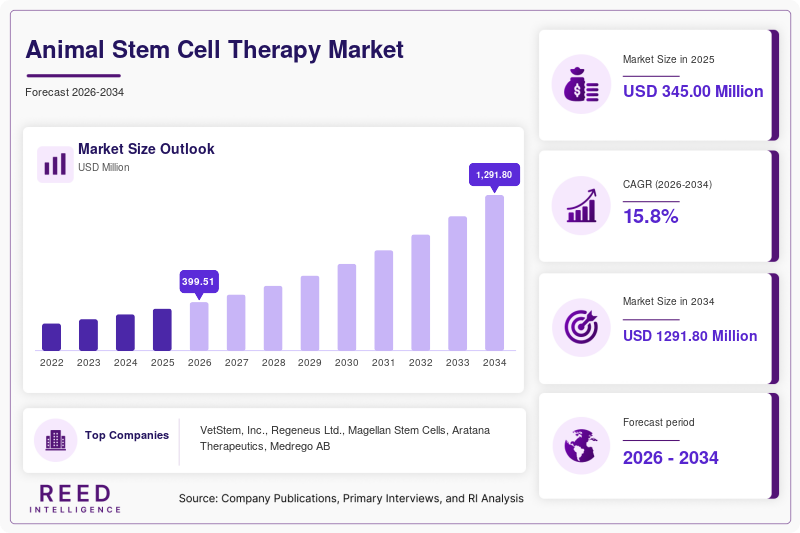
The global Animal Stem Cell Therapy Market was valued at approximately USD 345 million in 2026 and is projected to reach USD 1.12 billion by 2034, growing at a compound annual growth rate (CAGR) of 15.8% during the forecast period (2026–2034). This market growth is primarily supported by the increasing adoption of regenerative veterinary medicine across companion and livestock animals. Advances in biotechnology, coupled with the rising awareness of non-invasive and long-term treatment options, have significantly accelerated market expansion.
One of the major global factors supporting this market is the rising demand for advanced veterinary care driven by the humanization of pets. Pet owners are increasingly willing to spend on premium healthcare services, including stem cell therapies for chronic conditions such as osteoarthritis, ligament injuries, and neurological disorders. Additionally, the expansion of veterinary clinics and specialty hospitals has contributed to the adoption of innovative therapies.
Key Highlights
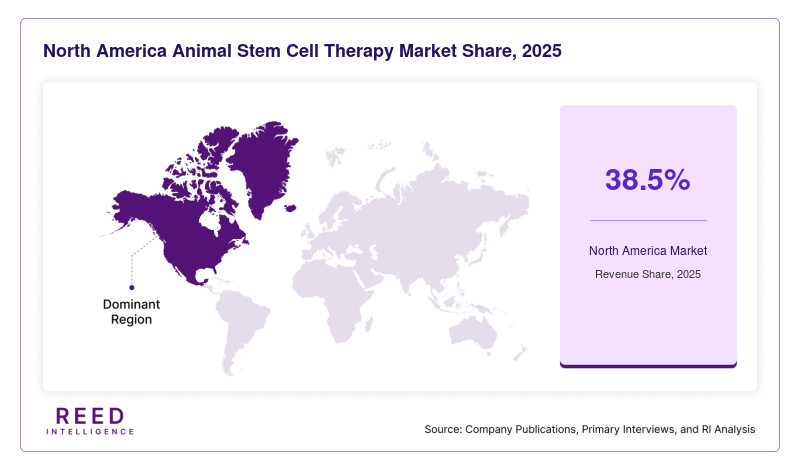
- North America dominated the market with a 38.5% share.
- Asia Pacific is expected to grow at the fastest CAGR of 17.6%.
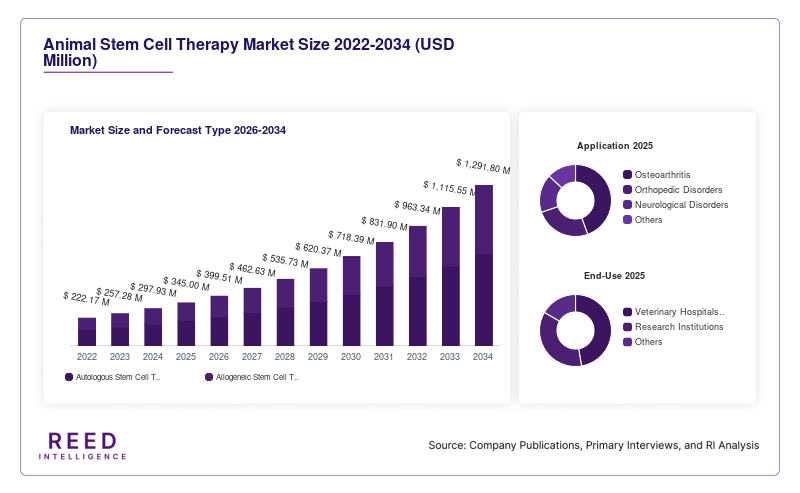
- The autologous stem cell therapy segment led with 56.2% share, while allogeneic therapy is the fastest-growing with a CAGR of 16.9%.
- The osteoarthritis application segment held the largest share at 41.8%, while neurological disorders are projected to grow at 17.2% CAGR.
- The United States accounted for USD 112 million in 2024 and USD 126 million in 2025.
Market Trends
Increasing Adoption of Regenerative Therapies in Companion Animals
The growing preference for regenerative medicine in companion animals is shaping the Animal Stem Cell Therapy Market. Pet owners are increasingly seeking advanced treatment options that provide long-term relief rather than temporary symptom management. Stem cell therapy is gaining attention for its ability to repair damaged tissues and improve mobility, particularly in aging pets. Veterinary professionals are recommending these therapies for chronic conditions such as arthritis and tendon injuries. The trend is also supported by the rise in veterinary insurance coverage, which is making expensive treatments more accessible. Furthermore, the integration of regenerative medicine into standard veterinary practices is expanding the scope of stem cell applications.
Technological Advancements in Stem Cell Processing and Storage
Technological progress in stem cell isolation, processing, and storage is another key trend influencing market growth. Innovations in cryopreservation and cell expansion techniques have improved the efficiency and viability of stem cells used in therapy. This has enhanced treatment outcomes and increased confidence among veterinarians and pet owners. Additionally, the development of off-the-shelf allogeneic stem cell products is reducing treatment time and costs. Companies are investing in automated processing systems to standardize procedures and ensure quality. These advancements are expected to drive broader adoption across emerging markets, where access to advanced veterinary infrastructure is improving.
Market Drivers
Rising Prevalence of Chronic Diseases in Animals
The increasing incidence of chronic diseases in animals is a major driver of the Animal Stem Cell Therapy Market. Conditions such as osteoarthritis, hip dysplasia, and ligament injuries are becoming more common, particularly among aging pets. Traditional treatments often involve long-term medication or invasive surgeries, which may not provide satisfactory outcomes. Stem cell therapy offers a promising alternative by promoting natural healing and reducing inflammation. This has led to growing acceptance among veterinarians and pet owners. Additionally, the rising lifespan of companion animals is contributing to the demand for effective and sustainable treatment options, further driving market growth.
Growth in Veterinary Healthcare Expenditure
The expansion of veterinary healthcare spending is significantly boosting the adoption of advanced therapies. Pet owners are increasingly willing to invest in high-quality care, including regenerative treatments. This trend is particularly strong in developed regions, where disposable incomes are higher and awareness of advanced medical options is widespread. Veterinary clinics are also upgrading their capabilities to offer specialized services, including stem cell therapy. Furthermore, the increasing number of veterinary professionals trained in regenerative medicine is supporting market expansion. As a result, the Animal Stem Cell Therapy Market is witnessing steady growth driven by both demand and supply-side factors.
Market Restraint
High Cost and Limited Standardization of Therapies
Despite its potential, the Animal Stem Cell Therapy Market faces challenges related to high treatment costs and limited standardization. Stem cell therapies are often expensive due to the complex processes involved in cell extraction, processing, and administration. This limits their accessibility, particularly in developing regions where veterinary healthcare budgets are constrained. Additionally, the lack of standardized protocols and regulatory guidelines creates variability in treatment outcomes. This can lead to skepticism among veterinarians and pet owners, hindering widespread adoption.
The industry also faces challenges related to quality control and consistency. Variations in stem cell sources, processing techniques, and administration methods can affect therapeutic efficacy. For example, inconsistent results in treating joint disorders have raised concerns about reliability. Moreover, regulatory frameworks for veterinary stem cell therapies are still evolving in many regions, leading to delays in product approvals. These factors collectively act as barriers to market growth, highlighting the need for improved standardization and cost reduction strategies.
Market Opportunities
Expansion in Emerging Markets
Emerging markets present significant growth opportunities for the Animal Stem Cell Therapy Market. Countries in Asia Pacific and Latin America are witnessing rapid growth in pet ownership and livestock farming. As awareness of advanced veterinary treatments increases, demand for stem cell therapies is expected to rise. Governments and private organizations are investing in veterinary infrastructure, creating a favorable environment for market expansion. Additionally, the increasing presence of international companies in these regions is facilitating technology transfer and improving access to advanced therapies. This trend is expected to drive market growth over the forecast period.
Development of Off-the-Shelf Stem Cell Products
The development of off-the-shelf allogeneic stem cell products offers a promising opportunity for market growth. These products eliminate the need for patient-specific cell extraction, reducing treatment time and costs. This makes stem cell therapy more accessible and convenient for both veterinarians and pet owners. Companies are focusing on developing standardized and ready-to-use products that can be easily integrated into veterinary practices. This innovation is expected to expand the application of stem cell therapy beyond specialized clinics, driving widespread adoption and market growth.
Segmental Analysis
By Type
The autologous stem cell therapy segment dominated the Animal Stem Cell Therapy Market in 2024, accounting for approximately 56.2% of the total share. This dominance is attributed to the reduced risk of immune rejection and higher compatibility with the patient. Autologous therapies involve using the animal’s own stem cells, which enhances safety and efficacy. Veterinary professionals prefer this approach for treating chronic conditions such as osteoarthritis and ligament injuries. The segment’s growth is also supported by increasing awareness among pet owners about personalized treatment options and improved clinical outcomes.
The allogeneic stem cell therapy segment is the fastest-growing, with a projected CAGR of 16.9% during the forecast period. This growth is driven by the convenience and scalability of off-the-shelf products. Allogeneic therapies use donor cells, eliminating the need for patient-specific cell extraction. This reduces treatment time and costs, making it more accessible. The development of standardized products and advancements in cell preservation techniques are further supporting the growth of this segment.
By Application
The osteoarthritis segment held the largest share of 41.8% in 2024, driven by the high prevalence of joint disorders in animals. Stem cell therapy is widely used to treat osteoarthritis due to its ability to reduce inflammation and promote tissue regeneration. This has made it a preferred treatment option among veterinarians. The segment’s dominance is also supported by increasing awareness of non-invasive treatment methods and the growing aging pet population.
The neurological disorders segment is the fastest-growing, with a CAGR of 17.2%. This growth is driven by the increasing research on stem cell applications in treating spinal cord injuries and neurodegenerative diseases. Advances in regenerative medicine are improving treatment outcomes, encouraging adoption. Additionally, the rising demand for advanced therapies for complex conditions is supporting the growth of this segment.
By End-Use
Veterinary hospitals and clinics dominated the market in 2024, accounting for approximately 62.5% of the total share. These facilities are equipped with advanced infrastructure and skilled professionals, enabling them to offer specialized treatments such as stem cell therapy. The segment’s growth is supported by increasing patient visits and the expansion of veterinary services. Additionally, the availability of diagnostic and treatment facilities in a single location enhances convenience for pet owners.
Research institutions are the fastest-growing end-use segment, with a CAGR of 16.4%. This growth is driven by increasing investment in veterinary research and the development of new therapies. Academic and research organizations are focusing on exploring new applications of stem cell therapy, contributing to market expansion. Collaborations between research institutions and biotechnology companies are further accelerating innovation in this segment.
Regional Analysis
North America
North America accounted for the largest share of the Animal Stem Cell Therapy Market in 2025, contributing approximately 38.5% of the global revenue. The region is expected to maintain steady growth with a CAGR of 14.9% during the forecast period. This dominance is attributed to advanced veterinary infrastructure, high pet ownership rates, and strong investment in research and development. The presence of leading biotechnology companies and well-established regulatory frameworks further supports market growth.
The United States is the dominant country in this region, driven by high expenditure on pet healthcare and increasing adoption of innovative therapies. A unique growth factor is the widespread availability of veterinary insurance, which covers advanced treatments such as stem cell therapy. This has significantly increased affordability and accessibility, encouraging more pet owners to opt for regenerative treatments.
Europe
Europe holds a significant share of the Animal Stem Cell Therapy Market, accounting for around 26.7% in 2025. The region is projected to grow at a CAGR of 15.2% during the forecast period. Growth is driven by increasing awareness of regenerative medicine and the presence of supportive regulatory policies. Countries in Western Europe are leading in terms of adoption, supported by advanced veterinary practices and research institutions.
Germany is the dominant country in Europe, with strong investment in veterinary research and innovation. A unique growth factor is the collaboration between academic institutions and biotechnology companies, which is accelerating the development and commercialization of stem cell therapies. This collaborative ecosystem is enhancing the region’s competitiveness in the global market.
Asia Pacific
Asia Pacific is the fastest-growing region in the Animal Stem Cell Therapy Market, with a CAGR of 17.6% and a market share of 18.9% in 2025. The region’s growth is driven by increasing pet ownership, rising disposable incomes, and expanding veterinary infrastructure. Countries such as China, Japan, and India are witnessing rapid adoption of advanced veterinary treatments.
China dominates the Asia Pacific market due to its large population of companion and livestock animals. A unique growth factor is the government’s support for biotechnology innovation, which is encouraging the development of stem cell therapies. Additionally, the growing number of veterinary clinics offering regenerative treatments is contributing to market expansion.
Middle East & Africa
The Middle East & Africa region accounted for approximately 8.4% of the global market share in 2025 and is expected to grow at a CAGR of 13.7%. The market is still in its early stages but shows potential due to increasing awareness of advanced veterinary treatments. Growth is supported by the expansion of veterinary services and rising investment in animal healthcare.
South Africa is the dominant country in this region, driven by a growing veterinary sector and increasing demand for advanced treatments. A unique growth factor is the rising focus on livestock health management, which is encouraging the adoption of stem cell therapies for improving productivity and disease resistance.
Latin America
Latin America held a market share of 7.5% in 2025 and is projected to grow at a CAGR of 14.3% during the forecast period. The region is experiencing growth due to increasing pet ownership and improving veterinary infrastructure. Brazil and Mexico are the key contributors to market expansion.
Brazil is the dominant country in Latin America, supported by a large livestock industry and growing awareness of regenerative medicine. A unique growth factor is the increasing use of stem cell therapy in equine and livestock applications, which is driving demand and expanding the market scope.
Competitive Landscape
The Animal Stem Cell Therapy Market is characterized by moderate competition, with several established players and emerging companies focusing on innovation and product development. The market leader is VetStem, Inc., which holds a significant share due to its extensive product portfolio and strong presence in North America. The company has been actively involved in developing autologous stem cell therapies and expanding its service offerings.
Other key players are investing in research and strategic collaborations to strengthen their market position. Recent developments include partnerships between biotechnology firms and veterinary clinics to enhance product accessibility. Companies are also focusing on developing allogeneic stem cell products to cater to a broader customer base. The competitive landscape is expected to evolve as new entrants introduce innovative solutions and existing players expand their geographic presence.
Key Players
- VetStem, Inc.
- Cell Therapy Sciences
- Aratana Therapeutics
- Medrego AB
- Magellan Stem Cells
- Vetherapy LLC
- StemcellX
- Animal Cell Therapies Inc.
- Kintaro Cells Power
- ReNeuroGen LLC
- VetCell Bioscience Ltd.
- Stem Cell Vet
- Regeneus Ltd.
- Celavet Inc.
- Animal Stem Care
Recent Developments
- In 2025, VetStem, Inc. expanded its stem cell processing facilities to increase production capacity and reduce turnaround time.
- In 2024, Regeneus Ltd. launched a new allogeneic stem cell product targeting joint disorders in companion animals.
- In 2025, Magellan Stem Cells entered a strategic partnership with veterinary clinics to expand its distribution network globally.
Animal Stem Cell Therapy Market Segments
Type
- Autologous Stem Cell Therapy
- Allogeneic Stem Cell Therapy
Application
- Osteoarthritis
- Orthopedic Disorders
- Neurological Disorders
- Others
End-Use
- Veterinary Hospitals & Clinics
- Research Institutions
- Others
By Region
- North America
- Europe
- APAC
- Middle East and Africa
- LATAM