API Chondroitin Sulfate Hyaluronic Acid Pancreatin Market Size, Share & Demand Report By Product Type (Chondroitin Sulfate, Hyaluronic Acid, Pancreatin), By Application (Pharmaceutical Formulations, Nutraceutical Products, Regenerative Medicine, Ophthalmology Applications, Digestive Health Therapies), By End Use (Pharmaceutical Companies, Biotechnology Firms, Research Institutions, Contract Manufacturing Organizations) By Region & Segment Forecasts, 2026–2034
USD 3950
Market Overview
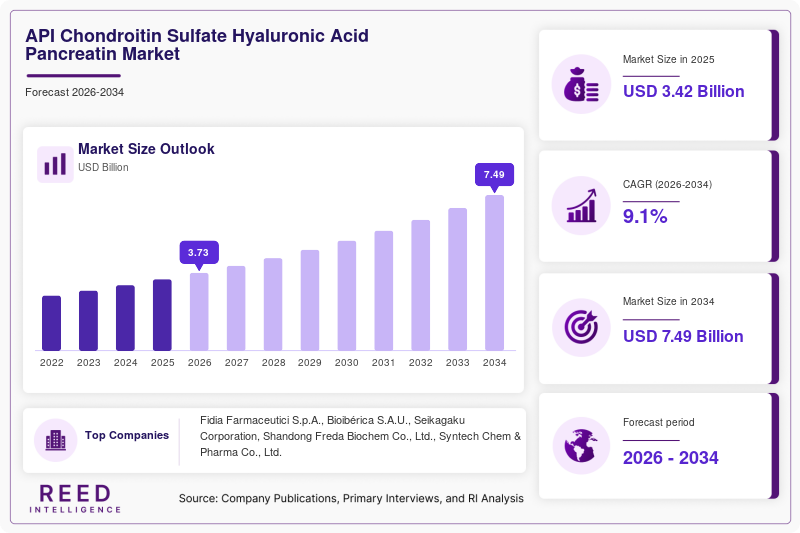
The global API Chondroitin Sulfate Hyaluronic Acid Pancreatin Market size was valued at USD 3.42 billion in 2026 and is projected to reach USD 6.88 billion by 2034, expanding at a CAGR of 9.1% during the forecast period from 2026 to 2034. The market is experiencing stable expansion due to the rising use of biologically derived active pharmaceutical ingredients in digestive health, orthopedic therapies, ophthalmic formulations, and regenerative medicine applications. Growing healthcare expenditure across developed and emerging economies has supported demand for specialized pharmaceutical ingredients with strong therapeutic functionality and improved bioavailability.
A major global factor supporting the growth of the API Chondroitin Sulfate Hyaluronic Acid Pancreatin Market is the increasing prevalence of chronic musculoskeletal disorders and gastrointestinal diseases. Aging populations in countries such as Japan, Germany, the United States, and China are contributing to higher demand for joint health formulations, enzyme replacement therapies, and injectable biologics. Pharmaceutical manufacturers are expanding production capacities for purified animal-derived and fermentation-based APIs to address the growing requirement for advanced treatment solutions. In addition, regulatory improvements related to ingredient traceability and pharmaceutical-grade quality standards are encouraging wider adoption among branded drug manufacturers and nutraceutical companies.
Key Highlights
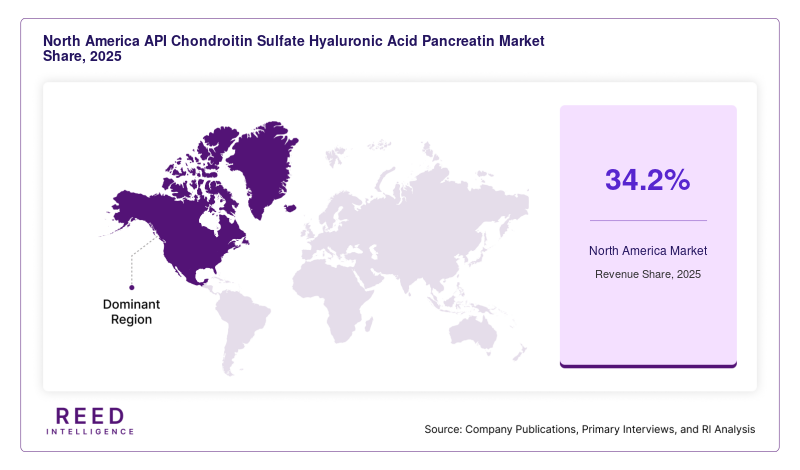
- North America dominated the market with a 34.2% share in 2025, while Asia Pacific is expected to grow at the fastest CAGR of 11.4% during 2026–2034.
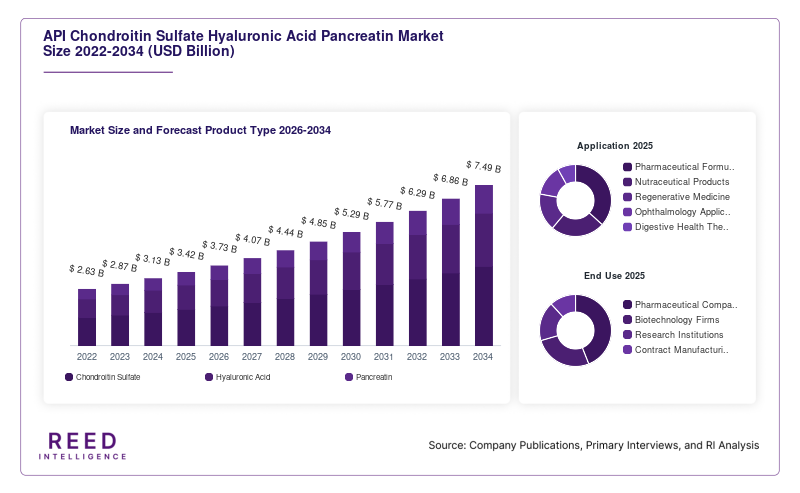
- By product type, hyaluronic acid accounted for the largest share of 39.1%, while pancreatin is projected to grow at a CAGR of 10.8%.
- By application, pharmaceutical formulations led with a 44.6% share, whereas regenerative medicine applications are expected to expand at a CAGR of 11.6%.
- By end use, pharmaceutical companies accounted for the largest share of 47.3%, while biotechnology firms are projected to grow at a CAGR of 10.9%.
- The United States remained the dominant country, with market values of USD 720 million in 2024 and USD 790 million in 2025.
Market Trends
Rising Preference for Fermentation-Based Hyaluronic Acid Production
Manufacturers operating in the API Chondroitin Sulfate Hyaluronic Acid Pancreatin Market are increasingly shifting toward fermentation-based hyaluronic acid production methods to improve purity, scalability, and regulatory compliance. Traditional extraction methods from animal tissues are facing growing scrutiny due to contamination concerns and supply variability. As a result, biotechnology companies are investing in microbial fermentation technologies that deliver pharmaceutical-grade hyaluronic acid with improved consistency and lower immunogenic risks. This trend is particularly visible in ophthalmology, dermatology, and orthopedic treatment applications where high-purity injectable formulations are required. Companies are also adopting automated purification systems and advanced bioprocessing technologies to reduce production costs while maintaining therapeutic effectiveness.
The expansion of aesthetic medicine and minimally invasive procedures is further supporting the demand for premium-grade hyaluronic acid APIs. Pharmaceutical firms are collaborating with biotechnology companies to develop customized molecular weight formulations for targeted therapeutic outcomes. In addition, regulatory agencies in North America and Europe are promoting higher quality standards for injectable biologics, encouraging manufacturers to modernize production infrastructure. This trend is expected to continue as pharmaceutical companies prioritize sustainable manufacturing processes and secure supply chain operations for critical biologically derived APIs.
Growing Integration of Enzyme-Based Therapeutics in Digestive Healthcare
The increasing use of enzyme-based therapeutic formulations is becoming a major trend across the API Chondroitin Sulfate Hyaluronic Acid Pancreatin Market. Pancreatin APIs are witnessing higher demand due to the rising incidence of pancreatic insufficiency, chronic pancreatitis, cystic fibrosis, and digestive disorders associated with aging populations. Pharmaceutical manufacturers are developing advanced delayed-release enzyme formulations that improve absorption efficiency and therapeutic performance. The trend is particularly strong in hospital-based gastroenterology treatment programs and specialized digestive care clinics.
Healthcare providers are also focusing on personalized digestive treatment approaches, creating opportunities for customized pancreatin formulations with optimized enzyme concentrations. In addition, improvements in encapsulation technologies are enabling better stability and shelf life for enzyme-based products. Several manufacturers are increasing investments in animal-derived enzyme purification systems to ensure consistent potency and regulatory compliance. The growing awareness of digestive health among consumers, combined with expanding access to specialty healthcare services in emerging economies, is expected to strengthen long-term demand for pancreatin APIs across both pharmaceutical and nutraceutical applications.
Market Drivers
Expanding Geriatric Population and Rising Joint Disorder Prevalence
The expanding geriatric population worldwide is a major driver supporting the API Chondroitin Sulfate Hyaluronic Acid Pancreatin Market. Aging demographics are contributing to increased prevalence of osteoarthritis, joint degeneration, and mobility-related disorders, particularly across developed healthcare markets. Chondroitin sulfate and hyaluronic acid APIs are widely used in joint health formulations, viscosupplementation therapies, and regenerative orthopedic treatments. Rising patient awareness regarding non-surgical treatment options is increasing demand for injectable and oral therapeutic products containing these APIs.
Healthcare systems are also prioritizing long-term management strategies for musculoskeletal disorders to reduce hospitalization costs and improve patient quality of life. This has encouraged pharmaceutical companies to expand clinical research related to combination therapies involving chondroitin sulfate and hyaluronic acid. Furthermore, increasing participation in sports and physical fitness activities among aging consumers has strengthened demand for preventive joint care supplements and therapeutic products. The growing availability of specialty orthopedic clinics and rehabilitation centers is expected to sustain market expansion throughout the forecast period.
Increasing Pharmaceutical Investments in Biologically Derived APIs
The pharmaceutical industry is significantly increasing investments in biologically derived active pharmaceutical ingredients, supporting the growth of the API Chondroitin Sulfate Hyaluronic Acid Pancreatin Market. Drug manufacturers are focusing on high-value therapeutic ingredients that offer better efficacy, lower toxicity, and broader application potential across chronic disease treatment areas. Hyaluronic acid, chondroitin sulfate, and pancreatin APIs are increasingly being integrated into advanced drug formulations due to their multifunctional therapeutic properties.
Biotechnology advancements are enabling manufacturers to improve extraction efficiency, purification quality, and scalability of biologically sourced APIs. In addition, rising demand for regenerative medicine, tissue engineering, and advanced wound care products is creating new commercial opportunities for hyaluronic acid and chondroitin sulfate suppliers. Pharmaceutical companies are also entering strategic partnerships with biotechnology firms to secure long-term supply agreements and accelerate product development initiatives. The growing emphasis on specialized healthcare treatments and biologic therapies is expected to continue driving investments in these pharmaceutical ingredients across global markets.
Market Restraint
Regulatory Complexity and Raw Material Supply Challenges
The API Chondroitin Sulfate Hyaluronic Acid Pancreatin Market faces considerable challenges related to regulatory compliance and raw material sourcing. Many of these APIs are derived from animal tissues, requiring manufacturers to follow strict traceability, purification, and contamination control regulations. Regulatory agencies across North America and Europe continue to strengthen quality requirements for biologically derived pharmaceutical ingredients, increasing operational costs for manufacturers. Compliance with evolving pharmaceutical standards often requires investments in advanced processing technologies, quality testing infrastructure, and documentation systems.
Raw material supply fluctuations also create operational uncertainty within the market. Chondroitin sulfate and pancreatin production depend heavily on animal-derived raw materials sourced from livestock processing industries. Disease outbreaks, trade restrictions, and changing agricultural regulations can disrupt supply chains and increase ingredient costs. Smaller manufacturers often struggle to maintain consistent production quality and regulatory approvals, limiting their ability to compete with larger pharmaceutical ingredient suppliers. In addition, concerns regarding ethical sourcing and sustainability are encouraging healthcare companies to evaluate alternative production technologies, creating additional pressure on traditional manufacturers. These challenges may temporarily slow market expansion in regions with strict pharmaceutical compliance frameworks.
Market Opportunities
Expanding Applications in Regenerative Medicine and Tissue Engineering
Regenerative medicine and tissue engineering applications are creating significant growth opportunities for the API Chondroitin Sulfate Hyaluronic Acid Pancreatin Market. Hyaluronic acid and chondroitin sulfate are increasingly used in biomaterials, scaffolds, wound healing products, and cartilage repair solutions due to their biocompatibility and tissue regeneration properties. Research institutions and biotechnology companies are investing in advanced regenerative therapies aimed at improving treatment outcomes for orthopedic injuries, chronic wounds, and degenerative diseases.
The increasing adoption of minimally invasive treatment approaches is also encouraging the use of injectable regenerative formulations containing these APIs. Several pharmaceutical companies are expanding research programs focused on stem cell therapy support materials and advanced tissue engineering products. In emerging healthcare markets, growing investments in specialty medical infrastructure and clinical research capabilities are supporting the commercialization of regenerative treatment technologies. The continued advancement of precision medicine and biologic therapies is expected to create long-term opportunities for API manufacturers focused on high-purity pharmaceutical ingredients.
Growth Potential in Emerging Pharmaceutical Manufacturing Economies
Emerging economies across Asia Pacific and Latin America are providing substantial opportunities for companies operating in the API Chondroitin Sulfate Hyaluronic Acid Pancreatin Market. Countries such as India, China, Brazil, and South Korea are increasing investments in pharmaceutical manufacturing infrastructure to strengthen domestic drug production capabilities and reduce dependence on imported APIs. Government incentives supporting biotechnology development and pharmaceutical exports are encouraging local manufacturers to expand production capacities for specialized active pharmaceutical ingredients.
The rising availability of skilled biotechnology professionals and cost-effective manufacturing environments is attracting international pharmaceutical companies to establish regional partnerships and production facilities. In addition, growing healthcare access and rising middle-class populations are increasing demand for orthopedic, digestive health, and regenerative treatment products across emerging economies. Regulatory harmonization initiatives in several Asian markets are also improving export opportunities for regional API manufacturers. These developments are expected to create favorable business conditions for global and regional participants throughout the forecast period.
Segmental Analysis
By Product Type
Hyaluronic acid accounted for the dominant share of the API Chondroitin Sulfate Hyaluronic Acid Pancreatin Market in 2024, representing 39.1% of total revenue. The segment benefits from broad application across ophthalmology, orthopedics, dermatology, and regenerative medicine. Pharmaceutical manufacturers are increasingly utilizing hyaluronic acid APIs in injectable viscosupplementation therapies, ophthalmic surgical products, dermal fillers, and wound healing formulations. The rising preference for minimally invasive procedures and advanced biologic therapies has significantly increased product demand across developed healthcare markets. In addition, technological improvements in fermentation-based production methods are enabling manufacturers to achieve higher purity levels and consistent molecular weight distribution. Regulatory support for high-quality injectable biologics and increasing investment in aesthetic medicine are also contributing to segment expansion. The growing use of hyaluronic acid in tissue engineering and biomaterial applications is expected to strengthen long-term market penetration.
Pancreatin is projected to witness the fastest growth within the product type segment, expanding at a CAGR of 10.8% during the forecast period. Rising incidence of digestive disorders, pancreatic insufficiency, and gastrointestinal complications associated with aging populations is driving demand for enzyme-based therapeutics. Pharmaceutical companies are developing advanced pancreatin formulations with improved stability, delayed-release mechanisms, and optimized enzyme activity. The increasing adoption of personalized digestive healthcare solutions is also supporting segment growth. Emerging healthcare markets are witnessing higher diagnosis rates of digestive diseases, creating new opportunities for pancreatin-based therapies. In addition, improvements in animal-derived enzyme purification technologies are enhancing product quality and regulatory compliance. Healthcare providers are increasingly recommending enzyme replacement therapies for chronic digestive conditions, further strengthening commercial demand for pharmaceutical-grade pancreatin APIs.
By Application
Pharmaceutical formulations represented the largest application segment in the API Chondroitin Sulfate Hyaluronic Acid Pancreatin Market in 2024, accounting for 44.6% of overall revenue. The segment includes oral therapeutics, injectable biologics, ophthalmic products, digestive enzyme formulations, and orthopedic treatment solutions. Rising prevalence of chronic musculoskeletal disorders and gastrointestinal diseases has significantly increased pharmaceutical demand for specialized APIs. Drug manufacturers are integrating hyaluronic acid and chondroitin sulfate into combination therapies designed to improve joint mobility and pain management outcomes. In addition, growing use of pancreatin in enzyme replacement therapies is supporting product adoption across hospital and specialty clinic settings. Regulatory emphasis on high-quality active pharmaceutical ingredients is encouraging manufacturers to invest in advanced purification technologies and quality assurance systems. The continued expansion of biologic drug development programs is expected to support stable demand for pharmaceutical-grade APIs.
Regenerative medicine applications are anticipated to record the fastest CAGR of 11.6% during the forecast period. The segment is benefiting from increasing clinical research related to tissue engineering, stem cell therapy support materials, and advanced wound healing products. Hyaluronic acid and chondroitin sulfate APIs are widely utilized in scaffold materials and biomatrix formulations due to their biocompatibility and regenerative properties. Biotechnology companies are collaborating with research institutions to develop innovative regenerative therapies for orthopedic injuries, cartilage repair, and chronic wound management. In addition, rising demand for minimally invasive treatment approaches is encouraging the use of injectable regenerative products containing biologically derived APIs. Governments and private healthcare investors are increasing funding for regenerative medicine research, particularly in North America, Europe, and Asia Pacific. These developments are expected to create significant commercial opportunities for API manufacturers focused on advanced therapeutic applications.
By End Use
Pharmaceutical companies held the dominant share of the API Chondroitin Sulfate Hyaluronic Acid Pancreatin Market in 2024, accounting for 47.3% of total revenue. Large pharmaceutical manufacturers are major consumers of hyaluronic acid, chondroitin sulfate, and pancreatin APIs for the production of prescription therapeutics, injectable biologics, and specialty digestive health products. The segment benefits from strong investment in chronic disease management therapies and advanced drug development programs. Pharmaceutical companies are increasingly focusing on high-purity APIs to meet stringent regulatory standards and improve treatment effectiveness. In addition, rising demand for branded biologic products and combination therapies is supporting procurement volumes across major healthcare markets. The expansion of clinical research activities related to orthopedic care, ophthalmology, and gastrointestinal disorders continues to create stable demand for specialized pharmaceutical ingredients. Strategic partnerships between API suppliers and branded drug manufacturers are also strengthening supply chain efficiency.
Biotechnology firms are projected to grow at the fastest CAGR of 10.9% during the forecast period due to rising innovation in regenerative medicine and biologic therapies. Biotechnology companies are actively developing advanced tissue engineering products, biomaterials, and precision medicine solutions utilizing hyaluronic acid and chondroitin sulfate APIs. The increasing focus on fermentation-based production technologies and sustainable manufacturing processes is encouraging biotechnology investment across developed and emerging economies. Smaller biotechnology firms are also entering collaborative agreements with pharmaceutical companies to accelerate commercialization of advanced treatment solutions. In addition, the growing availability of venture capital funding and government biotechnology incentives is supporting research expansion. The segment is expected to benefit further from increasing demand for personalized healthcare products and specialized biologic formulations targeting chronic musculoskeletal and digestive disorders.
Regional Analysis
North America
North America accounted for 34.2% of the global API Chondroitin Sulfate Hyaluronic Acid Pancreatin Market in 2025 and is projected to expand at a CAGR of 8.7% during the forecast period. The region benefits from advanced pharmaceutical manufacturing infrastructure, high healthcare expenditure, and strong demand for biologic therapies. Pharmaceutical companies in the United States and Canada are increasing investments in orthopedic treatment products, digestive enzyme therapies, and regenerative medicine applications. Rising adoption of injectable hyaluronic acid therapies and specialized gastrointestinal treatment solutions continues to support market expansion across hospitals, specialty clinics, and pharmaceutical manufacturing facilities.
The United States remains the dominant country in the regional market due to the strong presence of biotechnology firms and pharmaceutical research organizations. One major growth factor is the increasing prevalence of osteoarthritis and chronic digestive disorders among aging populations. The country is also witnessing growing demand for minimally invasive orthopedic procedures and regenerative treatment approaches. In addition, the expansion of clinical research programs focused on biologic therapies and tissue engineering products is encouraging pharmaceutical companies to increase procurement of high-purity APIs for advanced therapeutic formulations.
Europe
Europe represented 28.4% of the global API Chondroitin Sulfate Hyaluronic Acid Pancreatin Market in 2025 and is expected to grow at a CAGR of 8.5% between 2026 and 2034. The regional market is supported by strong pharmaceutical regulations, rising demand for specialty biologics, and increasing healthcare awareness among aging populations. Countries across Western Europe are adopting advanced therapeutic formulations for orthopedic care, ophthalmology, and digestive disease treatment. Pharmaceutical manufacturers are also focusing on sustainable sourcing practices and advanced purification technologies to comply with stringent regulatory requirements.
Germany remains the leading country within the European market due to its established pharmaceutical manufacturing sector and extensive clinical research capabilities. A key growth factor is the country’s focus on biotechnology innovation and advanced healthcare infrastructure development. German pharmaceutical companies are investing in regenerative medicine research and high-value biologic therapies, increasing demand for pharmaceutical-grade hyaluronic acid and chondroitin sulfate APIs. In addition, rising collaborations between biotechnology firms and academic research institutions are accelerating product development activities across the region.
Asia Pacific
Asia Pacific held 24.6% of the global API Chondroitin Sulfate Hyaluronic Acid Pancreatin Market in 2025 and is projected to register the fastest CAGR of 11.4% during the forecast period. Rapid pharmaceutical industry expansion, improving healthcare infrastructure, and increasing investments in biotechnology manufacturing are driving regional market growth. Countries such as China, India, Japan, and South Korea are witnessing rising demand for digestive enzyme therapies, joint health products, and regenerative medicine applications. Regional manufacturers are also expanding production capacities to support growing export demand for pharmaceutical-grade APIs.
China remains the dominant country in the Asia Pacific market due to its large pharmaceutical manufacturing base and strong biotechnology investments. One significant growth factor is the increasing government support for domestic API production and pharmaceutical innovation. Chinese manufacturers are modernizing production facilities and implementing advanced purification systems to improve product quality and international competitiveness. In addition, growing healthcare access and rising awareness of chronic joint disorders among aging populations are contributing to strong demand for hyaluronic acid and chondroitin sulfate products.
Middle East & Africa
The Middle East & Africa accounted for 6.8% of the global API Chondroitin Sulfate Hyaluronic Acid Pancreatin Market in 2025 and is expected to grow at a CAGR of 7.6% over the forecast period. Market growth in the region is supported by gradual healthcare infrastructure development and increasing pharmaceutical imports. Countries across the Gulf Cooperation Council are investing in advanced medical facilities and specialized treatment services for orthopedic and gastrointestinal disorders. Rising awareness regarding regenerative medicine applications and biologic therapies is also contributing to demand for pharmaceutical-grade APIs.
Saudi Arabia continues to dominate the regional market due to its expanding healthcare sector and pharmaceutical investment initiatives. A unique growth factor is the government’s long-term healthcare modernization strategy aimed at improving domestic pharmaceutical manufacturing capabilities. The country is encouraging international pharmaceutical partnerships and biotechnology investments to reduce dependence on imported medical products. In addition, rising rates of obesity-related digestive disorders and musculoskeletal conditions are supporting the demand for pancreatin and joint health therapeutic products.
Latin America
Latin America represented 6.0% of the global API Chondroitin Sulfate Hyaluronic Acid Pancreatin Market in 2025 and is projected to grow at a CAGR of 7.9% during the forecast period. The region is benefiting from increasing healthcare investments, expanding pharmaceutical distribution networks, and growing consumer awareness regarding digestive and orthopedic health management. Pharmaceutical companies in Brazil, Mexico, and Argentina are increasing procurement of specialized APIs for branded formulations and nutraceutical products. The expansion of private healthcare facilities and specialty clinics is further supporting market growth.
Brazil remains the leading country in the Latin American market due to its large pharmaceutical sector and rising healthcare expenditure. One important growth factor is the increasing domestic production of biologically derived pharmaceutical ingredients. Brazilian manufacturers are expanding collaborations with international biotechnology companies to improve manufacturing standards and strengthen export capabilities. Additionally, growing participation in sports activities and increasing awareness of preventive healthcare practices are supporting demand for joint care supplements and regenerative treatment products across the country.
Competitive Landscape
The API Chondroitin Sulfate Hyaluronic Acid Pancreatin Market is characterized by the presence of established pharmaceutical ingredient manufacturers, biotechnology companies, and specialized biologic API suppliers. Market participants are focusing on production expansion, purification technology improvements, regulatory compliance, and strategic partnerships to strengthen competitive positioning. Companies are increasingly investing in fermentation-based production methods and advanced quality assurance systems to address evolving pharmaceutical standards and growing global demand.
Fidia Farmaceutici S.p.A. remains one of the leading companies in the market due to its extensive portfolio of hyaluronic acid-based pharmaceutical ingredients and strong international distribution network. The company recently expanded its biotechnology manufacturing capacity to support increasing demand for injectable biologic formulations and regenerative medicine applications. Other major participants are also emphasizing product innovation and regional expansion strategies to strengthen market presence.
Key Players
- Fidia Farmaceutici S.p.A.
- Bioibérica S.A.U.
- Seikagaku Corporation
- Shandong Freda Biochem Co., Ltd.
- Syntech Chem & Pharma Co., Ltd.
- Sichuan Biosyn Pharmaceutical Co., Ltd.
- Gnosis by Lesaffre
- Panvo Organics Pvt. Ltd.
- Nordmark Biochemicals
- Pfizer CentreOne
- Chongqing Aoli Biopharmaceutical Co., Ltd.
- Bloomage Biotechnology Corporation Limited
- Titan Biotech Limited
- Advanced Enzyme Technologies Ltd.
- Cipan Compounds India Pvt. Ltd.
Recent Developments
- In February 2026, Fidia Farmaceutici S.p.A. expanded its hyaluronic acid production facility in Europe to increase pharmaceutical-grade API output for orthopedic and ophthalmic applications.
- In July 2025, Bioibérica S.A.U. introduced an upgraded purification process for chondroitin sulfate APIs designed to improve traceability and compliance with international pharmaceutical standards.
- In November 2025, Advanced Enzyme Technologies Ltd. announced a strategic partnership with a regional pharmaceutical manufacturer to expand pancreatin-based digestive therapy production in Asia Pacific.
- In March 2026, Bloomage Biotechnology Corporation Limited invested in fermentation technology development to enhance large-scale manufacturing efficiency for high-purity hyaluronic acid APIs.
API Chondroitin Sulfate Hyaluronic Acid Pancreatin Market Segments
Product Type
- Chondroitin Sulfate
- Hyaluronic Acid
- Pancreatin
Application
- Pharmaceutical Formulations
- Nutraceutical Products
- Regenerative Medicine
- Ophthalmology Applications
- Digestive Health Therapies
End Use
- Pharmaceutical Companies
- Biotechnology Firms
- Research Institutions
- Contract Manufacturing Organizations
By Region
- North America
- Europe
- APAC
- Middle East and Africa
- LATAM