APOL1 Mediated Kidney Disease Market Size, Share, Demand Report by Drug Type (Small Molecule Inhibitors, Gene Therapy, Monoclonal Antibodies), By Application (Chronic Kidney Disease, End-Stage Renal Disease, Focal Segmental Glomerulosclerosis, Hypertensive Kidney Disease), By End Use (Diagnostic Laboratories, Homecare Settings), By Region & Segment Forecasts, 2026–2034
USD 3950
Market Overview
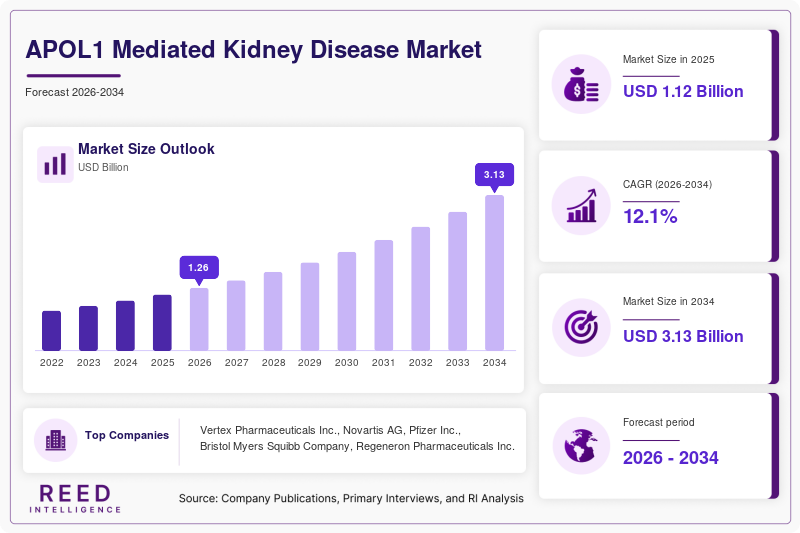
The APOL1 Mediated Kidney Disease Market size is estimated at USD 1.25 billion, and it is forecasted to reach approximately USD 3.10 billion by 2034, registering a CAGR of 12.1% during the forecast period (2026–2034). Growth in this market is strongly influenced by advancements in precision medicine, particularly in nephrology, where APOL1 gene variants are increasingly recognized as critical risk factors for chronic kidney disease progression.
A key global factor supporting market expansion is the integration of genomic screening into routine clinical practice, especially in high-risk populations of African ancestry. Increased collaboration between biotechnology firms and academic research institutes has accelerated the development of APOL1-targeted therapeutics and companion diagnostics. Additionally, government-backed rare disease initiatives and funding for kidney disease research are strengthening the pipeline of clinical trials.
Key Highlights
- North America dominated the market with a 34.2% share in 2025.
- Asia Pacific is expected to grow at the fastest CAGR of 11.2% during 2026–2034.
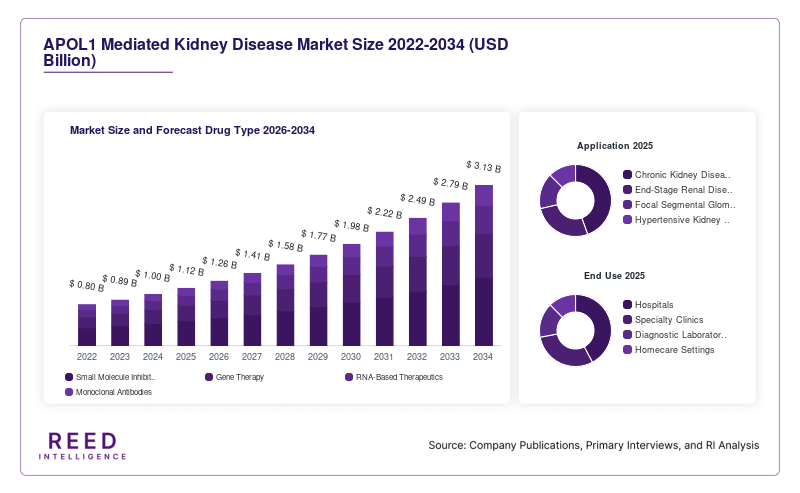
- By drug type, small molecule inhibitors accounted for the largest share of 39.6%.
- while gene therapy solutions are projected to grow at a CAGR of 13.4%.
- By application, chronic kidney disease treatment led with a 44.1% share, whereas end-stage renal disease management is expected to expand at a CAGR of 12.6%.
- The United States remained the dominant country, with market values of USD 510 million in 2024 and USD 560 million in 2025.
Market Trends
Expansion of Precision Nephrology and Genetic Screening Adoption
One of the most significant trends shaping the APOL1 Mediated Kidney Disease Market is the rapid expansion of precision nephrology. Healthcare systems are increasingly adopting genetic testing panels that include APOL1 variants to identify patients at elevated risk of kidney disease progression. This trend is supported by decreasing sequencing costs and improved accessibility of next-generation sequencing platforms. Hospitals and diagnostic labs are integrating genomic data into electronic health records, enabling early detection and personalized treatment planning. Pharmaceutical companies are also leveraging this data to design targeted therapies, improving clinical trial success rates and patient stratification efficiency across global research programs.
Increasing Focus on Gene-Based Therapeutic Development
Another major trend is the growing investment in gene-based therapies aimed at addressing the root cause of APOL1-mediated kidney dysfunction. Biopharmaceutical companies are actively developing RNA interference therapies, CRISPR-based gene editing approaches, and antisense oligonucleotides targeting APOL1 protein expression. This trend is driven by the limitations of conventional CKD treatments, which primarily focus on symptom management rather than disease modification. Strategic collaborations between biotech startups and large pharmaceutical players are accelerating clinical development timelines. Furthermore, regulatory agencies are offering expedited pathways for rare kidney disease therapies, encouraging innovation and expanding the competitive landscape.
Market Drivers
Rising Prevalence of Genetic Kidney Disorders
A key driver of the APOL1 Mediated Kidney Disease Market is the increasing prevalence of genetically linked kidney disorders, particularly among populations of African descent. APOL1 gene variants significantly elevate the risk of focal segmental glomerulosclerosis and hypertensive kidney disease. As awareness improves among healthcare professionals, more patients are being screened and diagnosed at earlier stages. This has resulted in higher demand for targeted therapies and diagnostic solutions. Additionally, the global rise in chronic kidney disease cases has intensified the need for specialized treatment approaches that address genetic causation rather than only managing symptoms.
Advancements in Biopharmaceutical Research and Funding
Rapid advancements in biopharmaceutical research and increased funding from both public and private sectors are significantly driving market growth. Governments and non-profit organizations are investing heavily in rare disease research programs, with a strong focus on kidney-related genetic disorders. Venture capital funding in biotechnology firms specializing in renal genomics has also increased, supporting early-stage innovation. These investments are enabling faster clinical trials, improved drug discovery platforms, and enhanced collaboration between research institutions and pharmaceutical companies, ultimately accelerating the commercialization of APOL1-targeted therapies.
Market Restraint
High Cost of Genetic Testing and Advanced Therapies
A major restraint in the APOL1 Mediated Kidney Disease Market is the high cost associated with genetic testing and advanced treatment options. Many healthcare systems, particularly in developing economies, face challenges in adopting widespread genomic screening due to budget limitations. Additionally, emerging gene-based therapies and biologics are expected to be priced at premium levels, limiting patient accessibility. Insurance coverage gaps further exacerbate affordability issues, restricting adoption rates despite increasing clinical demand. This cost barrier slows down market penetration and creates disparities in treatment availability across different regions.
Market Opportunities
Expansion of Companion Diagnostics in Nephrology
The integration of companion diagnostics with targeted therapies presents a significant opportunity in the APOL1 Mediated Kidney Disease Market. Pharmaceutical companies are increasingly collaborating with diagnostic firms to develop tests that identify APOL1 mutation carriers who are most likely to benefit from specific treatments. This approach enhances clinical trial precision and improves therapeutic outcomes. As regulatory bodies continue to support personalized medicine frameworks, the demand for companion diagnostics is expected to rise significantly, creating new revenue streams for diagnostic developers and biotechnology firms.
Growth of Telemedicine and Digital Health Integration
The increasing adoption of telemedicine and digital health platforms offers another major opportunity for market expansion. Remote patient monitoring systems and AI-driven diagnostic tools are enabling early detection and continuous management of kidney disease patients. Digital platforms also facilitate genetic counseling and follow-up consultations, improving patient adherence to treatment protocols. In regions with limited access to nephrology specialists, telehealth solutions are bridging critical gaps in care delivery. This trend is expected to significantly enhance disease management efficiency and expand the reach of APOL1-related healthcare services
Segmental Analysis
Drug Type Segment
Small molecule inhibitors dominated the APOL1 Mediated Kidney Disease Market with a 2024 share of approximately 39.6%. These therapies are widely used due to their established safety profiles and cost-effectiveness compared to advanced gene therapies. Pharmaceutical companies continue to focus on optimizing these molecules to improve renal protection outcomes in high-risk patients.
Gene therapy solutions are expected to be the fastest-growing subsegment, expanding at a CAGR of 13.4%. Growth is driven by advancements in CRISPR and RNA-based technologies that enable direct targeting of APOL1 gene expression. Increasing clinical trials and regulatory support for innovative therapies are accelerating development in this segment.
Application Segment
Chronic kidney disease treatment held the dominant share of 44.1% in 2024, as APOL1 variants are strongly associated with disease progression in affected populations. This segment benefits from high patient volumes and increasing adoption of early diagnostic screening programs.
End-stage renal disease management is projected to grow at a CAGR of 12.6%, supported by rising demand for advanced therapeutic interventions and dialysis alternatives. Innovations in renal replacement therapies are further contributing to segment expansion.
End-Use Segment
Hospitals and specialty clinics accounted for a 42.8% share in 2024 due to their central role in diagnosis and treatment of kidney disorders. These institutions are primary adopters of genetic testing and advanced nephrology treatments.
Homecare settings are expected to grow at a CAGR of 11.9%, driven by the rise of telehealth services and remote monitoring technologies that enable continuous patient management outside traditional clinical environments.
Regional Analysis
North America
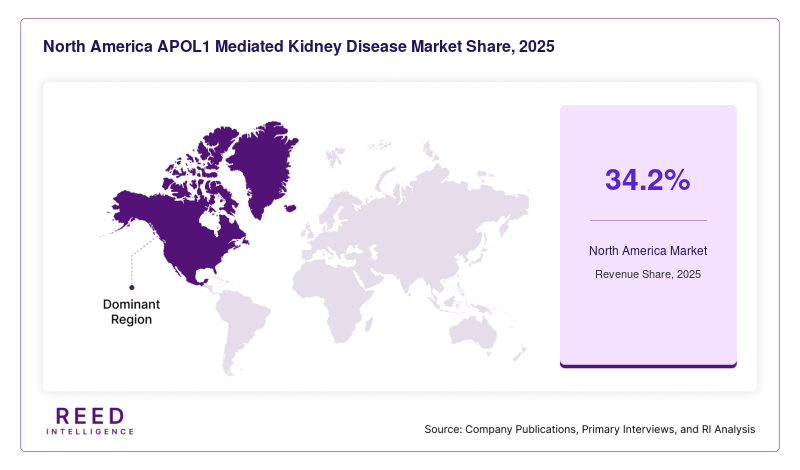
North America accounted for approximately 34.2% market share in 2025 and is projected to grow at a steady CAGR of 11.5% during the forecast period. The region benefits from advanced healthcare infrastructure, high adoption of genomic medicine, and strong presence of leading biotechnology companies. Increased awareness of APOL1 mutations among clinicians is further driving diagnostic uptake.
The United States remains the dominant country in this region, supported by extensive research funding and clinical trial activity. A key growth factor is the integration of precision medicine initiatives into national healthcare programs, which is accelerating early diagnosis and targeted treatment adoption across nephrology practices.
Europe
Europe held a market share of 26.8% in 2025 and is expected to grow at a CAGR of 10.7%. Strong regulatory support for rare disease research and well-established healthcare systems are key contributors to regional growth. Countries such as Germany, France, and the United Kingdom are leading adoption of genetic testing in nephrology.
Germany dominates the European market due to its advanced biomedical research ecosystem and strong government funding for genomic studies. Increased collaboration between universities and pharmaceutical companies is supporting innovation in APOL1-targeted therapies.
Asia Pacific
Asia Pacific represented 22.4% market share in 2025 and is projected to register the fastest CAGR of 11.2%. Rising healthcare expenditure, growing awareness of genetic disorders, and expanding diagnostic infrastructure are driving growth in the region.
China leads the Asia Pacific market due to rapid expansion of biotechnology research and increasing government investment in precision medicine. The country’s large patient population provides a strong base for clinical research and therapeutic development.
Middle East & Africa
The Middle East & Africa accounted for 8.6% market share in 2025 and is expected to grow at a CAGR of 10.2%. Limited access to advanced diagnostics remains a challenge, but increasing healthcare modernization efforts are improving market conditions.
South Africa is a key contributor in this region due to its higher prevalence of APOL1 variants in certain populations and growing investment in genetic research initiatives supported by public health organizations.
Latin America
Latin America held a 7.0% market share in 2025 and is expected to grow at a CAGR of 9.8%. Improving healthcare infrastructure and rising awareness of chronic kidney disease are supporting gradual market expansion.
Brazil dominates the regional market, driven by increasing adoption of genetic testing services and growing participation in international nephrology research collaborations.
Competitive Landscape
The APOL1 Mediated Kidney Disease Market is moderately consolidated, with leading biotechnology and pharmaceutical companies focusing on genetic research and targeted therapy development. Key players include Vertex Pharmaceuticals, Novartis AG, Pfizer Inc., Bristol Myers Squibb, and Regeneron Pharmaceuticals. Vertex Pharmaceuticals holds a leading position due to its strong pipeline in kidney-related genetic disorders. Recent developments include increased investment in APOL1-targeted RNA therapy programs and expansion of clinical trial networks across North America and Europe, strengthening its competitive positioning.
Key Players
- Vertex Pharmaceuticals
- Novartis AG
- Pfizer Inc.
- Bristol Myers Squibb
- Regeneron Pharmaceuticals
- AstraZeneca
- Roche Holding AG
- Amgen Inc.
- Gilead Sciences
- AbbVie Inc.
- Sanofi
- Eli Lilly and Company
- Bayer AG
- Takeda Pharmaceutical Company
- Moderna Inc.
Recent Developments
- In 2025, multiple biotechnology firms advanced Phase II clinical trials evaluating APOL1-targeted RNA interference therapies, showing promising early efficacy in reducing proteinuria levels.
- A major pharmaceutical collaboration was announced in 2025 between a leading gene therapy company and a global diagnostics provider to develop integrated APOL1 screening and treatment pathways.
- In early 2026, regulatory agencies in the United States granted fast-track designation to a novel CRISPR-based therapy targeting APOL1-mediated kidney dysfunction, accelerating its clinical development timeline.
APOL1 Mediated Kidney Disease Market Segments
Drug Type
- Small Molecule Inhibitors
- Gene Therapy
- RNA-Based Therapeutics
- Monoclonal Antibodies
Application
- Chronic Kidney Disease (CKD)
- End-Stage Renal Disease (ESRD)
- Focal Segmental Glomerulosclerosis
- Hypertensive Kidney Disease
End Use
- Hospitals
- Specialty Clinics
- Diagnostic Laboratories
- Homecare Settings
By Region
- North America
- Europe
- APAC
- Middle East and Africa
- LATAM