Aramid Paper Market Size, Share & Demand Report By Type (Meta-Aramid Paper, Para-Aramid Paper), By Application (Electrical Insulation, Aerospace, Automotive, Industrial Equipment), By End-Use Industry (Electrical & Electronics, Automotive, Aerospace & Defense, Industrial Manufacturing) & Segment Forecasts, 2026–2034
USD 3950
Market Overview
The global Aramid Paper Market size was valued at approximately USD 1.35 billion in 2026 and is projected to reach around USD 2.45 billion by 2034, expanding at a CAGR of 7.7% during the forecast period 2026–2034. Aramid paper, known for its high thermal stability, electrical insulation, and mechanical strength, continues to gain traction across multiple industrial applications, including electrical insulation systems, aerospace components, and high-performance automotive parts. The growing demand for lightweight and durable materials in critical environments is driving steady adoption across developed and emerging economies.
A major global factor supporting market growth is the rapid expansion of electrification and renewable energy infrastructure. As power grids modernize and renewable installations increase, the need for reliable insulation materials in transformers, motors, and generators has intensified. Aramid paper provides superior dielectric properties and heat resistance, making it a preferred choice in high-voltage and high-temperature applications. This trend is further reinforced by stringent safety regulations and efficiency requirements across energy and transportation sectors.
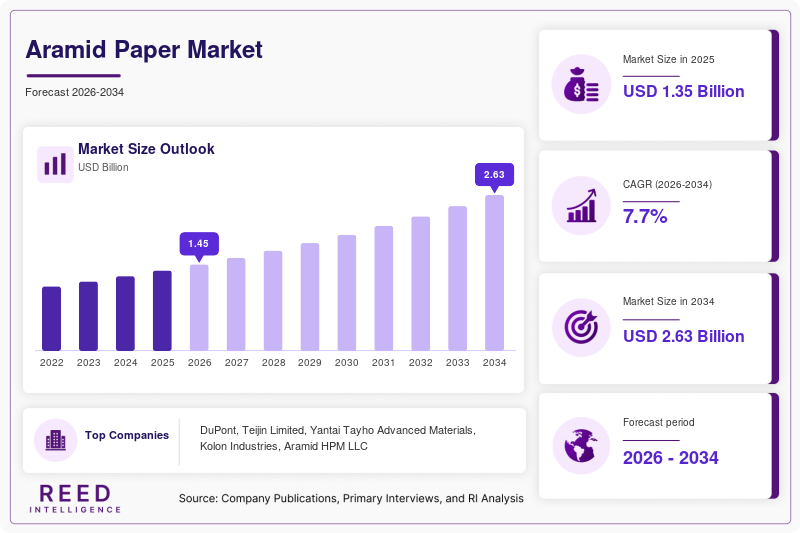
Key Highlights
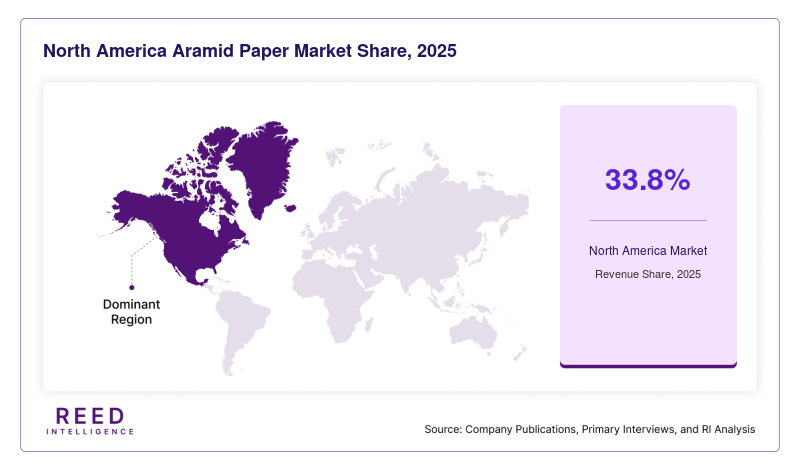
- North America dominated the market with a 33.8% share in 2025.
- Asia Pacific is expected to grow at the fastest CAGR of 9.4% during 2026–2034.
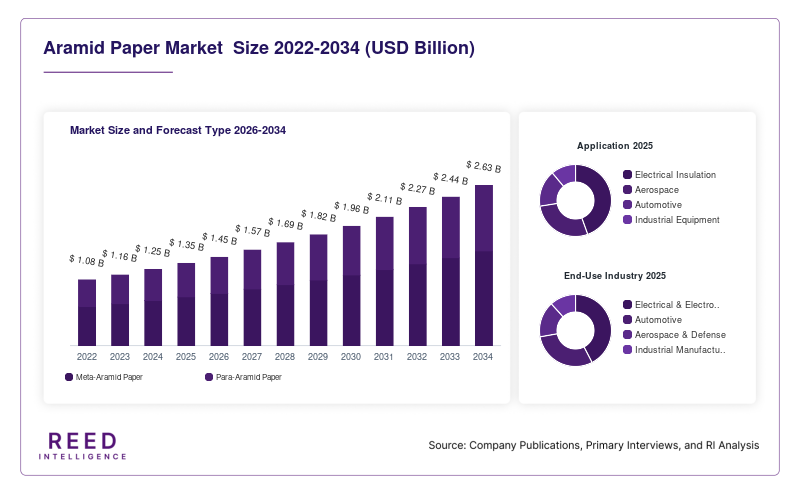
- By type, meta-aramid paper accounted for the largest share of 61.2%, while para-aramid paper is projected to grow at a CAGR of 8.6%.
- By application, electrical insulation led with a 44.5% share, whereas aerospace applications are expected to expand at a CAGR of 9.1%.
- The United States remained the dominant country, with market values of USD 410 million in 2024 and USD 445 million in 2025.
Market Trends
Rising Integration in Electric Vehicles and Advanced Mobility
The increasing shift toward electric vehicles (EVs) and advanced mobility solutions is shaping key trends in the Aramid Paper Market. Aramid paper is widely used in EV battery insulation, electric motor components, and high-voltage wiring systems due to its excellent thermal resistance and dielectric strength. As automakers prioritize safety and efficiency, the demand for materials that can withstand high temperatures and electrical loads continues to grow. Additionally, advancements in battery technologies, including solid-state batteries, are further boosting the use of aramid-based insulation materials. This trend is expected to gain momentum as governments worldwide support EV adoption through policy incentives and emission regulations.
Expanding Use in Aerospace and Defense Applications
Another notable trend is the growing utilization of aramid paper in aerospace and defense sectors. The material’s lightweight properties, combined with its high strength and flame resistance, make it ideal for aircraft interiors, insulation panels, and structural components. Aerospace manufacturers are increasingly focusing on reducing aircraft weight to improve fuel efficiency and lower emissions, which directly benefits the adoption of aramid-based materials. Furthermore, defense applications such as ballistic protection and thermal shielding also contribute to market expansion. Continuous innovations in composite materials and the increasing number of aircraft production programs are reinforcing this trend globally.
Market Drivers
Growth in Power Generation and Transmission Infrastructure
The global expansion of power generation and transmission infrastructure is a key driver for the Aramid Paper Market. As countries invest heavily in upgrading aging electrical grids and integrating renewable energy sources, the demand for high-performance insulation materials has surged. Aramid paper plays a critical role in transformers, cables, and switchgear systems, ensuring reliability and longevity under high thermal and electrical stress. The transition toward smart grids and increased electrification in industrial and residential sectors further amplifies this demand. Emerging economies are particularly contributing to growth due to large-scale infrastructure development projects.
Increasing Demand for High-Performance Materials in Industrial Applications
Industrial sectors such as automotive, electronics, and manufacturing are increasingly adopting high-performance materials to enhance efficiency and durability. Aramid paper offers exceptional resistance to heat, chemicals, and mechanical stress, making it suitable for demanding environments. The material’s ability to maintain structural integrity under extreme conditions makes it a preferred choice in insulation and reinforcement applications. As industries aim to improve operational efficiency and reduce maintenance costs, the adoption of advanced materials like aramid paper continues to rise, supporting sustained market growth over the forecast period.
Market Restraint
High Production Costs and Limited Raw Material Availability
One of the primary challenges facing the Aramid Paper Market is the high production cost associated with aramid fibers and paper manufacturing processes. The complex chemical synthesis involved in producing aramid materials requires significant capital investment and advanced technology, resulting in higher product prices compared to conventional alternatives. Additionally, the limited availability of raw materials and dependence on a few key suppliers can create supply chain constraints. These factors may restrict market penetration, particularly in cost-sensitive regions and applications. For instance, small-scale manufacturers and developing markets may opt for less expensive insulation materials, thereby limiting overall adoption. Addressing cost challenges through process optimization and technological advancements remains crucial for long-term market expansion.
Market Opportunities
Increasing Adoption in Renewable Energy Systems
The rapid growth of renewable energy systems presents significant opportunities for the Aramid Paper Market. Wind turbines, solar power systems, and energy storage units require reliable insulation materials to ensure efficient operation under varying environmental conditions. Aramid paper’s high thermal stability and electrical insulation properties make it suitable for these applications. As governments and private organizations invest in clean energy projects, the demand for durable and efficient materials is expected to rise. This creates a favorable environment for market players to expand their product offerings and capture new growth avenues in the renewable energy sector.
Technological Advancements in Material Engineering
Advancements in material engineering and manufacturing technologies are opening new opportunities for the market. Innovations in aramid fiber production and paper processing techniques are improving product performance while reducing costs. The development of hybrid materials and composites that incorporate aramid paper is further expanding its application scope. These advancements enable manufacturers to cater to diverse industry requirements, including electronics, automotive, and aerospace. Additionally, ongoing research and development efforts are focused on enhancing recyclability and sustainability, which can attract environmentally conscious industries and drive future market growth.
Segmental Analysis
By Type
Meta-aramid paper held the dominant share in 2024, accounting for approximately 61.2% of the global market. This segment’s leadership is attributed to its excellent thermal resistance, electrical insulation properties, and cost-effectiveness compared to para-aramid variants. Meta-aramid paper is widely used in electrical insulation systems, including transformers, motors, and generators, where reliability and durability are critical. Its ability to maintain performance under high temperatures and electrical stress makes it a preferred choice across industries. Additionally, the widespread availability and established manufacturing processes contribute to its strong market presence.
Para-aramid paper is expected to be the fastest-growing subsegment, with a projected CAGR of 8.6% during the forecast period. This growth is driven by its superior mechanical strength and high tensile properties, making it suitable for advanced applications such as aerospace and defense. The increasing demand for lightweight and high-strength materials in these sectors is boosting the adoption of para-aramid paper. Furthermore, advancements in manufacturing technologies are improving its performance characteristics, making it more accessible for a wider range of applications.
By Application
Electrical insulation emerged as the dominant application segment, accounting for 44.5% of the market share in 2024. The widespread use of aramid paper in transformers, cables, and electrical equipment drives this segment’s growth. The material’s high dielectric strength and thermal stability ensure efficient performance in demanding environments. As global energy consumption increases and power infrastructure expands, the demand for reliable insulation materials continues to rise, reinforcing the dominance of this segment.
Aerospace applications are expected to witness the fastest growth, with a CAGR of 9.1% during the forecast period. The increasing production of aircraft and the need for lightweight, flame-resistant materials are key factors driving this segment. Aramid paper is used in aircraft interiors, insulation panels, and structural components, contributing to weight reduction and improved fuel efficiency. The growing focus on sustainable aviation and technological advancements in composite materials further support the expansion of this segment.
By End-Use Industry
The electrical and electronics industry dominated the market in 2024, holding a significant share due to the extensive use of aramid paper in insulation and protection applications. The rapid growth of consumer electronics, industrial automation, and power systems has increased the demand for high-performance materials. Aramid paper’s ability to withstand high temperatures and electrical stress makes it indispensable in this industry. Additionally, the ongoing development of smart devices and advanced electronics continues to drive demand.
The automotive industry is projected to be the fastest-growing end-use segment, with a notable CAGR during the forecast period. The increasing adoption of electric vehicles and the need for advanced insulation materials in battery systems and electric motors are key growth factors. Aramid paper provides enhanced safety and efficiency in automotive applications, making it a preferred choice for manufacturers. The shift toward sustainable mobility and technological advancements in automotive design further contribute to the growth of this segment.
Regional Analysis
North America
North America held a significant share of the Aramid Paper Market, accounting for approximately 33.8% in 2025, with a steady CAGR projected over the forecast period. The region benefits from strong demand in aerospace, defense, and electrical infrastructure sectors. The presence of established manufacturers and advanced technological capabilities further supports market growth. Additionally, the increasing adoption of electric vehicles and renewable energy systems contributes to sustained demand for high-performance insulation materials.
The United States dominates the regional market, driven by extensive investments in power grid modernization and aerospace innovation. A unique growth factor in this region is the high level of research and development activities focused on advanced materials. Government support for clean energy initiatives and defense modernization programs also enhances the adoption of aramid paper across multiple applications.
Europe
Europe accounted for a notable share of the market in 2025 and is expected to grow at a moderate CAGR during the forecast period. The region’s emphasis on sustainability and energy efficiency has driven the adoption of advanced insulation materials. Stringent regulations related to emissions and energy consumption are encouraging industries to use high-performance materials like aramid paper in electrical and automotive applications.
Germany emerges as the dominant country in Europe, supported by its strong automotive and industrial base. A unique growth factor is the region’s focus on green energy transitions, particularly in wind and solar power projects. This has increased the demand for reliable insulation materials, thereby boosting the market for aramid paper.
Asia Pacific
Asia Pacific is the fastest-growing region in the Aramid Paper Market, with a projected CAGR of 9.4% during 2026–2034. Rapid industrialization, urbanization, and infrastructure development are key factors driving market growth. The region’s expanding power generation capacity and increasing demand for consumer electronics further contribute to the adoption of aramid paper.
China dominates the Asia Pacific market due to its large-scale manufacturing capabilities and growing energy sector. A unique growth factor is the government’s focus on expanding renewable energy installations and electric vehicle production. These initiatives are significantly increasing the demand for high-performance insulation materials, supporting market expansion.
Middle East & Africa
The Middle East & Africa region is witnessing gradual growth in the Aramid Paper Market, supported by increasing investments in energy and infrastructure projects. The market share in 2025 was relatively smaller compared to other regions, but a steady CAGR is expected during the forecast period. The demand for reliable insulation materials in power generation and industrial applications is driving market development.
Saudi Arabia leads the regional market, driven by its focus on diversifying the economy and investing in energy infrastructure. A unique growth factor is the expansion of industrial projects under national development plans, which increases the demand for durable and high-performance materials like aramid paper.
Latin America
Latin America holds a modest share of the global market and is expected to grow at a steady pace during the forecast period. The region’s growth is primarily driven by increasing investments in power infrastructure and industrial development. The demand for efficient insulation materials in electrical systems is contributing to market expansion.
Brazil dominates the Latin American market, supported by its growing energy sector and industrial base. A unique growth factor is the increasing focus on renewable energy projects, particularly in wind and hydroelectric power. This trend is boosting the demand for aramid paper in insulation applications.
Competitive Landscape
The Aramid Paper Market is characterized by the presence of several established players focusing on innovation, product development, and strategic collaborations. The competitive environment is moderately consolidated, with key companies investing in research and development to enhance product performance and expand application areas. Companies are also focusing on expanding their production capacities and strengthening their global distribution networks to meet increasing demand.
One of the leading players in the market is DuPont, known for its advanced aramid-based products. The company continues to maintain a strong market position through continuous innovation and strategic partnerships. A recent development includes the expansion of its production capacity to meet the growing demand from the electric vehicle and renewable energy sectors. Other companies are also focusing on sustainable manufacturing practices and product diversification to gain a competitive edge.
Key Players
- DuPont
- Teijin Limited
- Yantai Tayho Advanced Materials
- Kolon Industries
- Aramid HPM LLC
- Toray Industries
- Hyosung Corporation
- SRO Aramid
- JSC Kamenskvolokno
- China National Bluestar
- Jiangsu Zhongtian Technology
- Hebei Silicon Valley Chemical
- Kermel
- Sinopec Yizheng Chemical Fibre
- Huvis Corporation
Recent Developments
- A major manufacturer expanded its aramid paper production facility in Asia to cater to increasing demand from the electronics and automotive sectors.
- A leading company introduced a new high-performance aramid paper variant designed for advanced battery insulation in electric vehicles.
- Strategic collaborations between material manufacturers and renewable energy companies have been established to develop customized insulation solutions for wind and solar applications.
Aramid Paper Market Segments
Type
- Meta-Aramid Paper
- Para-Aramid Paper
Application
- Electrical Insulation
- Aerospace
- Automotive
- Industrial Equipment
End-Use Industry
- Electrical & Electronics
- Automotive
- Aerospace & Defense
- Industrial Manufacturing
By Region
- North America
- Europe
- APAC
- Middle East and Africa
- LATAM