Aromatase Deficiency Market Size, Share & Demand Report By Treatment Type (Estrogen Replacement Therapy, Combination Hormonal Therapy), By Diagnosis (Genetic Testing, Molecular Diagnostics), By End-User (Hospitals, Specialty Clinics), By Distribution Channel (Hospital Pharmacies, Retail Pharmacies, Online Pharmacies), By Region & Segment Forecasts, 2025–2034
USD 3950
Market Overview
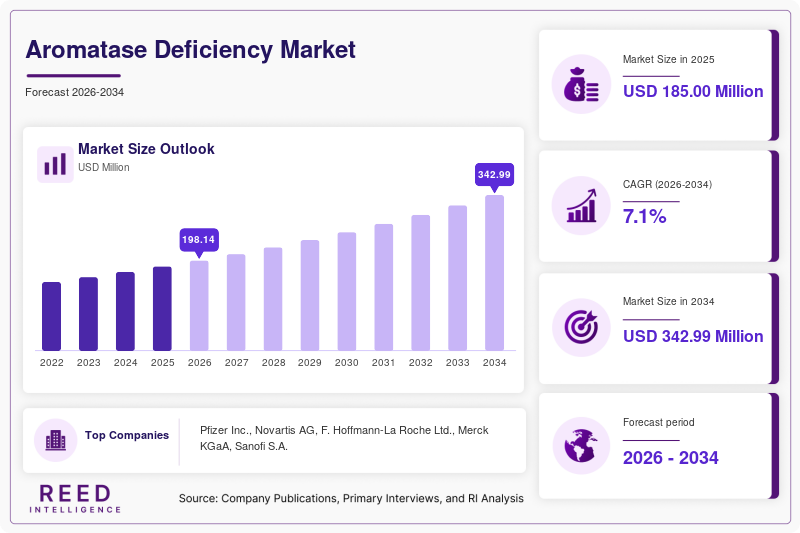
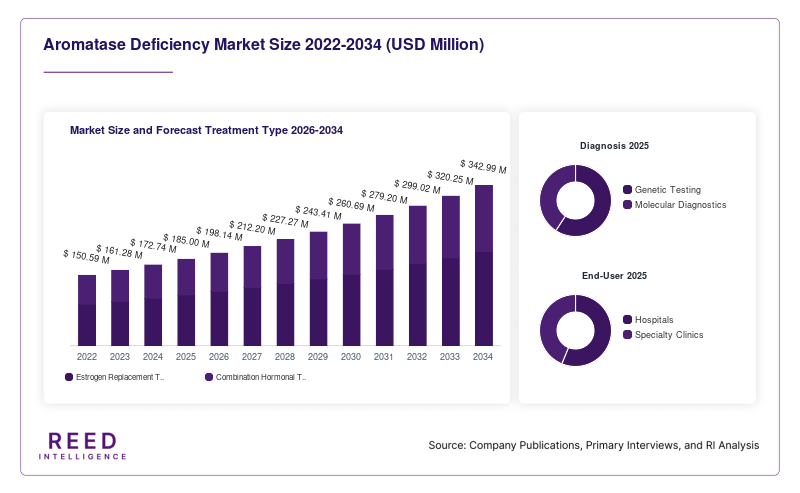
The global Aromatase Deficiency Market size was valued at approximately USD 185 million in 2025 and is projected to reach USD 342 million by 2034, expanding at a compound annual growth rate (CAGR) of 7.1% from 2025 to 2034. Aromatase deficiency, a rare genetic endocrine disorder affecting estrogen biosynthesis, has witnessed increasing clinical attention due to advancements in diagnostic capabilities and growing awareness among healthcare providers. The rising focus on rare diseases globally has supported market growth, particularly through expanded research funding and improved patient identification rates.
A key global factor contributing to the expansion of the Aromatase Deficiency Market is the increasing integration of genetic testing technologies into routine diagnostic workflows. Early detection has enabled timely hormone replacement therapies, improving patient outcomes and boosting demand for specialized treatments. Additionally, collaborations between pharmaceutical companies and research institutions have accelerated the development of targeted therapies.
Key Highlights
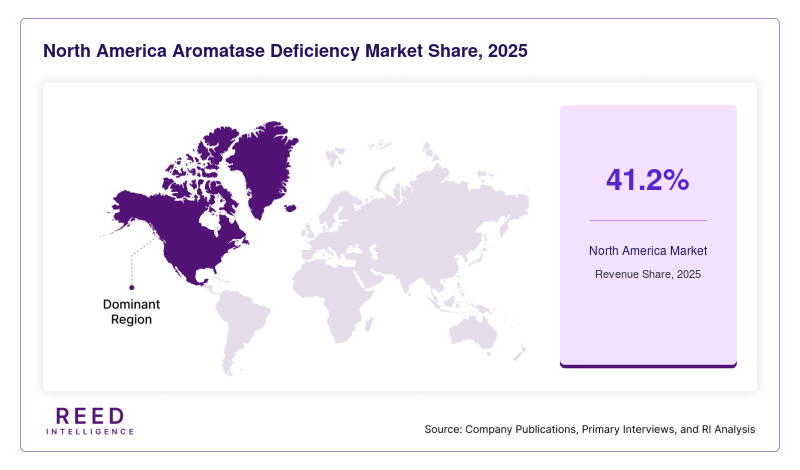
- North America dominated the market with a 41.2% share in 2025, while Asia Pacific is expected to register the fastest growth at a CAGR of 8.6%.
- By treatment type, estrogen replacement therapy accounted for 56.4% share in 2025, while combination hormonal therapy is projected to grow at a CAGR of 7.9%.
- By diagnosis, genetic testing led with 48.7% share, whereas advanced molecular diagnostics is anticipated to grow at a CAGR of 8.2%.
- The U.S. market was valued at USD 68.5 million in 2025 and is expected to reach USD 72.9 million in 2026.
Market Trends
Integration of Precision Medicine Approaches
The Aromatase Deficiency Market is increasingly influenced by precision medicine, where treatments are tailored based on individual genetic profiles. Advances in genomic sequencing have enabled clinicians to identify specific mutations in the CYP19A1 gene, facilitating more accurate diagnosis and targeted therapy planning. This trend is reshaping treatment protocols and enhancing patient-specific outcomes, particularly in pediatric and adolescent cases.
Expansion of Rare Disease Registries
The establishment of rare disease registries across developed and emerging economies is contributing to better epidemiological understanding. These databases help in tracking patient populations, disease progression, and treatment responses. As a result, pharmaceutical companies are leveraging this data to design more efficient clinical trials and develop novel therapies. The trend is also improving healthcare policy decisions and reimbursement frameworks, supporting long-term market growth.
Market Drivers
Increasing Awareness of Rare Endocrine Disorders
The growing awareness of rare hormonal disorders among healthcare professionals and patients is a significant driver of the Aromatase Deficiency Market. Educational initiatives by healthcare organizations and advocacy groups have improved early recognition of symptoms, leading to timely diagnosis and treatment.
Advancements in Hormone Replacement Therapies
Technological advancements in hormone replacement therapies have enhanced treatment efficacy and safety. Improved formulations with better bioavailability and reduced side effects have increased patient compliance. These innovations are encouraging wider adoption of therapeutic solutions, contributing to the expansion of the Aromatase Deficiency Market.
Market Restraint
Limited Patient Pool and High Treatment Costs
One of the major restraints in the Aromatase Deficiency Market is the extremely limited patient population due to the rarity of the condition. This restricts large-scale clinical trials and limits commercial incentives for pharmaceutical companies. Additionally, the high cost of genetic testing and long-term hormone therapy poses affordability challenges, particularly in low- and middle-income regions. The lack of standardized treatment protocols further complicates clinical management, hindering market growth.
Market Opportunities
Development of Gene-Based Therapies
The emergence of gene therapy presents a promising opportunity in the Aromatase Deficiency Market. Research focused on correcting genetic mutations at the molecular level could offer long-term or permanent solutions, reducing dependency on lifelong hormone therapy.
Expansion in Emerging Healthcare Markets
Expanding healthcare infrastructure and increased investment in rare disease management in emerging economies present growth opportunities. Improved access to diagnostic tools and specialized care centers is expected to enhance market penetration in regions such as Asia Pacific and Latin America.
Segmental Analysis
By Treatment Type
Estrogen replacement therapy dominated the Aromatase Deficiency Market, accounting for 56.4% share in 2025. This dominance is attributed to its effectiveness in managing symptoms associated with estrogen deficiency, including bone health and reproductive development.
Combination hormonal therapy is projected to grow at the fastest CAGR of 7.9%. This growth will be driven by its ability to address multiple hormonal imbalances simultaneously, offering improved clinical outcomes. Increasing research into multi-hormonal approaches is expected to support this segment’s expansion.
By Diagnosis
Genetic testing held the largest share at 48.7% in 2025, as it provides accurate identification of the underlying genetic mutations. Its widespread adoption in developed regions has strengthened its market position.
Advanced molecular diagnostics is expected to grow at a CAGR of 8.2%. The integration of next-generation sequencing technologies will enhance diagnostic precision, enabling early detection and personalized treatment strategies.
By End-User
Hospitals accounted for the largest share of 52.3% in 2025, driven by the availability of specialized care and advanced diagnostic facilities. Hospitals serve as primary centers for treatment and long-term patient management.
Specialty clinics are anticipated to grow at a CAGR of 7.8%. Their focus on endocrine disorders and personalized care is expected to attract more patients, supporting segment growth.
By Distribution Channel
Hospital pharmacies dominated with a 49.1% share in 2025, as most treatments are administered under medical supervision. The centralized distribution of medications in hospitals supports this segment.
Online pharmacies are projected to grow at a CAGR of 8.4%. Increasing digitalization and convenience of home delivery services will drive adoption, particularly in urban areas.
Regional Analysis
North America
North America accounted for 41.2% of the Aromatase Deficiency Market share in 2025 and is expected to grow at a CAGR of 6.8% through 2034. The region’s established healthcare infrastructure and strong focus on rare disease research have supported market dominance. Favorable reimbursement policies and widespread adoption of genetic testing technologies have further contributed to growth.
The United States remained the dominant country due to its advanced clinical research ecosystem. A key growth factor is the presence of specialized endocrine centers that facilitate early diagnosis and personalized treatment approaches, improving patient outcomes.
Europe
Europe held a 27.5% share in 2025 and is projected to grow at a CAGR of 6.5%. The region benefits from robust healthcare systems and supportive regulatory frameworks for orphan drugs. Increased funding for rare disease research has supported the development of innovative therapies.
Germany dominated the European market due to its strong pharmaceutical industry and emphasis on clinical research. The country’s structured healthcare system enables efficient patient management and access to advanced treatment options.
Asia Pacific
Asia Pacific represented 18.6% of the market in 2025 and is expected to grow at the fastest CAGR of 8.6%. Rapid improvements in healthcare infrastructure and increasing awareness of genetic disorders are key growth factors. Governments are investing in diagnostic facilities, boosting early detection rates.
China led the regional market due to its large population base and expanding healthcare system. Increased government initiatives aimed at rare disease management have improved access to diagnostic and treatment services.
Middle East & Africa
The Middle East & Africa accounted for 7.1% of the market in 2025 and is projected to grow at a CAGR of 6.2%. Growth is driven by gradual improvements in healthcare infrastructure and rising awareness of rare diseases. However, limited access to specialized care remains a challenge.
Saudi Arabia dominated the region due to increased healthcare spending and initiatives to improve genetic testing capabilities. The country’s focus on modernizing healthcare services has supported market expansion.
Latin America
Latin America held 5.6% of the market share in 2025 and is expected to grow at a CAGR of 6.4%. The region is witnessing gradual improvements in healthcare access and diagnostic capabilities. Government initiatives aimed at rare disease awareness are contributing to growth.
Brazil emerged as the leading country due to its expanding healthcare infrastructure and growing investment in medical research. Efforts to improve patient access to advanced diagnostics have enhanced market development.
Competitive Landscape
The Aromatase Deficiency Market is moderately fragmented, with key players focusing on research collaborations and product innovation. Companies are investing in advanced hormone therapies and diagnostic tools to strengthen their market presence.
A leading player in the market is Pfizer Inc., which has focused on expanding its endocrine therapy portfolio through strategic partnerships and clinical trials. The company’s recent development includes the advancement of hormone-based therapies aimed at improving treatment outcomes for rare endocrine disorders.
Other prominent players are emphasizing regional expansion and investment in research to address unmet clinical needs. The competitive landscape is shaped by innovation, regulatory approvals, and strategic alliances.
Key Players List
- Pfizer Inc.
- Novartis AG
- F. Hoffmann-La Roche Ltd.
- Merck KGaA
- Sanofi S.A.
- AstraZeneca plc
- Eli Lilly and Company
- Bayer AG
- AbbVie Inc.
- Takeda Pharmaceutical Company Limited
- Teva Pharmaceutical Industries Ltd.
- Amgen Inc.
- Ipsen S.A.
- Endo International plc
- Recordati Rare Diseases
Recent Developments
- 2024: Pfizer Inc. expanded its research pipeline focusing on rare endocrine disorders.
- 2024: Novartis AG initiated clinical trials targeting hormone deficiency treatments.
- 2023: Roche introduced advanced diagnostic tools for rare genetic diseases.
- 2023: Takeda Pharmaceutical increased investment in rare disease therapies.
- 2023: Sanofi strengthened collaborations for endocrine disorder research.
Aromatase Deficiency Market Segments
Treatment Type
- Estrogen Replacement Therapy
- Combination Hormonal Therapy
Diagnosis
- Genetic Testing
- Molecular Diagnostics
End-User
- Hospitals
- Specialty Clinics
Distribution Channel
- Hospital Pharmacies
- Retail Pharmacies
- Online Pharmacies
By Region
- North America
- Europe
- APAC
- Middle East and Africa
- LATAM