Art Collection Software Market Size, Share & Demand Report By Deployment Mode (Cloud-Based, On-Premise, Hybrid), By Application (Collection Management, Digital Asset Management, Inventory Tracking, Provenance Management, Exhibition Management), By End Use (Museums and Galleries, Private Collectors, Auction Houses, Educational Institutions, Cultural Heritage Organizations), By Region & Segment Forecasts, 2026–2034
USD 3950
Market Overview
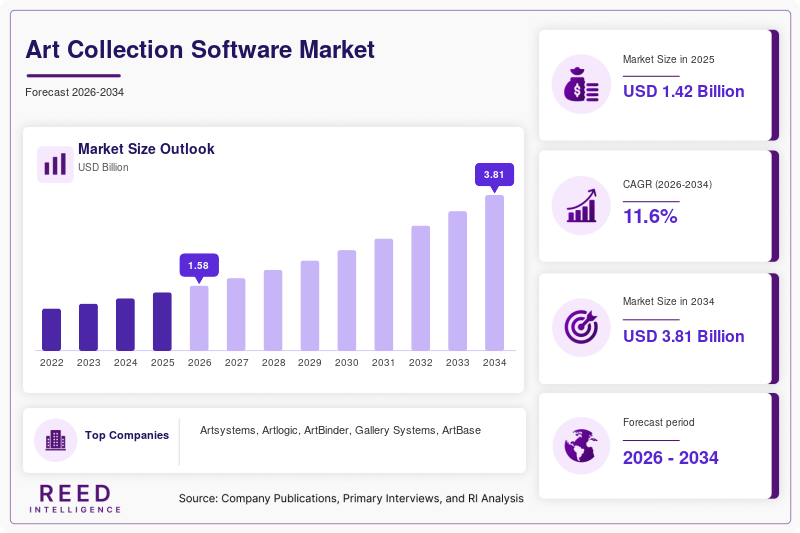
The global Art Collection Software Market size was valued at USD 1.42 billion in 2026 and is projected to reach USD 3.41 billion by 2034, expanding at a CAGR of 11.6% during the forecast period. The market continues to gain momentum due to the growing digital transformation across museums, galleries, auction houses, private collectors, and cultural institutions. Organizations managing high-value art collections are increasingly investing in cloud-based platforms, collection cataloging tools, provenance tracking systems, and digital asset management solutions to improve operational efficiency and collection visibility. The rising integration of artificial intelligence, blockchain authentication, and mobile accessibility within art management platforms is also contributing to market expansion.
One of the major global factors supporting market growth is the increasing adoption of digital archiving practices among museums and private collectors. Art institutions are focusing on centralized databases that simplify inventory management, insurance documentation, valuation tracking, and restoration monitoring. Growing online art transactions and virtual exhibitions have further accelerated the demand for software capable of managing both physical and digital artworks across multiple channels. In addition, government initiatives supporting cultural preservation and digital heritage management are encouraging organizations to modernize collection management infrastructure.
Key Highlights
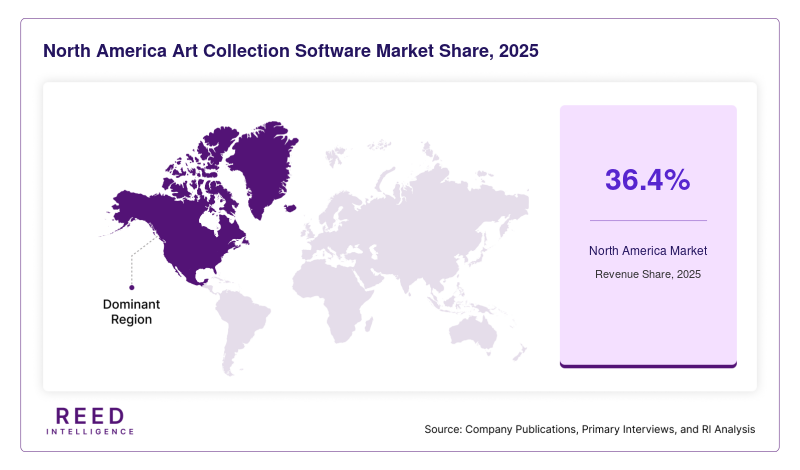
- North America dominated the market with a 36.4% share in 2025.
- Asia Pacific is expected to grow at the fastest CAGR of 13.1% during 2026–2034.
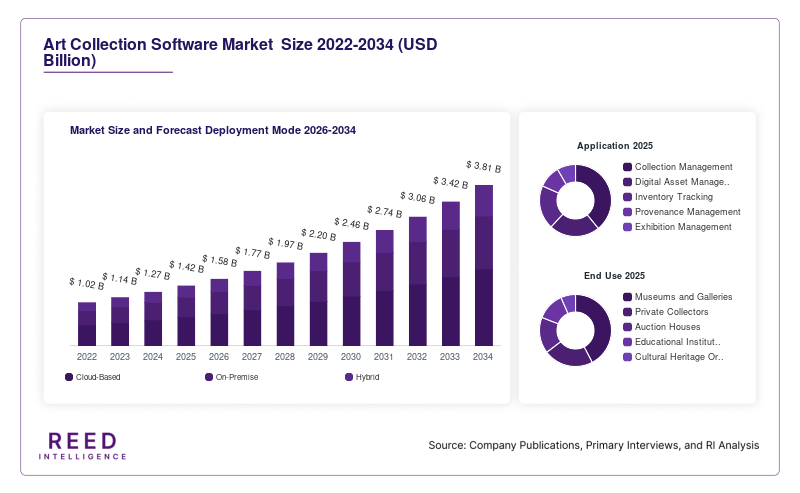
- By deployment mode, cloud-based software accounted for the largest share of 58.7%, while hybrid deployment is projected to grow at a CAGR of 14.2%.
- By application, collection management led with a 42.5% share, whereas digital asset management is expected to expand at a CAGR of 13.8%.
- By end use, museums and galleries represented the leading segment with a 46.9% share, while private collectors are projected to grow at a CAGR of 12.9%. The United States remained the dominant country, with market values of USD 430 million in 2024 and USD 486 million in 2025.
Market Trends
Expansion of AI-Driven Cataloging and Authentication Solutions
Artificial intelligence is becoming an important trend within the Art Collection Software Market as organizations seek faster and more accurate collection management systems. AI-enabled software can automatically categorize artworks, identify duplicate entries, recognize artistic styles, and generate metadata from uploaded images. Museums and galleries are increasingly adopting these capabilities to reduce administrative workload and improve collection accessibility. AI-driven image recognition also supports authentication and provenance verification, helping institutions detect inconsistencies in artwork records. The growing availability of machine learning algorithms integrated into cloud-based collection software is improving the efficiency of inventory tracking and insurance documentation. Vendors are introducing predictive maintenance tools that monitor environmental conditions and restoration schedules for sensitive artworks. As art collections continue to expand globally, AI-powered automation is expected to remain a key trend supporting operational scalability and digital transformation.
Rising Integration of Blockchain for Provenance Tracking
Blockchain integration is emerging as another notable trend influencing the Art Collection Software Market. Art collectors, auction houses, and galleries are increasingly prioritizing transparent ownership records and secure transaction histories. Blockchain-enabled platforms provide immutable provenance tracking that improves trust among buyers, sellers, and insurers. The technology also supports digital certificates of authenticity, reducing concerns associated with counterfeit artworks and disputed ownership claims. Several software providers are incorporating smart contract capabilities that automate royalty payments and ownership transfers for artists and collectors. The rise of digital art and tokenized collectibles has further accelerated demand for blockchain-compatible management systems. Institutions are using decentralized ledgers to document restoration history, exhibition records, and valuation changes. This trend is expected to strengthen long-term market growth as organizations seek more secure and transparent collection management ecosystems.
Market Drivers
Increasing Digitization Across Museums and Cultural Institutions
The rapid digitization of museums, galleries, and cultural archives is one of the primary drivers supporting the Art Collection Software Market. Institutions worldwide are transitioning from paper-based documentation and disconnected spreadsheets to centralized digital collection systems. This shift enables organizations to manage extensive artwork inventories, monitor restoration schedules, and improve public accessibility through online databases. Museums are increasingly investing in software platforms that support high-resolution imaging, multilingual records, and cloud synchronization. The demand for digital engagement accelerated after the expansion of virtual exhibitions and online viewing rooms, encouraging institutions to modernize legacy infrastructure. Governments and cultural organizations are also providing financial support for digital preservation initiatives, especially for historical and heritage collections. These factors continue to increase adoption of advanced collection management platforms across both public and private sectors.
Growing Online Art Transactions and Private Collecting Activities
The increasing volume of online art transactions and the expansion of private art collecting activities are contributing significantly to market growth. High-net-worth individuals and investment firms are using art collection software to manage acquisitions, monitor valuations, and organize insurance documentation. The growing popularity of online auctions and digital art marketplaces has created a need for platforms that provide real-time inventory updates and secure transaction management. Collectors are prioritizing mobile-accessible software that enables remote monitoring of portfolios across multiple locations. Software vendors are responding by offering integrated analytics, financial reporting, and tax management features tailored to collectors and dealers. The emergence of digital artworks and non-fungible assets has further strengthened demand for systems capable of handling both physical and digital collections. This growing commercialization of the global art ecosystem continues to support sustained market expansion.
Market Restraint
High Implementation Costs and Data Migration Challenges
Despite favorable growth prospects, the Art Collection Software Market faces challenges associated with high implementation costs and complex data migration processes. Large museums and galleries often maintain decades of historical records in incompatible formats, making digital conversion both time-consuming and expensive. Organizations adopting advanced software platforms frequently require customized integrations with existing accounting systems, conservation databases, and ticketing platforms, increasing deployment complexity. Small galleries and independent collectors may hesitate to invest in enterprise-grade solutions due to licensing fees, training expenses, and cybersecurity concerns. In addition, data standardization remains inconsistent across regions, creating interoperability limitations for institutions operating internationally. Concerns related to protecting sensitive ownership records and artwork valuations also affect purchasing decisions. For example, several mid-sized cultural institutions in Europe delayed modernization projects during 2025 because of rising migration costs and limited internal technical expertise. These factors may restrain market penetration among budget-sensitive organizations during the forecast period.
Market Opportunities
Growth Potential in Emerging Art Markets and Regional Galleries
Emerging economies are creating substantial opportunities for the Art Collection Software Market due to rising cultural investments and expanding art industries. Countries across Asia Pacific, the Middle East, and Latin America are witnessing increased establishment of private galleries, museums, and art fairs. These organizations require affordable digital platforms for inventory management, provenance tracking, and exhibition planning. Regional governments are supporting digital heritage initiatives that encourage modernization of museum infrastructure and archival systems. Software vendors are increasingly introducing subscription-based and modular solutions that cater to smaller institutions with limited budgets. Cloud deployment models are also improving accessibility by reducing upfront hardware costs. As local art ecosystems mature and international collectors expand into emerging markets, demand for scalable collection management solutions is expected to accelerate steadily across developing regions.
Rising Adoption of Mobile and Cloud-Based Collection Platforms
The growing preference for mobile and cloud-based technologies presents another major opportunity for the Art Collection Software Market. Art professionals increasingly require remote access to collection records, valuation reports, and exhibition schedules across multiple devices and locations. Cloud-based software enables real-time collaboration among curators, restorers, insurers, and collectors without relying on physical servers. Mobile applications equipped with barcode scanning, image capture, and condition reporting capabilities are improving collection management efficiency during transportation and exhibitions. Vendors are also integrating advanced analytics and automated backup features that enhance operational reliability. Small and medium-sized galleries are adopting cloud platforms due to their lower maintenance costs and flexible subscription structures. As cybersecurity frameworks continue to improve and internet penetration expands globally, mobile and cloud-enabled art collection software is expected to create substantial long-term growth opportunities.
Segmental Analysis
By Deployment Mode
Cloud-based software accounted for the largest share of the Art Collection Software Market in 2024, representing approximately 58.7% of total revenue. The dominance of this subsegment is primarily attributed to lower infrastructure costs, remote accessibility, and simplified software maintenance. Museums, galleries, and private collectors increasingly prefer cloud deployment because it enables centralized data storage and real-time collaboration across multiple locations. Cloud solutions also support automatic backups, cybersecurity updates, and mobile integration, which improve operational efficiency for organizations managing large and geographically dispersed collections. The growing adoption of subscription-based pricing models has further increased demand among small and mid-sized institutions seeking scalable and affordable management platforms. Vendors are continuously enhancing cloud security frameworks to address concerns related to sensitive ownership and valuation records.
Hybrid deployment is projected to witness the fastest CAGR of 14.2% during the forecast period due to rising demand for flexible infrastructure solutions. Organizations managing highly valuable collections are increasingly adopting hybrid environments that combine the accessibility of cloud systems with the security of on-premise storage. This deployment approach enables institutions to maintain control over confidential data while benefiting from remote collaboration and digital archiving capabilities. Hybrid systems are gaining popularity among large museums and international auction houses that require customized integrations with existing financial and conservation management platforms. Growing concerns regarding cybersecurity compliance and regional data regulations are also encouraging adoption of hybrid deployment models. Software providers are introducing modular hybrid solutions designed to improve interoperability and operational continuity across complex institutional environments.
By Application
Collection management represented the dominant application segment within the Art Collection Software Market in 2024, accounting for nearly 42.5% of global revenue. This subsegment includes inventory tracking, cataloging, provenance documentation, restoration scheduling, and insurance management functionalities. Museums and galleries rely heavily on collection management platforms to maintain organized records and improve accessibility to artwork databases. Increasing digitalization initiatives across cultural institutions have accelerated adoption of software capable of handling high-resolution images, multilingual metadata, and automated reporting features. Organizations are also integrating barcode scanning and RFID tracking technologies into collection management systems to improve artwork movement monitoring during exhibitions and transportation. The need for centralized and searchable databases continues to drive investment in advanced collection management applications across both public and private sectors.
Digital asset management is expected to expand at the fastest CAGR of 13.8% through 2034 due to the rising importance of digital artworks and virtual exhibitions. Institutions are increasingly creating high-quality digital archives for educational access, marketing campaigns, and online exhibitions. The growth of non-fungible digital assets and multimedia collections has further increased demand for software capable of storing and managing diverse digital formats. Digital asset management systems also support copyright tracking, automated metadata generation, and integration with social media and e-commerce platforms. Art organizations are prioritizing these solutions to enhance audience engagement and streamline content distribution across online channels. As virtual experiences continue to gain popularity within the global art ecosystem, demand for scalable digital asset management tools is expected to rise significantly.
By End Use
Museums and galleries held the leading share of the Art Collection Software Market in 2024, contributing approximately 46.9% of total revenue. These institutions manage extensive collections requiring sophisticated cataloging, restoration tracking, and exhibition planning capabilities. Growing investments in cultural preservation and public accessibility have encouraged museums to adopt digital management platforms that support online databases and virtual tours. Galleries are also implementing software systems to streamline inventory management, customer relationship management, and artwork valuation tracking. The increasing use of mobile applications and cloud synchronization features is improving operational coordination across departments and exhibition venues. Public institutions are particularly focused on implementing scalable software solutions that support multilingual interfaces and integration with educational resources for broader audience engagement.
Private collectors are anticipated to register the fastest CAGR of 12.9% during the forecast period due to increasing art investments and portfolio diversification activities. High-net-worth individuals and investment firms are using specialized software platforms to monitor acquisitions, valuations, insurance records, and transportation logistics. Mobile accessibility and real-time reporting features are becoming increasingly important for collectors managing artworks across multiple residences and storage facilities. The growth of online art auctions and digital marketplaces has also accelerated demand for software capable of supporting secure transaction management and provenance verification. Vendors are introducing personalized dashboards, financial analytics tools, and blockchain-based authentication features tailored specifically for private collectors. This growing professionalization of personal art management practices is expected to contribute significantly to long-term market growth.
Regional Analysis
North America
North America accounted for the largest share of the Art Collection Software Market in 2025, representing approximately 36.4% of global revenue. The region is projected to expand at a CAGR of 10.9% through 2034 due to the strong presence of museums, private collectors, auction houses, and technology providers. Organizations across the United States and Canada are investing heavily in cloud-based collection management platforms to improve operational efficiency and digital engagement. Increasing adoption of virtual exhibitions and online archival systems is also supporting software demand across educational and cultural institutions.
The United States remained the dominant country within North America due to its extensive museum infrastructure and active art investment ecosystem. A key growth factor in the country is the rapid integration of artificial intelligence and blockchain technologies into collection management systems. Leading museums and private galleries are adopting AI-enabled cataloging solutions that automate artwork classification and provenance verification. The growing popularity of online art marketplaces and digital collectibles is further strengthening demand for secure collection software platforms across the country.
Europe
Europe represented a significant portion of the global Art Collection Software Market in 2025 and is expected to grow at a CAGR of 10.4% during the forecast period. The region benefits from a strong concentration of historical museums, cultural institutions, and heritage preservation organizations. Countries across Western Europe are increasingly modernizing archival systems to support digital accessibility and collection transparency. Cloud-based collection software adoption is rising among public museums and independent galleries seeking efficient inventory tracking and restoration management capabilities.
The United Kingdom emerged as the leading country within the European market due to its active auction industry and strong museum network. A unique growth factor supporting the country is the expansion of government-backed digital heritage initiatives focused on preserving historical collections through advanced software infrastructure. Cultural organizations are increasingly collaborating with technology vendors to improve public engagement through digital exhibitions and searchable online databases. Rising demand for provenance management tools among collectors and insurers is also contributing to regional growth.
Asia Pacific
Asia Pacific is anticipated to register the fastest CAGR of 13.1% in the Art Collection Software Market between 2026 and 2034. Rapid urbanization, rising disposable income, and increasing investments in museums and galleries are supporting regional expansion. Countries across the region are witnessing growing participation in international art fairs and online auctions, creating demand for efficient collection management systems. Software providers are targeting regional institutions with cost-effective cloud platforms and multilingual interfaces designed for diverse operational requirements.
China remained the dominant country within Asia Pacific due to its expanding art trade sector and increasing establishment of private museums. One of the key growth factors driving the market in China is the rapid digitalization of cultural institutions supported by government initiatives promoting heritage preservation. Museums are adopting centralized databases and mobile applications to improve public accessibility and operational management. Growing interest in digital art and technology-driven exhibitions is also accelerating software implementation across galleries and auction houses.
Middle East & Africa
The Middle East & Africa region is gradually emerging as an important market for art collection software, supported by rising investments in cultural tourism and museum development. The market in the region is forecast to grow at a CAGR of 9.8% during the assessment period. Governments across Gulf countries are expanding cultural infrastructure through large-scale museum projects and heritage preservation programs. Increasing interest in digital documentation and exhibition management is encouraging institutions to adopt centralized software platforms.
The United Arab Emirates dominated the regional market due to the expansion of international art exhibitions and luxury art auctions in cities such as Dubai and Abu Dhabi. A major growth factor in the country is the increasing development of smart museums and digitally integrated cultural destinations. Art institutions are implementing advanced collection management systems to support multilingual visitor engagement and international collaboration. The rise of private collectors and cross-border art transactions is further contributing to software demand across the country.
Latin America
Latin America is expected to witness stable growth in the Art Collection Software Market, supported by increasing modernization efforts among museums and galleries. The region is projected to expand at a CAGR of 9.5% during 2026–2034. Public and private institutions are increasingly recognizing the importance of digital archiving and inventory management solutions for preserving cultural heritage. Cloud deployment models are particularly attractive within the region because they reduce infrastructure costs and simplify software implementation for smaller organizations.
Brazil emerged as the dominant country in Latin America due to its extensive network of museums, cultural institutions, and growing art fair industry. A unique growth factor supporting the Brazilian market is the rising adoption of digital platforms for community engagement and educational outreach. Museums are using collection software to create virtual exhibitions and interactive databases accessible to broader audiences. Increased collaboration between local governments and cultural organizations is also encouraging technology investments aimed at preserving national artistic heritage.
Competitive Landscape
The Art Collection Software Market is moderately fragmented, with established technology providers competing alongside specialized niche vendors offering customized collection management solutions. Market participants are focusing on cloud integration, AI-enabled cataloging, mobile accessibility, and blockchain authentication features to strengthen their competitive positioning. Companies are also expanding subscription-based pricing models to attract small and medium-sized galleries, museums, and independent collectors.
Artsystems emerged as one of the leading companies in the market due to its broad portfolio of collection management and gallery operation software solutions. The company strengthened its market presence during 2025 by enhancing AI-assisted cataloging and cloud synchronization capabilities across its platform portfolio. Other notable players are investing in strategic partnerships with museums, auction houses, and cultural institutions to improve software interoperability and customer retention.
Key Players
- Artsystems
- Artlogic
- ArtBinder
- Gallery Systems
- Art Galleria
- Collector Systems
- ArtBase
- ArtCloud
- ArtFundi
- Vernon Systems
- CollectionSpace
- Artwork Archive
- Adlib Software
- Axiell Group
- Modeshape
Recent Developments
- In February 2025, Artlogic introduced an AI-powered artwork recognition feature designed to automate metadata generation and provenance verification for galleries and museums.
- In July 2025, Gallery Systems expanded its cloud infrastructure services across Asia Pacific to support growing demand from regional museums and cultural institutions.
- In November 2025, Artwork Archive launched an enhanced mobile application with integrated valuation tracking and digital asset management capabilities for private collectors.
- In January 2026, Axiell Group partnered with multiple European museums to deploy advanced digital archiving systems focused on cultural heritage preservation.
- In March 2026, Artsystems announced the integration of blockchain-enabled provenance tracking tools into its enterprise collection management platform.
Art Collection Software Market Segments
Deployment Mode
- Cloud-Based
- On-Premise
- Hybrid
Application
- Collection Management
- Digital Asset Management
- Inventory Tracking
- Provenance Management
- Exhibition Management
End Use
- Museums and Galleries
- Private Collectors
- Auction Houses
- Educational Institutions
- Cultural Heritage Organizations
By Region
- North America
- Europe
- APAC
- Middle East and Africa
- LATAM