Astragalus Root Extract Market Size, Share & Demand Report By Form (Powder Extract, Liquid Extract, Capsules, Tablets), By Application (Dietary Supplements, Functional Beverages, Pharmaceuticals, Personal Care & Cosmetics, Herbal Tea Products), By Distribution Channel (Offline Retail, Online Retail, Direct Sales), By Region & Segment Forecasts, 2026–2034
USD 3950
Market Overview
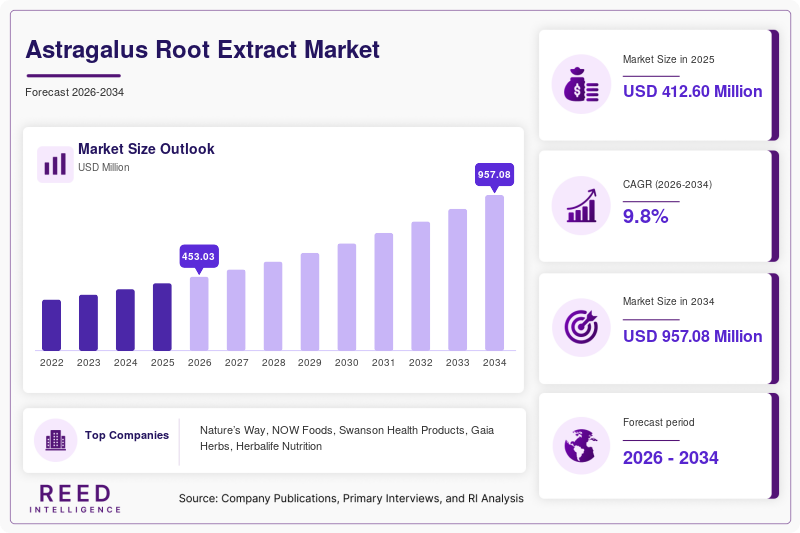
The global Astragalus Root Extract Market size was valued at USD 412.6 million in 2026 and is projected to reach USD 873.4 million by 2034, expanding at a CAGR of 9.8% during the forecast period from 2026 to 2034. The market continues to gain momentum due to rising consumer interest in herbal supplements, plant-derived immunity boosters, and preventive healthcare products. Astragalus root extract, derived from the Astragalus membranaceus plant, is widely used in nutraceuticals, pharmaceuticals, functional beverages, skincare formulations, and traditional medicine applications. Growing awareness regarding adaptogenic ingredients and natural wellness solutions has increased demand among health-conscious consumers across developed and emerging economies.
The expansion of the global herbal supplement industry has supported the growth of the Astragalus Root Extract Market. Consumers are increasingly shifting toward botanical ingredients that are associated with immune support, anti-inflammatory properties, and energy enhancement. Food and beverage manufacturers are integrating herbal extracts into functional drinks, gummies, and wellness powders to address evolving consumer preferences. In addition, rising investments in plant-based ingredient processing and extraction technologies are helping manufacturers improve product purity and scalability. The growth of e-commerce health retail platforms has further improved product accessibility and global distribution.
Key Highlights
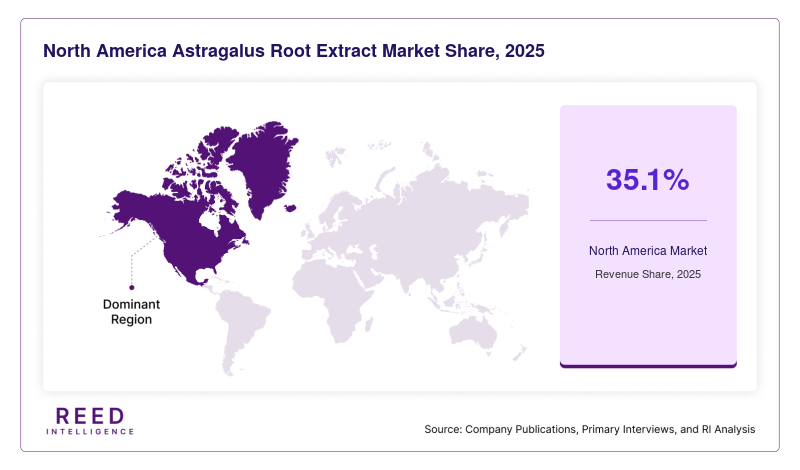
- North America dominated the market with a 35.1% share in 2025.
- Asia Pacific is expected to grow at the fastest CAGR of 11.4% during 2026–2034.
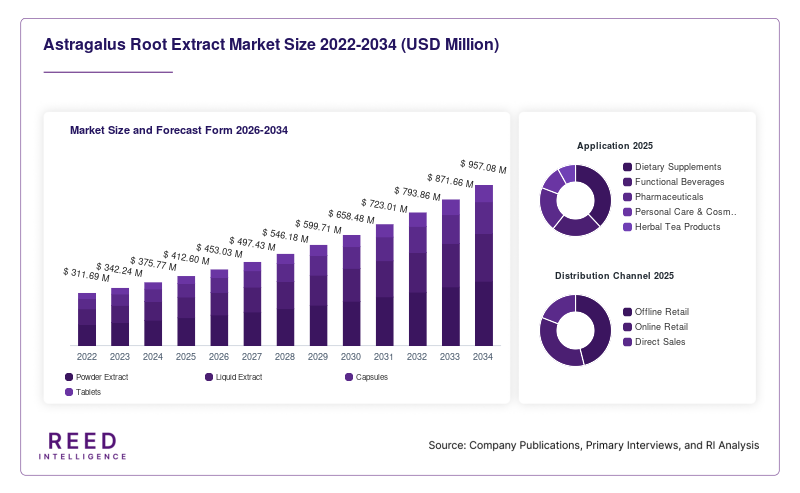
- By form, powder extract accounted for the largest share of 44.8%.
- while liquid extract is projected to grow at a CAGR of 10.9%.
- By application, dietary supplements led with a 41.3% share.
- whereas functional beverages are expected to expand at a CAGR of 11.7%.
- By distribution channel, offline retail accounted for the largest share of 58.6%.
- while online retail is anticipated to grow at a CAGR of 12.2%.
- The United States remained the dominant country, with market values of USD 138 million in 2024 and USD 151 million in 2025.
Market Trends
Rising Integration of Herbal Ingredients in Functional Nutrition Products
The growing incorporation of herbal ingredients into functional nutrition products is emerging as a major trend in the Astragalus Root Extract Market. Consumers are increasingly seeking foods and beverages that provide additional health benefits beyond basic nutrition. This demand has encouraged manufacturers to develop immunity-supporting drinks, herbal teas, nutritional gummies, powdered supplements, and wellness snacks containing astragalus root extract. The ingredient is gaining popularity among younger consumers who prefer preventive health approaches and clean-label formulations. Food companies are also emphasizing transparent sourcing and plant-based claims to improve consumer trust. In addition, rising urban lifestyles and stressful working conditions have increased interest in adaptogenic ingredients that support energy and wellness.
Expansion of Botanical Skincare and Beauty Applications
The use of astragalus root extract in skincare and cosmetic formulations is becoming increasingly common across the global beauty industry. Manufacturers are utilizing botanical extracts in creams, serums, masks, and anti-aging products due to rising consumer demand for natural personal care solutions. Astragalus root extract is being promoted for its antioxidant and skin-soothing properties, making it suitable for premium skincare lines and wellness-focused cosmetic brands. Beauty companies are also focusing on sustainable ingredient sourcing and environmentally friendly formulations to strengthen brand positioning. The rapid expansion of online beauty retail channels and influencer-driven marketing campaigns has accelerated awareness regarding herbal skincare ingredients, creating additional opportunities for product diversification.
Market Drivers
Increasing Consumer Preference for Natural Immune Support Products
The rising preference for natural immunity-supporting products is a key factor driving the Astragalus Root Extract Market. Consumers across multiple age groups are becoming more aware of the importance of maintaining long-term health and strengthening immune response through natural ingredients. This shift has increased the consumption of herbal supplements and botanical extracts in both developed and developing countries. Astragalus root extract is widely recognized for its use in traditional medicine systems and wellness applications, which has strengthened consumer confidence in the ingredient. Growing health concerns, changing dietary habits, and the expansion of preventive healthcare practices are further supporting product adoption. Manufacturers are responding by launching capsules, powders, and liquid supplements targeting immunity, stress management, and overall vitality.
Growth of E-Commerce Platforms for Herbal Supplement Distribution
The rapid development of e-commerce platforms and digital health retailing has significantly contributed to market expansion. Online channels allow consumers to compare ingredients, access detailed product information, and purchase herbal supplements conveniently. The Astragalus Root Extract Market has benefited from the strong growth of direct-to-consumer wellness brands and subscription-based supplement services. Small and mid-sized manufacturers are increasingly using online marketplaces to reach global consumers without relying heavily on traditional retail infrastructure. Digital advertising campaigns, influencer promotions, and health-focused social media content have improved product visibility and consumer engagement. Additionally, the availability of international shipping and cross-border online commerce has enabled herbal extract manufacturers to expand into emerging markets with growing wellness awareness.
Market Restraint
Variability in Raw Material Quality and Regulatory Standards
One of the major restraints affecting the Astragalus Root Extract Market is the inconsistency in raw material quality and the lack of harmonized regulatory standards across countries. The quality of astragalus root extract can vary depending on cultivation practices, harvesting conditions, extraction methods, and storage procedures. Such variability may affect product potency, purity, and consumer confidence. In several regions, herbal ingredients are subject to varying labeling requirements and safety regulations, creating operational challenges for manufacturers involved in international trade. Companies often face additional testing and certification costs to comply with import regulations and quality assurance requirements.
The fragmented regulatory environment also limits product standardization and creates barriers for smaller manufacturers attempting to scale operations globally. For example, companies exporting herbal supplements to North America and Europe must comply with stringent manufacturing and documentation standards, while certain developing regions maintain less structured oversight systems. This imbalance may result in supply chain inefficiencies and inconsistent market positioning. In addition, fluctuations in raw herb availability caused by climate conditions and agricultural limitations can increase production costs. These challenges may reduce profit margins for producers and limit the pace of market expansion in price-sensitive economies.
Market Opportunities
Increasing Demand for Personalized Wellness Supplements
The growing popularity of personalized wellness and customized nutrition products presents significant opportunities for the Astragalus Root Extract Market. Consumers are increasingly looking for supplements tailored to specific health goals, age groups, lifestyles, and dietary preferences. This trend is encouraging manufacturers to introduce targeted herbal formulations that combine astragalus root extract with vitamins, probiotics, minerals, and other botanical ingredients. Personalized supplement subscription models and digital health assessment platforms are also creating new avenues for product innovation. Companies are leveraging consumer data and health tracking technologies to recommend specialized herbal products for immunity, energy management, and healthy aging.
The expansion of personalized nutrition is particularly strong among urban consumers who seek convenience and scientifically supported wellness solutions. Manufacturers are investing in advanced packaging, dosage customization, and direct-to-consumer sales strategies to improve customer engagement. The availability of customized herbal gummies, liquid shots, and powdered blends is expected to attract younger consumers and fitness-focused populations. These developments are likely to create long-term revenue opportunities for ingredient suppliers and supplement manufacturers operating in the Astragalus Root Extract Market.
Expansion of Herbal Ingredients in Pharmaceutical Research
The increasing exploration of herbal ingredients in pharmaceutical and clinical research is creating additional opportunities for market growth. Research institutions and biotechnology companies are evaluating plant-derived compounds for their potential use in immune support, anti-inflammatory formulations, and metabolic health products. Astragalus root extract is gaining attention due to its bioactive compounds and historical use in traditional medicine systems. As pharmaceutical companies continue to investigate natural compounds for product development, demand for high-quality standardized extracts is expected to increase.
Advancements in extraction technologies and ingredient purification methods are also improving the commercial viability of herbal formulations. Manufacturers are focusing on standardized active compound concentrations to support product consistency and regulatory compliance. Collaborative partnerships between nutraceutical firms and research organizations are further expanding scientific interest in botanical ingredients. In addition, rising healthcare spending and the growing acceptance of complementary medicine in several countries are expected to create favorable conditions for the adoption of astragalus-based pharmaceutical applications over the forecast period.
Segmental Analysis
By Form
Powder extract dominated the Astragalus Root Extract Market in 2024, accounting for 44.8% of the global market share. Powdered formulations are widely used across dietary supplements, functional beverages, herbal teas, and pharmaceutical preparations due to their long shelf life and formulation flexibility. Manufacturers prefer powder extracts because they can be easily blended with proteins, vitamins, probiotics, and plant-based nutritional ingredients. Consumers also favor powdered products for convenience and dosage customization. The segment benefits from increasing demand for herbal wellness powders and immunity-support products across North America, Europe, and Asia Pacific. In addition, powder extract formats are highly suitable for bulk transportation and commercial-scale manufacturing, which supports cost efficiency for producers and retailers.
Liquid extract is projected to register the fastest CAGR of 10.9% during the forecast period due to rising consumer demand for fast-absorption herbal formulations and convenient wellness products. Liquid extracts are increasingly being used in herbal tonics, wellness shots, flavored beverages, and concentrated supplement drops. The growing popularity of ready-to-consume products among younger consumers is supporting segment growth. Manufacturers are focusing on innovative flavor combinations and portable packaging solutions to attract urban consumers seeking convenience. Liquid formulations are also gaining attention in personalized nutrition and pediatric supplement categories because they offer flexible dosage administration. The rapid expansion of online wellness retailing and direct-to-consumer health brands is expected to further strengthen demand for liquid astragalus root extract products.
By Application
Dietary supplements accounted for the largest share of the Astragalus Root Extract Market in 2024, representing 41.3% of total revenue. The segment continues to benefit from rising consumer interest in preventive healthcare and natural wellness products. Astragalus root extract is commonly included in capsules, tablets, powders, and immunity-support blends due to its association with adaptogenic and herbal health applications. Increasing consumer awareness regarding immunity management, energy support, and healthy aging has strengthened demand for botanical supplements globally. Supplement manufacturers are also introducing clean-label and vegan-friendly formulations to address changing consumer preferences. The expansion of pharmacies, health stores, and e-commerce supplement platforms has further contributed to the strong growth of this segment.
Functional beverages are anticipated to witness the fastest CAGR of 11.7% through 2034 due to the growing popularity of health-oriented drinks and herbal refreshment products. Beverage manufacturers are incorporating astragalus root extract into herbal teas, wellness tonics, energy drinks, and immunity beverages to diversify product portfolios. Consumers are increasingly seeking beverages that provide nutritional benefits while fitting into busy lifestyles. This trend is particularly visible among younger populations and urban professionals who prefer convenient health products. Companies are also introducing sugar-free and organic beverage options to align with clean-label trends. The rapid expansion of ready-to-drink herbal beverages across Asia Pacific and North America is expected to create substantial opportunities for this segment during the forecast period.
By Distribution Channel
Offline retail held the dominant position in the Astragalus Root Extract Market in 2024, accounting for 58.6% of total market revenue. Pharmacies, supermarkets, specialty nutrition stores, and herbal medicine retailers continue to play a significant role in product distribution. Consumers often prefer offline channels for herbal supplements because they can compare brands, evaluate packaging, and seek guidance from healthcare professionals or store representatives. Established retail chains also provide visibility for premium wellness products and improve brand credibility. In many developing economies, offline distribution remains essential due to limited digital payment adoption and varying levels of e-commerce penetration. The strong presence of health-focused retail outlets in North America and Europe further supports segment dominance.
Online retail is projected to expand at the fastest CAGR of 12.2% during the forecast period due to increasing digital commerce adoption and rising consumer preference for convenient purchasing experiences. E-commerce platforms allow consumers to access a wide range of herbal supplement brands, compare ingredients, and review customer feedback before making purchasing decisions. Digital wellness brands are increasingly using subscription-based models, targeted advertising, and influencer marketing campaigns to improve customer engagement. Online retail channels are particularly effective for reaching younger consumers and health-conscious urban populations. The growth of smartphone penetration, secure payment systems, and international shipping networks is expected to further accelerate the expansion of online astragalus root extract sales globally.
Regional Analysis
North America
North America accounted for 35.1% of the global Astragalus Root Extract Market share in 2025 and is expected to maintain steady growth during the forecast period, expanding at a CAGR of 8.7% through 2034. The region benefits from strong consumer awareness regarding herbal supplements, preventive healthcare, and plant-based nutrition products. The presence of established nutraceutical manufacturers and advanced retail infrastructure supports market development. Consumers in the United States and Canada are increasingly adopting botanical extracts in capsules, powders, and wellness beverages. Growing demand for clean-label dietary supplements and natural immunity products continues to support long-term industry expansion.
The United States remained the dominant country in North America due to rising consumer spending on health and wellness products. One unique growth factor supporting the market is the increasing integration of herbal supplements into sports nutrition and fitness-focused lifestyles. Health-conscious consumers are using astragalus root extract in energy blends, recovery drinks, and adaptogenic formulations. In addition, digital wellness platforms and subscription-based supplement services are helping brands expand product accessibility. The strong presence of online retailers and specialty nutrition stores is also contributing to market penetration across urban and suburban populations.
Europe
Europe represented 27.4% of the global Astragalus Root Extract Market in 2025 and is projected to grow at a CAGR of 8.3% during the forecast period. The region has witnessed rising demand for organic and plant-derived ingredients across food, beverage, and personal care industries. Consumers are increasingly interested in herbal wellness products that align with sustainable and environmentally conscious lifestyles. Regulatory support for clean-label products and the expansion of botanical supplement categories have encouraged manufacturers to invest in herbal ingredient innovation. Countries across Western Europe are also experiencing strong growth in herbal tea and functional beverage consumption.
Germany emerged as the dominant country within the European market due to its well-established herbal medicine industry and high consumer trust in botanical products. A unique factor supporting regional growth is the increasing use of astragalus root extract in natural skincare and anti-aging formulations. European cosmetic manufacturers are integrating herbal ingredients into premium beauty products to meet demand for plant-based alternatives. In addition, rising investments in sustainable packaging and ethically sourced ingredients are improving the market positioning of botanical extract suppliers throughout the region.
Asia Pacific
Asia Pacific held 23.8% of the global Astragalus Root Extract Market in 2025 and is anticipated to record the fastest CAGR of 11.4% from 2026 to 2034. The region benefits from strong cultural familiarity with herbal medicine and traditional botanical therapies. Growing disposable incomes, rapid urbanization, and expanding middle-class populations are increasing spending on wellness products and dietary supplements. Countries such as China, Japan, South Korea, and India are witnessing rising demand for herbal beverages, immunity boosters, and functional nutrition products. The availability of raw materials and lower manufacturing costs also support regional production capabilities.
China remained the leading country in Asia Pacific due to its large-scale cultivation of astragalus roots and strong traditional medicine industry. One unique growth factor driving the market is the increasing modernization of traditional herbal formulations for younger consumers. Manufacturers are introducing ready-to-drink herbal beverages, convenient sachets, and flavored wellness products targeting urban populations. The expansion of cross-border e-commerce and digital retail channels has further improved product accessibility across the region. Government support for traditional medicine research is also contributing to industry growth.
Middle East & Africa
The Middle East & Africa region accounted for 6.1% of the global Astragalus Root Extract Market in 2025 and is expected to expand at a CAGR of 7.9% during the forecast period. Demand for herbal supplements and wellness products is increasing steadily due to growing awareness regarding preventive healthcare and natural ingredients. Urban consumers in Gulf countries are showing greater interest in imported dietary supplements and plant-based nutritional products. The expansion of modern retail formats, pharmacies, and online health stores is improving market access across the region. Rising investments in healthcare infrastructure are also supporting awareness regarding herbal wellness solutions.
Saudi Arabia emerged as the dominant country within the regional market owing to rising healthcare spending and increasing demand for premium wellness products. A unique growth factor supporting the market is the growing popularity of herbal beverages and traditional wellness remedies among younger consumers. Retailers and pharmacies are expanding their portfolios of botanical supplements to address changing consumer preferences. In addition, social media marketing and influencer-driven wellness trends are helping increase awareness regarding herbal ingredients such as astragalus root extract in urban populations.
Latin America
Latin America captured 7.6% of the global Astragalus Root Extract Market in 2025 and is forecast to grow at a CAGR of 8.1% through 2034. The region is experiencing rising consumer demand for affordable herbal supplements and plant-derived wellness products. Increasing health awareness and the expansion of the nutraceutical sector are encouraging retailers to introduce a wider range of botanical ingredients. Countries across the region are also witnessing growing demand for herbal teas, immunity boosters, and natural personal care products. Improvements in distribution infrastructure and online retailing are supporting market expansion.
Brazil remained the dominant country in Latin America due to its expanding dietary supplement industry and growing interest in natural health products. One unique growth factor supporting regional development is the increasing use of herbal ingredients in sports nutrition and active lifestyle applications. Consumers are showing greater interest in plant-based energy products and recovery supplements containing botanical extracts. The expansion of fitness centers, wellness campaigns, and nutrition awareness programs is also contributing to rising product demand among younger urban consumers.
Competitive Landscape
The Astragalus Root Extract Market is moderately fragmented, with the presence of global nutraceutical manufacturers, botanical ingredient suppliers, and regional herbal extract companies. Market participants are focusing on product standardization, clean-label formulations, and strategic distribution partnerships to strengthen their market positions. Companies are increasingly investing in advanced extraction technologies and sustainable sourcing practices to improve product quality and supply chain reliability. Competitive strategies also include expansion into e-commerce channels, new product launches, and collaborations with wellness brands.
Nature’s Way remains one of the leading participants in the market due to its strong product portfolio, broad retail presence, and established brand recognition in herbal supplements. The company recently expanded its botanical wellness product line by introducing immunity-focused formulations containing astragalus root extract and complementary herbal ingredients. Other major companies are emphasizing organic certifications, vegan-friendly products, and personalized supplement solutions to attract health-conscious consumers. The competitive landscape is expected to evolve further as demand for plant-based wellness products continues to rise across global markets.
Key Players
- Nature’s Way
- NOW Foods
- Swanson Health Products
- Gaia Herbs
- Herbalife Nutrition
- Nutra Green Biotechnology Co.
- Xi’an Greena Biotech Co., Ltd.
- Bio-Botanica Inc.
- Mountain Rose Herbs
- Oregon’s Wild Harvest
- Solaray
- GNC Holdings
- Nature’s Answer
- Hunan Nutramax Inc.
- Shaanxi Undersun Biomedtech Co., Ltd.
Recent Developments
- In February 2026, Gaia Herbs expanded its herbal wellness portfolio with a new astragalus root extract powder designed for immunity-support applications.
- In July 2025, NOW Foods introduced a liquid astragalus extract range targeting personalized nutrition and daily wellness consumers.
- In November 2025, Bio-Botanica Inc. invested in upgraded botanical extraction facilities to improve production efficiency and ingredient standardization.
- In March 2026, Nature’s Answer launched a clean-label herbal supplement line combining astragalus root extract with mushroom-based wellness ingredients.
Astragalus Root Extract Market Segments
Form
- Powder Extract
- Liquid Extract
- Capsules
- Tablets
Application
- Dietary Supplements
- Functional Beverages
- Pharmaceuticals
- Personal Care & Cosmetics
- Herbal Tea Products
Distribution Channel
- Offline Retail
- Online Retail
- Direct Sales
By Region
- North America
- Europe
- APAC
- Middle East and Africa
- LATAM