Atypical Hemolytic Uremic Syndrome Treatment Market Size, Share & Demand Report By Drug Class (Complement Inhibitors, Immunosuppressants, Gene Therapy), By Treatment Type (First-Line Therapy, Second-Line Therapy), By Route of Administration (Intravenous, Subcutaneous), By End-Use (Hospitals, Specialty Clinics, Others), By Region & Segment Forecasts, 2026–2034
USD 3950
Market Overview
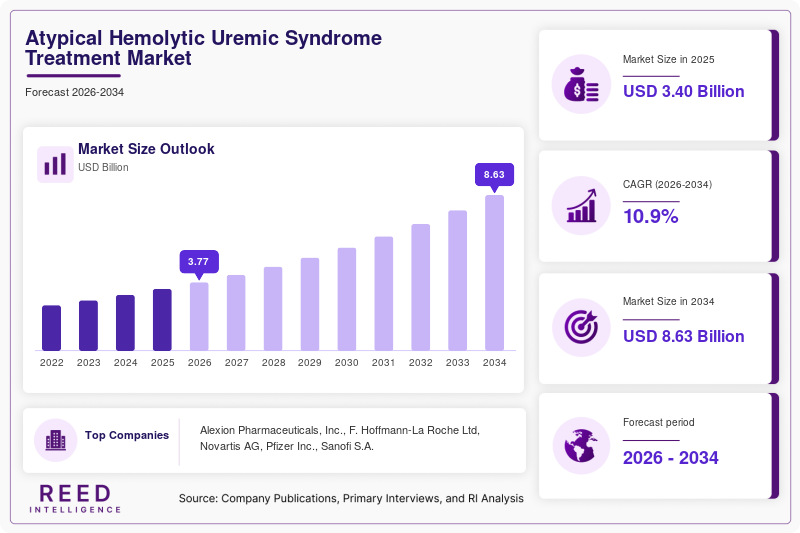
The global Atypical Hemolytic Uremic Syndrome Treatment Market was valued at USD 3.4 billion in 2026 and is projected to reach USD 7.8 billion by 2034, expanding at a CAGR of 10.9% during the forecast period (2026–2034). The market is driven by advancements in complement pathway-targeted therapies and increasing diagnosis rates of rare renal disorders worldwide.
One of the major global factors supporting market growth is the rising adoption of precision medicine in rare disease treatment, which has significantly improved early detection and therapeutic outcomes for atypical hemolytic uremic syndrome (aHUS). Governments and healthcare institutions are also expanding rare disease registries, leading to improved patient identification and access to treatment.
Key Highlights:
- North America dominated the market with 42.3% share, while Asia Pacific is expected to register the fastest CAGR of 12.6%.
- Complement inhibitors emerged as the leading drug class with 68.5% share, while gene therapy is anticipated to be the fastest-growing segment at a CAGR of 13.8%.
- Hospitals accounted for the largest end-use segment share at 57.2%, while specialty clinics are projected to grow at a CAGR of 11.9%.
- The U.S. remained the dominant country with market values of USD 1.25 billion in 2024 and USD 1.38 billion in 2025.
Market Trends
Increasing Adoption of Complement Inhibitors
The Atypical Hemolytic Uremic Syndrome Treatment Market is witnessing a strong shift toward complement inhibitor therapies. These targeted biologics directly address the underlying pathophysiology of aHUS by regulating complement system dysregulation. Their clinical effectiveness in reducing relapse rates and improving renal outcomes has made them a standard of care in many regions. Additionally, ongoing pipeline innovations are focused on improving dosing frequency and patient convenience, further strengthening their adoption.
Expansion of Rare Disease Drug Development Programs
Another notable trend shaping the Atypical Hemolytic Uremic Syndrome Treatment Market is the expansion of orphan drug pipelines. Pharmaceutical companies are increasingly investing in rare disease therapeutics due to regulatory incentives such as fast-track approvals and market exclusivity. This has led to a rise in clinical trials exploring novel treatment approaches, including gene therapies and RNA-based therapeutics. The increasing number of collaborations between biotech firms and academic institutions is also accelerating innovation and broadening treatment options.
Market Drivers
Rising Prevalence of Rare Kidney Disorders
The increasing prevalence of rare kidney diseases, including aHUS, is a significant driver of the Atypical Hemolytic Uremic Syndrome Treatment Market. Improved diagnostic capabilities and growing awareness among clinicians have led to better identification of cases that were previously underdiagnosed. As a result, the demand for specialized therapies has increased, driving market growth.
Favorable Regulatory Support for Orphan Drugs
Government initiatives supporting orphan drug development are another key growth driver. Regulatory bodies offer incentives such as tax credits, extended exclusivity, and accelerated approval pathways. These measures have encouraged pharmaceutical companies to invest in the development of advanced therapies for aHUS. The supportive regulatory environment has also reduced time-to-market for innovative drugs, enhancing overall market expansion.
Market Restraint
High Cost of Treatment and Limited Accessibility
One of the major restraints in the Atypical Hemolytic Uremic Syndrome Treatment Market is the high cost associated with biologic therapies. Complement inhibitors and other advanced treatments often involve significant expenses, making them inaccessible to a large patient population, particularly in low- and middle-income countries.
The lack of comprehensive reimbursement policies in several regions further limits patient access to these therapies. Additionally, the complexity of treatment administration and the need for long-term therapy contribute to the financial burden on healthcare systems. This cost barrier may hinder widespread adoption and slow overall market growth.
Market Opportunities
Development of Gene-Based Therapies
The emergence of gene therapy presents a promising opportunity in the Atypical Hemolytic Uremic Syndrome Treatment Market. These therapies aim to address the root cause of genetic mutations associated with aHUS, offering the potential for long-term or curative outcomes. Ongoing research and clinical trials are expected to drive innovation and open new avenues for treatment.
Expansion in Emerging Markets
Emerging economies present significant growth opportunities due to improving healthcare infrastructure and increasing awareness of rare diseases. Countries in Asia Pacific and Latin America are investing in healthcare modernization, which is expected to enhance access to advanced therapies. Strategic partnerships and localized manufacturing initiatives may further support market penetration in these regions.
Segmental Analysis
By Drug Class
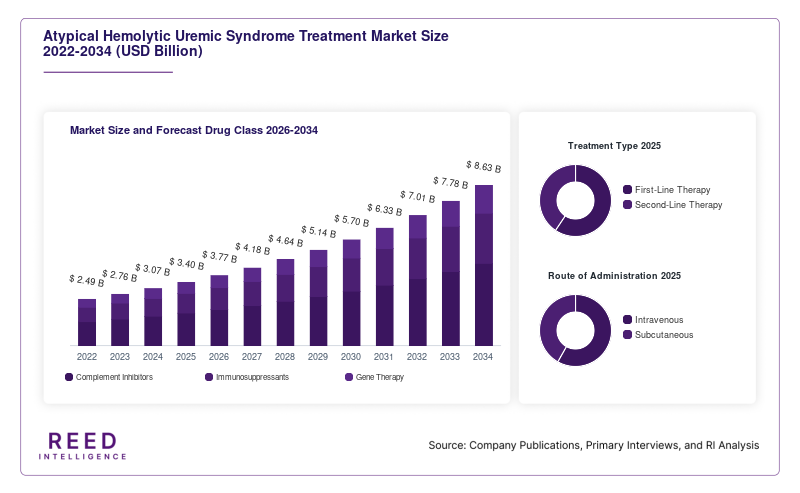
Complement inhibitors dominated the Atypical Hemolytic Uremic Syndrome Treatment Market with a 68.5% share in 2025. Their ability to directly target the complement system and reduce disease progression has made them the preferred treatment option among healthcare providers.
Gene therapy is expected to be the fastest-growing subsegment, registering a CAGR of 13.8% during the forecast period. The potential for long-term disease control and reduced dependency on lifelong medication is expected to drive adoption.
By Treatment Type
First-line therapies accounted for the largest share of 61.4% in 2025, supported by their widespread use in initial disease management and clinical effectiveness in preventing complications.
Second-line therapies are projected to grow at a CAGR of 11.7%, driven by increasing cases of treatment resistance and the need for alternative therapeutic approaches.
By Route of Administration
Intravenous administration dominated the market with a 72.1% share in 2025, owing to its effectiveness in delivering biologics and ensuring rapid therapeutic action.
Subcutaneous administration is expected to grow at a CAGR of 12.2%, driven by patient preference for convenience and reduced hospital visits.
By End-Use
Hospitals held the largest share of 57.2% in 2025, as they are the primary centers for diagnosis and treatment of aHUS. Their access to advanced medical infrastructure supports the use of complex therapies.
Specialty clinics are anticipated to grow at a CAGR of 11.9%, supported by increasing demand for specialized care and outpatient treatment options.
Regional Analysis
North America
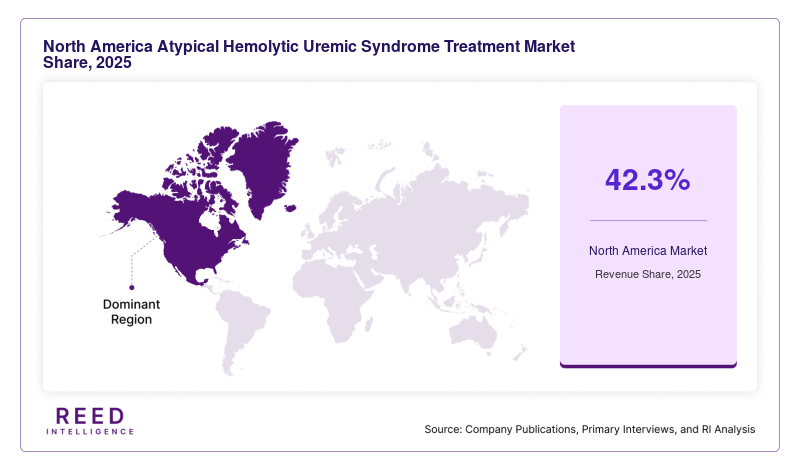
North America accounted for 42.3% of the Atypical Hemolytic Uremic Syndrome Treatment Market share in 2025 and is expected to grow at a CAGR of 10.4% during 2026–2034. The region’s growth is supported by strong healthcare infrastructure, high awareness levels, and widespread adoption of advanced biologics.
The United States dominated the regional market due to its well-established rare disease treatment ecosystem. A key growth factor is the presence of specialized treatment centers and robust insurance coverage, which facilitate access to high-cost therapies. Continuous research initiatives and clinical trials further contribute to market expansion in the country.
Europe
Europe held 28.7% market share in 2025 and is projected to expand at a CAGR of 10.1% through 2034. The region benefits from supportive regulatory frameworks and strong government initiatives promoting rare disease management.
Germany emerged as the leading country in Europe, driven by its advanced healthcare system and early adoption of innovative treatments. The country’s focus on patient registries and disease awareness programs has significantly improved diagnosis rates, supporting market growth.
Asia Pacific
Asia Pacific captured 16.5% market share in 2025 and is anticipated to register the fastest CAGR of 12.6% during the forecast period. The region is witnessing rapid improvements in healthcare infrastructure and increasing investments in rare disease treatment.
China dominated the regional market due to its large population base and expanding healthcare access. Government initiatives aimed at improving rare disease diagnosis and treatment availability are a key growth factor, contributing to increased adoption of advanced therapies.
Middle East & Africa
The Middle East & Africa accounted for 6.3% of the market share in 2025 and is expected to grow at a CAGR of 9.2% through 2034. Growth in this region is supported by gradual improvements in healthcare systems and increasing awareness of rare diseases.
Saudi Arabia emerged as the dominant country, driven by government investments in healthcare infrastructure and specialized treatment facilities. Efforts to enhance diagnostic capabilities have also contributed to market expansion.
Latin America
Latin America held 6.2% market share in 2025 and is projected to grow at a CAGR of 9.5% during the forecast period. The region is experiencing increased focus on rare disease management and healthcare modernization.
Brazil led the regional market due to its expanding healthcare network and government support for rare disease treatment. Increased access to biologics and growing awareness among healthcare professionals are key factors driving growth.
Competitive Landscape
The Atypical Hemolytic Uremic Syndrome Treatment Market is moderately consolidated, with key players focusing on innovation and strategic collaborations. Leading companies are investing in research and development to expand their product portfolios and improve treatment efficacy.
A leading market player is Alexion Pharmaceuticals, which has established a strong presence through its complement inhibitor therapies. The company continues to focus on pipeline expansion and global market penetration. Recent developments include advancements in next-generation therapies aimed at improving patient outcomes and reducing treatment frequency.
Other companies are also actively pursuing clinical trials and partnerships to strengthen their market positions. The competitive environment is characterized by continuous innovation and increasing focus on rare disease therapeutics.
Key Players List
- Alexion Pharmaceuticals, Inc.
- F. Hoffmann-La Roche Ltd
- Novartis AG
- Pfizer Inc.
- Sanofi S.A.
- Amgen Inc.
- Takeda Pharmaceutical Company Limited
- Regeneron Pharmaceuticals, Inc.
- Otsuka Pharmaceutical Co., Ltd.
- BioCryst Pharmaceuticals, Inc.
- Apellis Pharmaceuticals, Inc.
- Alnylam Pharmaceuticals, Inc.
- Ionis Pharmaceuticals, Inc.
- CSL Limited
- Grifols S.A.
Recent Developments
- 2025: A leading biotech firm initiated a phase III clinical trial for a novel complement inhibitor targeting improved dosing schedules.
- 2024: A global pharmaceutical company expanded its rare disease portfolio through acquisition of a gene therapy startup.
- 2025: Regulatory authorities approved a new subcutaneous therapy option for aHUS, enhancing patient convenience.
- 2026: Strategic collaboration between biotech and academic institutions accelerated research in RNA-based therapeutics.
- 2024: Expansion of rare disease registries in emerging markets improved patient identification and treatment access.
Atypical Hemolytic Uremic Syndrome Treatment Market Segments
Drug Class
- Complement Inhibitors
- Immunosuppressants
- Gene Therapy
Treatment Type
- First-Line Therapy
- Second-Line Therapy
Route of Administration
- Intravenous
- Subcutaneous
End-Use
- Hospitals
- Specialty Clinics
- Others
By Region
- North America
- Europe
- APAC
- Middle East and Africa
- LATAM