Autogenous Vaccine Market Size, Share Demand Report By Type (Inactivated Autogenous Vaccines, Live Attenuated Autogenous Vaccines), By Application (Livestock, Aquaculture), By End-Use (Veterinary Clinics & Laboratories, Farms & Integrated Production Units), By Region & Segment Forecasts, 2025–2034
USD 3950
Market Overview
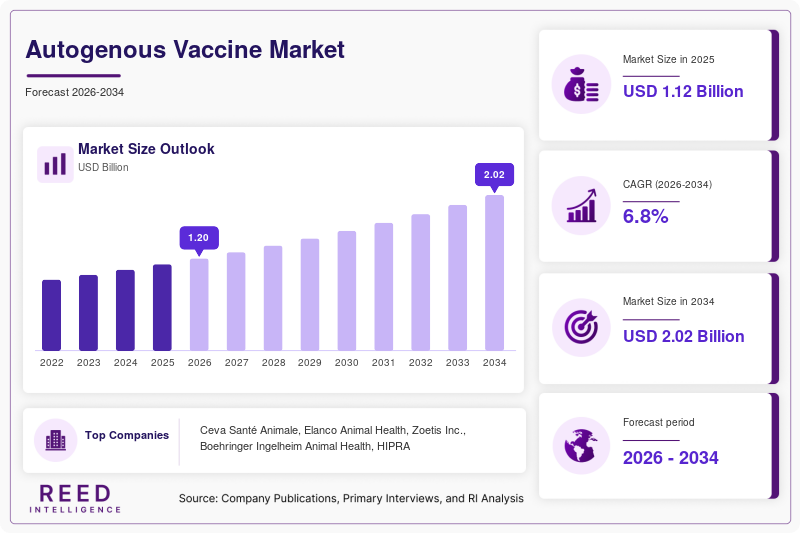
The global Autogenous Vaccine Market size is estimated at approximately USD 1.12 billion, and it is projected to reach around USD 1.20 billion in 2026. With growing adoption across livestock and aquaculture industries, the market is expected to reach nearly USD 2.05 billion by 2034, registering a compound annual growth rate (CAGR) of 6.8% from 2025 to 2034.
Autogenous vaccines are tailor-made biological products developed from pathogens isolated from a specific farm or herd. These vaccines offer targeted immunity where conventional vaccines may not be effective due to strain variations. The increasing prevalence of infectious diseases in animals, coupled with rising concerns over antibiotic resistance, is significantly boosting demand for such personalized solutions.
Key Highlights
- The global Autogenous Vaccine Market is estimated to reach a value of USD 1.12 billion in 2025, reflecting steady demand across livestock and aquaculture sectors. This growth is supported by increasing awareness of disease prevention and farm-specific vaccination strategies.
- The market is projected to grow significantly and reach approximately USD 2.05 billion by 2034. This expansion highlights the rising adoption of customized vaccines across both developed and emerging economies.
- The industry is expected to register a CAGR of 6.8% from 2025 to 2034, indicating consistent and moderate growth. This trend reflects the increasing shift toward preventive healthcare solutions in animal farming.
- Rising concerns over antibiotic resistance are driving the demand for alternative solutions such as autogenous vaccines. These vaccines help reduce dependency on antibiotics while ensuring effective disease control.
Market Trends
Increasing Adoption of Precision Livestock Farming
Precision livestock farming is gaining traction as farmers adopt data-driven approaches to improve productivity and animal health. This trend is directly influencing the Autogenous Vaccine Market, as precise disease diagnostics enable the identification of farm-specific pathogens. As a result, autogenous vaccines are increasingly used to address unique disease challenges within individual herds. This approach enhances vaccine efficacy and reduces losses caused by ineffective generalized vaccines. Additionally, integration with digital monitoring systems allows continuous disease tracking, which further supports timely vaccine development and administration.
Growth of Aquaculture-Specific Vaccines
The aquaculture industry is witnessing rapid expansion, particularly in Asia Pacific and Latin America. This growth has led to increased demand for customized vaccines designed for aquatic species. Autogenous vaccines are becoming essential in managing bacterial infections in fish farms where pathogen strains vary significantly. Unlike conventional vaccines, these products provide tailored protection, improving survival rates and productivity. The trend is also supported by stricter environmental regulations limiting antibiotic use in aquaculture, thereby encouraging preventive immunization strategies.
Market Drivers
Rising Prevalence of Animal Infectious Diseases
The increasing occurrence of infectious diseases in livestock and aquaculture is a major driver for the Autogenous Vaccine Market. Intensive farming practices, high stocking densities, and global trade of animals contribute to rapid disease transmission. Diseases such as bacterial infections in poultry, swine, and fish require targeted solutions due to strain variability. Autogenous vaccines offer a customized approach that addresses these specific strains, making them more effective than standard vaccines. This growing need for precise disease management is accelerating the adoption of autogenous vaccines globally.
Regulatory Push to Reduce Antibiotic Usage
Governments and regulatory bodies worldwide are implementing strict guidelines to reduce the use of antibiotics in animal farming. This shift is driven by concerns over antimicrobial resistance, which poses risks to both animal and human health. As a result, farmers are increasingly adopting preventive measures such as vaccination. Autogenous vaccines provide a viable alternative by offering targeted immunity without contributing to resistance. This regulatory environment is encouraging investment in vaccine development and boosting market growth.
Market Restraint
Complex Regulatory and Production Processes
Despite their benefits, the Autogenous Vaccine Market faces challenges related to regulatory approvals and production complexities. Autogenous vaccines are highly customized, which means each product must comply with specific regulatory guidelines that vary across regions. This can lead to longer approval timelines and increased costs for manufacturers. Additionally, the production process requires precise pathogen isolation, inactivation, and formulation, which demands advanced laboratory infrastructure and expertise.
These challenges can limit the scalability of autogenous vaccines, especially in developing regions where resources are limited. For example, small-scale farmers may face delays in obtaining vaccines due to limited manufacturing capacity or logistical constraints. This can reduce the effectiveness of disease control measures, particularly during outbreaks. As a result, the complexity of production and regulatory compliance remains a key restraint impacting market growth.
Market Opportunities
Expansion in Emerging Markets
Emerging economies in Asia Pacific, Latin America, and Africa present significant growth opportunities for the Autogenous Vaccine Market. These regions are experiencing rapid expansion in livestock and aquaculture industries, driven by increasing demand for protein-rich food. However, disease outbreaks remain a major challenge due to limited access to advanced veterinary solutions. Autogenous vaccines can address this gap by providing tailored protection against region-specific pathogens. Growing awareness among farmers and improving veterinary infrastructure are expected to support market expansion.
Advancements in Diagnostic Technologies
Technological advancements in diagnostics are creating new opportunities for market growth. Rapid pathogen identification techniques, such as molecular diagnostics and genomic sequencing, enable faster development of autogenous vaccines. These technologies reduce the time required to produce vaccines, making them more practical for real-time disease management. Additionally, improved diagnostics enhance the accuracy of pathogen detection, leading to more effective vaccine formulations. This integration of diagnostics and vaccine production is expected to drive innovation and expand the market.
Segmental Analysis
By Type
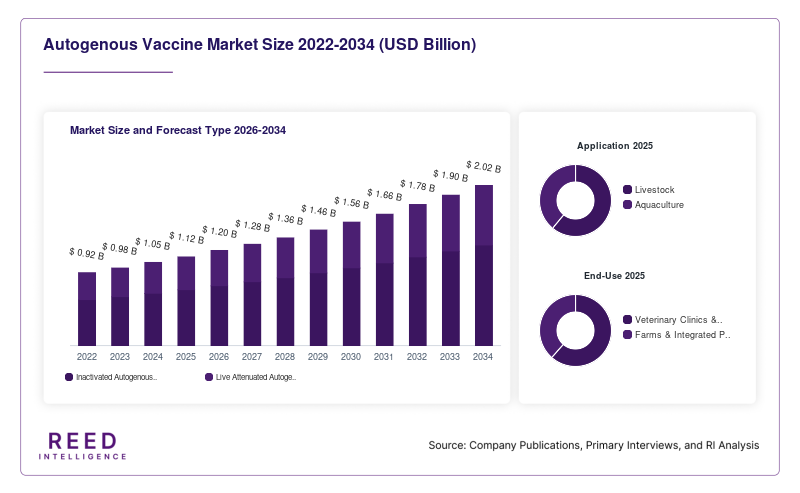
The inactivated autogenous vaccines segment dominated the market in 2024, accounting for approximately 58% of the total share. These vaccines are widely used due to their safety profile and ability to provide stable immunity without causing disease. Inactivated vaccines are particularly preferred in livestock applications where safety is a critical concern. Their longer shelf life and ease of storage further contribute to their dominance. Additionally, regulatory approval processes for inactivated vaccines are generally more streamlined compared to live vaccines, supporting their widespread adoption.
The live attenuated autogenous vaccines segment is expected to be the fastest-growing, with a CAGR of 7.4% during the forecast period. These vaccines offer stronger and longer-lasting immunity, making them suitable for high-risk environments. Growth in this segment is driven by advancements in attenuation techniques and increasing demand for effective disease prevention solutions. However, their use requires careful handling and monitoring, which may limit adoption in certain regions.
By Application
The livestock segment held the largest market share in 2024, accounting for around 65% of the total market. This dominance is attributed to the high prevalence of diseases in cattle, poultry, and swine, which require targeted vaccination strategies. Autogenous vaccines are widely used in livestock farming to address specific pathogen strains, improving overall herd health and productivity. Increasing demand for meat and dairy products further supports the growth of this segment.
The aquaculture segment is projected to grow at the fastest CAGR of 7.8% during the forecast period. This growth is driven by the rapid expansion of fish farming and the increasing incidence of aquatic diseases. Autogenous vaccines provide tailored solutions for managing bacterial infections in fish, improving survival rates and yield. The shift towards sustainable aquaculture practices and reduced antibiotic use is also contributing to the growth of this segment.
By End-Use
Veterinary clinics and laboratories dominated the market in 2024, accounting for approximately 52% of the total share. These facilities play a crucial role in diagnosing diseases and developing autogenous vaccines. Their access to advanced diagnostic tools and expertise enables accurate pathogen identification, which is essential for vaccine formulation. The increasing number of veterinary clinics and diagnostic laboratories is supporting the growth of this segment.
The farms and integrated production units segment is expected to grow at the fastest CAGR of 7.2% during the forecast period. This growth is driven by the increasing adoption of on-site disease management practices. Large-scale farms are investing in in-house diagnostic capabilities and vaccine solutions to reduce dependency on external providers. This trend is particularly prominent in developed regions, where farms are adopting advanced technologies to improve efficiency and productivity.
Regional Analysis
North America
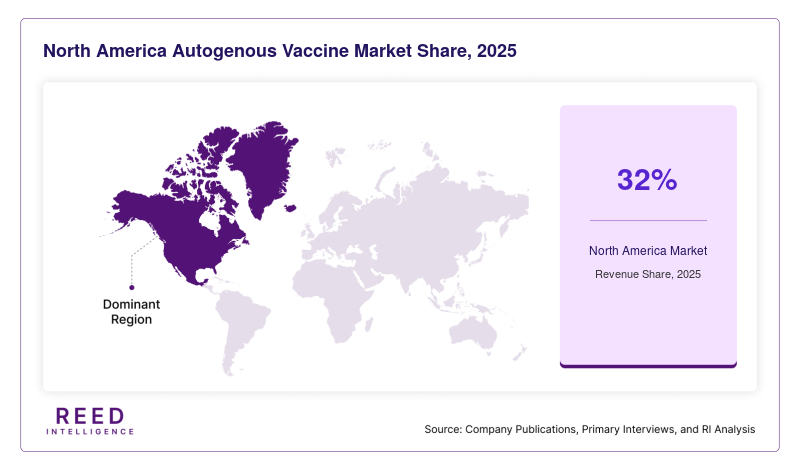
North America accounted for approximately 32% of the global Autogenous Vaccine Market share in 2025, with a projected CAGR of 6.2% through 2034. The region benefits from advanced veterinary healthcare infrastructure and strong regulatory frameworks supporting vaccine development. High awareness among farmers regarding disease prevention and the adoption of precision farming techniques contribute to steady market growth. The presence of established manufacturers also enhances product availability and innovation.
The United States dominates the North American market due to its large livestock industry and advanced research capabilities. A unique growth factor in this region is the integration of digital livestock monitoring systems, which enable real-time disease detection and support the use of autogenous vaccines. This technological integration enhances vaccine effectiveness and drives adoption among commercial farms.
Europe
Europe held around 27% market share in 2025 and is expected to grow at a CAGR of 6.5% during the forecast period. Strict regulations on antibiotic use in animal farming are a major driver in this region. Countries across Europe are increasingly adopting preventive healthcare measures, including vaccination, to ensure sustainable farming practices. This regulatory environment supports the growth of autogenous vaccines.
Germany leads the European market due to its strong veterinary research base and emphasis on sustainable agriculture. A unique growth factor in Europe is the focus on organic and antibiotic-free livestock production, which encourages the use of vaccines as preventive solutions. This trend is expected to continue driving demand for autogenous vaccines.
Asia Pacific
Asia Pacific is the fastest-growing region, accounting for 24% of the market share in 2025 with a CAGR of 7.5%. The region’s growth is driven by the rapid expansion of livestock and aquaculture industries, particularly in countries like China and India. Increasing demand for animal protein and rising awareness about disease prevention are key factors supporting market growth.
China dominates the Asia Pacific market due to its large-scale aquaculture industry. A unique growth factor in this region is the high prevalence of aquatic diseases, which necessitates the use of customized vaccines. This has led to increased adoption of autogenous vaccines in fish farming, contributing significantly to regional growth.
Middle East & Africa
The Middle East & Africa region accounted for 9% of the market share in 2025 and is expected to grow at a CAGR of 6.9%. The market is driven by increasing investments in livestock farming and improving veterinary infrastructure. Governments are focusing on enhancing food security, which includes disease prevention measures in animal farming.
South Africa is a key market within the region. A unique growth factor is the rising government initiatives to support veterinary healthcare, including vaccination programs. These initiatives are expected to boost the adoption of autogenous vaccines and support market growth.
Latin America
Latin America held approximately 8% of the global market share in 2025, with a projected CAGR of 7.1%. The region’s growth is driven by expanding livestock and poultry industries, particularly in Brazil and Argentina. Increasing export demand for meat products is encouraging farmers to adopt advanced disease prevention methods.
Brazil dominates the Latin American market due to its large agricultural sector. A unique growth factor is the growing focus on export-quality livestock production, which requires strict disease control measures. This is driving the adoption of autogenous vaccines as part of comprehensive animal health management strategies.
Competitive Landscape
The Autogenous Vaccine Market is moderately fragmented, with several global and regional players competing to expand their market presence. Key companies are focusing on product innovation, strategic partnerships, and geographic expansion to strengthen their positions. The market is characterized by the presence of specialized manufacturers that offer customized vaccine solutions tailored to specific customer needs.
One of the leading players in the market is Ceva Santé Animale, which has established a strong presence through its advanced vaccine development capabilities and global distribution network. The company continues to invest in research and development to enhance its product portfolio. A recent development includes the expansion of its autogenous vaccine production facilities to meet growing demand.
Other major players are also focusing on collaborations with veterinary institutions and research organizations to improve their offerings. These strategies are expected to intensify competition and drive innovation in the market.
Key Players
- Ceva Santé Animale
- Elanco Animal Health
- Zoetis Inc.
- Boehringer Ingelheim Animal Health
- HIPRA
- Phibro Animal Health Corporation
- Vaxxinova International BV
- Bioveta, a.s.
- Merck Animal Health
- IDvet
- Hester Biosciences Limited
- Neogen Corporation
- Virbac
- Indian Immunologicals Limited
- KM Biologics
Recent Developments
- In 2024, Ceva Santé Animale expanded its autogenous vaccine manufacturing capacity in Europe to meet rising demand.
- In 2023, HIPRA introduced a new diagnostic platform to accelerate autogenous vaccine development timelines.
- In 2025, Zoetis Inc. announced a partnership with regional veterinary labs to enhance customized vaccine delivery services.
Autogenous Vaccine Market Segments
Type
- Inactivated Autogenous Vaccines
- Live Attenuated Autogenous Vaccines
Application
- Livestock
- Aquaculture
End-Use
- Veterinary Clinics & Laboratories
- Farms & Integrated Production Units
By Region
- North America
- Europe
- APAC
- Middle East and Africa
- LATAM