Autoimmune Polyglandular Syndrome Type 1 Market Size, Share & Demand Report By Treatment Type (Hormone Replacement Therapy), By Diagnosis Type (Genetic Testing, Autoimmune Antibody Testing), By Application (Adrenal Insufficiency Management, Hypoparathyroidism Treatment), By End-Use (Hospitals, Specialty Endocrine Clinics, Diagnostic Laboratories) By Region & Segment Forecasts, 2026–2034
USD 3950
Market Overview
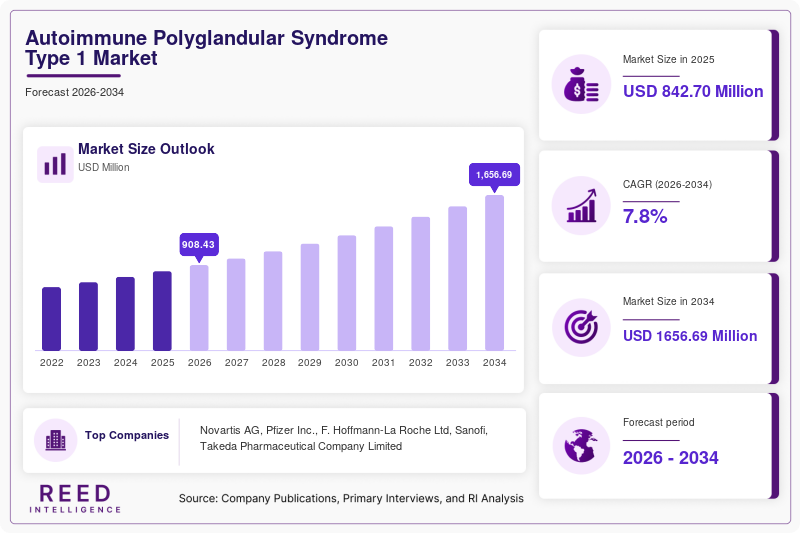
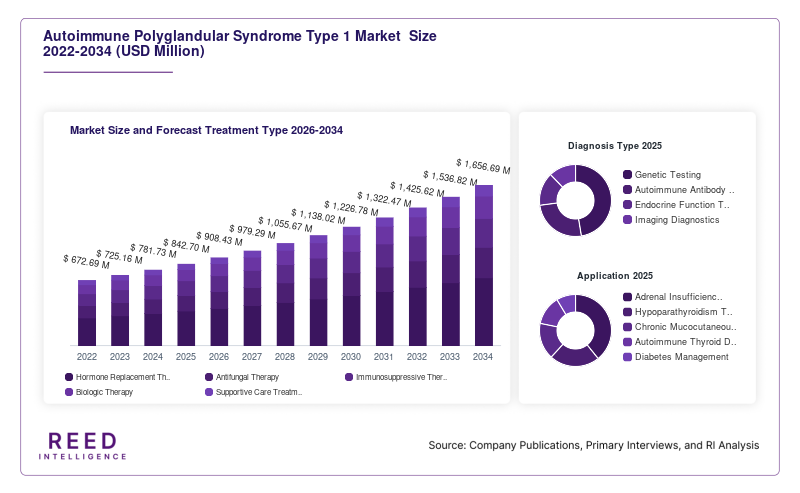
The Autoimmune Polyglandular Syndrome Type 1 Market size was valued at USD 842.7 million in 2026 and is projected to reach USD 1.54 billion by 2034, expanding at a CAGR of 7.8% during the forecast period from 2026 to 2034. The global Autoimmune Polyglandular Syndrome Type 1 Market growth has been supported by increasing global awareness regarding rare autoimmune disorders and growing advancements in precision medicine and endocrinology diagnostics. Rising healthcare expenditure and expanding access to specialized treatment centers have further accelerated market development.
Autoimmune Polyglandular Syndrome Type 1 (APS-1), also known as Autoimmune Polyendocrinopathy-Candidiasis-Ectodermal Dystrophy (APECED), is a rare inherited autoimmune disorder caused by mutations in the AIRE gene. The condition affects multiple endocrine glands and is associated with chronic mucocutaneous candidiasis, hypoparathyroidism, adrenal insufficiency, and several autoimmune complications. Increasing focus on early diagnosis and long-term disease management has strengthened demand for advanced diagnostic testing and targeted therapeutic approaches.
Key Highlights
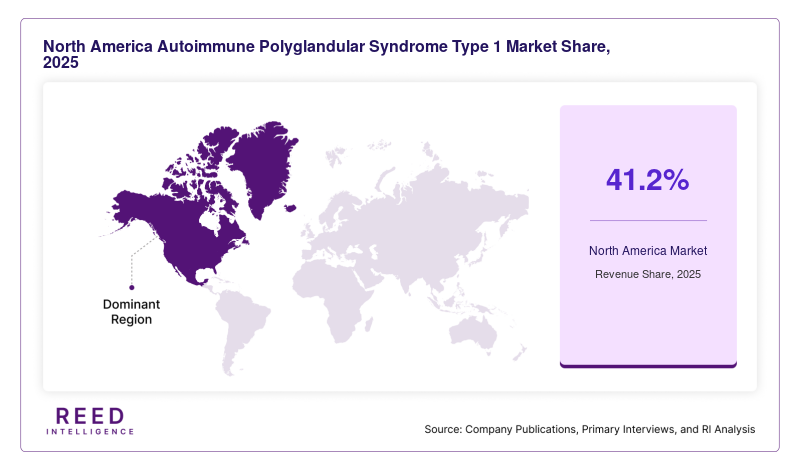
- North America accounted for 41.2% of the global Autoimmune Polyglandular Syndrome Type 1 Market share in 2025, while Asia Pacific is expected to register the fastest CAGR of 8.6% during 2026–2034.
- By treatment type, hormone replacement therapy held the largest share of 44.7% in 2025, whereas biologic therapies are projected to expand at the fastest CAGR of 9.1% through 2034.
- By diagnosis type, genetic testing dominated with 39.4% market share in 2025, while autoimmune antibody testing is expected to grow at a CAGR of 8.4%.
- By application, adrenal insufficiency management represented the largest share of 31.8% in 2025, whereas chronic mucocutaneous candidiasis treatment is forecast to grow at a CAGR of 8.8%.
- By end-use, hospitals led the market with 46.3% share in 2025, while specialty endocrine clinics are expected to witness the fastest CAGR of 8.5%.
- The United States remained the dominant country in the market and was valued at USD 246.8 million in 2024, increasing to USD 264.9 million in 2025 due to rising rare disease awareness and expanding access to specialized autoimmune treatment centers.
Market Trends
Increasing Adoption of Precision Medicine Approaches
The Autoimmune Polyglandular Syndrome Type 1 Market has been witnessing increasing adoption of precision medicine approaches aimed at improving disease management and therapeutic outcomes. Healthcare providers are emphasizing individualized treatment plans based on genetic profiling and immune response analysis. Precision medicine strategies are helping clinicians optimize hormone replacement regimens and immunomodulatory therapies for patients with complex autoimmune manifestations.
Expansion of Rare Disease Research Collaborations
The expansion of collaborative research initiatives for rare autoimmune disorders has emerged as another important trend shaping the Autoimmune Polyglandular Syndrome Type 1 Market. Pharmaceutical companies, academic institutions, and healthcare organizations are increasingly participating in international clinical research programs focused on rare endocrine diseases. These collaborations are accelerating the development of innovative therapies and improving understanding of disease progression mechanisms.
Market Drivers
Rising Prevalence of Autoimmune Disorders
The increasing prevalence of autoimmune disorders worldwide has significantly supported the growth of the Autoimmune Polyglandular Syndrome Type 1 Market. Environmental factors, genetic predisposition, and immune system dysregulation have contributed to growing autoimmune disease incidence across various age groups. Healthcare systems are expanding diagnostic capabilities and long-term disease management services to address increasing patient demand.
Advancements in Genetic and Molecular Diagnostics
Rapid advancements in genetic and molecular diagnostic technologies have accelerated market growth. Improved access to next-generation sequencing, biomarker analysis, and autoimmune antibody testing has strengthened early disease identification and clinical intervention. Physicians are increasingly relying on advanced diagnostic tools to differentiate APS-1 from other autoimmune endocrine conditions.
Market Restraint
Limited Awareness and Delayed Diagnosis
One of the major restraints affecting the Autoimmune Polyglandular Syndrome Type 1 Market is limited disease awareness and delayed diagnosis. APS-1 remains a rare condition with complex clinical presentations that are often misdiagnosed or identified at advanced stages. Lack of awareness among primary healthcare providers and limited access to specialized diagnostic testing continue to create challenges for timely treatment initiation.
Market Opportunities
Development of Targeted Biologic Therapies
The growing focus on targeted biologic therapies presents favorable opportunities for the Autoimmune Polyglandular Syndrome Type 1 Market. Pharmaceutical companies are investing in immunotherapy research and cytokine-targeting treatments designed to regulate abnormal immune responses. Increasing clinical research activities are expected to create new treatment pathways for APS-1 patients.
Expansion of Specialized Rare Disease Centers
The increasing establishment of specialized rare disease treatment centers is creating another important opportunity for market participants. Healthcare institutions are developing dedicated endocrine and autoimmune disease units to improve patient monitoring and multidisciplinary care management. These specialized facilities are expected to strengthen access to advanced treatment solutions.
Segmental Analysis
By Treatment Type
Based on treatment type, the Autoimmune Polyglandular Syndrome Type 1 Market is segmented into hormone replacement therapy, antifungal therapy, immunosuppressive therapy, biologic therapy, and supportive care treatment.
Hormone replacement therapy dominated the market with a 44.7% share in 2025 due to its critical role in managing endocrine dysfunction associated with APS-1. Patients with adrenal insufficiency and hypoparathyroidism required long-term hormone supplementation to maintain metabolic stability and improve quality of life.
Biologic therapies are expected to witness the fastest CAGR of 9.1% during the forecast period. The growth will be driven by increasing research into targeted immunomodulatory treatments designed to reduce autoimmune complications and improve disease control.
By Diagnosis Type
Based on diagnosis type, the market is categorized into genetic testing, autoimmune antibody testing, endocrine function testing, and imaging diagnostics.
Genetic testing accounted for the largest market share of 39.4% in 2025 owing to its importance in confirming AIRE gene mutations and enabling early disease identification. Healthcare providers increasingly adopted advanced molecular diagnostics to support accurate APS-1 diagnosis and family risk assessment.
Autoimmune antibody testing is projected to grow at the fastest CAGR of 8.4% from 2026 to 2034. The segment growth will be supported by increasing demand for rapid autoimmune screening and improved biomarker-based disease monitoring solutions.
By Application
Based on application, the Autoimmune Polyglandular Syndrome Type 1 Market is segmented into adrenal insufficiency management, hypoparathyroidism treatment, chronic mucocutaneous candidiasis treatment, autoimmune thyroid disease management, and diabetes management.
Adrenal insufficiency management held the dominant market share of 31.8% in 2025 due to the high prevalence of adrenal gland dysfunction among APS-1 patients. Long-term corticosteroid therapy and endocrine monitoring remained essential components of disease management.
Chronic mucocutaneous candidiasis treatment is anticipated to grow at the fastest CAGR of 8.8% during the forecast period. Increasing demand for antifungal therapies and improved infection management protocols will strengthen future segment growth.
By End-Use
Based on end-use, the market is divided into hospitals, specialty endocrine clinics, diagnostic laboratories, and research institutes.
Hospitals dominated the market with a 46.3% share in 2025 because of increasing patient admissions related to autoimmune endocrine disorders and availability of multidisciplinary treatment services. Hospitals relied heavily on integrated diagnostic and therapeutic capabilities for comprehensive APS-1 management.
Specialty endocrine clinics are expected to expand at the fastest CAGR of 8.5% through 2034. Increasing preference for specialized outpatient autoimmune care and rising availability of personalized treatment programs will support market expansion across specialty clinics.
Regional Analysis
North America
North America held 41.2% of the global Autoimmune Polyglandular Syndrome Type 1 Market share in 2025 and is expected to expand at a CAGR of 7.3% during the forecast period. The region benefited from advanced healthcare infrastructure, increasing rare disease awareness, and expanding access to genetic testing services. The United States dominated the regional market due to rising investment in orphan drug research and increasing adoption of personalized medicine approaches.
Europe
Europe accounted for 29.4% of the global Autoimmune Polyglandular Syndrome Type 1 Market share in 2025 and is projected to grow at a CAGR of 7.1% from 2026 to 2034. The region experienced stable market growth due to increasing clinical research initiatives and growing healthcare support for rare endocrine disorders. Germany emerged as the dominant country because of its strong rare disease research ecosystem and advanced endocrinology treatment infrastructure.
Asia Pacific
Asia Pacific represented 18.7% of the global Autoimmune Polyglandular Syndrome Type 1 Market share in 2025 and is forecast to register the fastest CAGR of 8.6% through 2034. The region benefited from expanding healthcare expenditure, increasing awareness regarding autoimmune disorders, and growing adoption of molecular diagnostics. China dominated the regional market owing to improving healthcare accessibility and rising investments in advanced diagnostic laboratories.
Middle East & Africa
The Middle East & Africa accounted for 5.8% of the global Autoimmune Polyglandular Syndrome Type 1 Market share in 2025 and is anticipated to grow at a CAGR of 7.4% during the forecast period. Market expansion in the region was supported by improving access to endocrine healthcare services and increasing government investment in specialized medical centers. Saudi Arabia emerged as the leading country due to healthcare modernization initiatives and expanding rare disease treatment programs.
Latin America
Latin America held 4.9% of the global Autoimmune Polyglandular Syndrome Type 1 Market share in 2025 and is projected to grow at a CAGR of 7.0% from 2026 to 2034. The region witnessed gradual market expansion due to increasing healthcare awareness and improving access to autoimmune disease diagnostics. Brazil dominated the regional market because of rising investments in public healthcare programs and expanding endocrinology treatment services.
Competitive Landscape
The Autoimmune Polyglandular Syndrome Type 1 Market remains competitive with the presence of pharmaceutical companies, biotechnology firms, and diagnostic solution providers focusing on rare autoimmune disease management and advanced therapeutic development. Companies are investing in targeted immunotherapies, genetic diagnostics, and precision medicine technologies to strengthen market positioning.
Novartis AG emerged as one of the leading players in the market due to its extensive immunology and rare disease treatment portfolio. The company recently expanded its autoimmune research initiatives to support development of advanced biologic therapies for rare endocrine disorders.
Pfizer Inc. continued to strengthen its position through research collaborations focused on immunomodulatory therapies and rare disease drug development. F. Hoffmann-La Roche Ltd emphasized molecular diagnostic innovations for autoimmune disease detection. Sanofi expanded its rare disease treatment programs through targeted endocrine care research, while Takeda Pharmaceutical Company Limited invested in advanced biologic therapies for autoimmune disease management.
Manufacturers are increasingly emphasizing personalized treatment approaches, biologic drug innovation, and integrated diagnostic solutions. Strategic collaborations between pharmaceutical companies and research institutions are also contributing to technological advancement across the Autoimmune Polyglandular Syndrome Type 1 Market.
Key Players List
- Novartis AG
- Pfizer Inc.
- F. Hoffmann-La Roche Ltd
- Sanofi
- Takeda Pharmaceutical Company Limited
- Eli Lilly and Company
- AstraZeneca plc
- Bristol-Myers Squibb Company
- Amgen Inc.
- AbbVie Inc.
- Johnson & Johnson Services, Inc.
- Merck & Co., Inc.
- Biogen Inc.
- CSL Limited
- GlaxoSmithKline plc
Recent Developments
- In February 2026, Novartis AG expanded its autoimmune biologics research program focused on rare endocrine disorders and immune dysregulation therapies.
- In July 2025, Pfizer Inc. entered a clinical research collaboration for advanced immunomodulatory treatment development targeting autoimmune endocrine diseases.
- In October 2025, Roche launched enhanced molecular diagnostic solutions for autoimmune disease screening and rare genetic disorder detection.
- In January 2026, Sanofi expanded its rare disease clinical trial network to improve treatment accessibility for autoimmune endocrine conditions.
- In April 2026, Takeda Pharmaceutical Company Limited invested in biologic therapy research focused on precision treatment approaches for rare autoimmune syndromes.
Autoimmune Polyglandular Syndrome Type 1 Market Segments
Treatment Type
- Hormone Replacement Therapy
- Antifungal Therapy
- Immunosuppressive Therapy
- Biologic Therapy
- Supportive Care Treatment
Diagnosis Type
- Genetic Testing
- Autoimmune Antibody Testing
- Endocrine Function Testing
- Imaging Diagnostics
Application
- Adrenal Insufficiency Management
- Hypoparathyroidism Treatment
- Chronic Mucocutaneous Candidiasis Treatment
- Autoimmune Thyroid Disease Management
- Diabetes Management
End-Use
- Hospitals
- Specialty Endocrine Clinics
- Diagnostic Laboratories
- Research Institutes
By Region
- North America
- Europe
- APAC
- Middle East and Africa
- LATAM