Automatic Train Wash System Market Size, Share Demand Report By System Type (Drive-Through Wash Systems, Gantry Wash Systems), By Application (Passenger Rail & Metro, High-Speed Rail), By Component (Brush & Cleaning Modules, Pumps & Spray Systems, Water Recycling Units, Control Systems), By End User (Public Rail Operators), By Region & Segment Forecasts, 2026–2034
USD 3950
Market Overview
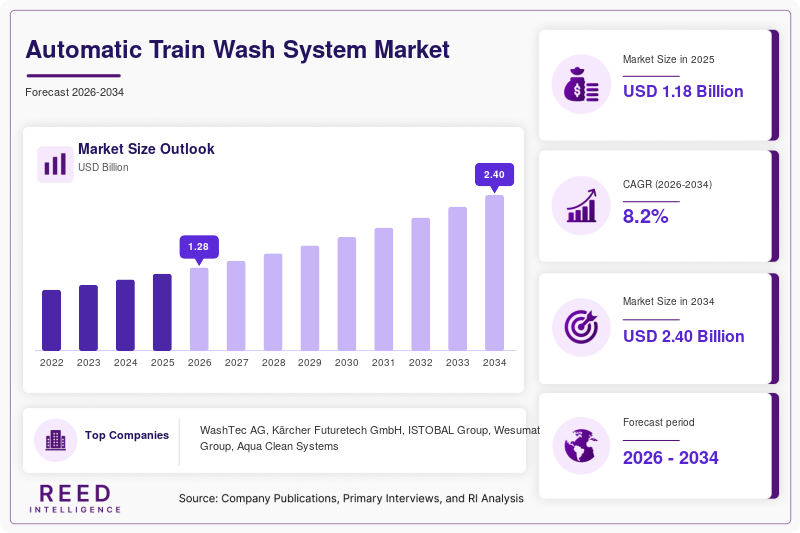
The Automatic Train Wash System Market size was valued at USD 1.18 billion in 2026 and is projected to reach USD 2.21 billion by 2034, expanding at a CAGR of 8.2% during 2026–2034. The market is gaining momentum as railway operators prioritize efficient exterior cleaning, water conservation, labor optimization, and asset appearance management across passenger, metro, and freight rolling stock fleets. Automatic systems reduce manual washing time, improve cleaning consistency, and support scheduled maintenance cycles.
A major global factor supporting growth has been the steady expansion of urban rail transit networks. Governments and transit authorities have increased investment in metro rail, suburban rail, and intercity train modernization, creating stronger demand for depot automation systems. New rolling stock deliveries and refurbishment programs have also accelerated the installation of automatic train wash facilities.
Key Highlights
- Europe held the dominant regional share of 34.8% in 2025, while Asia Pacific is expected to register the fastest CAGR of 9.6% through 2034.
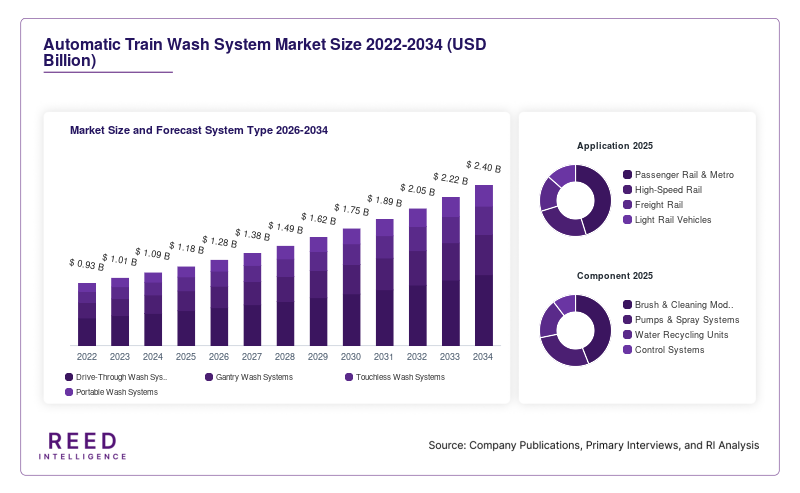
- By System Type, Drive-Through Wash Systems led with 46.5% share in 2025, while Touchless Wash Systems are projected to grow at 10.1% CAGR.
- By Application, Passenger Rail & Metro remained dominant with 61.2% share, while High-Speed Rail is forecast to expand at 9.8% CAGR.
- By Component, Brush & Cleaning Modules accounted for the leading share, while Water Recycling Units will witness the fastest growth at 10.4% CAGR.
- Germany, the leading country, was valued at USD 128.4 million in 2024 and USD 135.9 million in 2025.
Market Trends
Smart Wash Automation and Predictive Maintenance Integration
Rail depots are adopting connected wash systems equipped with sensors, PLC controls, remote diagnostics, and maintenance alerts. These platforms monitor brush wear, nozzle pressure, pump efficiency, and water quality. The trend is reducing downtime and improving lifecycle management for operators.
Shift Toward Water-Efficient and Eco-Friendly Systems
Manufacturers are launching systems with water reclamation tanks, biodegradable detergents, and optimized spray technologies. Operators are increasingly selecting systems that lower freshwater consumption and meet sustainability goals, especially in water-stressed regions.
Market Drivers
Expansion of Urban Transit and Rail Fleet Modernization
Growing investments in metro corridors, commuter rail lines, and high-capacity passenger trains are increasing the installed base of rolling stock requiring regular cleaning. New depots are being designed with automated wash bays, directly supporting the Automatic Train Wash System Market.
Need for Lower Operating Costs and Faster Turnaround
Rail operators are under pressure to reduce depot labor costs while improving train availability. Automatic wash systems shorten cleaning cycles, reduce manual labor dependency, and enable faster fleet turnaround between service schedules.
Market Restraint
High Initial Capital and Infrastructure Cost
The installation of fixed automatic train wash systems requires civil works, water treatment infrastructure, drainage systems, and control integration. This higher upfront investment can delay procurement decisions among smaller rail operators.
Market Opportunities
Retrofit Demand in Aging Rail Depots
Many rail depots still depend on manual cleaning methods. Retrofitting existing facilities with compact automatic wash units offers suppliers a strong growth opportunity, particularly in mature rail markets.
Growth of Freight Wagon Cleaning Solutions
Freight rail operators are increasingly focusing on wagon hygiene, branding, and contamination control. Specialized wash systems for tank wagons, container carriers, and bulk freight units create a new revenue stream for manufacturers.
Segmental Analysis
By System Type
Drive-Through Wash Systems: Drive-through systems dominated the Automatic Train Wash System Market with 46.5% share in 2025. These systems enabled trains to pass through fixed brush and spray stations, making them suitable for high-frequency passenger operations with predictable schedules.
Touchless Wash Systems: Touchless systems are projected to grow at a 10.1% CAGR through 2034. Growth will be supported by demand for scratch-free cleaning on premium rolling stock, painted surfaces, and high-speed train exteriors where brush contact is less preferred.
By Application
Passenger Rail & Metro: Passenger rail and metro applications led with 61.2% share in 2025. Frequent cleaning cycles, public visibility, and branding standards supported strong demand from metro operators and suburban transit fleets.
High-Speed Rail: High-speed rail is forecast to expand at a 9.8% CAGR. Growth will be driven by fleet additions and the need for precision cleaning systems that maintain aerodynamic surfaces and premium passenger appearance standards.
By Component
Brush & Cleaning Modules: Brush assemblies, rotating cleaning units, and detergent modules accounted for the largest share at 38.7% in 2025. These components form the core cleaning mechanism of most installed systems.
Water Recycling Units: Water recycling units will grow at a 10.4% CAGR through 2034. Adoption will rise as operators target lower water consumption, wastewater reuse, and compliance with tightening environmental rules.
By End User
Public Rail Operators dominated with 67.5% share in 2025. Large municipal and national rail networks maintained regular procurement cycles for depot automation.
Private Rail Service Providers: Private rail operators are expected to grow at a 9.1% CAGR. Expansion of private metro concessions and industrial rail services will support demand for efficient maintenance systems.
Regional Analysis
North America
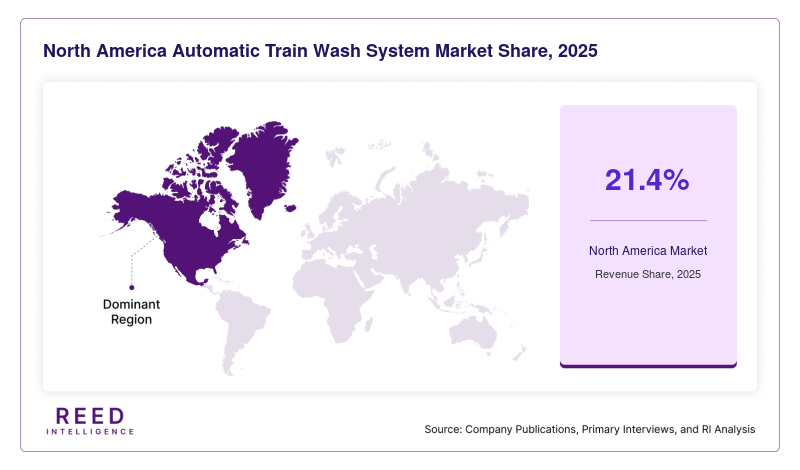
North America accounted for 21.4% of the Automatic Train Wash System Market share in 2025 and is projected to grow at a CAGR of 7.4% through 2034. The U.S. remained the dominant country due to commuter rail fleet upgrades and transit agency investment in automated maintenance depots. Rail operators focused on reducing turnaround times in major urban corridors.
Europe
Europe represented 34.8% share in 2025 and will expand at a CAGR of 7.8% during the forecast period. Germany led the region due to its extensive passenger rail network and strong emphasis on rail asset presentation standards. Operators adopted advanced recycling-based wash systems to meet environmental regulations.
Asia Pacific
Asia Pacific held 27.6% share in 2025 and is expected to record the fastest CAGR of 9.6% through 2034. China dominated regional demand owing to rapid high-speed rail expansion and continuous investment in new maintenance depots. Large rolling stock fleets created recurring demand for automated wash infrastructure.
Middle East & Africa
Middle East & Africa captured 8.2% share in 2025 and is forecast to grow at a CAGR of 8.7%. Saudi Arabia emerged as the leading country due to investment in metro rail systems and new intercity rail projects. Harsh desert conditions increased the need for frequent exterior cleaning solutions.
Latin America
Latin America held 8.0% share in 2025 and is anticipated to grow at a CAGR of 7.9%. Brazil led the region as urban rail modernization programs and commuter fleet upgrades increased depot automation spending. Transit agencies sought efficient cleaning systems for older fleets.
Competitive Landscape
The Automatic Train Wash System Market remains moderately consolidated, with global engineering firms and specialized depot equipment providers competing on automation capability, water efficiency, lifecycle service, and customization. Leading companies focus on turnkey depot solutions that combine washing, wastewater treatment, and digital controls.
A leader in the market is WashTec AG, supported by its broad vehicle wash expertise and growing railway-focused solutions portfolio. The company recently expanded smart monitoring features for fleet cleaning operations.
Other active participants include Aqua Clean Systems, Kärcher Futuretech, Wesumat Group, and ISTOBAL, which are strengthening regional distribution and service networks. Several suppliers are also partnering with rolling stock OEMs and rail depot contractors to secure long-term projects. Product innovation is centered on touchless cleaning, modular installations, and low-water-use technologies. Aftermarket service contracts are becoming an important revenue source as operators seek uptime guarantees and predictable maintenance costs.
Key Players List
- WashTec AG
- Kärcher Futuretech GmbH
- ISTOBAL Group
- Wesumat Group
- Aqua Clean Systems
- Trapeze Wash Solutions
- Enz Technik AG
- Hegenscheidt MFD
- KTN Rail Systems
- Daifuku Co., Ltd.
- Nilfisk Group
- Westmatic AB
- Aquafrisch Rail Systems
- Siemens Mobility Service Solutions
- Alstom Depot Equipment Division
Recent Developments
- WashTec AG introduced upgraded remote monitoring features for rail wash systems in 2025.
- ISTOBAL launched a modular water recycling platform for rail depots in Europe.
- Kärcher Futuretech expanded automated exterior wash solutions for metro fleets in Asia.
- Wesumat Group secured contracts for passenger train wash installations in Central Europe.
- Daifuku Co., Ltd. increased investment in smart depot automation systems integrating wash equipment.
Automatic Train Wash System Market Segments
System Type
- Drive-Through Wash Systems
- Gantry Wash Systems
- Touchless Wash Systems
- Portable Wash Systems
Application
- Passenger Rail & Metro
- High-Speed Rail
- Freight Rail
- Light Rail Vehicles
Component
- Brush & Cleaning Modules
- Pumps & Spray Systems
- Water Recycling Units
- Control Systems
End User
- Public Rail Operators
- Private Rail Operators
- Maintenance Contractors
By Region
- North America
- Europe
- APAC
- Middle East and Africa
- LATAM