Automotive Glass Cleaner Market Size, Share & Demand Report By Product Type (Spray Cleaners, Foam-Based Cleaners, Wipes, Concentrated Liquids), By Vehicle Type (Passenger Vehicles, Commercial Vehicles), By Distribution Channel (Aftermarket Retail Stores, Online Sales Channels, Automotive Service Centers, Supermarkets and Hypermarkets), By Region & Segment Forecasts, 2026–2034
USD 3950
Market Overview
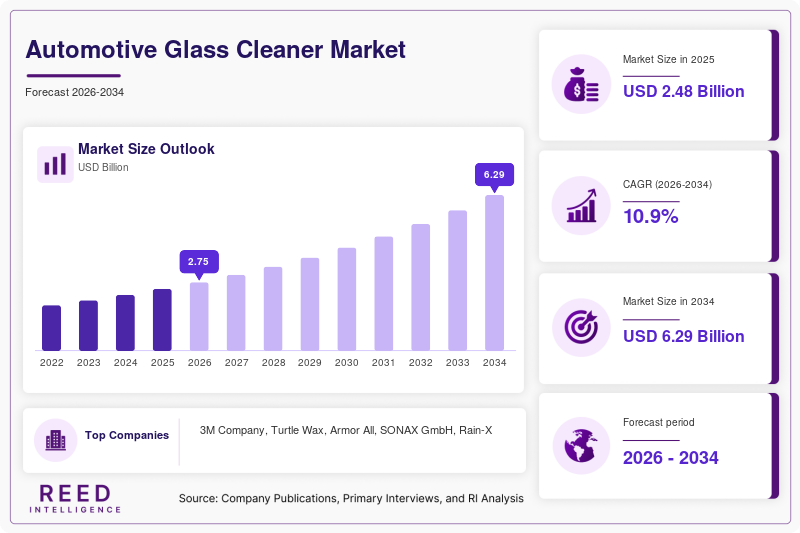
The global Automotive Glass Cleaner Market size was valued at approximately USD 2.48 billion in 2026 and is projected to reach nearly USD 5.71 billion by 2034, expanding at a CAGR of 10.9% during the forecast period from 2026 to 2034. The market continues to witness stable expansion due to rising vehicle ownership, increasing consumer awareness regarding vehicle maintenance, and growing demand for improved driving visibility and safety. Automotive glass cleaners are widely used for windshields, rear windows, mirrors, and infotainment display panels across passenger and commercial vehicles. The increasing preference for professional car detailing services and premium vehicle cleaning products has further accelerated market demand across both developed and emerging economies.
One of the major global factors supporting market growth is the rapid expansion of the automotive aftermarket industry. Vehicle owners are increasingly investing in cleaning and maintenance solutions that improve appearance, visibility, and long-term durability. The rise in urban pollution, dust accumulation, and extreme weather conditions has increased the frequency of automotive glass cleaning activities. Manufacturers are also introducing ammonia-free, biodegradable, and anti-fog formulations to align with sustainability trends and stricter environmental standards. In addition, e-commerce channels and digital retail platforms have improved product accessibility, enabling manufacturers to reach broader consumer bases across urban and semi-urban markets.
Key Highlights
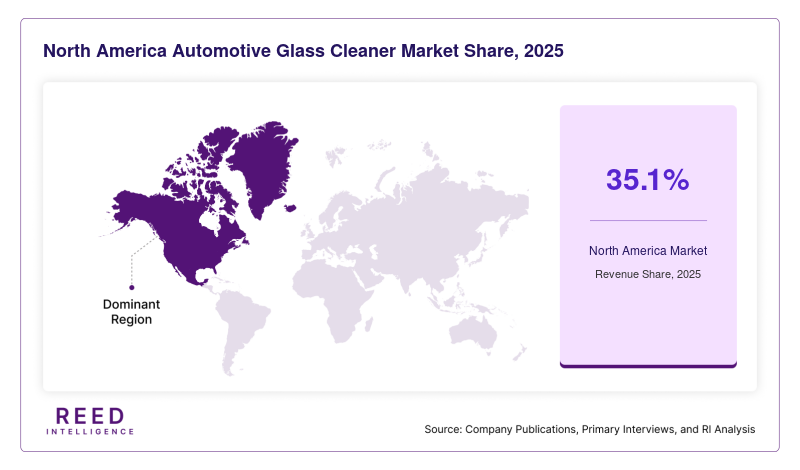
- North America dominated the market with a 35.1% share in 2025.
- Asia Pacific is expected to grow at the fastest CAGR of 11.8% during 2026–2034.
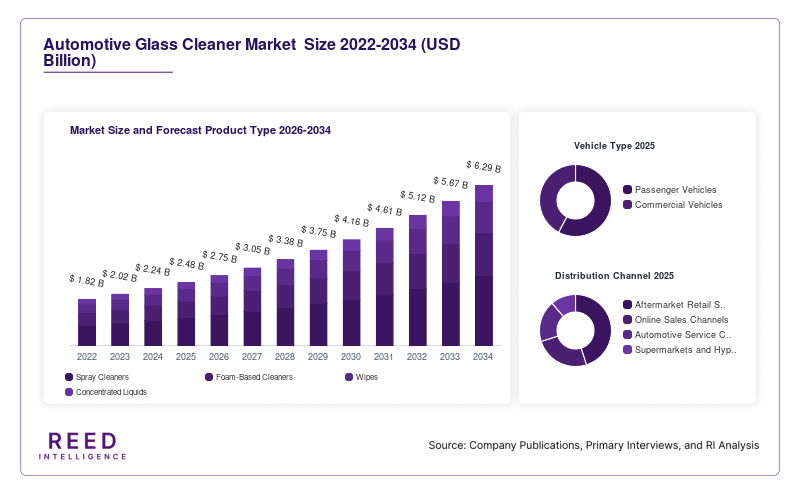
- By product type, spray cleaners accounted for the largest share of 42.6%.
- while foam-based cleaners are projected to grow at a CAGR of 12.3%.
- By vehicle type, passenger vehicles led with a 67.8% share.
- whereas commercial vehicles are expected to expand at a CAGR of 10.7%.
- By distribution channel, aftermarket retail stores dominated with a 48.2% share.
- while online sales channels are projected to grow at a CAGR of 13.1%.
- The United States remained the dominant country, with market values of USD 620 million in 2024 and USD 685 million in 2025.
Market Trends
Growing Demand for Eco-Friendly and Ammonia-Free Formulations
The Automotive Glass Cleaner Market is witnessing increasing demand for environmentally responsible products as consumers become more aware of chemical safety and sustainability concerns. Traditional glass cleaners containing ammonia and harsh solvents are gradually being replaced by biodegradable and low-VOC alternatives. Automotive owners are seeking products that provide effective cleaning without damaging tinted windows, interior surfaces, or the surrounding environment. Manufacturers are responding by introducing plant-based formulations and recyclable packaging solutions designed for environmentally conscious buyers.
This trend is particularly visible in North America and Europe, where environmental regulations and consumer preferences are driving product reformulation efforts. Companies are investing in research and development to create streak-free cleaners that maintain high performance while reducing chemical content. Premium automotive detailing centers are also promoting eco-friendly products as part of their service offerings. The rise of electric vehicles has additionally supported demand for sustainable automotive maintenance products, including specialized glass cleaning solutions designed for advanced driver assistance systems and sensitive sensor-equipped windshields.
Increasing Adoption of Multi-Functional Automotive Cleaning Products
Consumers are increasingly preferring multi-functional cleaning solutions that combine cleaning, anti-fogging, water repellency, and dust resistance within a single product. This shift is influencing product innovation within the Automotive Glass Cleaner Market. Automotive owners now seek products that not only clean glass surfaces but also improve visibility during rain, fog, and dust exposure. Manufacturers are introducing advanced formulations with hydrophobic coatings and anti-static properties to enhance overall driving comfort and convenience.
The trend is gaining momentum due to rising consumer expectations for premium vehicle care products. Modern vehicles equipped with digital dashboards, infotainment systems, and sensor-integrated windshields require specialized cleaners that avoid residue buildup and maintain optical clarity. Commercial fleet operators are also adopting high-performance glass cleaners to reduce maintenance frequency and improve driver safety. Online retail platforms have accelerated consumer awareness by offering detailed product comparisons and user reviews, encouraging wider adoption of advanced multi-purpose automotive cleaning products across global markets.
Market Drivers
Rising Vehicle Ownership and Automotive Aftermarket Expansion
The continuous rise in global vehicle ownership remains one of the strongest growth drivers for the Automotive Glass Cleaner Market. Urbanization, improving disposable income, and easier vehicle financing options have significantly increased passenger car sales across developing economies. As the number of vehicles on roads increases, the demand for routine maintenance products such as automotive glass cleaners continues to expand. Consumers are increasingly prioritizing visibility, cleanliness, and vehicle aesthetics, creating stable demand for windshield and mirror cleaning solutions.
The automotive aftermarket industry has also experienced rapid development due to growing consumer spending on vehicle maintenance and detailing services. Independent service centers, car wash operators, and detailing studios are purchasing automotive glass cleaners in large volumes to support expanding customer demand. Fleet operators and ride-sharing companies are maintaining stricter vehicle cleanliness standards to improve customer satisfaction and operational safety. In addition, e-commerce growth has improved product availability across remote markets, supporting broader consumer adoption of specialized automotive cleaning products.
Increasing Focus on Road Safety and Driving Visibility
Road safety awareness has become a significant factor driving the Automotive Glass Cleaner Market. Dirty or fogged windshields can reduce visibility and increase accident risks, particularly during adverse weather conditions. Governments and transportation agencies across several countries are promoting vehicle maintenance awareness campaigns, indirectly supporting demand for automotive cleaning products. Consumers are recognizing the importance of maintaining clear glass surfaces for safe driving, especially in regions affected by heavy rainfall, dust storms, or snow.
Automotive manufacturers are also integrating advanced driver assistance systems that rely heavily on camera clarity and windshield transparency. This technological advancement has increased the need for high-quality glass cleaning products capable of preserving sensor efficiency and optical accuracy. Commercial transportation companies are adopting scheduled cleaning practices to improve fleet safety and regulatory compliance. The growth of long-distance logistics operations and ride-sharing services has further contributed to rising demand for reliable automotive glass maintenance products across both developed and emerging economies.
Market Restraint
Price Sensitivity and Availability of Low-Cost Alternatives
Price sensitivity among consumers remains a major restraint for the Automotive Glass Cleaner Market, particularly across developing economies where vehicle owners often prefer low-cost cleaning alternatives. Many consumers continue using household cleaning products, soap-based mixtures, or generic cleaning liquids instead of specialized automotive glass cleaners. This behavior limits premium product penetration and reduces revenue opportunities for established manufacturers. Small-scale local brands offering inexpensive products further intensify market competition and place pressure on pricing strategies.
The presence of counterfeit and low-quality cleaning products also affects consumer trust and overall market growth. In some regions, unregulated cleaning solutions may damage tinted windows, leave streaks, or reduce windshield clarity, creating inconsistent user experiences. Professional detailing services often face challenges convincing cost-conscious customers to upgrade to premium glass care products. Additionally, fluctuating raw material prices for specialty chemicals, surfactants, and packaging materials can increase manufacturing costs, reducing profit margins for producers. These factors collectively create operational and pricing challenges for companies attempting to expand their presence in price-sensitive markets.
Market Opportunities
Expansion of E-Commerce and Direct-to-Consumer Sales Channels
The rapid growth of digital commerce platforms presents significant opportunities for the Automotive Glass Cleaner Market. Consumers increasingly prefer online shopping due to convenience, product variety, competitive pricing, and access to customer reviews. Automotive cleaning product manufacturers are leveraging digital channels to strengthen brand visibility and reach new customer segments across urban and rural regions. Subscription-based vehicle care kits and bundled maintenance products are also gaining traction through online retail platforms.
Direct-to-consumer sales strategies enable manufacturers to improve profit margins while building stronger relationships with end users. Companies are investing in digital marketing campaigns, influencer partnerships, and social media promotions to increase consumer engagement. Online platforms additionally allow manufacturers to educate customers regarding the benefits of ammonia-free, anti-fog, and sensor-safe glass cleaners. The increasing penetration of smartphones and digital payment systems in emerging economies is expected to further accelerate online sales growth, creating long-term expansion opportunities for automotive glass cleaner brands worldwide.
Rising Demand from Professional Car Detailing and Fleet Maintenance Services
Professional car detailing services and fleet maintenance operations are creating substantial opportunities within the Automotive Glass Cleaner Market. Consumers are increasingly utilizing detailing services to maintain vehicle appearance, resale value, and driving comfort. Premium detailing centers require specialized cleaning products capable of delivering streak-free finishes and long-lasting protection. This trend is encouraging manufacturers to develop professional-grade formulations for commercial applications.
Commercial transportation operators, logistics companies, and ride-sharing fleets are also investing heavily in vehicle maintenance programs. Clear windshields and mirrors are critical for driver safety and operational efficiency, particularly for long-distance transportation businesses. Fleet operators prefer high-performance cleaning solutions that reduce cleaning frequency and improve visibility during challenging weather conditions. The growing popularity of automated car wash systems has additionally increased demand for concentrated glass cleaning formulations compatible with industrial equipment. These developments are expected to create stable commercial demand for automotive glass cleaning products throughout the forecast period.
Segmental Analysis
By Product Type
Spray cleaners dominated the Automotive Glass Cleaner Market in 2024, accounting for approximately 42.6% of total market share. Their strong position is primarily attributed to ease of application, wide product availability, and compatibility with multiple automotive glass surfaces. Spray-based formulations are widely preferred by both individual vehicle owners and professional detailing service providers due to their ability to provide quick and streak-free cleaning performance. Consumers also favor spray cleaners because they are available in different formulations, including anti-fog, water-repellent, and ammonia-free variants. Major automotive care brands continue introducing advanced spray products with improved drying speed and enhanced visibility performance, further strengthening segment growth across developed and emerging markets.
Foam-based cleaners are projected to register the fastest CAGR of 12.3% during the forecast period due to their superior adherence and deep-cleaning efficiency. Foam formulations remain on glass surfaces for longer durations, allowing better removal of dirt, grease, and insect residue without excessive wiping. Professional car detailing centers increasingly prefer foam cleaners for luxury and premium vehicles because they minimize streak formation and improve surface protection. Manufacturers are also introducing eco-friendly foam cleaners with biodegradable ingredients to meet changing environmental regulations and consumer preferences. The growth of automated vehicle washing systems and professional maintenance services is expected to further support demand for foam-based automotive glass cleaning products globally.
By Vehicle Type
Passenger vehicles represented the largest share of the Automotive Glass Cleaner Market in 2024, contributing nearly 67.8% of global revenue. The segment’s dominance is closely linked to rising personal vehicle ownership and increasing consumer awareness regarding vehicle appearance and driving safety. Passenger car owners frequently purchase windshield cleaning products to maintain visibility during daily commuting and long-distance travel. Urban pollution, bird droppings, rainfall, and road dust accumulation have increased demand for regular glass cleaning solutions among private vehicle users. Automotive detailing culture is also becoming more prominent among middle-income consumers, supporting continued sales growth for premium automotive glass cleaners within the passenger vehicle segment.
Commercial vehicles are anticipated to witness the fastest growth rate with a CAGR of 10.7% between 2026 and 2034. Fleet operators, logistics providers, and public transportation companies are increasingly adopting specialized maintenance products to improve road safety and operational efficiency. Commercial vehicles travel longer distances and are more exposed to dust, insects, and adverse weather conditions, increasing the need for frequent windshield cleaning. Regulatory emphasis on transportation safety and driver visibility standards is further encouraging fleet maintenance investments. In addition, the rapid expansion of e-commerce logistics operations and last-mile delivery services across developing economies is expected to increase commercial vehicle maintenance activities, supporting strong segment growth.
By Distribution Channel
Aftermarket retail stores accounted for the largest share of the Automotive Glass Cleaner Market in 2024, representing approximately 48.2% of total revenue. Consumers continue preferring physical automotive retail outlets due to product availability, direct comparison opportunities, and immediate purchase convenience. Retail chains, automotive accessory stores, and supermarkets offer a wide range of automotive glass cleaning products targeting different customer preferences and price ranges. Professional service centers and independent mechanics also rely heavily on aftermarket retail channels for bulk product procurement. Promotional discounts, bundled cleaning kits, and in-store demonstrations further contribute to strong sales performance within this distribution segment across multiple regional markets.
Online sales channels are projected to grow at the fastest CAGR of 13.1% during the forecast period due to increasing digital commerce adoption and changing consumer purchasing behavior. Consumers are increasingly purchasing automotive maintenance products through e-commerce platforms because of wider product selection, competitive pricing, and home delivery convenience. Online platforms also enable manufacturers to educate consumers regarding advanced product features such as anti-fog technology and hydrophobic coatings. Social media marketing, influencer promotions, and subscription-based vehicle care packages are accelerating online sales growth. Expanding smartphone penetration and digital payment infrastructure in emerging economies are expected to further strengthen e-commerce demand for automotive glass cleaning products.
Regional Analysis
North America
North America accounted for approximately 35.1% of the global Automotive Glass Cleaner Market share in 2025 and continues to maintain a strong position due to high vehicle ownership and mature automotive aftermarket infrastructure. The region is projected to expand at a CAGR of 9.7% during the forecast period. Consumers in the United States and Canada regularly invest in vehicle maintenance products, including premium automotive glass cleaners designed for harsh winter conditions and road dust exposure. The presence of established detailing service providers and strong retail distribution networks further supports regional market growth.
The United States remains the dominant country within the North American market due to its large passenger vehicle fleet and advanced automotive care industry. One significant growth factor is the increasing demand for premium detailing products among luxury vehicle owners. Consumers are actively purchasing water-repellent and anti-fog glass cleaners to improve visibility and maintain vehicle aesthetics. Rising adoption of electric vehicles equipped with sensor-integrated windshields is additionally encouraging demand for specialized glass cleaning formulations across the country.
Europe
Europe represented nearly 27.4% of the Automotive Glass Cleaner Market share in 2025 and is expected to grow at a CAGR of 9.2% through 2034. The regional market benefits from strict environmental regulations promoting low-VOC and biodegradable automotive cleaning products. Countries across Western Europe have strong automotive maintenance cultures, contributing to consistent demand for premium glass care solutions. Increasing awareness regarding road safety and visibility standards also supports the adoption of high-performance windshield cleaning products throughout the region.
Germany remains the leading country within the European market due to its strong automotive manufacturing base and well-developed aftermarket industry. One unique growth factor driving demand is the increasing popularity of professional car detailing services among premium vehicle owners. German consumers frequently invest in specialized automotive maintenance products designed to protect high-end vehicles from dust, rain, and snow-related visibility issues. The expansion of electric mobility and connected vehicle technologies is also supporting demand for advanced glass cleaning formulations.
Asia Pacific
Asia Pacific held approximately 23.6% of the global Automotive Glass Cleaner Market share in 2025 and is projected to register the fastest CAGR of 11.8% during the forecast period. Rapid urbanization, rising disposable income, and growing vehicle ownership are key factors supporting market expansion across the region. Developing economies such as China, India, and Southeast Asian countries are witnessing increased consumer spending on vehicle maintenance products. Expanding e-commerce platforms and digital retail channels have also improved accessibility to automotive glass cleaning solutions.
China dominates the Asia Pacific market due to its massive automotive production capacity and growing passenger vehicle ownership. A major growth factor is the rapid expansion of the domestic automotive aftermarket sector, particularly in urban regions. Chinese consumers are increasingly purchasing premium vehicle care products to maintain visibility and vehicle appearance amid rising pollution and dust exposure. Government initiatives supporting electric vehicle adoption are further contributing to increased demand for advanced automotive maintenance products, including specialized sensor-safe glass cleaners.
Middle East & Africa
The Middle East & Africa region accounted for nearly 7.2% of the Automotive Glass Cleaner Market share in 2025 and is expected to expand at a CAGR of 8.6% between 2026 and 2034. Demand for automotive glass cleaners is increasing steadily due to extreme climatic conditions, including high dust levels and sand exposure. Vehicle owners across Gulf countries frequently clean windshields and mirrors to maintain safe driving visibility. The growth of automotive service centers and premium car wash facilities is also contributing to regional market expansion.
Saudi Arabia remains the dominant country in the Middle East & Africa market because of its high vehicle ownership levels and expanding automotive aftermarket industry. One distinct growth factor is the persistent exposure to desert dust and sandstorms, which significantly increases windshield cleaning frequency. Consumers and commercial fleet operators regularly invest in high-performance cleaning solutions to reduce visibility impairment. The increasing number of luxury vehicles and premium detailing studios in major cities is further supporting demand for advanced automotive glass care products.
Latin America
Latin America captured approximately 6.7% of the Automotive Glass Cleaner Market share in 2025 and is projected to grow at a CAGR of 8.9% during the forecast period. Increasing vehicle ownership and improving consumer awareness regarding automotive maintenance are supporting market development across the region. Expanding urban populations and rising usage of ride-sharing services have also increased demand for routine vehicle cleaning products. Automotive retailers and independent service centers continue to strengthen product distribution across major regional markets.
Brazil remains the leading country in the Latin American market due to its large automotive fleet and growing automotive aftermarket sector. A key growth factor is the rising popularity of professional car cleaning and detailing services in metropolitan areas. Consumers are increasingly investing in premium automotive maintenance products to preserve vehicle aesthetics and resale value. Additionally, frequent rainfall and humid climatic conditions in several Brazilian regions are encouraging higher usage of anti-fog and streak-resistant automotive glass cleaning solutions.
Competitive Landscape
The Automotive Glass Cleaner Market remains moderately fragmented, with global and regional manufacturers competing through product innovation, pricing strategies, and distribution expansion. Companies are increasingly focusing on environmentally friendly formulations, advanced anti-fog technologies, and sensor-compatible cleaning solutions to strengthen their market positions. Strategic partnerships with automotive detailing chains, retail distributors, and e-commerce platforms continue shaping competitive dynamics within the industry.
3M Company remains one of the leading participants in the market due to its diversified automotive care portfolio and extensive global distribution network. The company continues investing in advanced cleaning technologies designed for modern sensor-equipped vehicles. Turtle Wax, Armor All, SONAX, and Rain-X also maintain strong market presence through continuous product launches and branding initiatives targeting premium vehicle owners and professional detailing service providers.
A recent industry development includes the introduction of biodegradable automotive glass cleaners with water-repellent coatings by several leading manufacturers to address growing sustainability concerns. Market participants are also expanding online direct-to-consumer sales channels to improve customer engagement and increase brand visibility. Competitive intensity is expected to rise further as regional manufacturers introduce cost-effective alternatives targeting price-sensitive markets.
Key Players
- 3M Company
- Turtle Wax
- Armor All
- SONAX GmbH
- Rain-X
- Liqui Moly
- Chemical Guys
- Meguiar's
- Soft99 Corporation
- Mothers Polishes Waxes Cleaners
- Würth Group
- AutoMagic
- Tetrosyl
- CarPlan
- Kao Corporation
Recent Developmets
- In 2025, 3M Company introduced an ammonia-free automotive glass cleaner designed for sensor-integrated windshields and advanced driver assistance systems.
- In 2024, Turtle Wax expanded its direct-to-consumer online platform across Asia Pacific to strengthen digital sales of automotive cleaning products.
- In 2025, SONAX GmbH launched a biodegradable anti-fog glass cleaner targeting premium vehicle detailing centers in Europe.
Automotive Glass Cleaner Market Segments
Product Type
- Spray Cleaners
- Foam-Based Cleaners
- Wipes
- Concentrated Liquids
Vehicle Type
- Passenger Vehicles
- Commercial Vehicles
Distribution Channel
- Aftermarket Retail Stores
- Online Sales Channels
- Automotive Service Centers
- Supermarkets and Hypermarkets
By Region
- North America
- Europe
- APAC
- Middle East and Africa
- LATAM