Automotive Isofix Mounts Market Size, Share, Demand Report By Type (Fixed Isofix Mounts, Adjustable Isofix Mounts), By Application (Passenger Vehicles, Commercial Vehicles), By End-Use (OEMs, Aftermarket) By Region & Segment Forecasts, 2026–2034
USD 3950
Market Overview
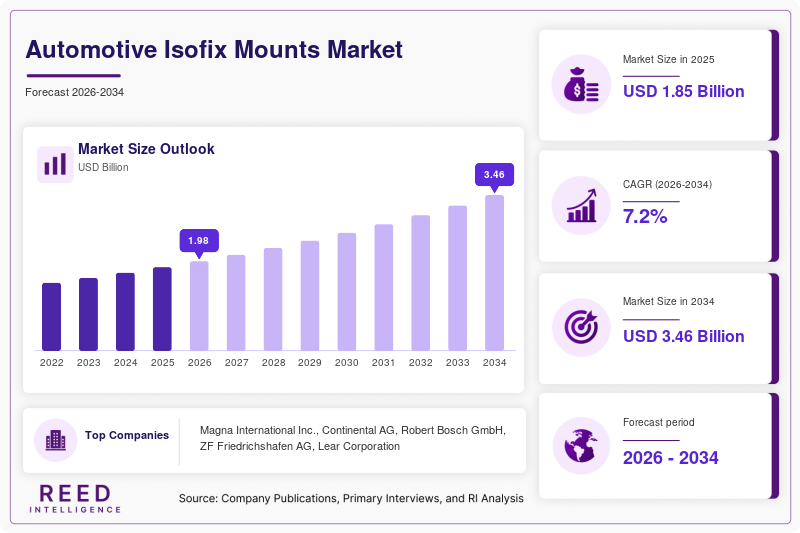
The global Automotive Isofix Mounts Market size is estimated at approximately USD 1.85 billion, and it is projected to reach around USD 1.98 billion in 2026. Looking ahead, the market is forecasted to grow to nearly USD 3.45 billion by 2034, reflecting a compound annual growth rate (CAGR) of approximately 7.2% during the forecast period from 2025 to 2034. This growth trajectory reflects consistent demand across both developed and emerging automotive markets.
Several key factors are contributing to the expansion of the Automotive Isofix Mounts Market. First, stringent government regulations mandating the inclusion of standardized child restraint anchorage systems in vehicles are significantly driving adoption. Second, increasing vehicle production globally, particularly in emerging economies, is supporting the integration of Isofix-compatible seating systems. Third, growing consumer awareness regarding child safety and the importance of secure installation of child seats is encouraging automakers to include Isofix mounts as a standard feature across multiple vehicle segments. Additionally, advancements in automotive interior design and manufacturing processes are enabling seamless integration of Isofix systems without compromising aesthetics or structural integrity.
Key Highlights
- Market size in 2025 is valued at USD 1.85 billion, reflecting steady demand from automotive safety integration across regions.
This base year establishes a strong foundation for consistent growth driven by regulatory and consumer safety requirements. - Market size in 2026 is estimated at USD 1.98 billion, indicating continued year-on-year expansion.
The increase is supported by rising vehicle production and wider adoption of standardized child restraint systems. - Forecast market size by 2034 is projected to reach USD 3.45 billion, showing sustained long-term growth potential.
This expansion is driven by increasing integration of Isofix mounts across passenger and commercial vehicle platforms globally. - CAGR (2025–2034) is approximately 7.2%, reflecting stable and moderate growth over the forecast period.
The growth rate is supported by regulatory mandates, safety awareness, and ongoing advancements in vehicle design and manufacturing. - Increasing regulatory mandates supporting child safety compliance are a major growth driver for the market.
Governments and safety authorities are enforcing stricter standards that require Isofix-compatible anchorage systems in vehicles.
Market Trends
Integration of Isofix Mounts in Entry-Level and Mid-Range Vehicles
Automakers are increasingly incorporating Isofix mounts as a standard feature not only in premium vehicles but also in entry-level and mid-range segments. This shift is largely driven by regulatory frameworks in several regions that require child seat anchorage systems across all vehicle categories. Manufacturers are aligning with safety standards to maintain compliance while enhancing their brand positioning. As competition intensifies, offering built-in Isofix mounts is becoming a baseline expectation rather than a premium feature. This trend is also supported by cost optimization in manufacturing processes, allowing OEMs to integrate these systems without significantly increasing vehicle prices. The growing penetration of compact cars and SUVs equipped with Isofix mounts is further contributing to the normalization of this feature across global markets.
Technological Advancements in Seat Frame Engineering and Modular Design
Another notable trend is the advancement in automotive seat frame engineering, enabling more efficient and durable Isofix mount integration. Manufacturers are adopting modular design approaches that allow Isofix anchorage points to be seamlessly embedded into vehicle chassis structures. This improves installation accuracy and reduces variability during assembly. Additionally, advancements in materials such as high-strength steel and lightweight alloys are enhancing the structural integrity of Isofix systems while maintaining vehicle weight efficiency. The integration of digital design tools and simulation technologies is also helping engineers optimize mount positioning for improved usability and safety performance. These innovations are contributing to higher reliability, reduced installation errors, and improved compliance with global safety standards.
Market Drivers
Increasing Regulatory Standards for Child Passenger Safety
One of the primary drivers of the Automotive Isofix Mounts Market is the implementation of stringent safety regulations across multiple regions. Governments and transportation authorities are mandating the inclusion of standardized child restraint anchorage systems in vehicles to reduce the risk of injuries in accidents. These regulations require automakers to design vehicles that are compatible with Isofix child seats, ensuring secure and consistent installation. Compliance with such regulations is not optional, which compels manufacturers to incorporate Isofix mounts as part of their standard vehicle configurations. This regulatory push is particularly strong in regions with high vehicle safety standards, where enforcement mechanisms and safety ratings influence consumer purchasing decisions. As regulatory frameworks continue to evolve, the demand for Isofix-compatible vehicles is expected to remain strong, supporting long-term market growth.
Rising Consumer Awareness and Demand for Enhanced Safety Features
Growing consumer awareness regarding vehicle safety and child protection is another significant driver of the market. Parents and caregivers are increasingly prioritizing vehicles equipped with standardized child restraint systems that offer ease of installation and improved safety performance. Isofix mounts eliminate the need for seat belts during installation, reducing the likelihood of improper fitting, which is a common issue with traditional child seats. This ease of use, combined with enhanced safety, is encouraging consumers to prefer vehicles with built-in Isofix compatibility. Additionally, safety ratings and crash test results published by independent organizations are influencing buyer decisions, pushing automakers to adopt advanced safety features, including Isofix mounts, to maintain competitive advantage in the market.
Market Restraint
Limited Awareness and Adoption in Developing Regions
Despite the growing global emphasis on vehicle safety, limited awareness and lower adoption rates in certain developing regions remain a key restraint for the Automotive Isofix Mounts Market. In several emerging economies, consumers may not be fully aware of the benefits of Isofix systems compared to traditional child seat installation methods. Additionally, affordability concerns and the prioritization of basic vehicle functionality over advanced safety features can slow adoption rates. In regions where regulatory enforcement is less stringent, automakers may not consistently include Isofix mounts in lower-end vehicle models, further limiting market penetration.
This restraint is also influenced by disparities in infrastructure and consumer education regarding child safety standards. For example, in markets where public awareness campaigns and safety regulations are less developed, the demand for Isofix-compatible vehicles tends to lag behind more mature markets. Furthermore, aftermarket child seat usage without standardized anchorage systems remains prevalent in some areas, reducing the immediate need for integrated Isofix mounts. Addressing this challenge will require coordinated efforts from governments, automotive manufacturers, and safety organizations to improve awareness, strengthen regulations, and promote the benefits of standardized child restraint systems.
Market Opportunities
Expansion of Electric and Smart Vehicles
The growing adoption of electric vehicles (EVs) and smart vehicles presents a significant opportunity for the Automotive Isofix Mounts Market. As automakers transition toward electrification, vehicle platforms are being redesigned from the ground up, allowing for improved integration of safety features, including Isofix mounts. EV architectures often provide more flexibility in interior layout, enabling optimized placement of child seat anchorage points. Additionally, the emphasis on smart mobility and connected vehicle ecosystems is encouraging manufacturers to incorporate advanced safety and convenience features as standard offerings. This shift is expected to create new opportunities for Isofix mount suppliers to collaborate with OEMs during the early stages of vehicle design, ensuring seamless integration and enhanced performance.
Growth in Ride-Sharing and Family-Oriented Mobility Services
The expansion of ride-sharing and family-oriented mobility services is another emerging opportunity for the market. As shared mobility platforms evolve, there is increasing demand for vehicles equipped with standardized safety features that can accommodate passengers with children. Fleet operators are recognizing the importance of providing Isofix-compatible seating to enhance safety and attract family users. This trend is particularly relevant in urban areas where shared mobility is becoming a preferred transportation option. Additionally, the rise of subscription-based vehicle ownership models is encouraging automakers and service providers to offer vehicles with enhanced safety features as part of their value proposition. This creates new avenues for Isofix mount adoption across commercial fleets and mobility service providers.
Segmental Analysis
By Type Segment
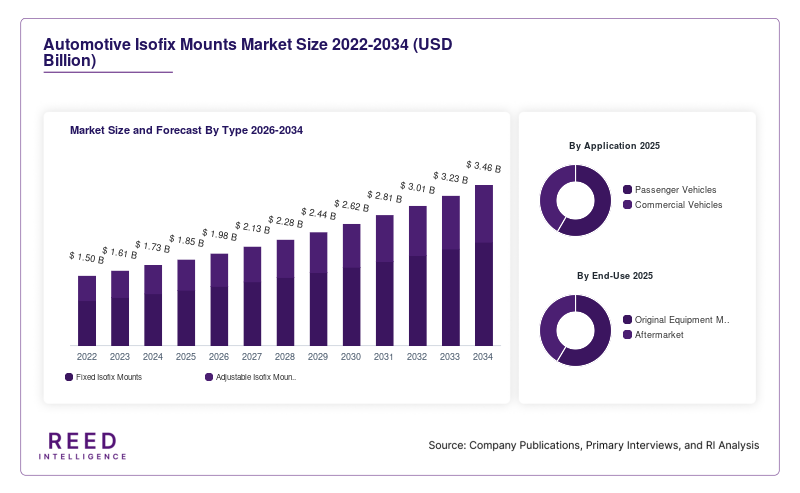
Within the type segment, the fixed Isofix mounts subsegment accounted for the dominant share of approximately 58% in 2024. Fixed mounts are widely used due to their structural stability and ease of integration into vehicle seat frames. These mounts are permanently embedded within the vehicle chassis, ensuring consistent performance and reliability during use. Automakers prefer fixed Isofix systems because they simplify manufacturing processes and reduce variability in installation. Their widespread adoption across passenger vehicles, particularly in sedans and SUVs, contributes significantly to the overall market share of this subsegment.
The adjustable Isofix mounts subsegment is emerging as the fastest-growing category, projected to register a CAGR of approximately 8.5% during the forecast period. Adjustable mounts offer flexibility in positioning, allowing better compatibility with a wider range of child seats. This adaptability is particularly beneficial in vehicles designed for multiple passenger configurations. The growth of this subsegment is driven by advancements in seat design technologies and increasing demand for customizable safety solutions. Automakers are incorporating adjustable systems to enhance user convenience and improve compatibility across different vehicle models.
By Application Segment
In the application segment, passenger vehicles accounted for the dominant share of approximately 72% in 2024. This dominance is attributed to the high volume of passenger vehicle production globally and the mandatory inclusion of child restraint anchorage systems in these vehicles. Passenger cars, including hatchbacks, sedans, and SUVs, are the primary beneficiaries of Isofix mount integration due to their widespread use by families. The demand for safety features in this segment is further reinforced by regulatory requirements and consumer expectations for enhanced protection.
The commercial vehicle subsegment is the fastest-growing application category, with an estimated CAGR of around 7.8% during the forecast period. Growth in this segment is driven by the expansion of ride-sharing services, taxi fleets, and family-oriented transportation solutions. Commercial vehicle operators are increasingly incorporating Isofix mounts to cater to passengers traveling with children. This trend is particularly prominent in urban mobility services where safety and convenience are key differentiators. The adoption of Isofix systems in commercial vehicles is expected to increase as fleet operators prioritize passenger safety and compliance with evolving regulations.
By End-Use Segment
In the end-use segment, original equipment manufacturers (OEMs) held the dominant share of approximately 65% in 2024. OEMs integrate Isofix mounts during the vehicle manufacturing process, ensuring compliance with safety standards and consistent quality across production units. The integration of Isofix systems at the OEM level allows for better design alignment and reduces the need for aftermarket modifications. This dominance is supported by the increasing standardization of safety features in new vehicles across global markets.
The aftermarket segment is projected to be the fastest-growing end-use category, with a CAGR of approximately 7.6% during the forecast period. Growth in this segment is driven by the demand for retrofit solutions in older vehicles that were not originally equipped with Isofix mounts. Consumers seeking to upgrade their vehicles for improved child safety are increasingly turning to aftermarket installations. Additionally, the availability of modular Isofix retrofit kits is contributing to the expansion of this segment. As awareness of child safety continues to rise, the aftermarket segment is expected to gain traction among vehicle owners looking for cost-effective safety enhancements.
Regional Analysis
North America
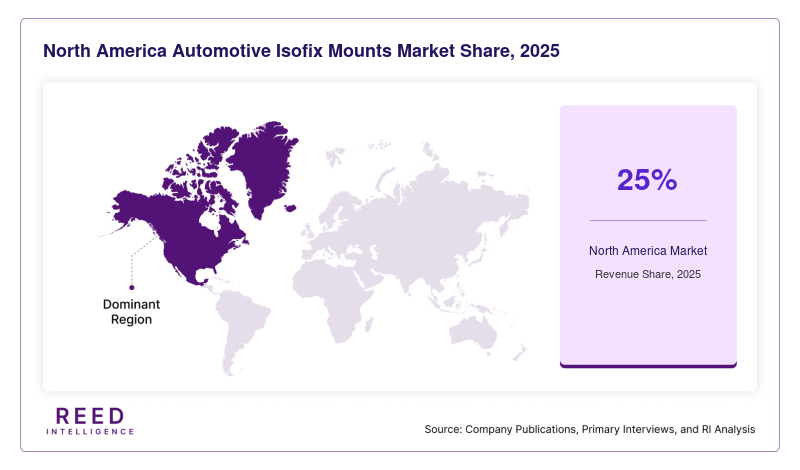
North America accounted for approximately 25% of the global Automotive Isofix Mounts Market share in 2025 and is expected to grow at a CAGR of around 6.8% through 2034. The region’s market growth is supported by well-established automotive manufacturing infrastructure and high consumer awareness regarding vehicle safety standards. Regulatory frameworks in the region emphasize child passenger safety, which has led to widespread adoption of Isofix-compatible vehicles across multiple segments.
The United States is the dominant country in this region, driven by strong vehicle production volumes and stringent safety regulations enforced by transportation authorities. One unique growth factor in North America is the increasing consumer preference for SUVs and family vehicles, which typically come equipped with advanced safety features, including Isofix mounts. This preference is further supported by higher disposable income levels and a strong emphasis on child safety.
Europe
Europe held approximately 30% of the market share in 2025 and is projected to grow at a CAGR of about 7.5% during the forecast period. The region benefits from strict regulatory mandates and high adoption of standardized safety systems across all vehicle categories. Isofix mounts are widely integrated into vehicles as part of compliance with regional safety standards, making Europe one of the most mature markets.
Germany leads the European market due to its strong automotive manufacturing base and emphasis on engineering quality. A unique growth factor in Europe is the presence of harmonized safety regulations across countries, which ensures uniform adoption of Isofix systems. Additionally, high consumer awareness and frequent updates to safety protocols continue to drive demand for advanced child restraint solutions.
Asia Pacific
Asia Pacific accounted for approximately 28% of the market share in 2025 and is expected to witness the highest CAGR of around 8.2% through 2034. The region’s growth is fueled by rapid urbanization, increasing vehicle production, and rising disposable incomes. Automotive manufacturers are expanding their presence in countries across the region to cater to growing demand.
China dominates the Asia Pacific market due to its large automotive manufacturing sector and increasing focus on vehicle safety standards. A key growth factor in this region is the expanding middle-class population, which is driving demand for passenger vehicles equipped with modern safety features. Additionally, government initiatives aimed at improving road safety are encouraging the adoption of Isofix mounts across vehicle categories.
Middle East & Africa
The Middle East & Africa region accounted for approximately 8% of the global market share in 2025 and is expected to grow at a CAGR of around 6.5% through 2034. Market growth is relatively moderate due to varying levels of regulatory enforcement and infrastructure development across countries. However, increasing vehicle imports and gradual improvements in safety awareness are supporting demand.
The United Arab Emirates leads the region due to its higher vehicle ownership rates and adoption of international safety standards. A unique growth factor in this region is the increasing presence of premium vehicles and luxury automotive imports, which often come equipped with Isofix mounts as standard features. This trend is gradually influencing broader market adoption.
Latin America
Latin America held approximately 9% of the market share in 2025 and is projected to grow at a CAGR of around 6.9% through 2034. The region is characterized by growing automotive sales and increasing awareness of vehicle safety features. However, economic variability and infrastructure challenges can impact adoption rates.
Brazil is the leading country in this region due to its large automotive market and expanding middle-class population. A key growth factor in Latin America is the gradual implementation of safety regulations and increasing consumer interest in child protection features. As regulatory frameworks evolve, the integration of Isofix mounts in vehicles is expected to become more widespread.
Competitive Landscape
The Automotive Isofix Mounts Market is moderately consolidated, with several global and regional players competing based on product quality, innovation, and strategic partnerships with automotive OEMs. Leading companies are focusing on enhancing manufacturing capabilities, improving material strength, and integrating advanced design technologies to meet evolving safety standards. Strategic collaborations with vehicle manufacturers play a critical role in securing long-term supply contracts and expanding market presence.
One of the leading players in the market has recently introduced an advanced modular Isofix mounting system designed to improve installation efficiency and reduce assembly time. This development reflects the industry’s focus on innovation and operational efficiency. Companies are also investing in research and development to enhance durability, reduce weight, and ensure compatibility with a wide range of vehicle platforms. Competitive differentiation is increasingly influenced by the ability to meet stringent regulatory requirements while offering cost-effective and scalable solutions.
Key Players List
- Magna International Inc.
- Continental AG
- Robert Bosch GmbH
- ZF Friedrichshafen AG
- Lear Corporation
- Adient plc
- Faurecia SE
- Denso Corporation
- Toyota Boshoku Corporation
- Hyundai Mobis Co., Ltd.
- Aptiv PLC
- Grupo Antolin
- Tachi-S Co., Ltd.
- Yanfeng Automotive Interiors
- TS Tech Co., Ltd.
- Gentherm Incorporated
Recent Developments
- Automotive manufacturers have increased integration of Isofix mounts in entry-level vehicles to comply with updated safety regulations across multiple regions.
- Suppliers are investing in lightweight and high-strength materials to improve the durability and performance of Isofix mounting systems.
- Several companies have introduced modular seat architectures that enable easier installation and compatibility with a broader range of child restraint systems.
Automotive Isofix Mounts Market Segments
By Type
- Fixed Isofix Mounts
- Adjustable Isofix Mounts
By Application
- Passenger Vehicles
- Commercial Vehicles
By End-Use
- Original Equipment Manufacturers (OEMs)
- Aftermarket
By Region
- North America
- Europe
- APAC
- Middle East and Africa
- LATAM