Automotive Parking Heater Market Size, Share & Demand Report By Product Type (Air Heaters, Coolant Heaters), By Vehicle Type (Passenger Vehicles, Commercial Vehicles, Electric Vehicles), By Sales Channel (OEM, Aftermarket) & Segment Forecasts, 2026–2034
USD 3950
Market Overview
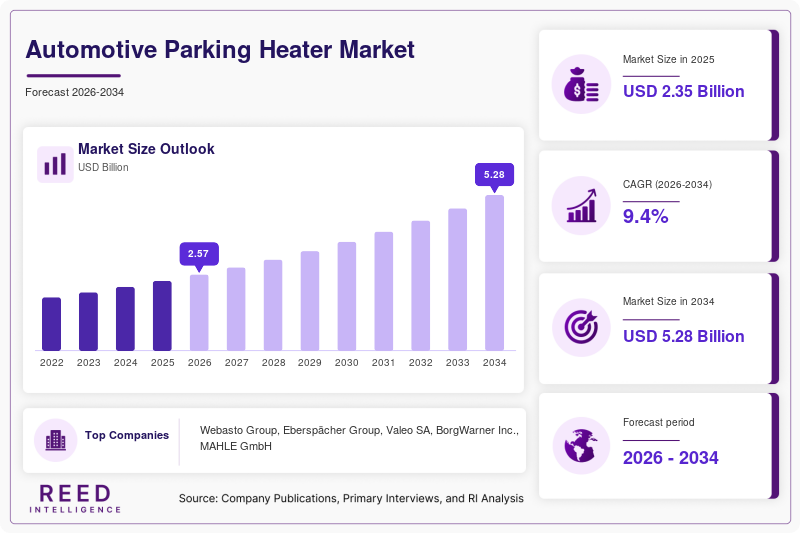
The Automotive Parking Heater Market size was valued at approximately USD 2.35 billion in 2026 and is projected to reach USD 4.85 billion by 2034, expanding at a CAGR of 9.4% during the forecast period (2026–2034). The market growth is primarily supported by the rising demand for vehicle comfort systems in cold climates and increasing adoption of energy-efficient heating solutions in passenger and commercial vehicles. Automotive parking heaters enable pre-heating of vehicle cabins and engines without running the engine, which contributes to reduced fuel consumption and lower emissions, making them an attractive solution amid tightening environmental regulations.
A significant global factor driving market expansion is the increasing focus on reducing idle emissions. Governments across developed and developing economies are implementing stricter emission norms, encouraging the use of auxiliary heating systems that minimize engine idling during cold starts. Additionally, the growing electrification of vehicles is further enhancing the demand for advanced heating systems that can operate independently of the engine.
Key Highlights
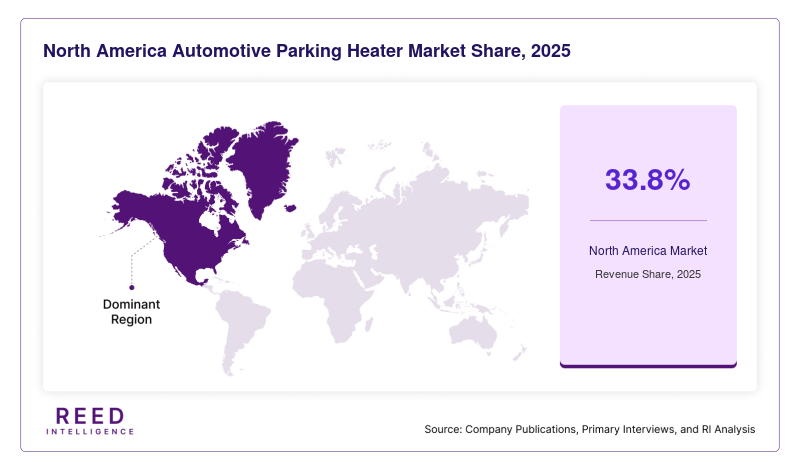
- North America dominated the market with a 33.8% share in 2025.
- Asia Pacific is expected to grow at the fastest CAGR of 10.8% during 2026–2034.
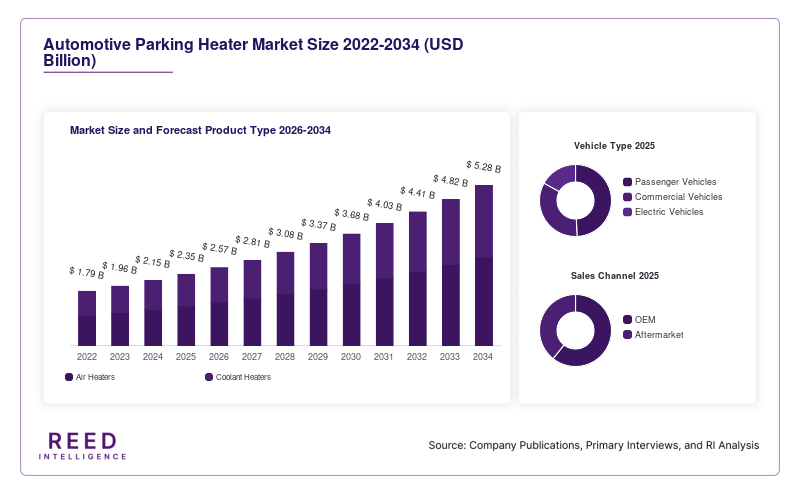
- By product type, air heaters accounted for the largest share of 42.6%.
- while coolant heaters are projected to grow at a CAGR of 10.5%.
- By vehicle type, passenger vehicles led with a 58.3% share, whereas electric vehicles are expected to expand at a CAGR of 11.6%.
- Germany remained the dominant country, with market values of USD 310 million in 2024 and USD 340 million in 2025.
Market Trends
Increasing Integration with Electric Vehicles
The transition toward electric mobility is shaping the Automotive Parking Heater Market significantly. Electric vehicles do not generate waste heat like internal combustion engine vehicles, creating a strong need for efficient cabin heating solutions. Parking heaters designed for EVs are becoming more compact, energy-efficient, and integrated with battery management systems to ensure optimal energy utilization. Manufacturers are focusing on developing smart heating systems that can be controlled remotely through mobile applications, allowing users to pre-condition their vehicles.
Additionally, the rise of connected car technologies is enabling seamless integration of parking heaters with vehicle infotainment systems. This enhances user convenience and supports personalized temperature settings. The growing penetration of EVs in Europe and Asia Pacific is expected to sustain this trend, with OEMs increasingly incorporating parking heaters as standard or optional features in premium and mid-range electric vehicles.
Advancements in Energy-Efficient Heating Technologies
Technological innovation is a defining trend in the market, particularly in improving the energy efficiency of parking heaters. Modern systems are designed to deliver faster heating with lower fuel or power consumption. Manufacturers are investing in advanced combustion technologies and improved insulation materials to enhance system performance while minimizing emissions.
Hybrid heating systems that combine electric and fuel-based technologies are also gaining traction, especially in commercial vehicles operating in extreme climates. These systems offer flexibility and improved operational efficiency. Furthermore, the adoption of eco-friendly fuels and the development of low-emission burners are aligning with global sustainability goals. As energy efficiency becomes a key purchasing criterion, these advancements are expected to drive long-term market growth.
Market Drivers
Rising Demand for Vehicle Comfort and Convenience
Consumer expectations regarding vehicle comfort are increasing steadily, particularly in regions with harsh winters. Automotive parking heaters play a critical role in enhancing passenger comfort by ensuring a warm cabin before the journey begins. This feature is becoming a standard requirement in premium vehicles and is gradually penetrating mid-range segments as well.
The growing awareness of the benefits of parking heaters, such as reduced engine wear and improved fuel efficiency, is also contributing to their adoption. Fleet operators, especially in logistics and transportation sectors, are increasingly installing parking heaters to improve driver comfort during long-haul operations. This trend is particularly evident in North America and Europe, where long-distance trucking is prevalent. As comfort features become a key differentiator in the automotive industry, the demand for parking heaters is expected to rise significantly.
Stringent Emission Regulations and Fuel Efficiency Standards
Governments worldwide are implementing stringent emission norms to reduce environmental impact, which is encouraging the adoption of auxiliary heating systems. Parking heaters help reduce the need for engine idling, thereby lowering fuel consumption and emissions. This makes them an effective solution for meeting regulatory requirements.
In addition, rising fuel prices are prompting both individual consumers and fleet operators to adopt technologies that enhance fuel efficiency. Parking heaters contribute to this by minimizing cold starts and optimizing engine performance. Regulatory incentives and subsidies for energy-efficient automotive technologies are further supporting market growth. As environmental concerns continue to shape automotive policies, the role of parking heaters in achieving compliance will become increasingly important.
Market Restraints
High Initial Cost and Installation Complexity
One of the primary challenges limiting the growth of the Automotive Parking Heater Market is the high initial cost associated with these systems. Advanced parking heaters, particularly those integrated with smart features and designed for electric vehicles, involve significant upfront investment. This can deter cost-sensitive consumers, especially in emerging markets where price remains a critical factor in purchasing decisions.
In addition to the cost of the unit itself, installation can be complex and may require professional expertise, further increasing overall expenses. Retrofitting parking heaters in existing vehicles can be particularly challenging, as it may involve modifications to the vehicle’s electrical and fuel systems. This complexity limits aftermarket adoption, which is otherwise a key growth avenue. For example, small fleet operators may hesitate to invest in such systems due to budget constraints, despite the long-term benefits. Addressing these cost and installation barriers will be essential for broader market penetration.
Market Opportunities
Expansion in Emerging Markets
Emerging economies in Asia Pacific, Latin America, and parts of Eastern Europe present significant growth opportunities for the Automotive Parking Heater Market. Increasing vehicle ownership, improving living standards, and growing awareness of vehicle comfort features are driving demand in these regions. As disposable incomes rise, consumers are becoming more willing to invest in advanced automotive technologies.
Additionally, the expansion of automotive manufacturing facilities in these regions is encouraging OEMs to incorporate parking heaters into their product offerings. Governments are also focusing on reducing emissions and improving fuel efficiency, which aligns with the benefits of parking heaters. Market players can capitalize on these opportunities by offering cost-effective solutions tailored to local market needs and establishing strong distribution networks.
Growth of Commercial Vehicle and Fleet Segment
The commercial vehicle segment offers substantial growth potential for parking heater manufacturers. Long-haul trucks, buses, and other commercial vehicles often operate in extreme weather conditions, making heating systems essential for driver comfort and operational efficiency. Parking heaters enable drivers to rest comfortably without keeping the engine running, reducing fuel consumption and emissions.
Fleet operators are increasingly recognizing the economic benefits of installing parking heaters, including lower fuel costs and reduced engine maintenance. The growing logistics and transportation industry, driven by e-commerce and global trade, is further boosting demand. Additionally, regulatory pressures to reduce emissions in the commercial vehicle sector are encouraging the adoption of energy-efficient technologies. As fleet modernization initiatives continue, the demand for parking heaters is expected to increase significantly
Segmental Analysis
By Product Type
Air heaters emerged as the dominant subsegment, accounting for 42.6% of the market share in 2024. These systems are widely used due to their ability to heat the cabin quickly and efficiently. Air heaters are particularly popular in commercial vehicles, where rapid heating is essential for driver comfort during long journeys. Their relatively simple design and lower cost compared to coolant heaters make them an attractive option for both OEMs and aftermarket installations.
The demand for air heaters is also supported by their ease of installation and maintenance. They can be integrated into a wide range of vehicle types without significant modifications. Additionally, advancements in air heater technology, such as improved combustion efficiency and reduced noise levels, are enhancing their appeal. As a result, air heaters are expected to maintain their dominant position in the market.
Coolant heaters are projected to be the fastest-growing subsegment, with a CAGR of 10.5% during the forecast period. These systems heat the engine coolant, which in turn warms the engine and cabin, offering improved overall performance. The growing adoption of electric and hybrid vehicles is a key factor driving this segment’s growth, as coolant heaters are more compatible with these vehicle types.
Another important growth factor is the increasing focus on reducing engine wear and improving fuel efficiency. Coolant heaters enable smoother engine starts, which can extend engine life and reduce maintenance costs. As consumers and fleet operators become more aware of these benefits, the demand for coolant heaters is expected to increase significantly.
By Vehicle Type
Passenger vehicles dominated the market with a 58.3% share in 2024. The growing demand for comfort and convenience features in this segment is a major driver of market growth. Parking heaters are increasingly being offered as standard or optional features in premium and mid-range passenger vehicles, particularly in regions with cold climates.
The rising adoption of connected car technologies is also contributing to the growth of this segment. Consumers can control parking heaters remotely באמצעות smartphone applications, enhancing convenience. Additionally, the increasing popularity of electric passenger vehicles is creating new opportunities for advanced heating systems. As automakers continue to focus on improving the overall driving experience, the demand for parking heaters in passenger vehicles is expected to remain strong.
Electric vehicles are expected to be the fastest-growing subsegment, with a CAGR of 11.6% during the forecast period. The lack of waste heat in EVs necessitates the use of efficient heating systems, making parking heaters an essential component. Manufacturers are developing specialized heating solutions for EVs that optimize energy consumption and extend battery life.
The rapid growth of the EV market, driven by government incentives and environmental concerns, is a key factor supporting this segment. Additionally, advancements in battery technology and charging infrastructure are making EVs more accessible to consumers. As the adoption of electric vehicles continues to accelerate, the demand for parking heaters tailored to this segment is expected to grow significantly.
By Sales Channel
OEM installations accounted for the largest share of 64.1% in 2024. Automakers are increasingly integrating parking heaters into their vehicles during the manufacturing process, particularly in premium models. This ensures seamless integration and optimal performance, making OEM installations the preferred choice for many consumers.
The growing emphasis on vehicle customization and advanced features is also driving OEM adoption. Manufacturers are offering parking heaters as part of optional packages, allowing customers to choose features that meet their specific needs. Additionally, OEM installations often come with warranties and support services, enhancing consumer confidence and contributing to market growth.
The aftermarket segment is expected to grow at the fastest CAGR of 9.8% during the forecast period. This growth is driven by the increasing demand for retrofitting parking heaters in existing vehicles. Consumers and fleet operators are recognizing the benefits of these systems and are willing to invest in aftermarket solutions.
Technological advancements are making aftermarket installations more accessible and cost-effective. Manufacturers are developing modular systems that can be easily installed in a wide range of vehicles. As awareness of the benefits of parking heaters continues to increase, the aftermarket segment is expected to witness substantial growth.
Regional Analysis
North America
North America held a significant share of 33.8% in 2025 and is expected to grow at a CAGR of 8.9% during the forecast period. The region’s growth is driven by the high demand for comfort features in vehicles and the widespread use of commercial trucks in cold regions. The presence of established automotive manufacturers and a strong aftermarket industry further supports market expansion.
The United States dominates the regional market due to its extensive trucking industry and harsh winter conditions in several states. A unique growth factor is the increasing adoption of idle reduction technologies in commercial fleets, driven by regulatory requirements and fuel cost considerations. This is encouraging fleet operators to invest in parking heaters as an alternative to engine idling.
Europe
Europe accounted for a 29.5% share in 2025 and is projected to grow at a CAGR of 9.1%. The region’s strong focus on sustainability and emission reduction is a key driver for the adoption of parking heaters. Stringent environmental regulations and the growing popularity of electric vehicles are further contributing to market growth.
Germany leads the European market, supported by its robust automotive industry and high demand for premium vehicles. A unique growth factor is the widespread adoption of parking heaters in factory-installed configurations, particularly in luxury vehicles. This trend is reinforced by consumer preference for advanced comfort and convenience features.
Asia Pacific
Asia Pacific is expected to witness the fastest growth, with a CAGR of 10.8% during the forecast period. The region’s expanding automotive industry, rising disposable incomes, and increasing awareness of vehicle comfort features are driving market growth. Rapid urbanization and infrastructure development are also contributing to higher vehicle sales.
China dominates the Asia Pacific market due to its large automotive production base and growing adoption of electric vehicles. A unique growth factor is the government’s support for energy-efficient technologies, including incentives for EV adoption. This is encouraging manufacturers to integrate advanced heating systems into their vehicles.
Middle East & Africa
The Middle East & Africa region held a smaller share of 6.7% in 2025 but is expected to grow at a CAGR of 7.8%. The market is driven by the increasing adoption of commercial vehicles and the need for temperature control systems in specific regions with colder climates.
South Africa leads the market in this region, supported by its growing automotive sector. A unique growth factor is the increasing demand for aftermarket installations in commercial vehicles, particularly in logistics and mining industries, where operational efficiency and driver comfort are critical.
Latin America
Latin America accounted for 7.4% of the market in 2025 and is projected to grow at a CAGR of 8.2%. The region’s growth is supported by rising vehicle ownership and increasing demand for advanced automotive features. Economic development and improving infrastructure are also contributing to market expansion.
Brazil dominates the regional market due to its large automotive industry and growing commercial vehicle segment. A unique growth factor is the increasing adoption of cost-effective heating solutions in fleet operations, driven by the need to reduce fuel consumption and maintenance costs.
Competitive Landscape
The Automotive Parking Heater Market is moderately competitive, with several established players focusing on product innovation and strategic partnerships. Key companies are investing in research and development to enhance the efficiency and performance of their heating systems. The market is characterized by the presence of both global and regional players, each aiming to strengthen their market position through technological advancements and expansion strategies.
A leading player in the market is Webasto Group, known for its extensive product portfolio and strong global presence. The company has recently introduced advanced parking heaters designed specifically for electric vehicles, focusing on energy efficiency and compact design. Other major players are also expanding their offerings to cater to the growing demand for EV-compatible heating systems.
Strategic collaborations between automotive manufacturers and heating system providers are becoming increasingly common. These partnerships enable the integration of advanced heating technologies into new vehicle models. Additionally, companies are focusing on expanding their distribution networks and enhancing their aftermarket services to capture a larger share of the market.
Key Players List
- Webasto Group
- Eberspächer Group
- Valeo SA
- BorgWarner Inc.
- MAHLE GmbH
- Denso Corporation
- Delphi Technologies
- Sanden Holdings Corporation
- Hella GmbH & Co. KGaA
- Hanon Systems
- Proheat Inc.
- Espar Inc.
- Victor Industries
- Mikuni Corporation
- Butler Technik
Recent Developments
- Webasto Group launched a new range of high-efficiency parking heaters designed for electric vehicles, focusing on reduced energy consumption.
- Eberspächer Group expanded its production facility in Europe to meet the growing demand for advanced heating systems.
- Valeo SA introduced a smart parking heater system integrated with connected vehicle platforms, enabling remote operation via mobile applications.
Automotive Parking Heater Market Segments
Product Type
- Air Heaters
- Coolant Heaters
Vehicle Type
- Passenger Vehicles
- Commercial Vehicles
- Electric Vehicles
Sales Channel
- OEM
- Aftermarket
By Region
- North America
- Europe
- APAC
- Middle East and Africa
- LATAM