Automotive Tire Socks Market Size, Share & Demand Report By Type (Reusable Tire Socks, Disposable Tire Socks), By Material (Polyester, Blended Fabrics, Others), By Vehicle Type (Passenger Cars, Light Commercial Vehicles, Heavy Commercial Vehicles), By Distribution Channel (Online Retail, Offline Retail), By Region & Segment Forecasts, 2025–2034
USD 3950
Market Overview
The global Automotive Tire Socks Market size was valued at approximately USD 428 million in 2025 and is projected to reach USD 812 million by 2034, expanding at a CAGR of 7.4% during the forecast period (2025–2034). The market growth is driven by increasing demand for alternative traction solutions in winter driving conditions, particularly in regions with strict snow chain regulations and rising vehicle ownership.
A key global factor supporting the Automotive Tire Socks Market is the growing emphasis on road safety and seasonal mobility. Governments and transportation authorities across various countries are implementing stricter safety standards during winter months, encouraging the use of traction aids such as tire socks. Compared to traditional snow chains, tire socks offer ease of installation, lightweight design, and compatibility with modern vehicles, including electric and hybrid models. This has led to their increasing adoption among passenger vehicle owners.
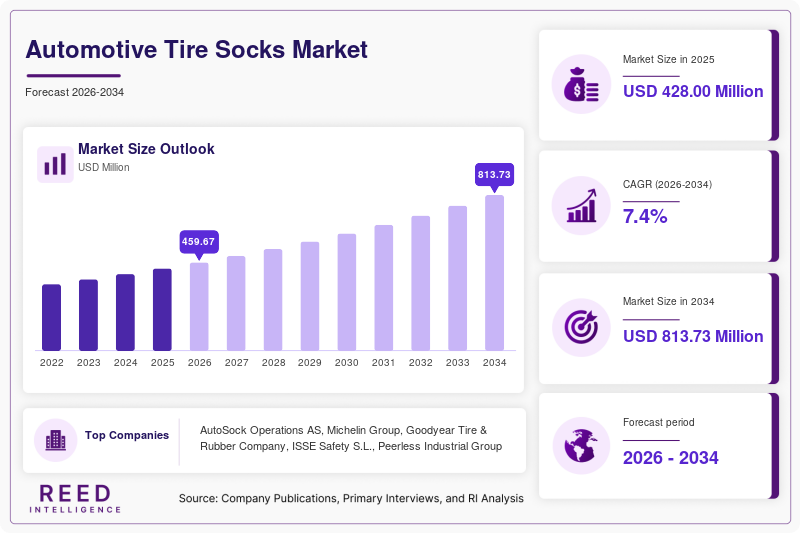
Key Highlights:
- Europe dominated the market with a 41.2% share in 2025, while Asia Pacific is projected to register the fastest CAGR of 8.3% through 2034.
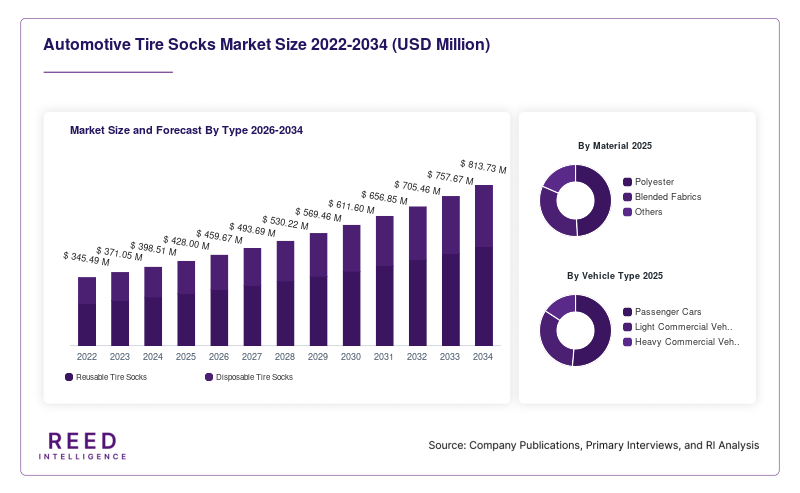
- By type, reusable tire socks accounted for the largest share (63.5%), whereas disposable tire socks are expected to grow fastest at a CAGR of 8.9%.
- By vehicle type, passenger cars held the leading share (58.7%), while light commercial vehicles are anticipated to expand at the fastest CAGR of 7.8%.
- Germany remained the dominant country with a market value of USD 96 million in 2025, expected to reach USD 102 million in 2026.
Market Trends
Increasing Adoption of Lightweight Traction Solutions
The Automotive Tire Socks Market is witnessing a shift toward lightweight and user-friendly traction devices. Consumers are increasingly preferring tire socks over traditional metal chains due to their ease of installation, reduced vehicle damage risk, and improved ride comfort. This trend is particularly evident among urban drivers and electric vehicle owners, where convenience and vehicle compatibility are critical. As a result, manufacturers are focusing on developing compact and easy-to-store products that cater to a wide range of tire sizes.
Technological Advancements in Textile Materials
Innovations in high-performance fabrics are shaping the Automotive Tire Socks Market. Advanced materials such as high-strength polyester blends and engineered fibers are being used to enhance durability, grip, and resistance to wear. These improvements are enabling tire socks to perform effectively under extreme snow and ice conditions. Additionally, the integration of multi-layer fabric structures is improving traction efficiency and extending product lifespan, making them a more viable alternative to traditional traction devices.
Market Drivers
Rising Demand for Winter Road Safety Solutions
The increasing incidence of road accidents during winter seasons has led to a growing demand for effective traction solutions. Automotive tire socks provide enhanced grip on snow and ice, improving vehicle stability and control. Governments and safety organizations are actively promoting the use of such devices, contributing to the growth of the Automotive Tire Socks Market.
Growing Adoption of Electric and Passenger Vehicles
The rising adoption of electric vehicles and passenger cars is another significant driver of market growth. Tire socks are compatible with modern vehicle systems, including advanced braking and traction control technologies. Their lightweight and non-metallic design makes them suitable for vehicles with limited wheel clearance, further boosting their demand in the Automotive Tire Socks Market.
Market Restraint
Limited Durability Compared to Traditional Snow Chains
One of the major restraints in the Automotive Tire Socks Market is the relatively lower durability of tire socks compared to conventional snow chains. Tire socks are primarily designed for temporary use and may wear out quickly when used on rough or dry surfaces.
This limitation can discourage long-term usage, especially among commercial vehicle operators who require more robust traction solutions. Additionally, frequent replacement of tire socks can increase overall costs for users, impacting their adoption in price-sensitive markets. Despite ongoing improvements in material quality, durability remains a key challenge for manufacturers.
Market Opportunities
Expansion in Emerging Snow-Prone Regions
Emerging markets in Asia Pacific and Eastern Europe present significant opportunities for the Automotive Tire Socks Market. Increasing vehicle ownership and growing awareness of winter safety measures are driving demand in these regions. As infrastructure development improves and climatic variations lead to more frequent snowfall, the adoption of tire socks is expected to rise.
Development of Eco-Friendly and Recyclable Materials
The development of sustainable tire sock materials offers a promising growth opportunity. Manufacturers are focusing on eco-friendly textiles that are recyclable and biodegradable. These innovations align with global sustainability goals and appeal to environmentally conscious consumers. As regulations on automotive products become stricter, eco-friendly tire socks are likely to gain traction in the market.
Segmental Analysis
By Type
Reusable tire socks dominated the Automotive Tire Socks Market in 2025, accounting for 63.5% of the total share. Their cost-effectiveness and longer usability compared to disposable options have supported their widespread adoption. Consumers prefer reusable tire socks for seasonal use, particularly in regions with regular snowfall.
Disposable tire socks are expected to grow at the fastest CAGR of 8.9% during the forecast period. These products are gaining popularity due to their convenience and lower upfront cost. They are particularly suitable for occasional users and emergency situations, driving their growth in the market.
By Material
Polyester-based tire socks accounted for the largest share of 52.8% in 2025 due to their strength, flexibility, and moisture absorption properties. These materials provide effective traction and durability, making them a preferred choice among manufacturers.
Blended fabrics are projected to grow at a CAGR of 8.1%, driven by their enhanced performance characteristics. The combination of different fibers improves grip and wear resistance, making them suitable for advanced applications.
By Vehicle Type
Passenger cars held the dominant share of 58.7% in 2025, driven by the large global passenger vehicle fleet and increasing consumer awareness of winter safety solutions. Tire socks are widely used in this segment due to their ease of installation and compatibility.
Light commercial vehicles are expected to grow at the fastest CAGR of 7.8%. The increasing use of such vehicles for logistics and transportation in snow-prone regions is driving demand for reliable traction solutions.
By Distribution Channel
Offline retail accounted for the largest share of 61.2% in 2025, as consumers prefer purchasing automotive accessories from physical stores where they can receive product guidance.
Online retail is projected to grow at a CAGR of 8.5%, driven by the increasing penetration of e-commerce platforms. The convenience of online shopping and availability of a wide range of products are supporting segment growth.
Regional Analysis
North America
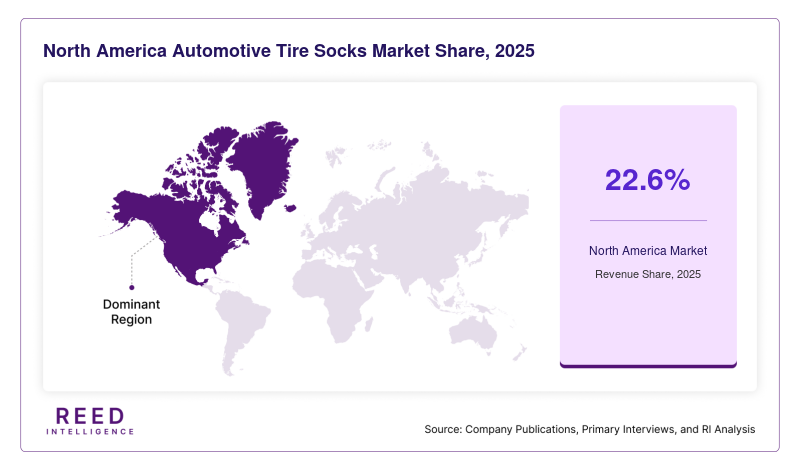
North America accounted for approximately 22.6% of the Automotive Tire Socks Market share in 2025 and is expected to grow at a CAGR of 6.7% during the forecast period. The region’s growth will be supported by increasing awareness of winter driving safety and the presence of established automotive accessory markets.
The United States dominated the regional market due to its large vehicle fleet and seasonal demand for traction devices. The country’s varied climate conditions and consumer preference for convenient solutions have contributed to the adoption of tire socks.
Europe
Europe held the largest market share of 41.2% in 2025 and is projected to expand at a CAGR of 7.1% through 2034. Strict winter driving regulations and widespread use of traction aids have supported market growth in the region.
Germany emerged as the dominant country, driven by its strong automotive industry and regulatory requirements for winter equipment. The demand for high-quality and compliant traction solutions has boosted the Automotive Tire Socks Market in the country.
Asia Pacific
Asia Pacific accounted for 24.3% of the market share in 2025 and is expected to register the fastest CAGR of 8.3% during the forecast period. Rapid urbanization and increasing vehicle ownership are key factors driving growth in the region.
China led the regional market due to its expanding automotive sector and growing awareness of winter safety products. The increasing adoption of advanced automotive accessories is supporting market expansion.
Middle East & Africa
The Middle East & Africa held a market share of 5.4% in 2025 and is anticipated to grow at a CAGR of 6.1% through 2034. While snow conditions are limited, certain regions experience seasonal demand for traction devices.
Turkey dominated the regional market, supported by its geographic location and winter climate in certain areas. The country’s growing automotive sector has contributed to the adoption of tire socks.
Latin America
Latin America accounted for 6.5% of the Automotive Tire Socks Market share in 2025 and is expected to grow at a CAGR of 7.5% during the forecast period. Increasing awareness of road safety and climatic changes are influencing market growth.
Chile emerged as the dominant country, driven by its mountainous terrain and seasonal snowfall. The need for reliable traction solutions in such conditions has supported the demand for tire socks.
Competitive Landscape
The Automotive Tire Socks Market is characterized by the presence of several regional and global players competing on product innovation, quality, and pricing. Companies are focusing on developing durable and high-performance products to meet evolving consumer needs.
AutoSock Operations AS is a key market leader, known for its advanced textile-based traction solutions. The company has recently introduced improved tire sock designs with enhanced durability and compatibility with a wider range of vehicles.
Other players are investing in research and development to improve material performance and expand their product portfolios. Strategic partnerships and geographic expansion are also common strategies adopted by market participants to strengthen their position in the Automotive Tire Socks Market.
Key Players List
- AutoSock Operations AS
- Michelin Group
- Goodyear Tire & Rubber Company
- ISSE Safety S.L.
- Peerless Industrial Group
- Rud Chain Inc.
- Thule Group
- Polaire (Joubert Group)
- Weissenfels S.p.A.
- König (Thule Group)
- Security Chain Company
- Michelin Lifestyle Ltd.
- Hankook Tire & Technology
- Bridgestone Corporation
- Continental AG
Recent Developments
- AutoSock Operations AS launched a next-generation tire sock with improved wear resistance and traction performance.
- Michelin Group expanded its winter mobility product portfolio, including textile-based traction solutions.
- ISSE Safety S.L. introduced new eco-friendly tire socks made from recyclable materials.
- Thule Group enhanced its distribution network across Europe to strengthen product availability.
- Goodyear Tire & Rubber Company invested in advanced textile research for traction solutions.
Automotive Tire Socks Market Segments
By Type
- Reusable Tire Socks
- Disposable Tire Socks
By Material
- Polyester
- Blended Fabrics
- Others
By Vehicle Type
- Passenger Cars
- Light Commercial Vehicles
- Heavy Commercial Vehicles
By Distribution Channel
- Online Retail
- Offline Retail
By Region
- North America
- Europe
- APAC
- Middle East and Africa
- LATAM