Autonomic Dysreflexia Treatment Market Size, Share & Demand Report By Treatment Type (Antihypertensive Drugs, Topical Vasodilators, Local Anesthetics, Bladder and Bowel Management Therapies, Combination Therapies), By Route of Administration (Oral, Injectable, Topical, Intravenous), By End Use (Hospitals and Trauma Centers, Rehabilitation Centers, Specialty Clinics, Homecare Settings, Ambulatory Care Centers), By Region & Segment Forecasts, 2026–2034
USD 3950
Market Overview
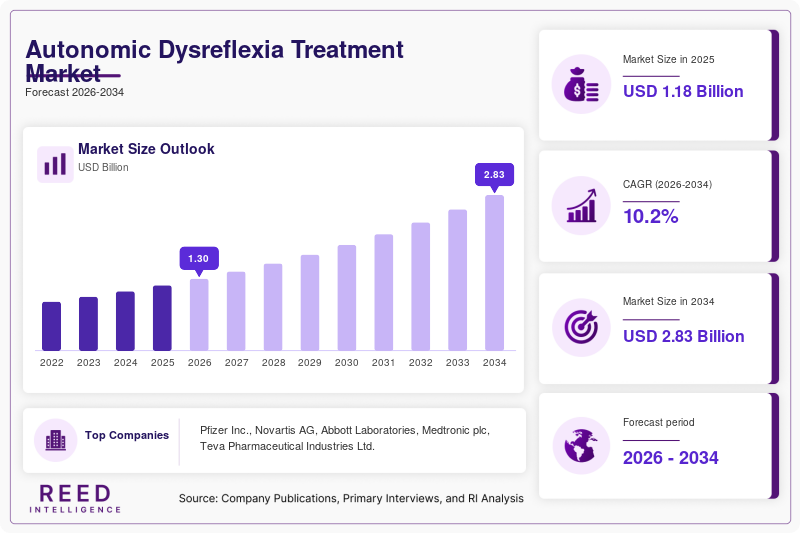
The global Autonomic Dysreflexia Treatment Market size was valued at USD 1.18 billion in 2026 and is projected to reach USD 2.56 billion by 2034, expanding at a CAGR of 10.2% during the forecast period from 2026 to 2034. The market continues to grow as healthcare systems improve the diagnosis and management of neurological complications associated with spinal cord injuries. Autonomic dysreflexia is a life-threatening condition that commonly affects individuals with spinal cord injuries above the T6 level, leading to sudden increases in blood pressure and severe autonomic responses. The growing global burden of spinal cord injuries, combined with rising awareness among physicians and rehabilitation specialists, has strengthened the demand for effective therapeutic interventions and long-term monitoring solutions.
The increasing adoption of specialized rehabilitation centers and neurological care facilities has also supported market expansion. Hospitals are integrating advanced blood pressure monitoring systems, emergency management protocols, and targeted pharmaceutical therapies to reduce the risks associated with autonomic dysreflexia episodes. In addition, pharmaceutical companies are investing in improved formulations of antihypertensive medications and fast-acting therapies that can provide rapid symptom control. Growth in telehealth platforms and remote neurological monitoring systems is further supporting patient management, especially in developing healthcare markets.
Key Highlights
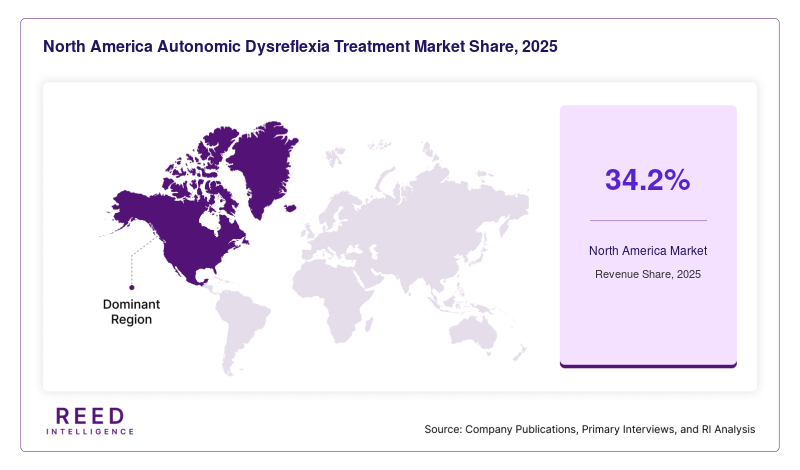
- North America dominated the market with a 34.2% share in 2025.
- Asia Pacific is expected to grow at the fastest CAGR of 11.2% during 2026–2034.
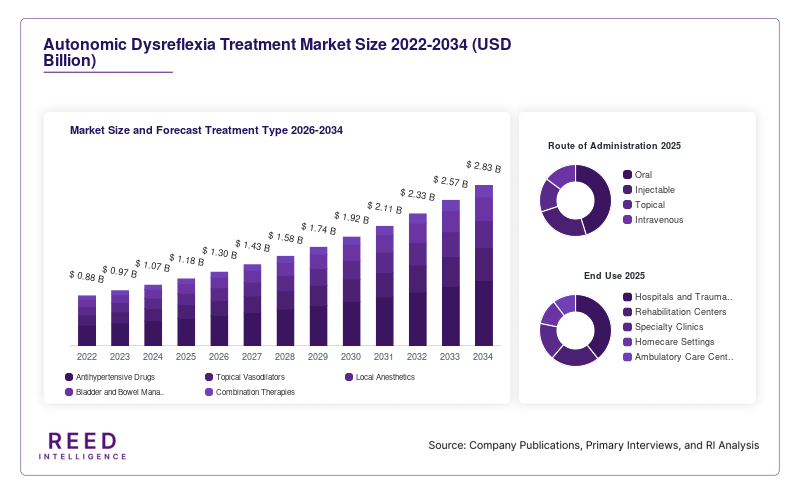
- By treatment type, antihypertensive drugs accounted for the largest share of 39.4%.
- while topical vasodilators are projected to grow at a CAGR of 11.7%.
- By route of administration, oral therapies led with a 46.1% share.
- whereas injectable therapies are expected to expand at a CAGR of 10.9%.
By end use, hospitals and trauma centers held a 48.6% share, while rehabilitation centers are projected to grow at a CAGR of 11.4%. - The United States remained the dominant country, with market values of USD 402 million in 2024 and USD 438 million in 2025.
Market Trends
Expansion of Personalized Neurological Care Programs
Healthcare providers are increasingly adopting personalized neurological care models for patients with spinal cord injuries and autonomic dysfunction disorders. Treatment plans are now designed around the severity of injury, patient age, blood pressure variability, and associated complications. This trend has increased the use of individualized antihypertensive therapy combinations and targeted rehabilitation support. Hospitals and rehabilitation centers are implementing patient-specific monitoring systems that can identify autonomic dysreflexia triggers before severe episodes occur. The use of wearable blood pressure monitoring devices and connected healthcare applications is also expanding among long-term spinal cord injury patients. These technologies help clinicians monitor symptoms remotely while reducing emergency hospital admissions. Personalized treatment approaches are gaining traction because they improve patient outcomes, reduce complications, and support preventive neurological care strategies.
Rising Integration of Digital Monitoring Technologies
Digital healthcare technologies are becoming an important part of autonomic dysreflexia treatment management. Healthcare institutions are integrating remote monitoring tools, artificial intelligence-based risk assessment systems, and cloud-connected neurological databases to improve patient safety. Real-time monitoring solutions allow physicians to detect blood pressure spikes, identify bladder or bowel-related triggers, and initiate timely intervention. The trend is particularly visible in advanced rehabilitation centers across North America and Europe, where digital health investments continue to rise. Mobile applications designed for spinal cord injury patients are also helping improve medication adherence and symptom tracking. In emerging economies, telemedicine adoption is expanding access to neurological consultations in rural and underserved regions. The growing acceptance of connected healthcare ecosystems is expected to support treatment efficiency and encourage long-term market development.
Market Drivers
Increasing Incidence of Spinal Cord Injuries Worldwide
The rising prevalence of spinal cord injuries remains one of the most significant growth drivers for the Autonomic Dysreflexia Treatment Market. Traffic accidents, sports injuries, workplace incidents, and age-related falls continue to increase the global patient pool requiring neurological rehabilitation and long-term autonomic care. A considerable percentage of individuals with high-level spinal cord injuries develop autonomic dysreflexia episodes, creating sustained demand for antihypertensive drugs, emergency intervention therapies, and continuous monitoring systems. Healthcare providers are strengthening trauma response infrastructure and rehabilitation capabilities to manage growing patient volumes. In addition, increasing awareness campaigns by neurological associations and rehabilitation organizations are improving early diagnosis rates. Better survival outcomes after traumatic injuries are also expanding the long-term treatment population, supporting continued demand for advanced therapeutic management solutions.
Advancements in Rehabilitation and Emergency Care Infrastructure
The expansion of neurological rehabilitation facilities and emergency care infrastructure is contributing significantly to market growth. Hospitals and specialty care centers are investing in integrated spinal injury treatment programs that include autonomic dysreflexia management protocols. Modern rehabilitation centers are increasingly equipped with advanced monitoring technologies, multidisciplinary neurological teams, and rapid-response medication systems. These developments are improving treatment efficiency and patient recovery outcomes. Governments in several countries are allocating larger healthcare budgets toward trauma care modernization and rehabilitation accessibility. In addition, medical training programs are enhancing physician awareness regarding the identification and management of autonomic dysreflexia episodes. Improved emergency response standards and increased access to rehabilitation services are supporting earlier intervention, reducing complications, and strengthening demand for specialized treatment products across healthcare systems.
Market Restraint
Limited Awareness and Delayed Diagnosis in Developing Regions
Limited awareness regarding autonomic dysreflexia symptoms and delayed diagnosis in developing healthcare markets continue to restrain market expansion. Many patients with spinal cord injuries remain undiagnosed or receive delayed treatment because healthcare professionals in smaller medical facilities may lack specialized neurological training. In rural and underserved regions, inadequate rehabilitation infrastructure and limited access to emergency neurological care can increase complications associated with unmanaged autonomic dysreflexia episodes. Patients often experience severe blood pressure fluctuations, headaches, and cardiovascular complications before receiving appropriate intervention.
The shortage of skilled rehabilitation specialists and neurologists further limits treatment accessibility in low-income economies. In several countries, reimbursement limitations and the high cost of advanced monitoring systems also reduce patient adoption rates. Healthcare facilities with limited budgets often prioritize broader trauma care services over specialized autonomic dysfunction management. As a result, patients may depend on basic antihypertensive medications rather than integrated long-term care programs. These challenges can slow market penetration for advanced therapies and digital monitoring solutions despite rising demand for neurological rehabilitation services worldwide.
Market Opportunities
Growth Potential in Emerging Healthcare Economies
Emerging economies are creating strong growth opportunities for companies operating in the Autonomic Dysreflexia Treatment Market. Countries across Asia Pacific, Latin America, and the Middle East are increasing healthcare spending and improving trauma care infrastructure to manage rising rates of neurological injuries. Governments are also investing in rehabilitation hospitals and spinal injury treatment programs to address long-term disability challenges. The expansion of health insurance coverage and public healthcare access is improving the affordability of neurological treatments and emergency medications. Pharmaceutical manufacturers and medical device providers are entering these regions through partnerships with local hospitals and distributors. As awareness regarding spinal cord injury complications increases, demand for rapid-response therapies and blood pressure monitoring systems is expected to rise steadily. These developments provide opportunities for market participants to expand product availability and strengthen regional market presence.
Development of Advanced Combination Therapies and Monitoring Solutions
The growing focus on innovative therapeutic approaches presents another major opportunity for market expansion. Pharmaceutical companies are developing combination therapies that offer faster blood pressure stabilization and improved symptom control during autonomic dysreflexia episodes. Research initiatives are also exploring safer formulations with reduced cardiovascular side effects for long-term use. In parallel, medical technology companies are introducing smart monitoring devices capable of detecting autonomic instability in real time.
Wearable technologies integrated with artificial intelligence algorithms are expected to transform patient monitoring and preventive care management. These systems can provide early alerts for caregivers and healthcare professionals, reducing the likelihood of severe complications. In addition, home-based neurological monitoring solutions are becoming increasingly attractive due to rising telemedicine adoption and growing demand for remote patient care. Companies that combine pharmaceutical innovation with digital health integration are likely to gain competitive advantages as healthcare systems move toward preventive and connected neurological treatment models.
Segmental Analysis
By Treatment Type
Antihypertensive drugs represented the dominant subsegment within the treatment type category, accounting for 39.4% of the global market share in 2024. These therapies remain the primary treatment option for managing acute autonomic dysreflexia episodes because they provide rapid blood pressure control and help reduce cardiovascular complications. Commonly prescribed medications include nitrates, calcium channel blockers, and alpha-adrenergic blockers that are widely used across hospitals and rehabilitation centers. Healthcare providers prefer antihypertensive drugs because of their established clinical effectiveness and broad availability within emergency care systems. The increasing number of spinal cord injury patients requiring immediate intervention during autonomic episodes has strengthened demand for fast-acting antihypertensive formulations. In addition, rising physician awareness regarding early intervention strategies continues to support the dominance of this treatment segment across both developed and emerging healthcare markets.
Topical vasodilators are expected to register the fastest CAGR of 11.7% during the forecast period due to increasing demand for noninvasive and rapidly acting treatment options. These therapies are gaining attention because they provide localized blood pressure management while reducing the risk of systemic side effects associated with oral medications. Rehabilitation centers and homecare providers are increasingly adopting topical vasodilator products for patients requiring frequent symptom management. Pharmaceutical companies are also investing in improved transdermal delivery systems that enhance absorption efficiency and treatment convenience. The growing focus on patient-centered neurological care and long-term symptom management is contributing to higher adoption rates. In addition, increasing research into advanced formulations with extended-release capabilities is expected to create new commercial opportunities for topical treatment manufacturers in the coming years.
By Route of Administration
Oral therapies held the largest share within the route of administration segment, capturing 46.1% of the market in 2024. Oral medications continue to dominate because they are widely accessible, easy to administer, and suitable for both emergency and long-term management of autonomic dysreflexia symptoms. Hospitals, rehabilitation facilities, and outpatient care providers frequently prescribe oral antihypertensive drugs due to their cost-effectiveness and broad clinical acceptance. Patients managing chronic spinal cord injury complications also prefer oral therapies because they simplify treatment adherence and reduce dependence on clinical supervision. The growing availability of generic medications has further supported segment growth by improving affordability in developing healthcare systems. In addition, pharmaceutical companies are introducing improved oral formulations with faster onset times and enhanced cardiovascular safety profiles, strengthening their position within the global treatment landscape.
Injectable therapies are projected to expand at a CAGR of 10.9% during 2026–2034 due to rising demand for rapid emergency intervention in severe autonomic dysreflexia cases. These therapies are commonly used in trauma centers and intensive care settings where immediate blood pressure stabilization is required. Healthcare professionals prefer injectable medications during acute episodes because they provide faster therapeutic action compared to oral alternatives. The increasing number of advanced trauma care units and specialized neurological emergency departments is supporting demand for injectable treatment products. Pharmaceutical companies are also focusing on developing improved injectable formulations with reduced side effects and better dosing precision. In addition, growing investments in emergency care infrastructure across emerging economies are expected to increase the use of injectable autonomic dysreflexia therapies in both hospital and ambulance-based treatment settings.
By End Use
Hospitals and trauma centers accounted for the largest share of the end-use segment in 2024, representing 48.6% of the global market. These healthcare facilities remain the primary point of treatment for autonomic dysreflexia because patients often require urgent medical intervention during severe hypertensive episodes. Hospitals are equipped with advanced monitoring technologies, emergency medications, and multidisciplinary neurological teams capable of managing complex spinal cord injury complications. Increasing admissions related to traumatic injuries and neurological disorders continue to strengthen demand for autonomic dysreflexia treatment products in hospital environments. Government investments in trauma care modernization and emergency response systems are also contributing to segment growth. Furthermore, hospitals are increasingly integrating digital monitoring platforms and rehabilitation programs that improve long-term patient management, supporting continued dominance within the overall market structure.
Rehabilitation centers are anticipated to record the fastest CAGR of 11.4% over the forecast period due to growing emphasis on long-term neurological recovery and preventive care management. These facilities play a critical role in monitoring autonomic dysreflexia triggers and educating patients regarding symptom prevention strategies. Rehabilitation providers are expanding the use of personalized care plans, wearable monitoring devices, and telehealth consultations to improve patient outcomes. The increasing number of specialized spinal cord injury rehabilitation programs across Asia Pacific and Europe is also supporting segment growth. In addition, rehabilitation centers are focusing on integrated treatment approaches that combine physiotherapy, neurological assessment, and cardiovascular monitoring. The shift toward community-based and outpatient rehabilitation services is expected to create further opportunities for advanced monitoring technologies and supportive therapeutic solutions in this segment.
Regional Analysis
North America
North America accounted for 34.2% of the global Autonomic Dysreflexia Treatment Market in 2025 and is expected to maintain a stable growth trajectory with a forecast CAGR of 9.8% through 2034. The region benefits from advanced neurological rehabilitation infrastructure, high healthcare expenditure, and strong awareness regarding spinal cord injury management. Hospitals and trauma centers across the United States and Canada have established standardized protocols for diagnosing and treating autonomic dysreflexia, contributing to higher treatment adoption rates. The presence of major pharmaceutical manufacturers and specialized rehabilitation facilities also supports consistent market expansion.
The United States remains the dominant country within the regional market due to its large spinal cord injury patient population and strong rehabilitation care network. The country continues to witness increasing investments in emergency neurological care and digital health integration. One unique growth factor supporting the U.S. market is the widespread adoption of remote patient monitoring technologies among long-term spinal cord injury patients. Healthcare providers are increasingly using wearable monitoring systems and telemedicine platforms to improve symptom management and reduce emergency hospital admissions.
Europe
Europe held a significant share of the Autonomic Dysreflexia Treatment Market in 2025 and is projected to expand at a CAGR of 9.4% during the forecast period. The regional market is supported by well-established public healthcare systems, growing neurological rehabilitation programs, and increasing government funding for disability management services. Countries across Western Europe continue to strengthen spinal cord injury treatment infrastructure through investments in rehabilitation centers and emergency response systems. Rising awareness regarding autonomic dysfunction complications among healthcare professionals is also improving diagnosis rates and treatment accessibility.
Germany represented the leading country within the European market due to its advanced rehabilitation hospitals and strong medical technology sector. The country has expanded access to specialized neurological care programs designed for long-term spinal cord injury management. A unique growth factor in Germany is the integration of multidisciplinary rehabilitation teams that combine neurology, physiotherapy, cardiology, and psychological care. This collaborative treatment model is improving patient outcomes while supporting demand for advanced autonomic dysreflexia therapies and monitoring devices.
Asia Pacific
Asia Pacific is expected to register the fastest CAGR of 11.2% during 2026–2034 as healthcare infrastructure development accelerates across major economies. The region is experiencing rising cases of traumatic injuries linked to industrial accidents, traffic incidents, and urbanization-related health risks. Governments in countries such as China, India, Japan, and South Korea are increasing investments in trauma care modernization and neurological rehabilitation services. Expanding healthcare insurance coverage and improving access to specialized treatment facilities are also supporting regional market growth.
China dominated the Asia Pacific market due to its large patient population and rapidly expanding hospital network. The country has increased funding for neurological rehabilitation and advanced emergency care systems in urban healthcare centers. A unique growth factor driving the Chinese market is the rapid adoption of smart healthcare technologies supported by government digital health initiatives. Hospitals are increasingly implementing connected monitoring systems and telehealth platforms to improve spinal cord injury management and enhance access to specialized neurological consultations.
Middle East & Africa
The Middle East & Africa market accounted for a smaller but steadily growing share of the global industry in 2025 and is expected to expand at a CAGR of 8.6% through 2034. Growth in the region is supported by improving healthcare infrastructure, rising investments in trauma care services, and increasing awareness regarding neurological rehabilitation. Countries within the Gulf Cooperation Council are strengthening hospital capabilities and expanding access to specialized rehabilitation centers. International healthcare collaborations and private sector investments are also contributing to the development of modern neurological treatment facilities.
Saudi Arabia emerged as the leading country within the regional market due to increasing healthcare modernization initiatives and higher spending on rehabilitation infrastructure. The government is investing in advanced medical cities and specialized neurological care programs as part of long-term healthcare transformation plans. One unique growth factor supporting the Saudi Arabian market is the expansion of public-private partnerships focused on rehabilitation and digital healthcare integration. These initiatives are helping improve treatment accessibility for patients with spinal cord injuries and autonomic dysfunction disorders.
Latin America
Latin America demonstrated moderate growth potential in the Autonomic Dysreflexia Treatment Market in 2025 and is projected to grow at a CAGR of 8.9% over the forecast period. Increasing road accident rates, rising awareness regarding neurological rehabilitation, and gradual improvements in healthcare infrastructure are supporting market development. Countries across the region are expanding emergency medical services and rehabilitation capabilities to manage long-term disability conditions. The growing presence of international pharmaceutical companies and medical device suppliers is also improving access to autonomic dysreflexia treatment products.
Brazil remained the dominant country in the Latin American market due to its large healthcare network and increasing focus on neurological rehabilitation services. Public hospitals and private healthcare providers are investing in specialized spinal cord injury management programs to address rising patient demand. A unique growth factor in Brazil is the expansion of community-based rehabilitation initiatives that aim to improve long-term patient monitoring and homecare support. These programs are encouraging broader adoption of treatment solutions and increasing awareness regarding autonomic dysreflexia management.
Competitive Landscape
The Autonomic Dysreflexia Treatment Market remains moderately consolidated, with major pharmaceutical companies and neurological care providers competing through product innovation, rehabilitation partnerships, and geographic expansion strategies. Companies are focusing on developing fast-acting antihypertensive therapies, advanced monitoring systems, and integrated neurological care solutions to strengthen market positioning. Strategic collaborations with rehabilitation centers and trauma hospitals are becoming increasingly common as providers seek to improve patient access to specialized treatment options.
Pfizer Inc. remains one of the leading participants in the market due to its strong cardiovascular and neurological treatment portfolio, broad global distribution network, and extensive research capabilities. The company continues to invest in advanced hypertension management therapies that can support emergency autonomic dysreflexia care. Medtronic, Novartis AG, Abbott Laboratories, and Teva Pharmaceutical Industries are also expanding their neurological and monitoring product offerings.
Key Players
- Pfizer Inc.
- Novartis AG
- Abbott Laboratories
- Medtronic plc
- Teva Pharmaceutical Industries Ltd.
- Johnson & Johnson
- Bausch Health Companies Inc.
- Sun Pharmaceutical Industries Ltd.
- Hikma Pharmaceuticals PLC
- Viatris Inc.
- Amneal Pharmaceuticals Inc.
- Aurobindo Pharma Limited
- Lupin Limited
- Sanofi
Recent Developments
- In February 2026, Medtronic plc introduced an upgraded remote monitoring platform for spinal cord injury patients that includes automated blood pressure alert functionality for autonomic dysreflexia management.
- In September 2025, Pfizer Inc. expanded its neurological rehabilitation research partnership with multiple trauma care hospitals in North America to improve emergency hypertension treatment protocols.
- In June 2025, Abbott Laboratories launched a wearable cardiovascular monitoring device designed to support continuous blood pressure tracking among patients with chronic neurological disorders.
Autonomic Dysreflexia Treatment Market Segments
Treatment Type
- Antihypertensive Drugs
- Topical Vasodilators
- Local Anesthetics
- Bladder and Bowel Management Therapies
- Combination Therapies
Route of Administration
- Oral
- Injectable
- Topical
- Intravenous
End Use
- Hospitals and Trauma Centers
- Rehabilitation Centers
- Specialty Clinics
- Homecare Settings
- Ambulatory Care Centers
By Region
- North America
- Europe
- APAC
- Middle East and Africa
- LATAM