Autoradiography Film Market Size, Share & Demand Report By Product Type (X-ray Films, Direct Exposure Films, Phosphor Imaging Plates), By Application (Molecular Biology, Drug Discovery, Clinical Diagnostics, Environmental Testing), By End-Use (Academic & Research Institutes, Pharmaceutical & Biotechnology Companies, Hospitals & Diagnostic Laboratories) By Region & Segment Forecasts, 2026–2034
USD 3950
Market Overview)
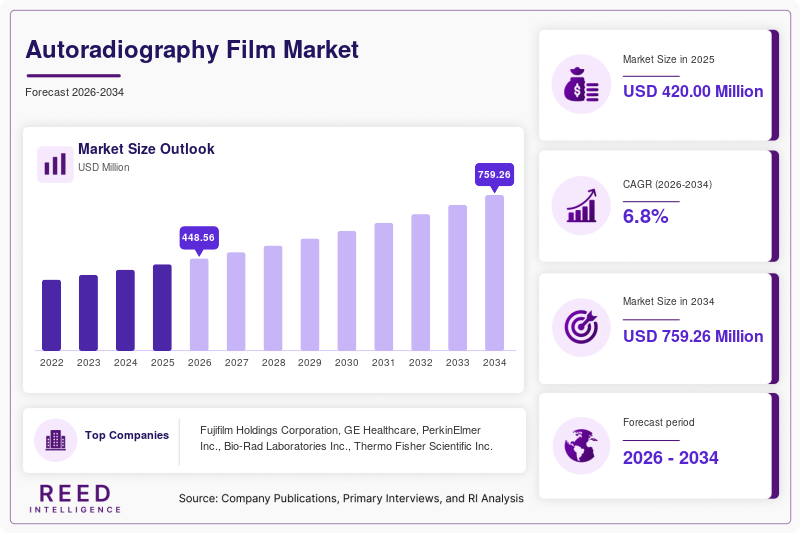
The global Autoradiography Film Market size was valued at approximately USD 420 million in 2026 and is projected to reach USD 710 million by 2034, expanding at a CAGR of 6.8% during the forecast period. This growth trajectory reflects steady demand across life sciences, pharmaceutical research, and molecular biology applications where high-resolution detection of radioactive signals remains essential. Autoradiography films continue to play a critical role in imaging DNA, RNA, and proteins, especially in laboratories that rely on cost-effective and reliable visualization techniques.
A key global factor supporting market expansion is the sustained investment in biomedical research and drug discovery pipelines. Increasing funding from public and private sectors has encouraged extensive use of radiolabeled compounds in research, thereby driving demand for autoradiography films. Additionally, despite the emergence of digital imaging systems, many laboratories prefer film-based methods due to their simplicity, sensitivity, and compatibility with established protocols.
Key Highlights
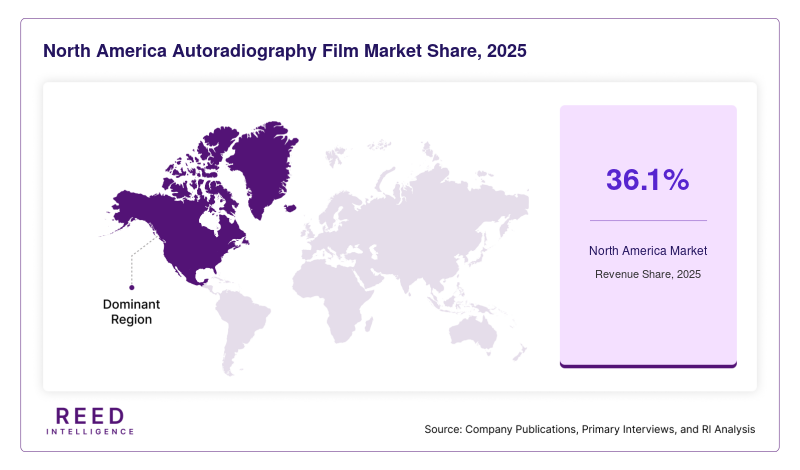
- North America dominated the market with a 36.1% share in 2025.
- Asia Pacific is expected to grow at the fastest CAGR of 8.5% during 2026–2034.
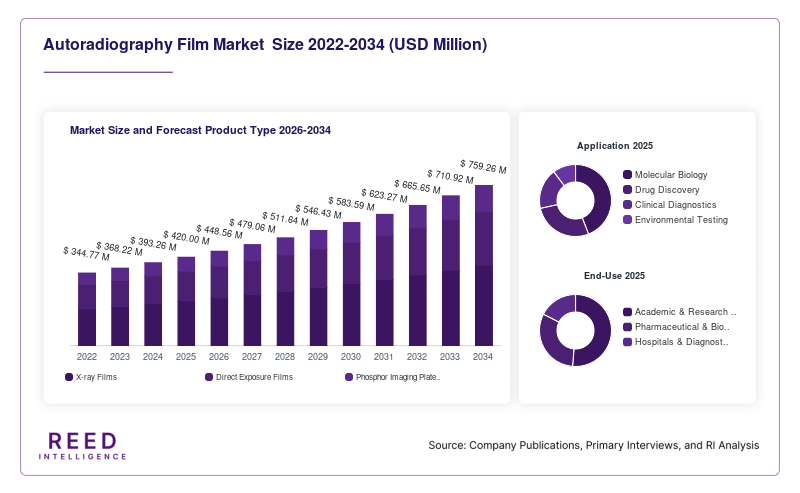
- By product type, X-ray films accounted for the largest share of 44.3%, while phosphor imaging plates are projected to grow at a CAGR of 7.9%.
- By application, molecular biology led with a 39.8% share, whereas drug discovery is expected to expand at a CAGR of 7.6%.
- The United States remained the dominant country, with market values of USD 145 million in 2024 and USD 155 million in 2025.
Market Trends
Increasing integration of hybrid imaging workflows in laboratories
Laboratories are gradually adopting hybrid workflows that combine traditional autoradiography film techniques with digital imaging systems. This trend is driven by the need to enhance data accuracy while maintaining cost efficiency. Researchers often use film for initial exposure due to its high sensitivity and then digitize results for further analysis. This dual approach ensures improved reproducibility and compatibility with modern data management systems. Additionally, hybrid workflows help laboratories extend the lifecycle of existing equipment while integrating newer technologies. As research institutions face budget constraints, this balanced adoption strategy allows them to maintain operational efficiency without fully transitioning to expensive digital platforms. The trend is particularly evident in academic and mid-sized research laboratories.
Rising demand for high-sensitivity films in advanced research applications
The demand for high-sensitivity autoradiography films is increasing as research becomes more complex and precise. Advanced applications in genomics, proteomics, and oncology require films capable of detecting low levels of radioactive signals with high resolution. Manufacturers are focusing on developing films with improved contrast, reduced exposure time, and enhanced durability. This shift aligns with the growing emphasis on accurate data interpretation in clinical and preclinical studies. Furthermore, high-sensitivity films support faster experimentation cycles, which is critical in competitive research environments. The trend is also supported by increased collaboration between academic institutions and pharmaceutical companies aiming to accelerate innovation.
Market Drivers
Expansion of pharmaceutical and biotechnology research activities
The growth of pharmaceutical and biotechnology industries has significantly contributed to the expansion of the autoradiography film market. Drug discovery processes often rely on radiolabeled compounds to study biological pathways and molecular interactions. Autoradiography films provide a reliable method for visualizing these interactions, making them indispensable in early-stage research. The increasing number of clinical trials and research initiatives globally has led to higher consumption of these films. Additionally, governments and private organizations are investing heavily in life sciences research, further boosting demand. Emerging markets are also witnessing growth in biotechnology infrastructure, which is expected to create sustained demand for autoradiography films over the forecast period.
Continued relevance of film-based techniques in cost-sensitive laboratories
Despite advancements in digital imaging technologies, film-based autoradiography remains relevant due to its affordability and ease of use. Many laboratories, particularly in developing regions, prefer film-based methods because they require minimal infrastructure and training. Autoradiography films offer consistent performance and do not depend heavily on complex software systems. This makes them suitable for routine experiments and educational purposes. Furthermore, film-based techniques provide high-resolution images that are often preferred for detailed analysis. The cost advantage and reliability of these films continue to drive their adoption across a wide range of research settings.
Market Restraint
Shift toward digital imaging systems limiting long-term demand
One of the primary challenges facing the autoradiography film market is the increasing adoption of digital imaging systems. These systems offer advantages such as faster processing times, improved data storage, and enhanced image analysis capabilities. As laboratories modernize their infrastructure, there is a gradual shift away from traditional film-based methods. This transition is particularly evident in well-funded research institutions and pharmaceutical companies that prioritize efficiency and automation. The reduced dependency on physical films may limit market growth in the long term. Additionally, environmental concerns related to chemical waste generated during film processing further discourage adoption. For instance, regulatory guidelines in developed regions are becoming stricter regarding hazardous waste disposal, prompting laboratories to explore alternative imaging solutions.
Market Opportunities
Growing research infrastructure in emerging economies
Emerging economies are investing significantly in building research infrastructure, creating new opportunities for the autoradiography film market. Countries in Asia Pacific, Latin America, and the Middle East are establishing advanced laboratories and research centers to support scientific innovation. These regions often rely on cost-effective technologies, making autoradiography films an attractive option. The increasing number of academic institutions and government-funded research projects is expected to drive demand. Additionally, collaborations with global pharmaceutical companies are facilitating technology transfer and expanding the use of autoradiography techniques. This growth in research capacity presents a favorable environment for market expansion.
Development of eco-friendly and advanced film materials
The development of environmentally friendly and technologically advanced autoradiography films presents a significant opportunity for market players. Manufacturers are focusing on reducing the environmental impact of film processing by introducing biodegradable materials and less toxic chemicals. These innovations align with global sustainability goals and regulatory requirements. Additionally, advancements in film technology, such as improved sensitivity and faster exposure times, enhance their applicability in modern research. The introduction of such products can attract new customers and retain existing ones. As environmental concerns continue to influence purchasing decisions, companies that invest in sustainable solutions are likely to gain a competitive edge.
Segmental Analysis
By Product Type
X-ray films dominated the autoradiography film market in 2024, accounting for approximately 44.3% of the total share. These films are widely used due to their high sensitivity and ability to produce detailed images. Laboratories prefer X-ray films for their reliability and compatibility with existing imaging systems. The widespread availability and cost-effectiveness of these films further contribute to their dominance. Additionally, they are suitable for a wide range of applications, including molecular biology and clinical research. The established use of X-ray films in traditional workflows ensures consistent demand across various research settings.
Phosphor imaging plates are expected to be the fastest-growing subsegment, with a projected CAGR of 7.9% during the forecast period. These plates offer advantages such as reusability and enhanced image quality. They are increasingly being adopted in laboratories seeking to improve efficiency and reduce operational costs. The ability to integrate with digital imaging systems makes them a preferred choice for modern research environments. As laboratories transition toward hybrid workflows, the demand for phosphor imaging plates is expected to increase significantly.
By Application
Molecular biology emerged as the dominant application segment in 2024, holding a share of 39.8%. Autoradiography films are extensively used in DNA and RNA analysis, making them essential in molecular research. The growing focus on genetic studies and disease research drives demand in this segment. Additionally, the use of autoradiography in protein analysis and gene expression studies supports its widespread adoption. The reliability and precision of these films make them suitable for critical research applications.
Drug discovery is projected to be the fastest-growing application segment, with a CAGR of 7.6%. The increasing number of pharmaceutical research projects and clinical trials drives demand for autoradiography films. These films play a crucial role in studying drug interactions and biological processes. The growing investment in pharmaceutical research and development further supports this segment’s growth. As companies focus on accelerating drug development, the demand for efficient imaging solutions continues to rise.
By End-Use
Academic and research institutes dominated the end-use segment in 2024, accounting for 46.7% of the market share. These institutions rely heavily on autoradiography films for various research applications. The availability of funding for scientific research and the presence of skilled professionals contribute to this dominance. Additionally, the use of autoradiography techniques in educational settings supports consistent demand. The widespread adoption of these films in academic research ensures their continued relevance.
Pharmaceutical and biotechnology companies are expected to be the fastest-growing end-use segment, with a CAGR of 7.2%. The increasing focus on drug development and clinical research drives demand in this segment. These companies require reliable imaging solutions to support their research activities. The growing number of collaborations between industry and academic institutions further enhances market growth. As the pharmaceutical sector continues to expand, the demand for autoradiography films is expected to increase.
Regional Analysis
North America
North America accounted for approximately 36.1% of the autoradiography film market share in 2025 and is expected to grow at a CAGR of 6.2% during the forecast period. The region’s strong presence of pharmaceutical companies and research institutions supports steady demand. Advanced healthcare infrastructure and consistent funding for biomedical research contribute to market stability. Additionally, the adoption of innovative research techniques ensures continued relevance of autoradiography films in specialized applications.
The United States dominates the regional market, driven by extensive research activities and well-established laboratory networks. A key growth factor is the high level of investment in drug discovery and clinical trials. The presence of leading biotechnology firms and academic institutions further strengthens market demand. Continuous advancements in molecular biology research also support the use of autoradiography films.
Europe
Europe held around 27.4% of the market share in 2025 and is projected to grow at a CAGR of 5.9%. The region benefits from strong regulatory frameworks and a well-developed research ecosystem. Government initiatives promoting scientific research and innovation play a crucial role in sustaining market growth. Additionally, collaborations between academic institutions and industry players drive the adoption of autoradiography films.
Germany leads the European market due to its robust pharmaceutical and biotechnology sectors. A unique growth factor is the country’s focus on precision medicine and advanced diagnostics. Research institutions in Germany активно use autoradiography techniques for molecular analysis, supporting consistent demand for high-quality films.
Asia Pacific
Asia Pacific accounted for 22.8% of the market share in 2025 and is expected to grow at the fastest CAGR of 8.5%. Rapid industrialization and increasing investment in research infrastructure drive market expansion. Countries in the region are focusing on strengthening their biotechnology and pharmaceutical sectors, creating demand for autoradiography films. The growing number of research institutions further supports market growth.
China dominates the Asia Pacific market, driven by significant government funding in life sciences research. A key growth factor is the expansion of domestic pharmaceutical manufacturing and research capabilities. The increasing number of academic collaborations and research projects enhances the adoption of autoradiography films across the country.
Middle East & Africa
The Middle East & Africa region held a 6.5% market share in 2025 and is projected to grow at a CAGR of 6.7%. The region is gradually developing its research infrastructure, supported by government initiatives and international collaborations. Increasing awareness of advanced research techniques contributes to market growth.
Saudi Arabia leads the regional market, driven by investments in healthcare and research facilities. A unique growth factor is the government’s focus on diversifying the economy through scientific innovation. This includes funding for research centers and universities, which supports the adoption of autoradiography films.
Latin America
Latin America accounted for 7.2% of the market share in 2025 and is expected to grow at a CAGR of 6.4%. The region is witnessing gradual growth in research activities, supported by government funding and academic initiatives. Increasing collaboration with international research organizations enhances market development.
Brazil dominates the Latin American market, supported by its expanding pharmaceutical industry. A key growth factor is the rising number of research projects in biotechnology and healthcare. The presence of leading universities and research institutions further drives demand for autoradiography films.
Competitive Landscape
The autoradiography film market is moderately competitive, with several established players focusing on product innovation and strategic collaborations. Leading companies are investing in research and development to enhance film sensitivity and reduce environmental impact. The market is characterized by the presence of both global and regional players catering to diverse customer needs.
A key leader in the market is Fujifilm Holdings Corporation, known for its extensive portfolio of imaging solutions. The company has recently focused on developing advanced autoradiography films with improved sensitivity and reduced processing time. Other major players are adopting strategies such as mergers, acquisitions, and partnerships to strengthen their market position. Continuous innovation and expansion into emerging markets remain key priorities for companies operating in this space.
Key Players
- Fujifilm Holdings Corporation
- GE Healthcare
- PerkinElmer Inc.
- Bio-Rad Laboratories Inc.
- Thermo Fisher Scientific Inc.
- Agfa-Gevaert Group
- Carestream Health
- Konica Minolta Inc.
- Kodak Alaris
- Merck KGaA
- Santa Cruz Biotechnology Inc.
- Danaher Corporation
- LI-COR Biosciences
- Cytiva
- Azure Biosystems
Recent Developments
- Fujifilm introduced a new generation of high-sensitivity autoradiography films designed for advanced molecular imaging applications.
- Thermo Fisher Scientific expanded its imaging solutions portfolio by integrating autoradiography film compatibility with digital systems.
- Bio-Rad Laboratories launched improved film processing solutions to enhance image clarity and reduce exposure time.
Autoradiography Film Market Segments
Product Type
- X-ray Films
- Direct Exposure Films
- Phosphor Imaging Plates
Application
- Molecular Biology
- Drug Discovery
- Clinical Diagnostics
- Environmental Testing
End-Use
- Academic & Research Institutes
- Pharmaceutical & Biotechnology Companies
- Hospitals & Diagnostic Laboratories
By Region
- North America
- Europe
- APAC
- Middle East and Africa
- LATAM