Baby Diaper Pails Market Size, Share & Demand Report By Product Type (Standard Diaper Pails, Hands-Free Diaper Pails, Smart Diaper Pails), By Distribution Channel (Offline Retail, Specialty Stores, Supermarkets & Hypermarkets, Department Stores, Online Retail), By End User (Residential Households, Daycare Centers, Hospitals & Maternity Centers), By Region & Segment Forecasts, 2026–2034
USD 3950
Market Overview
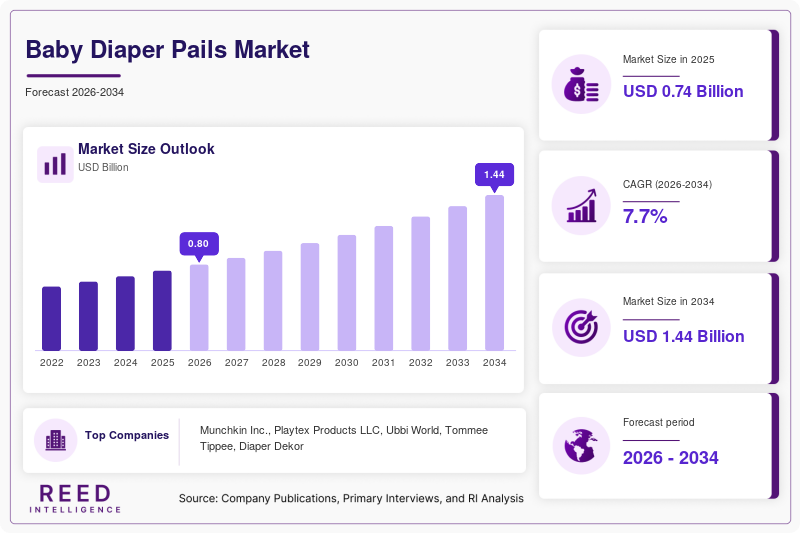
The Baby Diaper Pails Market size was valued at approximately USD 0.742 billion in 2026 and is projected to reach USD 1.34 billion by 2034, expanding at a CAGR of 7.7% during the forecast period of 2026–2034. Baby diaper pails are specialized waste disposal systems designed to store used diapers while minimizing odor leakage and improving hygiene in residential and childcare environments. These products have become an essential component of infant care solutions due to increasing awareness regarding household cleanliness, odor management, and convenience among modern parents.
One of the major global factors supporting market growth is the increasing focus on infant hygiene and sanitation standards. Rising urbanization, dual-income households, and growing spending on premium childcare products have encouraged consumers to invest in advanced diaper disposal systems that offer enhanced odor control and ease of use. Manufacturers are introducing innovative features such as antimicrobial coatings, hands-free operation, refill optimization, and eco-friendly materials to improve product performance and customer satisfaction.
Key Highlights
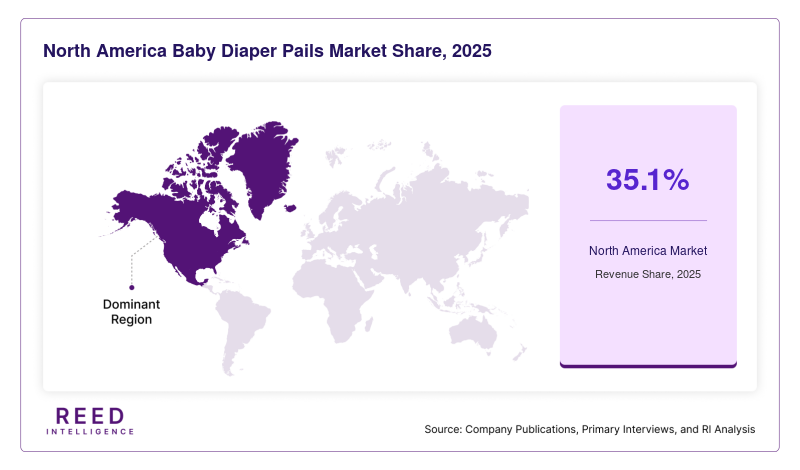
- North America dominated the market with a 35.1% share in 2025, while Asia Pacific is expected to grow at the fastest CAGR of 9.4% during 2026–2034.
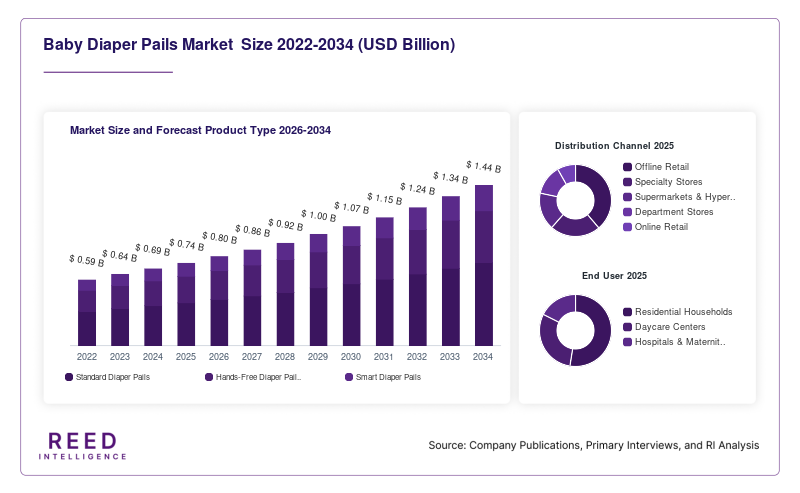
- By product type, standard diaper pails accounted for the largest share of 48.7%, while smart diaper pails are projected to grow at a CAGR of 10.2%.
- By distribution channel, offline retail led with a 61.3% share, whereas online retail is expected to expand at a CAGR of 9.8%.
- By end user, residential households held the largest share of 78.5%, while daycare centers are anticipated to grow at a CAGR of 8.9%.
- The United States remained the dominant country, with market values of USD 221 million in 2024 and USD 239 million in 2025.
Market Trends
Rising Adoption of Smart and Sensor-Enabled Diaper Disposal Solutions
The Baby Diaper Pails Market is witnessing increasing adoption of smart diaper disposal systems equipped with advanced features such as motion sensors, automatic lid opening mechanisms, fill-level indicators, and odor-monitoring technologies. Modern consumers are prioritizing convenience and hygiene, particularly in urban households where efficient waste management is essential. Manufacturers are responding by introducing technologically enhanced products that reduce direct contact with waste and improve user experience. These solutions are gaining popularity among first-time parents who seek premium childcare products that simplify daily routines. The integration of smart technologies is also helping brands differentiate themselves in a competitive market while supporting higher product margins and long-term customer loyalty.
Growing Preference for Sustainable and Eco-Friendly Product Designs
Environmental awareness among consumers is influencing purchasing decisions across the infant care industry. Parents are increasingly seeking diaper disposal products manufactured from recyclable plastics, biodegradable components, and reusable cartridge systems. This shift is encouraging manufacturers to reduce material waste and adopt sustainable production practices. Eco-conscious diaper pails help households align childcare routines with broader environmental goals. In addition, regulatory pressure related to plastic waste management in several countries is prompting innovation in product design and packaging. As sustainability becomes a key purchasing criterion, companies offering environmentally responsible diaper disposal solutions are expected to strengthen their market position and attract a growing consumer base.
Market Drivers
Increasing Demand for Hygiene-Oriented Infant Care Products
Growing awareness regarding infant health and household sanitation is a major factor driving the Baby Diaper Pails Market. Parents are increasingly prioritizing products that reduce exposure to unpleasant odors, bacteria, and contaminated waste. Diaper pails provide a convenient and hygienic solution for storing used diapers before disposal, making them an attractive alternative to conventional trash bins. Rising educational initiatives related to childcare hygiene and infection prevention have further contributed to product adoption. In both developed and developing economies, consumers are demonstrating a willingness to spend more on products that improve cleanliness and convenience. This trend continues to support steady demand across residential and institutional childcare environments.
Expansion of Urban Households and Premium Parenting Expenditure
Rapid urbanization and changing family structures are creating favorable conditions for market expansion. Smaller living spaces in urban areas increase the need for effective odor-control solutions, making diaper pails a practical household product. At the same time, rising disposable incomes and premiumization trends are encouraging consumers to invest in specialized baby care products. Parents increasingly view convenience-enhancing products as valuable investments rather than optional accessories. The availability of premium diaper pails through online and retail channels has expanded product accessibility, while targeted marketing campaigns continue to educate consumers regarding the benefits of dedicated diaper disposal systems. These factors collectively contribute to sustained market growth.
Market Restraint
Availability of Low-Cost Alternative Disposal Methods
Despite favorable growth prospects, the Baby Diaper Pails Market faces challenges associated with the availability of inexpensive alternative waste disposal methods. Many households continue to use conventional trash bins, disposable bags, or standard waste containers for diaper disposal. In price-sensitive markets, consumers may perceive specialized diaper pails as non-essential products, limiting adoption rates. The recurring cost of refill cartridges and accessories can further discourage budget-conscious buyers from purchasing premium models.
This restraint is particularly evident in developing regions where awareness regarding specialized diaper disposal systems remains limited. Retail penetration challenges and lower consumer spending on non-essential childcare accessories can reduce market expansion opportunities. For example, families with multiple children may prioritize diaper purchases and other infant necessities over premium disposal systems. Manufacturers must therefore balance product innovation with affordability to expand their customer base. Offering cost-effective product variants and reusable refill systems may help address pricing concerns and improve adoption across emerging economies.
Market Opportunities
Growth Potential Across Emerging Economies
Emerging economies present significant opportunities for the Baby Diaper Pails Market as rising urbanization, increasing birth rates, and expanding middle-class populations drive demand for infant care products. Countries across Asia Pacific, Latin America, and parts of Africa are witnessing higher household spending on childcare solutions. As awareness regarding hygiene and sanitation increases, consumers are becoming more receptive to specialized diaper disposal products. Manufacturers are expanding distribution networks and introducing region-specific product offerings to address diverse consumer preferences. The growing presence of organized retail stores and digital commerce platforms is expected to further enhance product accessibility and market penetration throughout these regions.
Product Innovation Focused on Sustainability and Cost Efficiency
Innovation in sustainable materials and refill technologies represents another promising opportunity for market participants. Consumers increasingly seek products that reduce environmental impact while maintaining affordability and performance. Manufacturers are investing in recyclable plastics, biodegradable liners, and reusable refill systems that lower long-term ownership costs. These innovations can appeal to environmentally conscious parents while addressing concerns regarding recurring expenses. Furthermore, advancements in odor-sealing mechanisms and antimicrobial technologies provide opportunities to improve product effectiveness and differentiation. Companies that successfully combine sustainability, convenience, and affordability are expected to capture a larger share of future market demand and strengthen brand competitiveness.
Segmental Analysis
By Product Type
Standard diaper pails represented the dominant product type segment and accounted for approximately 48.7% of the market share in 2024. These products remain popular due to their affordability, ease of use, and widespread availability through retail and online channels. Standard models provide effective odor control and storage capacity without requiring advanced technological features, making them attractive to a broad consumer base. Many households prefer these solutions because they offer a balance between functionality and cost efficiency. Manufacturers continue to improve sealing mechanisms and material durability to enhance performance. The segment benefits from strong adoption among first-time parents and families seeking reliable diaper disposal systems at moderate price points.
Smart diaper pails are emerging as an increasingly important category within the market. These products incorporate automation, sensor technologies, and enhanced odor-control systems designed to improve convenience. Smart features such as touchless operation and fill-level monitoring appeal to consumers seeking premium childcare products. Continuous innovation is enabling manufacturers to differentiate their offerings and target technology-oriented households. As awareness of advanced product benefits grows, smart diaper pails are expected to gain wider acceptance among consumers across developed and emerging markets.
By Distribution Channel
Offline retail accounted for the largest market share of approximately 61.3% in 2024. Specialty baby stores, supermarkets, hypermarkets, and department stores continue to play a critical role in product distribution. Many consumers prefer in-store purchases because they can physically evaluate product size, quality, and features before making a decision. Retail staff recommendations and product demonstrations also contribute to consumer confidence. Established retail networks provide manufacturers with strong brand visibility and direct access to target customers. Promotional campaigns, bundled product offerings, and seasonal discounts further support sales performance within the offline segment.
Online retail is projected to record the fastest CAGR of 9.8% during the forecast period. Growth is being driven by increasing internet penetration, smartphone adoption, and consumer preference for convenient shopping experiences. Digital platforms allow customers to compare products, read reviews, and access competitive pricing. Subscription services for refill cartridges and accessories are further enhancing online channel attractiveness. Manufacturers increasingly leverage digital marketing strategies and direct-to-consumer sales models to strengthen engagement and improve customer retention. These factors are expected to support robust expansion of the online retail segment.
By End User
Residential households dominated the Baby Diaper Pails Market and accounted for approximately 78.5% of total revenue in 2024. The segment benefits from widespread adoption among parents seeking hygienic and convenient diaper disposal solutions. Growing awareness regarding odor management and sanitation standards has encouraged households to invest in dedicated diaper pails rather than conventional waste bins. Product innovations focused on affordability, storage capacity, and ease of maintenance continue to strengthen demand. The increasing availability of diverse product options enables consumers to select solutions that match their budget and lifestyle requirements, supporting sustained market leadership.
Daycare centers are anticipated to register the fastest CAGR of 8.9% between 2026 and 2034. The growth of organized childcare services and rising enrollment levels are creating demand for efficient waste management systems. Daycare facilities require reliable diaper disposal solutions that maintain hygiene standards while reducing odor accumulation in shared environments. Regulatory requirements related to sanitation and child safety further encourage product adoption. Manufacturers are responding by developing high-capacity models designed specifically for institutional settings, creating additional opportunities for market growth within this segment.
Regional Analysis
North America
North America accounted for approximately 35.1% of the Baby Diaper Pails Market share in 2025, making it the leading regional market. The region is projected to expand at a CAGR of 6.8% between 2026 and 2034. Strong consumer awareness regarding infant hygiene, high spending on premium baby products, and widespread availability of advanced diaper disposal systems continue to support market expansion. Retail chains, specialty baby stores, and e-commerce platforms provide extensive product accessibility, enabling manufacturers to reach a broad consumer base across the region.
The United States remains the dominant country within North America. A key growth factor is the strong preference for premium childcare products among urban families. Consumers increasingly seek odor-control technologies, hands-free operation, and sustainable product designs. The presence of established brands and continuous product innovation further contributes to market development. Rising adoption among daycare centers and childcare facilities also supports demand growth throughout the forecast period.
Europe
Europe represented approximately 27.4% of the global Baby Diaper Pails Market in 2025 and is expected to register a CAGR of 6.9% through 2034. Demand is supported by growing awareness regarding household sanitation and increasing adoption of premium infant care products. Consumers across the region demonstrate strong interest in quality, durability, and environmentally responsible solutions. Regulatory emphasis on product safety and sustainability has encouraged manufacturers to develop innovative diaper disposal systems tailored to evolving consumer expectations.
Germany is the dominant market within Europe due to its established childcare product sector and high consumer purchasing power. A unique growth factor is the region’s strong environmental consciousness, which supports demand for recyclable and reusable diaper disposal solutions. Parents increasingly prefer products that align with sustainability objectives while maintaining convenience and hygiene standards. This trend is encouraging manufacturers to introduce eco-friendly product lines across European markets.
Asia Pacific
Asia Pacific held approximately 23.2% of the Baby Diaper Pails Market in 2025 and is forecast to record the fastest CAGR of 9.4% during the study period. Rapid urbanization, rising disposable incomes, and growing awareness regarding infant hygiene are supporting market expansion. Increasing participation of women in the workforce has created greater demand for convenience-oriented childcare products. In addition, the expansion of organized retail infrastructure and digital commerce platforms is enhancing product accessibility across major economies.
China dominates the regional market and continues to generate substantial demand for infant care products. A unique growth factor is the rapid expansion of middle-income households that are increasingly willing to purchase premium childcare accessories. Product awareness campaigns and growing exposure to international parenting trends have encouraged adoption of specialized diaper disposal systems. These developments are expected to strengthen regional growth prospects throughout the forecast period.
Middle East & Africa
The Middle East & Africa accounted for approximately 7.3% of the global Baby Diaper Pails Market in 2025 and is anticipated to expand at a CAGR of 7.1% through 2034. Market growth is supported by rising urban populations, improving retail infrastructure, and increasing awareness regarding infant hygiene practices. Demand remains concentrated in major metropolitan areas where consumers have greater access to premium childcare products. E-commerce development is also helping manufacturers reach previously underserved customer segments.
Saudi Arabia represents the dominant country within the region. A distinctive growth factor is the increasing investment in modern retail formats and family-oriented consumer goods sectors. Higher household incomes and growing interest in premium baby care products are encouraging market adoption. Furthermore, rising awareness regarding odor-control solutions and sanitation standards is creating favorable conditions for continued growth across the country and neighboring markets.
Latin America
Latin America captured approximately 7.0% of the Baby Diaper Pails Market share in 2025 and is projected to grow at a CAGR of 7.3% between 2026 and 2034. Increasing urbanization and rising expenditure on infant care products are contributing to regional market development. Consumers are becoming more aware of specialized childcare solutions that improve convenience and hygiene within the home environment. Expanding retail networks and online sales channels are further supporting market accessibility across multiple countries.
Brazil remains the leading market in Latin America. A unique growth factor is the expanding population of young parents seeking modern childcare products that simplify daily routines. Growing exposure to international parenting trends through digital media is encouraging product adoption. In addition, manufacturers are introducing affordable product variants designed to meet local purchasing preferences, creating additional opportunities for market expansion throughout the region.
Competitive Landscape
The Baby Diaper Pails Market is characterized by the presence of established infant care product manufacturers and specialized hygiene solution providers. Competition is primarily based on product innovation, odor-control performance, sustainability features, pricing strategies, and distribution reach. Companies are investing in advanced sealing technologies, eco-friendly materials, and smart product capabilities to strengthen their market positions.
Munchkin emerged as the market leader due to its strong product portfolio, brand recognition, and extensive retail presence. The company continues to focus on product innovation and consumer-centric design improvements. Meanwhile, other major participants are expanding their geographic footprint and introducing new product variants to address evolving customer preferences.
Key Players
- Munchkin Inc.
- Playtex Products LLC
- Ubbi World
- Tommee Tippee
- Diaper Dekor
- Safety 1st
- Angelcare
- Prince Lionheart
- Janibell Inc.
- Baby Trend Inc.
- Bambino Mio
- Nuby
- Chicco
- Bébé Confort
- Korbell
Recent Developments
- In 2025, Munchkin Inc. introduced an upgraded diaper pail system featuring enhanced odor-lock technology and improved refill efficiency to provide longer-lasting performance for residential households.
- In 2025, Ubbi World expanded its eco-friendly product portfolio with a new diaper pail range manufactured using recycled materials and designed to support sustainable parenting practices.
- In 2024, Tommee Tippee launched an advanced hands-free diaper disposal solution incorporating antimicrobial protection and simplified cartridge replacement mechanisms for improved convenience.
- In 2024, Angelcare enhanced its diaper pail product line by integrating upgraded multi-layer odor barrier technology aimed at improving hygiene and reducing household odor leakage.
- In 2025, Diaper Dekor expanded its production capabilities and introduced high-capacity diaper pail models specifically designed for daycare centers and institutional childcare facilities.
Baby Diaper Pails Market Segments
Product Type
- Standard Diaper Pails
- Hands-Free Diaper Pails
- Smart Diaper Pails
Distribution Channel
- Offline Retail
- Specialty Stores
- Supermarkets & Hypermarkets
- Department Stores
- Online Retail
End User
- Residential Households
- Daycare Centers
- Hospitals & Maternity Centers
By Region
- North America
- Europe
- APAC
- Middle East and Africa
- LATAM