Balloon Aortic Valvuloplasty Devices Market Size, Share & Demand Report By Product Type (Balloon Dilation Catheters, Scoring Balloon Systems, Cutting Balloon Devices, Specialty Balloon Catheters), By Application (Severe Calcific Aortic Stenosis, Bridge-to-TAVR Procedures, Pediatric Congenital Valve Disorders, Palliative Cardiac Care), By End User (Hospitals, Ambulatory Surgical Centers, Specialty Cardiac Clinics, Academic and Research Institutes) By Region & Segment Forecasts, 2026–2034
USD 3950
Market Overview
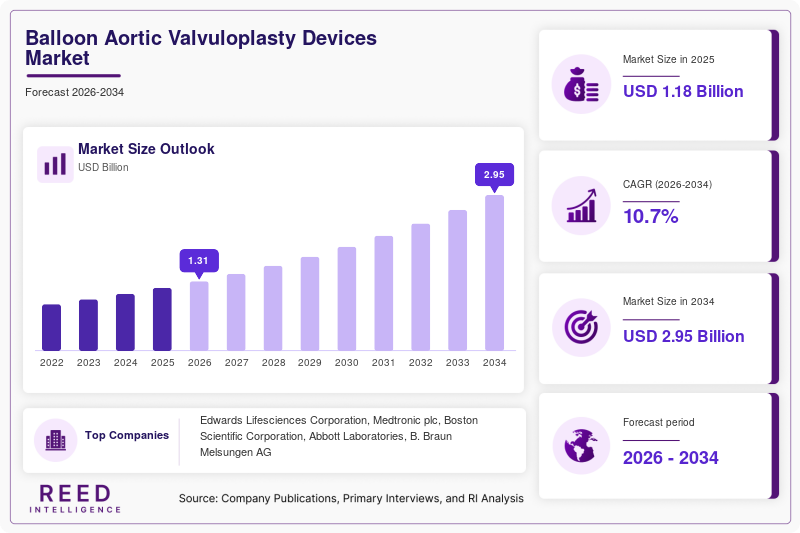
The global Balloon Aortic Valvuloplasty Devices Market size was valued at approximately USD 1.18 billion in 2026 and is projected to reach nearly USD 2.67 billion by 2034, expanding at a CAGR of 10.7% during the forecast period from 2026 to 2034. The market continues to gain momentum due to the rising prevalence of calcific aortic stenosis among aging populations and the increasing adoption of minimally invasive cardiovascular procedures across developed and emerging healthcare systems. Balloon aortic valvuloplasty devices are increasingly used as bridge therapies before transcatheter aortic valve replacement procedures and as palliative treatment options for patients who are not eligible for surgical valve replacement.
The growing burden of cardiovascular disease worldwide has created strong demand for advanced interventional cardiology devices. Increasing hospital investments in catheterization laboratories, rising awareness regarding structural heart disease treatment, and favorable reimbursement policies in several developed economies have supported market growth. In addition, technological improvements in balloon catheter flexibility, guidewire navigation systems, and imaging-assisted procedures have improved procedural success rates and reduced complications associated with valvuloplasty procedures.
Key Highlights
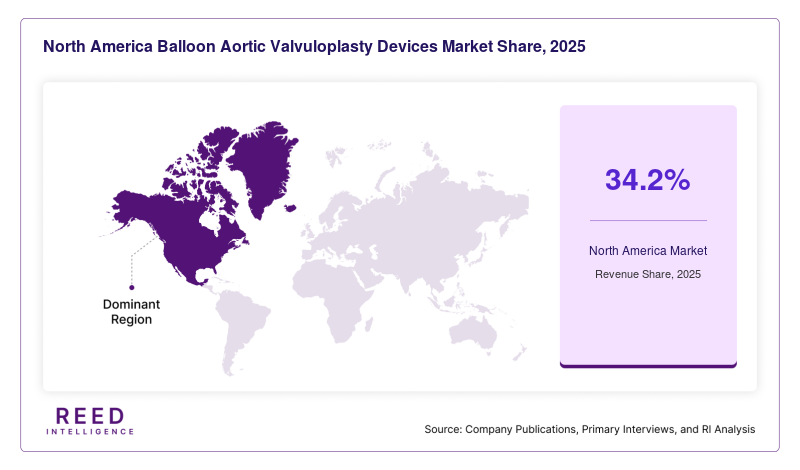
- North America dominated the Balloon Aortic Valvuloplasty Devices Market with a 34.2% share in 2025, while Asia Pacific is expected to grow at the fastest CAGR of 11.8% during 2026–2034.
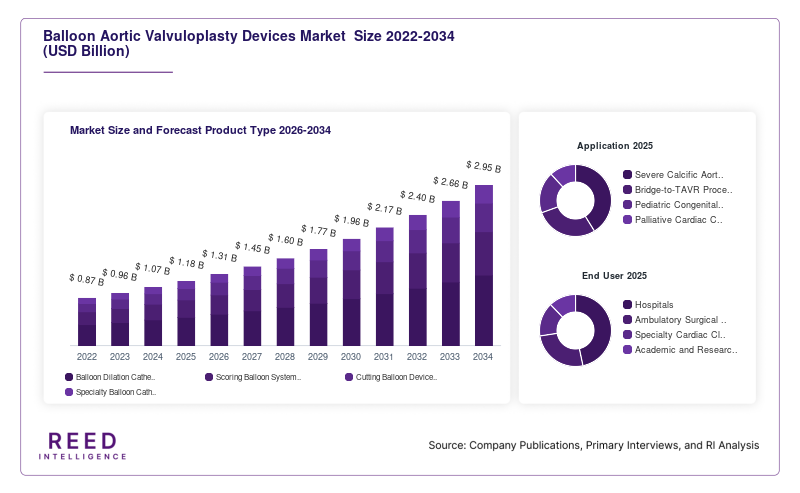
- By product type, balloon dilation catheters accounted for the largest share of 46.9%, while scoring balloon systems are projected to grow at a CAGR of 12.3%.
- By end user, hospitals led with a 58.4% share, whereas ambulatory surgical centers are expected to expand at a CAGR of 11.6%.
- By application, severe calcific aortic stenosis held the dominant share of 63.1%, while bridge-to-TAVR procedures are projected to witness a CAGR of 12.1%.
- The United States remained the dominant country, with market values of USD 352 million in 2024 and USD 389 million in 2025.
Market Trends
Integration of Imaging-Guided Interventional Procedures
The Balloon Aortic Valvuloplasty Devices Market is witnessing increased integration of advanced imaging technologies during cardiovascular interventions. Healthcare facilities are increasingly using intraprocedural echocardiography, fluoroscopy enhancement systems, and three-dimensional imaging platforms to improve procedural precision during valvuloplasty procedures. Imaging-guided navigation enables physicians to position balloon catheters more accurately and reduce the risk of vascular injury or incomplete valve dilation. This trend has gained importance in complex structural heart interventions involving elderly patients with multiple comorbidities. Hospitals in North America and Europe are investing heavily in hybrid operating rooms equipped with imaging-assisted technologies to improve patient outcomes. The integration of digital visualization systems also supports shorter procedure durations and reduced contrast agent use, which is becoming important in patients with impaired renal function. As healthcare systems continue to focus on minimally invasive treatment efficiency, imaging-assisted balloon valvuloplasty procedures are expected to become increasingly common across tertiary cardiac centers.
Rising Preference for Minimally Invasive Cardiac Therapies
The global shift toward minimally invasive cardiovascular treatment has become a significant trend supporting the growth of the Balloon Aortic Valvuloplasty Devices Market. Patients and healthcare providers increasingly prefer procedures that minimize surgical trauma, shorten recovery periods, and reduce hospitalization costs. Balloon aortic valvuloplasty procedures align with these objectives by offering catheter-based treatment alternatives for high-risk surgical patients. The increasing popularity of transcatheter interventions has also expanded physician familiarity with balloon-based cardiac devices. In emerging economies, healthcare providers are adopting minimally invasive procedures to improve patient throughput and reduce pressure on intensive care resources. Device manufacturers are responding to this trend by developing low-profile balloon systems with enhanced flexibility and improved crossing capabilities for calcified valves. Growing awareness regarding early diagnosis of structural heart diseases is further encouraging patients to seek less invasive treatment options. This trend is expected to create long-term opportunities for manufacturers focusing on technologically advanced balloon catheter systems.
Market Drivers
Increasing Global Burden of Aortic Stenosis
The growing prevalence of aortic stenosis among aging populations is a major factor driving the Balloon Aortic Valvuloplasty Devices Market. Calcific aortic stenosis is becoming increasingly common due to rising life expectancy and the growing incidence of cardiovascular disorders worldwide. Elderly individuals are more vulnerable to degenerative valve diseases that require interventional treatment. Balloon valvuloplasty procedures are often used in patients who are unsuitable for open-heart surgery because of age-related complications or multiple chronic conditions. The rising number of diagnosed cases has increased procedural volumes in hospitals and specialty cardiac centers. In developed healthcare systems, screening programs and routine cardiac imaging have improved early detection rates of valvular heart disease, supporting demand for interventional therapies. Emerging countries are also witnessing higher cardiovascular disease burdens due to urbanization, sedentary lifestyles, and dietary changes. These demographic and epidemiological trends are expected to support sustained market growth throughout the forecast period.
Expansion of Transcatheter Valve Replacement Programs
The expansion of transcatheter aortic valve replacement programs globally has positively influenced the Balloon Aortic Valvuloplasty Devices Market. Balloon valvuloplasty is frequently performed before transcatheter valve implantation to prepare calcified valves and improve procedural outcomes. As TAVR procedures become more accessible across hospitals and cardiac institutes, demand for associated balloon dilation technologies continues to rise. Healthcare providers are expanding structural heart programs due to growing patient demand for minimally invasive interventions. Several countries are increasing reimbursement support for transcatheter procedures, enabling wider patient access to advanced cardiac care. Medical device companies are also collaborating with hospitals to provide physician training programs focused on catheter-based interventions. The increasing number of hybrid catheterization laboratories and interventional cardiologists trained in structural heart procedures has further accelerated procedure adoption. This growing ecosystem surrounding transcatheter therapies is expected to create a favorable environment for balloon valvuloplasty device manufacturers.
Market Restraint
Procedural Risks and Limited Long-Term Effectiveness
Despite growing adoption, the Balloon Aortic Valvuloplasty Devices Market faces challenges related to procedural complications and limited long-term clinical durability. Balloon valvuloplasty procedures may lead to restenosis, vascular injury, embolic complications, or arrhythmias in certain patient groups. Many patients experience recurrent valve narrowing within months after the procedure, limiting its effectiveness as a permanent treatment option. Because of this limitation, balloon valvuloplasty is often used as a temporary or bridge therapy rather than a definitive intervention. These concerns may reduce physician preference in cases where alternative treatment options are available. In developing countries, limited access to skilled interventional cardiologists and advanced imaging infrastructure may further increase procedural risks. Hospitals also remain cautious regarding device selection because complications can increase healthcare costs and prolong hospitalization. Regulatory scrutiny associated with cardiovascular devices has intensified in several regions, requiring manufacturers to invest heavily in clinical validation and post-market surveillance. Such factors may restrain rapid market expansion, particularly among smaller healthcare institutions with budget limitations and limited interventional expertise.
Market Opportunities
Growing Healthcare Investments in Emerging Economies
Emerging economies are creating substantial growth opportunities for the Balloon Aortic Valvuloplasty Devices Market due to rising healthcare investments and improving cardiovascular treatment infrastructure. Countries across Asia Pacific, Latin America, and the Middle East are expanding hospital networks and upgrading catheterization laboratories to support advanced cardiac interventions. Governments are increasingly prioritizing noncommunicable disease management as cardiovascular disorders continue to rise among urban populations. Private healthcare providers are also investing in minimally invasive cardiac treatment programs to attract international patients and improve service capabilities. The growing availability of health insurance coverage in emerging countries is supporting patient access to interventional procedures. Device manufacturers are expanding their regional distribution networks and entering strategic partnerships with local healthcare providers to strengthen market penetration. As physician training programs improve and awareness regarding structural heart disease increases, demand for balloon valvuloplasty devices is expected to accelerate significantly across developing healthcare systems.
Development of Next-Generation Balloon Technologies
Technological innovation presents another major opportunity for the Balloon Aortic Valvuloplasty Devices Market. Manufacturers are increasingly focusing on next-generation balloon catheter systems designed to improve procedural safety, navigation, and durability. New devices featuring enhanced balloon materials, lower-profile catheter shafts, and improved inflation control systems are helping physicians perform procedures with greater precision. Research efforts are also exploring drug-coated balloon technologies and pressure-controlled dilation systems to reduce restenosis rates and improve clinical outcomes. These innovations may help address some of the limitations associated with conventional valvuloplasty procedures. In addition, artificial intelligence-assisted imaging and robotic catheter navigation systems are expected to improve procedural efficiency in the coming years. Companies that invest in advanced product development and clinical research are likely to gain competitive advantages as healthcare providers seek safer and more effective interventional solutions. The continued modernization of cardiovascular care environments will support adoption of technologically advanced balloon valvuloplasty devices globally.
Segmental Analysis
By Product Type
Balloon dilation catheters accounted for the dominant share of the Balloon Aortic Valvuloplasty Devices Market in 2024, representing nearly 46.9% of total revenue. These devices are widely used because of their effectiveness in enlarging narrowed aortic valves and improving blood flow in patients with severe aortic stenosis. Hospitals and interventional cardiologists prefer conventional balloon dilation catheters because they are compatible with established catheterization procedures and available across a broad range of sizes. The increasing number of elderly patients undergoing minimally invasive cardiac interventions has further strengthened demand for these devices. Manufacturers are also focusing on improving balloon compliance, trackability, and inflation performance to support procedural efficiency. In developed markets, growing integration of advanced imaging systems with catheter-based interventions has improved physician confidence and contributed to the strong market position of balloon dilation catheters.
Scoring balloon systems are expected to register the fastest CAGR of 12.3% during the forecast period due to their enhanced precision and ability to treat heavily calcified aortic valves. These systems feature specialized scoring elements that help modify calcified tissue more effectively before dilation, improving procedural outcomes. Increasing physician preference for devices capable of reducing balloon slippage and minimizing vascular trauma is driving demand for scoring balloon technologies. Healthcare providers are increasingly adopting advanced balloon systems in complex structural heart interventions involving high-risk patients. Manufacturers are also investing in research programs focused on next-generation scoring balloon materials and flexible catheter designs to improve maneuverability during procedures. As minimally invasive structural heart interventions continue to expand globally, scoring balloon systems are expected to gain wider clinical acceptance in both developed and emerging healthcare markets.
By Application
Severe calcific aortic stenosis represented the largest application segment within the Balloon Aortic Valvuloplasty Devices Market in 2024, accounting for approximately 63.1% of total revenue. The rising prevalence of degenerative valve disease among elderly populations has significantly increased the number of procedures performed for severe calcific stenosis treatment. Balloon valvuloplasty procedures are frequently used to temporarily improve valve function and stabilize patients who are unsuitable for immediate surgical intervention. Hospitals continue to prioritize minimally invasive approaches for elderly individuals with multiple comorbidities due to reduced procedural trauma and shorter recovery periods. Increasing awareness regarding early diagnosis of valvular disorders has also contributed to procedural growth. Advanced diagnostic imaging technologies and improved patient screening programs have enabled physicians to identify severe stenosis cases earlier, supporting demand for balloon-based interventional treatments across major healthcare systems.
Bridge-to-TAVR procedures are projected to witness the fastest growth rate, expanding at a CAGR of 12.1% during the forecast period. Balloon valvuloplasty is increasingly being used as a preparatory step before transcatheter aortic valve replacement procedures to optimize valve anatomy and improve procedural success. The rapid expansion of TAVR programs worldwide has created substantial demand for supportive interventional technologies. Healthcare providers are increasingly adopting bridge-to-TAVR strategies for high-risk patients requiring stabilization before definitive valve implantation. Technological improvements in balloon catheter systems have further enhanced procedural precision and safety during pre-TAVR interventions. Additionally, rising reimbursement support for transcatheter therapies in several developed countries has improved patient access to these advanced cardiovascular treatments. The growing integration of structural heart programs within tertiary hospitals is expected to continue driving strong demand for balloon valvuloplasty devices in bridge-to-TAVR applications.
By End User
Hospitals accounted for the largest share of the Balloon Aortic Valvuloplasty Devices Market in 2024, contributing approximately 58.4% of global revenue. Large hospitals remain the primary centers for structural heart interventions because they possess advanced catheterization laboratories, specialized cardiovascular teams, and comprehensive emergency care infrastructure. Balloon valvuloplasty procedures often require imaging-assisted guidance and multidisciplinary cardiac support, making hospitals the preferred treatment setting. Increasing patient admissions related to cardiovascular disease and rising demand for minimally invasive procedures have strengthened hospital-based procedural volumes. Public and private hospitals in developed countries are also expanding structural heart programs to support growing demand for transcatheter interventions. In addition, hospitals frequently participate in clinical trials and physician training initiatives related to advanced cardiovascular devices, further supporting adoption of innovative balloon valvuloplasty technologies across major healthcare institutions.
Ambulatory surgical centers are expected to expand at the fastest CAGR of 11.6% during the forecast period due to increasing emphasis on cost-efficient and minimally invasive healthcare delivery models. These facilities are becoming increasingly capable of performing selected interventional cardiovascular procedures using advanced catheter-based technologies. Patients and healthcare providers are showing greater preference for outpatient treatment environments that reduce hospitalization costs and recovery times. Improvements in procedural safety, imaging systems, and catheter technologies have enabled ambulatory centers to expand their cardiovascular service offerings. In several developed countries, favorable reimbursement structures and healthcare decentralization policies are encouraging procedural migration toward outpatient settings. Device manufacturers are also collaborating with ambulatory care providers to improve training and technology accessibility. As outpatient cardiovascular treatment capabilities continue to improve, ambulatory surgical centers are expected to emerge as important contributors to future market growth.
Regional Analysis
North America
North America accounted for the largest share of the Balloon Aortic Valvuloplasty Devices Market in 2025, representing approximately 34.2% of global revenue. The region is projected to maintain stable growth with a CAGR of 9.8% during the forecast period. Strong healthcare infrastructure, widespread adoption of minimally invasive cardiac procedures, and high awareness regarding structural heart disease treatment continue to support regional market expansion. The presence of leading medical device manufacturers and advanced reimbursement systems has further strengthened procedure accessibility across hospitals and specialty cardiovascular centers.
The United States remained the dominant contributor within North America due to high procedural volumes and extensive investments in structural heart programs. Increasing prevalence of calcific aortic stenosis among elderly populations has significantly boosted demand for balloon valvuloplasty procedures. Another important growth factor is the rapid expansion of transcatheter aortic valve replacement programs across major cardiac institutions. Canada is also experiencing gradual market growth because of improving access to advanced interventional cardiology procedures and increased healthcare funding for cardiovascular disease management initiatives.
Europe
Europe represented a significant portion of the Balloon Aortic Valvuloplasty Devices Market in 2025 and is anticipated to grow at a CAGR of 9.6% through 2034. The region benefits from strong public healthcare systems, rising elderly demographics, and growing physician expertise in minimally invasive cardiovascular interventions. Countries such as Germany, France, Italy, and the United Kingdom are investing in advanced cardiac care technologies to address increasing cardiovascular disease burdens. The region has also witnessed rising demand for catheter-based therapies that reduce hospitalization periods and postoperative complications.
Germany emerged as the leading country within the European market because of its advanced hospital infrastructure and strong adoption of transcatheter procedures. The country has a large network of specialized cardiovascular centers performing structural heart interventions at high volumes. Another unique growth factor in Europe is the increasing collaboration between academic research institutions and medical device manufacturers. These collaborations are accelerating innovation in balloon catheter design and procedural imaging technologies, helping improve patient outcomes and support broader clinical adoption across the region.
Asia Pacific
Asia Pacific is projected to register the fastest growth in the Balloon Aortic Valvuloplasty Devices Market, with an estimated CAGR of 11.8% during 2026–2034. Rapid healthcare infrastructure development, expanding middle-class populations, and increasing prevalence of cardiovascular disease are contributing to regional growth. Governments across China, India, Japan, and South Korea are investing in advanced healthcare technologies to strengthen cardiac treatment capabilities. Rising awareness regarding minimally invasive interventions and improving access to diagnostic imaging are also supporting procedural demand across the region.
China dominated the Asia Pacific market due to its large patient population and expanding network of tertiary hospitals offering interventional cardiology services. The country is witnessing significant investments in local medical device manufacturing and healthcare modernization programs. A major growth factor in the region is the increasing availability of physician training programs focused on structural heart interventions. Medical associations and healthcare organizations are promoting advanced procedural education to improve treatment quality, which is expected to enhance adoption of balloon valvuloplasty devices in both urban and semi-urban healthcare facilities.
Middle East & Africa
The Middle East & Africa Balloon Aortic Valvuloplasty Devices Market is expected to grow steadily during the forecast period, supported by increasing healthcare expenditure and gradual expansion of cardiovascular treatment services. The region accounted for a smaller market share in 2025 but is projected to witness a CAGR of 8.9% through 2034. Countries in the Gulf Cooperation Council are investing in advanced hospitals and specialized cardiac centers to reduce dependence on overseas treatment. Growing prevalence of lifestyle-related cardiovascular diseases has also increased demand for minimally invasive cardiac procedures.
Saudi Arabia remained the dominant market within the region due to expanding healthcare infrastructure and increasing government investments in specialized cardiovascular care facilities. The country continues to modernize its public healthcare system and strengthen local access to advanced interventional procedures. Another important growth factor is the increasing focus on medical tourism in the United Arab Emirates and neighboring Gulf countries. Hospitals are enhancing cardiac treatment capabilities to attract international patients seeking minimally invasive cardiovascular therapies, creating additional opportunities for device manufacturers.
Latin America
Latin America is witnessing moderate growth in the Balloon Aortic Valvuloplasty Devices Market due to rising cardiovascular disease prevalence and improving healthcare access across several countries. The region is forecast to grow at a CAGR of 9.1% during the study period. Expanding private healthcare investments and increasing adoption of minimally invasive interventions are supporting market development. Governments are also implementing initiatives aimed at improving cardiovascular disease diagnosis and treatment in urban healthcare facilities. However, limited reimbursement coverage in certain countries continues to affect broader procedural adoption.
Brazil emerged as the leading country within Latin America because of its relatively advanced healthcare infrastructure and growing network of specialized cardiac hospitals. The country performs a significant number of catheter-based interventions annually, contributing to market demand. A unique growth factor in the region is the increasing participation of international medical device companies in local distribution partnerships and physician education initiatives. These collaborations are improving technology availability and procedural awareness, helping strengthen the regional adoption of balloon valvuloplasty devices.
Competitive Landscape
The Balloon Aortic Valvuloplasty Devices Market remains moderately consolidated, with leading medical device companies focusing on technological innovation, strategic partnerships, and geographic expansion to strengthen their competitive positions. Major manufacturers are investing heavily in advanced balloon catheter systems that improve procedural precision, flexibility, and patient safety. Companies are also emphasizing physician training programs and clinical collaborations to increase product adoption in structural heart interventions.
Edwards Lifesciences Corporation remains one of the leading participants in the market due to its strong structural heart portfolio and broad global distribution network. The company continues to strengthen its position through research initiatives related to minimally invasive cardiovascular technologies. Medtronic plc, Boston Scientific Corporation, and B. Braun Melsungen AG are also actively expanding their interventional cardiology product offerings. Several companies are focusing on acquisitions and strategic collaborations with healthcare institutions to improve market penetration in emerging regions.
Key Players
- Edwards Lifesciences Corporation
- Medtronic plc
- Boston Scientific Corporation
- B. Braun Melsungen AG
- Abbott Laboratories
- Cordis Corporation
- BIOTRONIK SE & Co. KG
- Cook Medical
- Terumo Corporation
- Meril Life Sciences
- Lepu Medical Technology
- Balton Sp. z o.o.
- SMT Medical GmbH
- Teleflex Incorporated
- MicroPort Scientific Corporation
Recent Developments
- Edwards Lifesciences expanded its structural heart device manufacturing capacity in 2025 to support growing global demand for minimally invasive cardiovascular procedures.
- Medtronic plc introduced an advanced low-profile balloon catheter platform designed to improve flexibility and navigation during complex valvuloplasty interventions in 2024.
- Boston Scientific Corporation entered strategic physician training collaborations with major cardiac centers across Asia Pacific to strengthen procedural adoption of interventional cardiology technologies.
- Abbott Laboratories invested in digital imaging integration technologies aimed at improving procedural visualization during catheter-based cardiovascular interventions in 2025.
- Terumo Corporation expanded its interventional cardiology distribution network in Latin America to improve access to minimally invasive structural heart treatment devices.
Balloon Aortic Valvuloplasty Devices Market Segments
Product Type
- Balloon Dilation Catheters
- Scoring Balloon Systems
- Cutting Balloon Devices
- Specialty Balloon Catheters
Application
- Severe Calcific Aortic Stenosis
- Bridge-to-TAVR Procedures
- Pediatric Congenital Valve Disorders
- Palliative Cardiac Care
End User
- Hospitals
- Ambulatory Surgical Centers
- Specialty Cardiac Clinics
- Academic and Research Institutes
By Region
- North America
- Europe
- APAC
- Middle East and Africa
- LATAM