Beauty Fridge Market Size, Share & Demand Report By Type (Portable, Countertop), By Application (Skincare Products, Cosmetics), By End-Use (Residential, Commercial), By Region & Segment Forecasts, 2025–2034
USD 3950
Market Overview
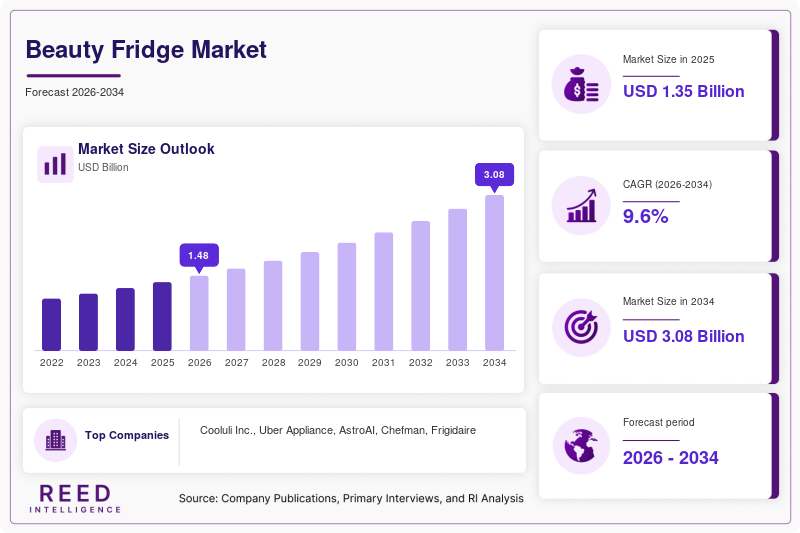
The Beauty Fridge Market size is estimated at approximately USD 1.35 billion, with further growth projected to reach USD 1.52 billion in 2026. The market is expected to expand significantly and reach around USD 3.48 billion by 2034, registering a compound annual growth rate (CAGR) of 9.6% during the forecast period (2025–2034).
The increasing adoption of skincare routines, particularly among younger demographics, is a primary factor driving market growth. Consumers are becoming more informed about the benefits of temperature-controlled storage for products such as serums, creams, and masks. Beauty fridges help maintain product efficacy, extending shelf life and improving application results. Additionally, the surge in social media influence has played a notable role in shaping consumer behavior, with influencers promoting aesthetically pleasing and functional beauty storage solutions.
Key Highlights
- Market size valued at USD 1.35 billion in 2025, driven by increasing adoption of compact skincare storage solutions and premium beauty appliances.
- Expected to reach USD 3.48 billion by 2034, supported by continuous product innovation and expanding global consumer base.
- CAGR of 9.6% from 2025 to 2034, reflecting steady demand growth across both developed and emerging markets.
- Rising skincare awareness driving demand, particularly for temperature-sensitive products like serums, creams, and organic formulations.
- Growing influence of social media and e-commerce, accelerating product visibility, consumer engagement, and online sales channels.
Market Trends
Rising Demand for Aesthetic and Personalized Beauty Appliances
The growing emphasis on aesthetics and personalization is shaping the beauty fridge market trends. Consumers are not only seeking functional appliances but also products that complement their lifestyle and interior décor. Beauty fridges are increasingly available in various colors, finishes, and customizable designs, allowing users to align them with vanity setups. This trend is particularly strong among younger consumers who value visually appealing products that enhance social media content. As a result, manufacturers are focusing on design innovation, including LED lighting, mirror doors, and compact modular storage.
Additionally, personalization extends beyond design to functionality. Some advanced models now offer adjustable temperature settings tailored to different skincare products, ensuring optimal storage conditions. This level of customization enhances consumer satisfaction and encourages repeat purchases. The integration of branding collaborations with cosmetic companies also supports this trend, as co-branded products create a sense of exclusivity. As personalization continues to influence purchasing decisions, this trend is expected to remain a key driver of market growth.
Integration of Smart and Energy-Efficient Technologies
Another notable trend in the beauty fridge market is the integration of smart and energy-efficient technologies. With increasing awareness of environmental sustainability, consumers are prioritizing appliances that consume less energy while maintaining high performance. Manufacturers are incorporating thermoelectric cooling systems, which are quieter and more energy-efficient compared to traditional compressor-based systems. These innovations make beauty fridges more suitable for residential use, particularly in bedrooms and personal spaces.
Smart features are also gaining traction, including temperature monitoring, mobile app integration, and automatic cooling adjustments. These functionalities provide convenience and ensure optimal product preservation. As smart home ecosystems become more widespread, the demand for connected beauty appliances is expected to rise. This trend aligns with broader industry insights indicating a shift toward technologically advanced personal care solutions. Consequently, companies investing in innovation and sustainability are likely to gain a competitive edge in the market.
Market Drivers
Increasing Skincare Awareness and Product Sensitivity
The rising awareness regarding skincare routines and product sensitivity is a major driver for the beauty fridge market. Consumers are becoming more educated about how temperature fluctuations can affect the stability and effectiveness of skincare products. Ingredients such as vitamin C, retinol, and natural extracts are sensitive to heat and light, making refrigeration a preferred storage option. This awareness has been fueled by dermatologists, beauty experts, and digital content platforms that emphasize proper product care.
Moreover, the growing popularity of premium and organic skincare products has increased the need for specialized storage solutions. These products often come at higher price points, prompting consumers to take additional measures to preserve their quality. Beauty fridges provide a controlled environment that helps maintain product integrity, thereby enhancing user experience. This driver is expected to sustain market growth as consumers continue to prioritize skincare investments.
Expansion of E-commerce and Influencer Marketing
The rapid expansion of e-commerce platforms and influencer marketing has significantly contributed to the growth of the beauty fridge market. Online retail channels provide easy access to a wide range of products, enabling consumers to compare features, prices, and reviews before making a purchase. This accessibility has increased product visibility and encouraged adoption across different regions.
Influencer marketing plays a crucial role in shaping consumer preferences. Beauty influencers and content creators frequently showcase beauty fridges as part of their skincare routines, highlighting their benefits and aesthetic appeal. This form of marketing creates a strong aspirational value, especially among younger audiences. Additionally, promotional campaigns, discounts, and bundled offers on e-commerce platforms further drive sales. As digital engagement continues to grow, this driver is expected to remain a key factor in market expansion.
Market Restraint
Limited Functional Necessity and Price Sensitivity
One of the primary restraints affecting the beauty fridge market is the perception of limited functional necessity combined with price sensitivity among consumers. While beauty fridges offer benefits in terms of product preservation, many consumers still view them as non-essential luxury items rather than everyday necessities. This perception can limit adoption, particularly in price-sensitive markets where consumers prioritize basic appliances over specialized products.
Additionally, the cost of beauty fridges can be relatively high compared to their size and functionality. Entry-level models may be affordable, but advanced units with smart features and premium designs often come at higher price points. This pricing structure can deter potential buyers, especially in developing regions. For example, consumers may opt to store skincare products in standard refrigerators instead of investing in a dedicated beauty fridge.
The industry impact of this restraint is reflected in slower penetration rates in certain regions. Manufacturers must address this challenge by offering cost-effective solutions and educating consumers about the long-term benefits of proper skincare storage. Without effective marketing and pricing strategies, this restraint may continue to limit the market’s growth potential.
Market Opportunities
Expansion into Emerging Markets
The expansion into emerging markets presents a significant opportunity for the beauty fridge market. Countries in Asia Pacific, Latin America, and parts of Africa are experiencing rising disposable incomes and increasing urbanization. These factors are contributing to a growing middle-class population with a higher inclination toward personal care and lifestyle products. As awareness of skincare benefits spreads, the demand for specialized storage solutions is expected to rise.
Moreover, the increasing penetration of online retail platforms in these regions makes it easier for consumers to access beauty fridges. Localized marketing strategies and affordable product variants can further enhance market entry. Companies that invest in regional distribution networks and partnerships are likely to benefit from untapped growth potential. This opportunity aligns with broader industry insights indicating a shift toward global market expansion.
Product Innovation and Multi-Functional Designs
Product innovation and the development of multi-functional designs offer another promising opportunity for the beauty fridge market. Manufacturers can differentiate their offerings by integrating additional features such as warming functions, UV sterilization, and storage compartments for different product types. These enhancements increase the utility of beauty fridges, making them more appealing to a wider audience.
Additionally, the introduction of compact and portable designs caters to consumers with limited space or those who travel frequently. Multi-functional beauty fridges can also be marketed as versatile appliances for storing beverages, medications, or other personal items. This versatility broadens the target market and increases product adoption. As innovation continues to drive product development, this opportunity is expected to play a crucial role in shaping the market’s future growth.
Segmental Analysis
By Type
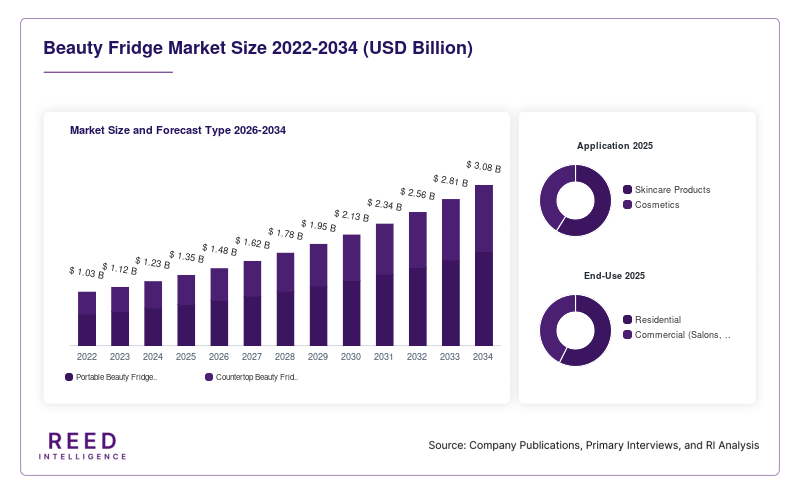
The portable beauty fridge segment dominated the market in 2024, accounting for approximately 62% of the total market share. These compact and lightweight units are highly preferred due to their convenience and ease of use. Consumers value portability as it allows them to move the appliance between rooms or carry it during travel. Additionally, portable beauty fridges are often more affordable, making them accessible to a wider audience. Their compact size also makes them suitable for small living spaces, which is particularly important in urban areas.
The countertop beauty fridge segment is expected to be the fastest-growing, with a CAGR of 10.4% during the forecast period. These units offer larger storage capacity and advanced features such as adjustable shelves and temperature controls. The growth of this segment is driven by increasing demand for multi-functional appliances that can store a variety of products. Consumers seeking enhanced functionality and premium designs are more likely to invest in countertop models, contributing to segment growth.
By Application
The skincare products segment held the largest market share in 2024, accounting for around 68% of the total market. Beauty fridges are primarily used to store skincare items such as creams, serums, and masks, which benefit from temperature-controlled environments. The increasing popularity of multi-step skincare routines has further driven demand in this segment. Consumers are willing to invest in appliances that enhance product effectiveness and improve overall skincare experiences.
The cosmetics segment is projected to grow at the fastest rate, with a CAGR of 9.8% during the forecast period. This growth is driven by the rising demand for temperature-sensitive makeup products, including liquid foundations and lipsticks. Storing cosmetics in a beauty fridge can improve texture and application, making it an attractive option for consumers. As awareness of these benefits increases, the cosmetics segment is expected to witness substantial growth.
By End-Use
The residential segment dominated the market in 2024, accounting for approximately 74% of the total market share. Beauty fridges are primarily used in homes, where consumers incorporate them into daily skincare routines. The growing trend of at-home self-care and wellness has significantly contributed to the dominance of this segment. Additionally, the availability of aesthetically pleasing designs makes these appliances a popular addition to personal spaces.
The commercial segment is expected to grow at the highest CAGR of 9.2% during the forecast period. This segment includes usage in salons, spas, and dermatology clinics. The growth is driven by the increasing adoption of professional skincare treatments and the need for proper product storage in commercial settings. Businesses are investing in beauty fridges to maintain product quality and enhance customer experience, supporting segment expansion.
Regional Analysis
North America
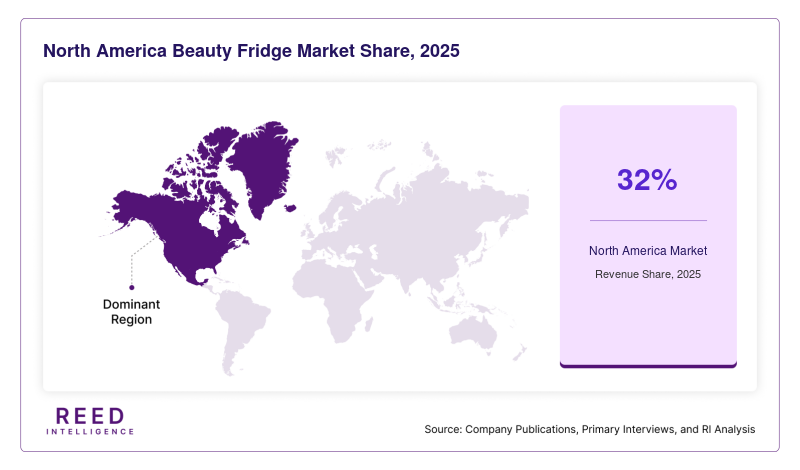
North America held a significant share of the beauty fridge market in 2025, accounting for approximately 32% of the global market. The region is expected to grow at a CAGR of around 8.9% during the forecast period. High consumer awareness regarding skincare routines and the presence of established beauty brands contribute to market growth. Additionally, strong purchasing power supports the adoption of premium personal care appliances.
The United States dominates the North American market, driven by high demand for innovative beauty products. A unique growth factor in this region is the influence of celebrity endorsements and digital marketing campaigns. Consumers are highly responsive to trends promoted by influencers, which accelerates product adoption. This dynamic environment supports continuous market expansion.
Europe
Europe accounted for nearly 26% of the global beauty fridge market share in 2025 and is projected to grow at a CAGR of 8.5% through 2034. The region’s growth is supported by increasing demand for sustainable and energy-efficient appliances. Consumers in Europe are particularly conscious of environmental impact, which influences purchasing decisions.
Germany leads the European market due to its strong consumer base and emphasis on quality products. A unique growth factor in this region is the preference for eco-friendly designs and materials. Manufacturers focusing on sustainability are likely to gain traction among environmentally conscious consumers, supporting long-term market growth.
Asia Pacific
Asia Pacific is expected to be the fastest-growing region, with a CAGR of 11.2% during the forecast period and a market share of approximately 24% in 2025. Rapid urbanization, rising disposable incomes, and increasing awareness of skincare routines are key factors driving growth in this region.
China dominates the Asia Pacific market, supported by a large consumer base and strong e-commerce presence. A unique growth factor is the influence of beauty trends originating from South Korea and Japan, which emphasize skincare routines and product preservation. This cultural influence significantly boosts demand for beauty fridges.
Middle East & Africa
The Middle East & Africa region held around 10% of the global market share in 2025 and is expected to grow at a CAGR of 7.8%. The market is gradually expanding due to increasing awareness of personal care products and improving economic conditions in certain countries.
The United Arab Emirates leads the region, driven by a high standard of living and demand for luxury products. A unique growth factor is the preference for premium lifestyle appliances among affluent consumers. This trend supports the adoption of beauty fridges as part of modern home setups.
Latin America
Latin America accounted for approximately 8% of the global beauty fridge market in 2025 and is projected to grow at a CAGR of 8.2%. The region’s growth is driven by increasing consumer awareness and expanding retail infrastructure.
Brazil dominates the Latin American market, supported by a strong beauty and personal care industry. A unique growth factor is the cultural emphasis on personal grooming and appearance. This cultural aspect encourages consumers to invest in products that enhance skincare routines, including beauty fridges.
Competitive Landscape
The beauty fridge market is characterized by the presence of several established and emerging players competing on product innovation, design, and pricing strategies. Companies are focusing on expanding their product portfolios and enhancing technological capabilities to gain a competitive edge. Strategic partnerships, mergers, and acquisitions are also common in this market, as firms aim to strengthen their market position.
Cooluli Inc. is considered a leading player in the market due to its diverse product offerings and strong brand recognition. The company has recently introduced new models featuring improved energy efficiency and enhanced cooling performance. Other key players are also investing in research and development to introduce advanced features such as smart connectivity and eco-friendly materials.
The competitive landscape is further shaped by the entry of new players, particularly in emerging markets. These companies focus on offering affordable products to attract price-sensitive consumers. As competition intensifies, innovation and differentiation are expected to remain key success factors.
Key Players
- Cooluli Inc.
- Uber Appliance
- AstroAI
- Chefman
- Frigidaire
- Crownful
- Koolatron
- RCA Appliances
- Subcold Ltd
- Teami LLC
- FaceTory
- Vanity Planet
- Finishing Touch Flawless
- Beautigloo
- Skin Gym
Recent Developments
- In 2024, Cooluli Inc. launched an upgraded line of beauty fridges with enhanced thermoelectric cooling technology.
- In 2023, Chefman introduced a multi-functional beauty fridge with dual cooling and warming capabilities.
- In 2024, AstroAI expanded its distribution network in Asia Pacific to strengthen regional presence.
Beauty Fridge Market Segments
Type
- Portable Beauty Fridges
- Countertop Beauty Fridges
Application
- Skincare Products
- Cosmetics
End-Use
- Residential
- Commercial (Salons, Spas, Clinics)
By Region
- North America
- Europe
- APAC
- Middle East and Africa
- LATAM