Becker Muscular Dystrophy Treatment Market Size, Share & Demand Report By Treatment Type (Corticosteroids, Gene Therapy, Exon Skipping, Supportive Therapy), By Route of Administration (Oral, Injectable, Others), By End-Use (Hospitals, Specialty Clinics, Homecare Settings), By Region & Segment Forecasts, 2026–2034
USD 3950
Market Overview
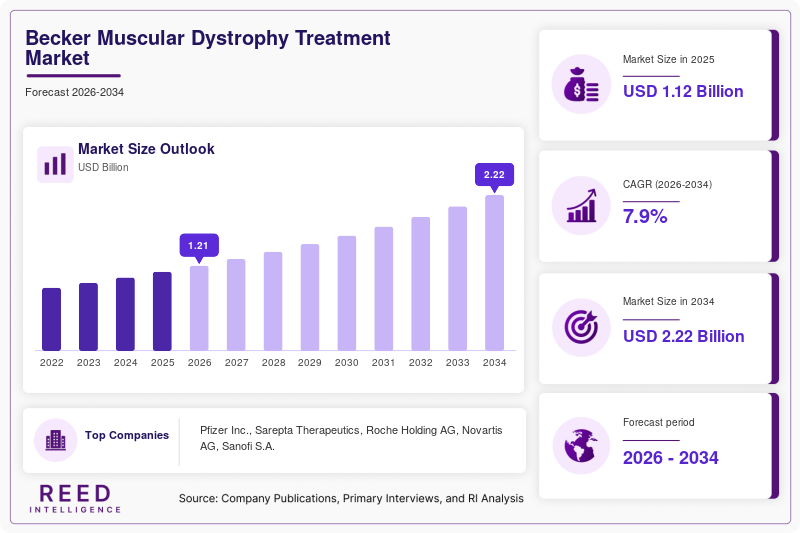
The Becker Muscular Dystrophy Treatment Market was valued at approximately USD 1.12 billion in 2026 and is projected to reach USD 2.05 billion by 2034, expanding at a CAGR of 7.9% during the forecast period (2026–2034). The market growth is primarily supported by increasing global awareness of rare genetic disorders and the expansion of targeted therapies, particularly in neuromuscular disease management. Advancements in gene therapy and exon-skipping technologies are creating new treatment avenues, improving patient outcomes and extending life expectancy among individuals diagnosed with Becker muscular dystrophy (BMD).
The growing emphasis on precision medicine and supportive regulatory frameworks has accelerated clinical trials and product approvals in this space. Pharmaceutical companies are increasingly investing in research and development to introduce innovative therapies that address the underlying genetic causes of BMD rather than merely managing symptoms. Additionally, rising healthcare expenditure and improved diagnostic capabilities have contributed to early disease identification, further boosting treatment adoption rates globally.
Key Highlights
- North America dominated the market with a 36.8% share in 2025.
- Asia Pacific is expected to grow at the fastest CAGR of 9.6% during 2026–2034.
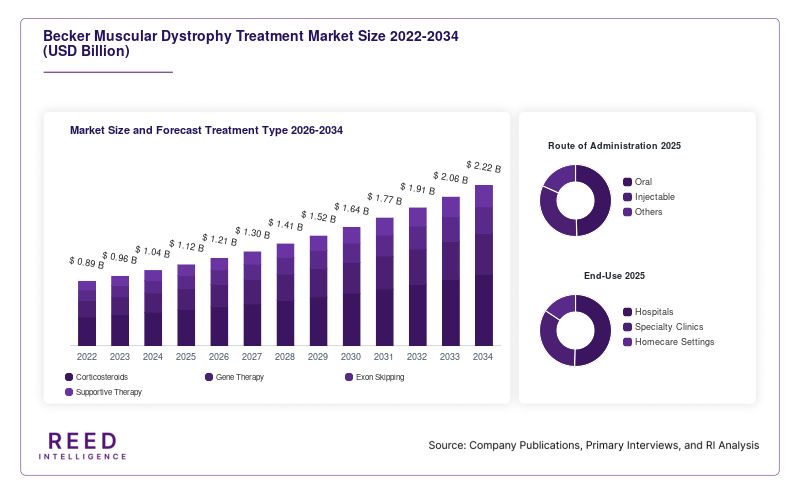
- By treatment type, corticosteroids accounted for the largest share of 42.3%, while gene therapy is projected to grow at a CAGR of 10.8%.
- By route of administration, oral therapies led with a 47.5% share, whereas injectable therapies are expected to expand at a CAGR of 9.9%.
- The United States remained the dominant country, with market values of USD 420 million in 2024 and USD 455 million in 2025.
Market Trends
Increasing Adoption of Gene and Molecular Therapies
A key trend shaping the Becker Muscular Dystrophy Treatment Market is the growing adoption of gene-based and molecular therapies. These treatments focus on correcting or modifying the defective dystrophin gene responsible for the condition. Pharmaceutical companies are actively exploring exon-skipping drugs, gene editing techniques, and viral vector-based delivery systems. These advancements aim to restore partial dystrophin function, which can significantly slow disease progression. As regulatory agencies show increased willingness to fast-track rare disease treatments, the pipeline for such therapies is expanding. Clinical trials are demonstrating promising efficacy and safety profiles, which is encouraging investor confidence and funding. This trend is expected to transform the treatment landscape by shifting from symptomatic management to disease-modifying approaches.
Expansion of Rare Disease Awareness and Screening Programs
Another significant trend is the expansion of awareness campaigns and screening programs for rare genetic disorders, including BMD. Governments and healthcare organizations are investing in educational initiatives to improve early diagnosis and treatment access. Neonatal screening and genetic testing have become more accessible, enabling earlier intervention and better disease management. Patient advocacy groups are playing an important role in promoting research funding and policy changes. Increased awareness is also encouraging pharmaceutical companies to enter the rare disease segment, further intensifying competition and innovation. As awareness improves globally, particularly in emerging markets, demand for effective treatments is expected to rise steadily.
Market Drivers
Advancements in Genetic Research and Therapeutic Development
The rapid advancement in genetic research is a major driver of the Becker Muscular Dystrophy Treatment Market. Breakthroughs in genomics and molecular biology have enabled a deeper understanding of the dystrophin gene mutation responsible for BMD. This knowledge has led to the development of targeted therapies such as exon-skipping drugs and gene replacement treatments. Pharmaceutical companies are leveraging these technologies to design therapies that address the root cause of the disease. The increasing number of clinical trials and regulatory approvals is accelerating market growth. Furthermore, collaborations between biotechnology firms and research institutions are fostering innovation and reducing development timelines. These advancements are expected to significantly improve treatment outcomes and expand the patient pool seeking therapy.
Rising Healthcare Investments and Government Support
Another important driver is the growing investment in healthcare infrastructure and rare disease research. Governments across developed and developing regions are allocating funds to support the diagnosis and treatment of rare conditions like BMD. Incentives such as orphan drug designations, tax credits, and accelerated approval pathways are encouraging pharmaceutical companies to invest in this niche market. Increased healthcare spending is also improving access to advanced therapies and diagnostic tools. Additionally, public-private partnerships are facilitating the development of innovative treatment options. As funding continues to increase, the availability and affordability of treatments are expected to improve, further driving market growth.
Market Restraint
High Cost of Advanced Therapies and Limited Accessibility
The high cost associated with advanced therapies represents a significant restraint in the Becker Muscular Dystrophy Treatment Market. Gene therapies and novel biologics often require substantial investment in research, development, and manufacturing, resulting in high treatment prices. These costs can limit patient access, particularly in low- and middle-income countries where healthcare funding is constrained. Insurance coverage for rare disease treatments is often limited, further restricting affordability. Additionally, the complex regulatory approval process can delay market entry and increase development costs. This financial burden impacts both healthcare providers and patients, slowing adoption rates. For example, advanced gene therapies may cost several hundred thousand dollars per patient, making them inaccessible to a large portion of the population. Addressing these cost challenges is essential for ensuring equitable access to treatment and sustaining long-term market growth.
Market Opportunities
Emerging Markets Expansion
Emerging markets present significant growth opportunities for the Becker Muscular Dystrophy Treatment Market. Countries in Asia Pacific, Latin America, and parts of the Middle East are improving their healthcare infrastructure and increasing investment in rare disease management. Rising awareness and government initiatives are driving demand for advanced diagnostic and treatment options. Pharmaceutical companies are expanding their presence in these regions through partnerships and distribution agreements. The large patient population and unmet medical needs create a favorable environment for market expansion. As healthcare systems continue to evolve, these regions are expected to contribute significantly to overall market growth.
Development of Personalized Medicine Approaches
The shift toward personalized medicine offers another promising opportunity. Tailoring treatments based on individual genetic profiles can enhance therapeutic efficacy and reduce adverse effects. Advances in genetic sequencing and biomarker identification are enabling the development of customized treatment plans for BMD patients. Pharmaceutical companies are investing in precision medicine platforms to create targeted therapies that address specific genetic mutations. This approach not only improves patient outcomes but also increases treatment adoption rates. As personalized medicine becomes more accessible, it is expected to drive innovation and open new revenue streams in the market.
Segmental Analysis
By Treatment Type
Corticosteroids accounted for the largest share of 42.3% in 2024, making them the dominant subsegment. These drugs are widely used to manage inflammation and slow muscle degeneration in BMD patients. Their affordability and established efficacy make them a preferred choice among healthcare providers. Corticosteroids are often prescribed as a first-line treatment due to their ability to improve muscle strength and prolong mobility. Additionally, their availability across various healthcare settings ensures widespread adoption.
Gene therapy is the fastest-growing subsegment, projected to expand at a CAGR of 10.8% during the forecast period. This growth is driven by ongoing advancements in genetic engineering and increasing investment in research and development. Gene therapy offers the potential to address the root cause of BMD by restoring dystrophin production. Clinical trials are showing promising results, attracting significant funding and interest from pharmaceutical companies. As these therapies become more accessible, their adoption is expected to increase rapidly.
By Route of Administration
Oral therapies dominated the market with a 47.5% share in 2024. These treatments are preferred due to their ease of administration and high patient compliance. Oral medications are commonly used for long-term management of BMD, making them a convenient option for patients and caregivers. The widespread availability of oral formulations further supports their dominance in the market.
Injectable therapies are expected to grow at a CAGR of 9.9% during the forecast period. This growth is driven by the increasing use of biologics and gene therapies, which often require injectable delivery methods. Advances in drug delivery technologies are improving the safety and efficacy of injectable treatments. As more innovative therapies enter the market, the demand for injectable administration is expected to rise.
By End-Use
Hospitals accounted for the largest share of 51.2% in 2024, making them the dominant subsegment. Hospitals provide comprehensive care, including diagnosis, treatment, and monitoring of BMD patients. The availability of advanced medical equipment and specialized healthcare professionals supports the dominance of this segment. Hospitals also play a key role in conducting clinical trials and administering complex therapies.
Specialty clinics are the fastest-growing subsegment, with a projected CAGR of 8.7% during the forecast period. These clinics focus on neuromuscular disorders and offer specialized care tailored to BMD patients. The increasing number of specialty clinics and rising demand for personalized treatment are driving growth in this segment. Patients prefer these facilities for their expertise and targeted treatment approaches.
Regional Analysis
North America
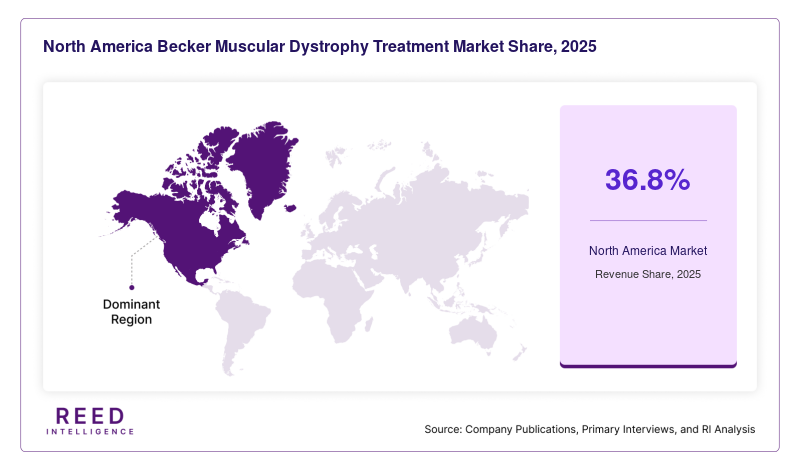
North America held a dominant share of 36.8% in 2025 and is projected to grow at a CAGR of 7.5% during the forecast period. The region’s leadership is attributed to advanced healthcare infrastructure, high awareness levels, and strong research capabilities. The presence of leading pharmaceutical companies and ongoing clinical trials further supports market growth. Favorable reimbursement policies and government support for rare disease treatments contribute to sustained demand for innovative therapies.
The United States remains the dominant country in the region due to its robust healthcare system and extensive research funding. A unique growth factor is the strong presence of patient advocacy groups that actively promote awareness and funding for BMD research. These organizations collaborate with pharmaceutical companies and regulatory bodies to accelerate drug development and improve patient access to treatment.
Europe
Europe accounted for a significant share of the Becker Muscular Dystrophy Treatment Market in 2025 and is expected to grow at a CAGR of 7.2% through 2034. The region benefits from well-established healthcare systems and increasing government support for rare disease management. Regulatory frameworks such as orphan drug policies encourage innovation and market entry for new therapies.
Germany leads the European market due to its advanced medical research infrastructure and strong pharmaceutical industry. A unique growth factor is the integration of genetic testing into routine healthcare practices, enabling early diagnosis and intervention. This proactive approach is driving demand for effective treatment options across the region.
Asia Pacific
Asia Pacific is anticipated to grow at the fastest CAGR of 9.6% during the forecast period. The region’s growth is driven by increasing healthcare investments, rising awareness of rare diseases, and expanding access to advanced diagnostic tools. Countries such as China, India, and Japan are witnessing significant improvements in healthcare infrastructure.
China dominates the Asia Pacific market due to its large population and increasing focus on rare disease management. A unique growth factor is government initiatives aimed at improving access to genetic testing and treatment options. These efforts are enhancing early diagnosis and boosting demand for innovative therapies.
Middle East & Africa
The Middle East & Africa region is expected to experience moderate growth, with a CAGR of 6.5% during the forecast period. Limited awareness and healthcare infrastructure challenges have historically restricted market growth. However, increasing investments in healthcare and rising awareness are gradually improving the situation.
Saudi Arabia is the leading country in the region due to its growing healthcare expenditure and focus on advanced medical technologies. A unique growth factor is the government’s investment in specialized healthcare facilities and research centers, which is improving access to treatment and supporting market expansion.
Latin America
Latin America is projected to grow at a CAGR of 6.9% during the forecast period. The region is witnessing gradual improvements in healthcare infrastructure and increasing awareness of rare diseases. Government initiatives and international collaborations are supporting the adoption of advanced treatment options.
Brazil dominates the Latin American market due to its relatively developed healthcare system and growing focus on rare disease management. A unique growth factor is the expansion of public healthcare programs that provide access to diagnostic and treatment services for underserved populations, driving market growth.
Competitive Landscape
The Becker Muscular Dystrophy Treatment Market is characterized by moderate competition, with several global and regional players focusing on research and development to introduce innovative therapies. Leading companies are investing in gene therapy and precision medicine to gain a competitive edge. Strategic collaborations, mergers, and acquisitions are common as companies aim to expand their product portfolios and geographic presence.
A leading player in the market is Pfizer Inc., which has been actively involved in developing advanced therapies for neuromuscular disorders. The company recently announced progress in its gene therapy pipeline, highlighting its commitment to innovation in this field. Other companies are also focusing on clinical trials and regulatory approvals to strengthen their market position. The competitive landscape is expected to evolve as new entrants bring novel treatment options to the market.
Key Players
- Pfizer Inc.
- Sarepta Therapeutics
- Roche Holding AG
- Novartis AG
- Sanofi S.A.
- Biogen Inc.
- PTC Therapeutics
- Wave Life Sciences
- Solid Biosciences
- Astellas Pharma Inc.
- Daiichi Sankyo Company
- Bristol Myers Squibb
- Vertex Pharmaceuticals
- Ionis Pharmaceuticals
- CSL Behring
Recent Developments
- A major pharmaceutical company announced positive Phase II trial results for a gene therapy targeting dystrophin restoration in BMD patients.
- A biotechnology firm entered into a strategic partnership to develop exon-skipping therapies, expanding its neuromuscular disease portfolio.
- Regulatory authorities granted orphan drug designation to a novel therapy aimed at treating Becker muscular dystrophy, accelerating its development timeline.
Becker Muscular Dystrophy Treatment Market Segments
Treatment Type
- Corticosteroids
- Gene Therapy
- Exon Skipping
- Supportive Therapy
Route of Administration
- Oral
- Injectable
- Others
End-Use
- Hospitals
- Specialty Clinics
- Homecare Settings
By Region
- North America
- Europe
- APAC
- Middle East and Africa
- LATAM