Beef Fat Market Size, Share & Demand Report By Product Type (Edible Beef Tallow, Inedible Tallow, Biodiesel-Grade Beef Fat, Specialty Rendered Derivatives), By Application (Food Processing, Animal Feed, Renewable Energy, Cosmetics & Personal Care, Oleochemicals), By End-Use (Foodservice, Industrial Manufacturing, Retail & Consumer Goods, Pharmaceutical & Specialty Uses) By Region & Segment Forecasts, 2026–2034
USD 3950
Market Overview
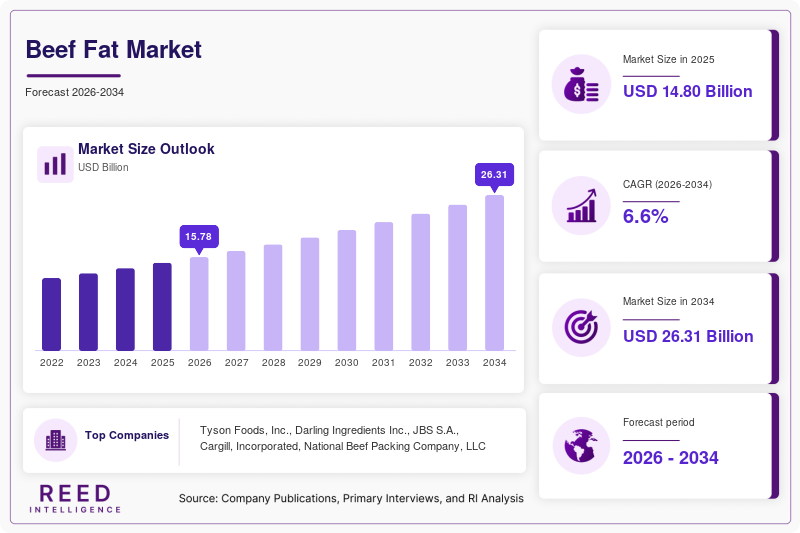
The global Beef Fat Market size was valued at USD 14.8 billion in 2026 and is projected to reach USD 24.6 billion by 2034, expanding at a compound annual growth rate (CAGR) of 6.6% during the forecast period. Beef fat, commonly processed into tallow, dripping, and rendered ingredients, remains an important commodity across food processing, oleochemicals, cosmetics, biodiesel, and animal feed industries. Rising utilization in processed foods, premium culinary products, and industrial applications has sustained steady demand worldwide. A major global factor supporting market growth is the increasing commercial use of animal-derived fats in renewable fuel production, especially in biodiesel and sustainable aviation fuel supply chains, where beef fat serves as a cost-efficient feedstock. At the same time, expanding demand for traditional cooking fats in quick-service restaurants and packaged foods has reinforced consumption in both developed and emerging markets. Market participants are also investing in advanced rendering systems that improve purity and shelf stability, making beef fat more attractive for pharmaceutical and personal care applications. Regulatory improvements in meat processing infrastructure have further supported global trade and product consistency. The market demonstrates moderate fragmentation, with integrated meat processors and specialty rendering companies competing on supply chain efficiency, sustainability certifications, and value-added applications.
Key Highlights
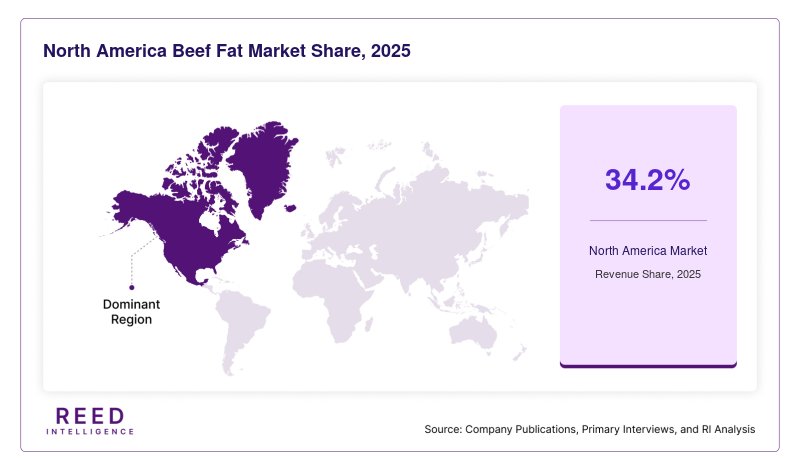
- North America dominated the market with a 34.2% share in 2025.
- Asia Pacific is expected to grow at the fastest CAGR of 8.9% during 2026–2034.
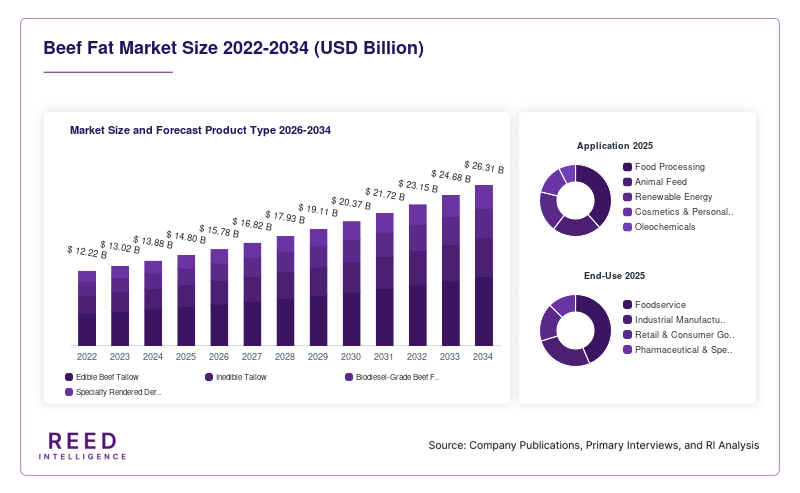
- By product type, edible beef tallow accounted for the largest share of 39.4%, while biodiesel-grade beef fat is projected to grow at a CAGR of 9.8%.
- By application, food processing led with a 44.1% share, whereas renewable energy is expected to expand at a CAGR of 10.1%.
- The United States remained the dominant country, with market values of USD 3.9 billion in 2024 and USD 4.2 billion in 2025.
Market Trends
Expansion of Beef Fat in Renewable Fuel and Bioenergy Supply Chains
A notable trend shaping the Beef Fat Market is the accelerating use of rendered beef fat in renewable fuel production. As governments and industrial operators seek lower-carbon alternatives to fossil fuels, beef tallow has emerged as a practical feedstock for biodiesel and renewable diesel due to its stable fatty acid profile and broad industrial availability. Refiners increasingly source beef fat from slaughterhouses and rendering facilities to diversify away from vegetable oils, which often face price volatility. This trend is especially visible in North America and Europe, where low-carbon fuel standards encourage alternative feedstocks. Beef fat’s role in sustainable aviation fuel pilot projects is also expanding, creating long-term commercial value. Improved rendering technologies that reduce impurities are enhancing suitability for advanced fuel conversion systems.
Growing Premiumization of Traditional Animal Fat in Culinary and Specialty Food Markets
Another significant trend is the repositioning of beef fat from a commodity byproduct to a premium culinary ingredient. Restaurants, gourmet food brands, and artisanal snack manufacturers are increasingly using beef tallow for frying, roasting, and flavor enhancement due to consumer preference for traditional fats and clean-label ingredients. This trend aligns with demand for minimally processed foods and heritage cooking methods. Beef fat is also gaining traction in packaged frozen foods and savory snacks where texture and flavor differentiation are important. Food manufacturers are promoting beef tallow as a stable, reusable frying medium with distinct sensory benefits. In emerging markets, rising meat processing volumes are supporting local supply, while premium Western-style foodservice growth is increasing adoption.
Market Drivers
Rising Demand from Processed Food and Quick-Service Restaurant Industries
The growth of processed food manufacturing and quick-service restaurant chains continues to drive the Beef Fat Market. Beef fat is widely used in frying oils, bakery shortenings, savory flavor systems, and ready-to-eat meals due to its functional properties and taste profile. Global urbanization and busier lifestyles are increasing demand for convenient food products, which supports greater use of stable cooking fats. Restaurants favor beef tallow for certain menu categories because of heat resistance and flavor retention. In regions with strong fast-food penetration, commercial kitchens are increasing procurement of rendered fats to maintain cost efficiency. The growing packaged snack sector also supports this driver as manufacturers seek differentiated textures and flavor consistency.
Industrial Diversification into Cosmetics, Oleochemicals, and Personal Care
Beef fat’s expanding use beyond food is another important market driver. Rendered beef fat derivatives are increasingly processed into fatty acids, soaps, lubricants, candles, and cosmetic ingredients. Manufacturers value beef fat for its relatively low cost and functional versatility compared with some plant-based alternatives. In personal care, stearic acid derived from beef fat is used in creams, soaps, and emulsifiers. Oleochemical industries are also using beef fat as a feedstock for industrial compounds. This diversification reduces dependence on food-sector demand alone and supports broader market resilience. As processing standards improve, refined beef fat products are becoming more suitable for regulated industrial sectors.
Market Restraint
Health Concerns and Regulatory Pressure Related to Saturated Fat Consumption
A key restraint in the Beef Fat Market is ongoing consumer and regulatory concern regarding saturated fat intake. Public health campaigns in several developed economies encourage reduced consumption of animal fats due to links with cardiovascular disease, which can limit growth in food applications. Food producers may reformulate products using vegetable or blended oils to align with nutritional expectations. In retail markets, labeling requirements and health-conscious consumer behavior can reduce mainstream demand for beef fat-based products. Additionally, environmental concerns related to livestock emissions can influence institutional procurement decisions. While industrial applications partially offset these limitations, negative dietary perception remains a significant challenge for edible beef fat categories, particularly in health-sensitive urban populations.
Market Opportunities
Increasing Penetration in Emerging Asian and African Meat Processing Markets
Emerging economies offer substantial opportunity for the Beef Fat Market due to expanding meat processing industries and improving cold-chain infrastructure. Countries in Asia Pacific and Africa are witnessing rising disposable income, urban dietary shifts, and greater consumption of processed meat products. As slaughter capacity grows, beef fat availability increases, supporting domestic rendering operations. These markets also present opportunities for lower-cost edible fats and industrial feedstocks. Government investment in food manufacturing zones and export processing facilities can further enhance product commercialization. International suppliers are exploring partnerships with regional processors to establish localized value chains and reduce waste through fat utilization.
Product Innovation in High-Purity Pharmaceutical and Specialty Industrial Applications
Another major opportunity lies in technological advancements that enable high-purity beef fat derivatives for pharmaceutical, nutraceutical, and specialty industrial sectors. Advanced fractionation and purification systems are improving product consistency, making beef fat suitable for medicinal ointments, encapsulation systems, and specialized lubricants. This creates higher-margin opportunities compared with commodity tallow sales. Specialty soap and skincare segments also benefit from premium rendered fat ingredients. As manufacturers focus on maximizing carcass value, investment in specialized beef fat processing can unlock new revenue streams. Innovation in traceability and sustainability certification can further strengthen premium positioning across global markets.
Segmental Analysis
By Product Type
Edible beef tallow emerged as the dominant product type, accounting for 39.4% of the market in 2024. This segment benefits from widespread use in frying, baking, savory food manufacturing, and traditional culinary practices. Its stable high-temperature cooking performance and flavor profile support strong adoption across foodservice and packaged food sectors. Quick-service restaurants, frozen meal manufacturers, and specialty snack producers continue driving demand. Consumer interest in heritage fats and minimally processed ingredients has also strengthened edible tallow’s market position.
Biodiesel-grade beef fat is projected to be the fastest-growing subsegment, expanding at a CAGR of 9.8% through 2034. This growth is supported by increasing renewable fuel mandates, carbon reduction targets, and feedstock diversification efforts. Beef fat offers economic advantages compared with some vegetable oils and supports waste valorization strategies. Fuel producers are investing in pretreatment systems to process rendered animal fats more efficiently, strengthening long-term segment demand.
By Application
Food processing held the largest application share at 44.1% in 2024, supported by widespread integration in snacks, bakery, frying, and prepared meals. Beef fat’s sensory advantages and thermal stability make it valuable for maintaining texture and flavor consistency. Industrial food manufacturers increasingly incorporate beef fat into premium and mainstream product lines. The rise of convenience foods globally has reinforced this segment’s leadership.
Renewable energy is expected to be the fastest-growing application, with a CAGR of 10.1% over the forecast period. Biodiesel and renewable diesel producers are increasing use of beef fat due to favorable cost structures and regulatory incentives. Growing investment in low-carbon fuels, particularly in North America and Europe, is driving this transition. Advanced refining technologies are improving feedstock flexibility, making beef fat increasingly attractive.
By End-Use
Foodservice and commercial kitchens represented the dominant end-use segment with 36.8% share in 2024. Restaurants, catering services, and quick-service operators rely on beef fat for frying efficiency and flavor enhancement. The expansion of international fast-food chains and regional meat-based cuisines continues supporting segment growth. Bulk procurement advantages and cooking stability contribute to broad adoption.
Industrial manufacturing is the fastest-growing end-use segment, forecast to expand at a CAGR of 8.7%. This includes biodiesel plants, soap manufacturers, cosmetics producers, and oleochemical processors. Rising focus on byproduct utilization, cost-effective industrial inputs, and sustainability is driving segment expansion. Increasing adoption of rendered beef fat derivatives in specialized applications supports continued momentum.
Regional Analysis
North America
North America accounted for 34.2% of the global Beef Fat Market in 2025 and remains the leading regional contributor due to advanced meat processing infrastructure, integrated rendering systems, and strong foodservice demand. The region is projected to expand at a CAGR of 5.8% through 2034. Large-scale beef production in the United States and Canada ensures abundant raw material availability, while industrial applications in biodiesel and oleochemicals continue supporting demand diversification.
The United States dominates the regional market because of its large beef slaughter industry and extensive rendering network. A unique growth factor is the country’s rapid integration of beef tallow into renewable diesel production. Federal and state-level fuel policies are increasing demand for animal fat feedstocks, encouraging processors to invest in rendering optimization and supply contracts with biofuel refiners.
Europe
Europe held approximately 24.6% of global market share in 2025 and is expected to grow at a CAGR of 5.9% during the forecast period. Demand is driven by processed food manufacturing, industrial oleochemicals, and increasing use of rendered fats in renewable energy. Regulatory oversight is stringent, but efficient waste valorization systems support broad commercial use of beef fat across multiple sectors.
Germany leads the European market due to its advanced food manufacturing base and biodiesel infrastructure. A unique growth factor is the region’s circular economy emphasis, which encourages full animal byproduct utilization. This sustainability framework supports rendering investments and positions beef fat as a viable industrial resource rather than a low-value byproduct.
Asia Pacific
Asia Pacific represented 21.8% of global Beef Fat Market share in 2025 and is forecast to grow at the fastest CAGR of 8.9% through 2034. Rising meat consumption, urbanization, and industrialization are driving both edible and non-edible beef fat demand. Expanding processed food industries in populous economies create strong long-term growth potential.
China remains the dominant country in the region due to growing meat processing output and industrial ingredient demand. A unique growth factor is the expansion of domestic foodservice chains and packaged meal sectors, which increasingly utilize beef fat for flavor systems and processed formulations. Rising industrial use in soaps and chemicals also contributes.
Middle East & Africa
The Middle East & Africa region captured 9.1% of global market share in 2025 and is projected to grow at a CAGR of 6.7%. Demand is supported by population growth, meat consumption expansion, and increasing food manufacturing capabilities. Several countries are modernizing slaughter and rendering operations to improve domestic resource utilization.
Saudi Arabia leads regional demand due to expanding food processing and hospitality sectors. A unique growth factor is halal-certified rendering development, which enhances beef fat commercialization for regional and export food applications. Improved regulatory frameworks are also encouraging broader industrial investment.
Latin America
Latin America accounted for 10.3% of the global market in 2025 and is expected to register a CAGR of 6.4% through 2034. Strong cattle industries in Brazil and Argentina provide extensive raw material access. Growing biodiesel programs and food manufacturing modernization are improving market prospects.
Brazil dominates the region because of its large cattle production base and export-oriented meat sector. A unique growth factor is the increasing integration of beef fat into domestic biofuel strategies, where rendering byproducts are leveraged to improve profitability and reduce waste in large meatpacking ecosystems.
Competitive Landscape
The Beef Fat Market features a mix of multinational meat processors, rendering specialists, and regional suppliers competing through vertical integration and byproduct optimization. Leading companies focus on supply chain efficiency, product purity, and diversified end-use channels. Tyson Foods remains a major market leader due to its integrated beef operations and extensive rendering capabilities. Darling Ingredients plays a central role in industrial and renewable energy applications through large-scale rendering networks. JBS, Cargill, and National Beef Packing maintain strong positions through global meat production and value-added fat commercialization. A recent industry development includes expanded rendering capacity investments by several major processors to meet rising biodiesel feedstock demand, reflecting strategic alignment with renewable energy markets.
Key Players
- Tyson Foods
- Darling Ingredients
- JBS S.A.
- Cargill Incorporated
- National Beef Packing Company
- Smithfield Foods
- Baker Commodities
- West Coast Reduction
- SARIA Group
- Minerva Foods
- American Foods Group
- BHT ReSources
- Allanasons Pvt Ltd
- Leo Group Ltd
- FASA Group
Recent Developments
- Major rendering companies expanded biodiesel-grade fat purification facilities to support renewable diesel demand.
- Several global meat processors invested in automation technologies to improve beef fat extraction yields and reduce waste.
- New partnerships between rendering suppliers and sustainable fuel producers increased long-term procurement agreements for animal fat feedstocks.
Beef Fat Market Segments
Product Type
- Edible Beef Tallow
- Inedible Tallow
- Biodiesel-Grade Beef Fat
- Specialty Rendered Derivatives
Application
- Food Processing
- Animal Feed
- Renewable Energy
- Cosmetics & Personal Care
- Oleochemicals
End-Use
- Foodservice
- Industrial Manufacturing
- Retail & Consumer Goods
- Pharmaceutical & Specialty Uses
By Region
- North America
- Europe
- APAC
- Middle East and Africa
- LATAM