Behcets Disease Treatment Market Size, Share & Demand Report By Drug Class (Corticosteroids, Immunosuppressants, Biologics, Colchicine, Others), By Route of Administration (Oral, Injectable, Topical), By Distribution Channel (Hospital Pharmacies, Retail Pharmacies, Online Pharmacies), By Region & Segment Forecasts, 2026–2034
USD 3950
Market Overview
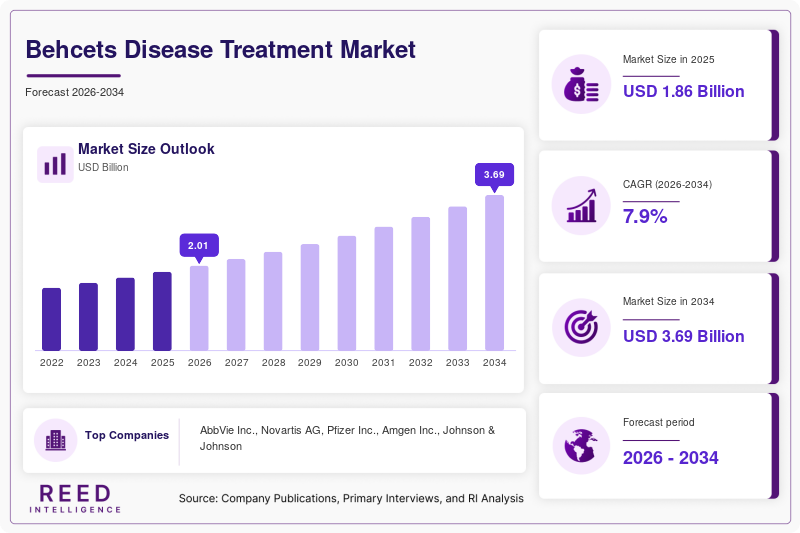
The global Behcets Disease Treatment Market size was valued at USD 1.86 billion in 2026 and is projected to reach USD 3.42 billion by 2034, expanding at a CAGR of 7.9% during the forecast period of 2026–2034. Growth in this market is being shaped by the rising prevalence of autoimmune and inflammatory disorders, broader clinical awareness of rare vasculitis conditions, and expanding access to targeted immunosuppressive therapies. Behcet’s disease, a chronic multisystem inflammatory disorder affecting blood vessels, requires long-term treatment approaches involving corticosteroids, immunosuppressants, biologics, and supportive therapies. The market is benefiting from advances in biologic drugs such as TNF inhibitors and interleukin-targeting agents, which are improving treatment outcomes for patients with severe ocular, neurological, and vascular complications. Increasing diagnosis rates in both developed and emerging healthcare systems are also contributing to stronger treatment demand. In addition, pharmaceutical investment in orphan disease therapeutics and personalized medicine platforms is supporting innovation. Government-backed rare disease programs in major economies have improved reimbursement frameworks, making premium therapies more accessible. Digital monitoring tools and integrated specialty care centers are further strengthening treatment adherence. As healthcare systems continue focusing on chronic inflammatory disease management, the Behcets Disease Treatment Market is expected to witness sustained expansion across hospital, specialty clinic, and retail pharmacy channels.
Key Highlights
- North America dominated the market with a 36.8% share in 2025.
- Asia Pacific is expected to grow at the fastest CAGR of 9.8% during 2026–2034.
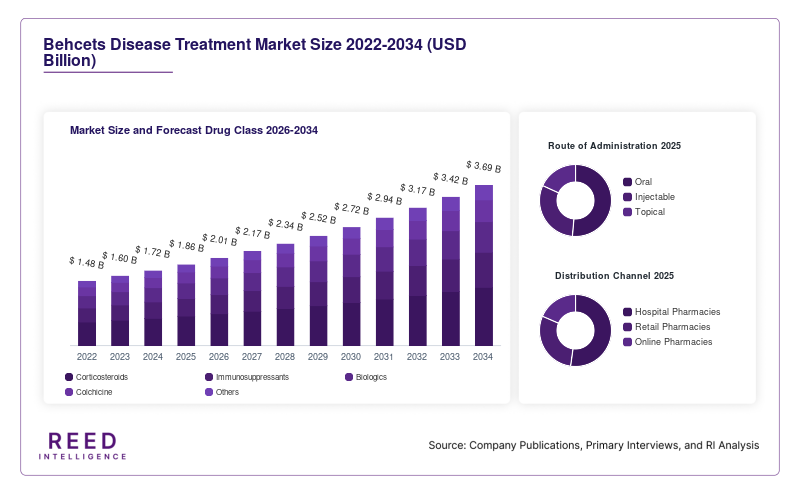
- By drug class, corticosteroids accounted for the largest share of 34.6%, while biologics are projected to grow at a CAGR of 10.7%.
- By route of administration, oral therapies led with a 49.3% share, whereas injectable therapies are expected to expand at a CAGR of 9.9%.
- By distribution channel, hospital pharmacies held a 45.1% share, while online pharmacies are forecast to grow at a CAGR of 11.1%.
- The United States remained the dominant country, with market values of USD 428 million in 2024 and USD 462 million in 2025.
Market Trends
Rising penetration of biologic therapies in severe disease management
The Behcets Disease Treatment Market is increasingly shifting toward biologic therapies due to their growing effectiveness in managing refractory and multisystem cases. Patients with severe ocular inflammation, neuro-Behcet manifestations, or vascular complications often require more precise interventions than corticosteroids alone can provide. This has accelerated demand for TNF-alpha inhibitors, interferons, and monoclonal antibodies targeting inflammatory pathways. Healthcare providers are adopting biologics earlier in treatment algorithms to reduce relapse rates and preserve organ function. This trend is also supported by expanded regulatory approvals, physician confidence, and increasing insurance coverage in developed markets. As biosimilar competition improves affordability, biologic adoption is expected to broaden further across emerging countries.
Expansion of personalized and multidisciplinary treatment frameworks
A notable trend shaping the market is the transition from generalized symptom suppression to personalized care models based on disease severity, organ involvement, and patient response patterns. Rheumatologists, dermatologists, ophthalmologists, and neurologists are increasingly collaborating to optimize treatment regimens. This multidisciplinary strategy is improving long-term disease control and reducing hospitalization rates. Genetic studies and biomarker research are also helping identify patient subsets likely to benefit from targeted interventions. Specialty clinics are incorporating telemedicine and remote symptom monitoring for chronic disease management, improving adherence and treatment continuity. This personalized approach is creating opportunities for premium therapies and advanced clinical services within the Behcets Disease Treatment Market.
Market Drivers
Increasing prevalence of autoimmune and inflammatory disorders worldwide
The rising burden of autoimmune diseases is a major driver supporting the Behcets Disease Treatment Market. Although Behcet’s disease remains rare, broader improvements in autoimmune screening have increased diagnosis rates. Enhanced physician awareness of recurrent oral ulcers, genital lesions, uveitis, and vascular inflammation has reduced underdiagnosis. Regions with genetically susceptible populations, including parts of Asia and the Middle East, are witnessing stronger patient identification rates. Public health initiatives promoting early diagnosis are also improving treatment uptake. As more healthcare systems recognize the economic burden of delayed intervention, demand for comprehensive therapeutic solutions continues to grow across both first-line and advanced care segments.
Stronger pharmaceutical investment in orphan and rare disease therapeutics
Pharmaceutical companies are increasingly prioritizing rare inflammatory diseases due to favorable orphan drug incentives, premium pricing opportunities, and less crowded treatment landscapes. Behcet’s disease is benefiting from this trend as developers explore biologics, immunomodulators, and next-generation anti-inflammatory compounds. Research pipelines focused on cytokine inhibition and targeted immune modulation are expanding. Government support for orphan drug designation in the United States, Europe, and Japan has encouraged clinical development. These incentives include tax credits, market exclusivity, and expedited regulatory pathways. As innovation accelerates, the market is gaining from improved therapeutic diversity, stronger commercialization potential, and rising specialist confidence.
Market Restraint
High treatment costs and limited disease awareness in lower-income regions
One of the primary restraints affecting the Behcets Disease Treatment Market is the substantial cost burden associated with advanced therapies, especially biologics and specialty immunosuppressants. While corticosteroids and generic immunosuppressants remain accessible, severe cases often require expensive long-term biologic intervention, which can create affordability barriers. In many low- and middle-income countries, healthcare systems lack adequate reimbursement for rare diseases, restricting patient access to modern treatment protocols. Limited specialist availability also contributes to delayed diagnosis, leading to disease progression before treatment begins. Misdiagnosis with lupus, Crohn’s disease, or other vasculitis disorders can further slow intervention. These challenges reduce market penetration and create disparities in treatment quality. Manufacturers must also overcome small patient populations, which can complicate pricing flexibility. Unless broader awareness campaigns and cost-reduction strategies are implemented, unequal treatment accessibility may constrain overall market growth.
Market Opportunities
Growth potential in emerging Asia-Pacific and Middle Eastern healthcare systems
Emerging healthcare markets represent a major opportunity for the Behcets Disease Treatment Market due to higher disease prevalence along historical Silk Road populations and improving medical infrastructure. Countries such as China, India, Turkey, and Saudi Arabia are increasing investment in autoimmune disease diagnostics and specialty care centers. Expanding insurance penetration and public-private healthcare partnerships are improving treatment access. These regions also present opportunities for biosimilar manufacturers seeking cost-sensitive expansion. As healthcare systems modernize, diagnosis rates are expected to improve significantly. Pharmaceutical companies entering these markets with localized pricing models and physician education initiatives can capture substantial long-term growth.
Development of novel targeted therapies and biosimilars
The market presents strong opportunity through innovation in targeted therapies and biosimilar expansion. New interleukin inhibitors, JAK inhibitors, and cytokine pathway modulators could reshape treatment standards by offering improved safety and precision. Biosimilars are also expected to reduce biologic therapy costs, especially in price-sensitive regions. As patent expirations open access for lower-cost alternatives, treatment adoption may broaden. Clinical research focused on reducing relapse frequency and minimizing steroid dependence is creating commercial potential. Companies that combine innovation with affordability are likely to gain competitive advantage while expanding addressable patient populations.
Segmental Analysis
By Drug Class
Corticosteroids dominated the Behcets Disease Treatment Market in 2024 with a 34.6% share due to their widespread use as first-line therapy for inflammation control. These medications remain foundational because of affordability, rapid symptom relief, and broad availability across healthcare systems. Prednisone and related therapies are commonly prescribed for oral ulcers, skin lesions, and acute inflammatory episodes. Their role remains significant despite concerns over long-term side effects.
Biologics are projected to register the fastest CAGR of 10.7% through 2034 due to growing use in severe or refractory cases. TNF inhibitors and monoclonal antibodies are increasingly preferred for ocular, neurological, and vascular complications. Their targeted immune modulation and relapse reduction capabilities are driving physician confidence, especially in developed healthcare markets.
By Route of Administration
Oral therapies accounted for the largest market share of 49.3% in 2024 because they offer convenience, lower cost, and broad applicability in chronic symptom management. Oral corticosteroids, colchicine, and immunosuppressants remain widely prescribed due to patient familiarity and easier adherence. Retail pharmacy access also strengthens this segment.
Injectable therapies are expected to grow at the fastest CAGR of 9.9% through 2034, primarily due to rising biologic penetration. Injectable monoclonal antibodies and advanced immunotherapies are increasingly used in hospital and specialty settings for patients with severe disease progression. Improved efficacy and expanding biosimilar access are key growth contributors.
By Distribution Channel
Hospital pharmacies led the market with a 45.1% share in 2024 due to specialist prescribing patterns and the complexity of advanced Behcet’s disease management. Severe cases often require integrated hospital systems for diagnosis, biologic administration, and monitoring. Hospital settings also improve patient safety for immunosuppressive therapies.
Online pharmacies are projected to witness the fastest CAGR of 11.1% over the forecast period. Digital prescription platforms, improved chronic disease delivery systems, and telemedicine expansion are supporting this segment. Greater medication accessibility for stable patients and cost transparency are accelerating online channel adoption globally.
Regional Analysis
North America
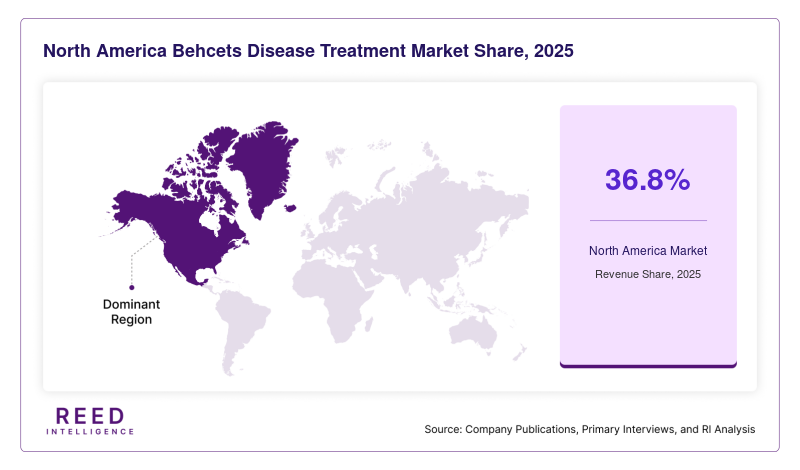
North America held the largest share of the Behcets Disease Treatment Market in 2025, accounting for 36.8% of global revenue, and is projected to maintain stable growth at a CAGR of 7.1% through 2034. The region benefits from advanced rare disease diagnostics, strong biologics adoption, and favorable reimbursement frameworks. High healthcare expenditure and widespread access to immunologists and rheumatologists support sustained treatment demand.
The United States dominates the regional market due to extensive orphan drug research and higher biologic utilization. A unique growth factor is the integration of multidisciplinary autoimmune disease centers, which improve diagnosis and long-term disease management. Increased patient support programs and insurance-backed specialty therapies continue strengthening treatment accessibility.
Europe
Europe represented 28.4% of the global market in 2025 and is expected to grow at a CAGR of 7.4% over the forecast period. The region benefits from strong healthcare systems, rare disease registries, and broader access to immunosuppressive therapies. Western Europe leads biologic integration, while Eastern Europe is improving diagnosis rates.
Germany remains the dominant European market due to strong specialty pharmaceutical infrastructure and physician awareness. A unique factor supporting growth is Europe’s emphasis on biosimilar adoption, which is lowering biologic costs and improving accessibility across public healthcare systems.
Asia Pacific
Asia Pacific accounted for 22.6% of the global Behcets Disease Treatment Market in 2025 and is projected to grow at the fastest CAGR of 9.8% through 2034. High disease prevalence in genetically susceptible populations and expanding healthcare infrastructure are driving regional expansion. Growing awareness campaigns are improving diagnosis.
China leads regional growth due to large patient populations and increasing investment in rare disease care. A unique driver is rapid expansion of urban specialty hospitals and government-backed pharmaceutical modernization, which supports broader biologic and immunotherapy availability.
Middle East & Africa
Middle East & Africa captured 7.1% market share in 2025 and is expected to grow at a CAGR of 8.5% during the forecast period. Higher disease prevalence in parts of the Middle East, particularly along Silk Road ancestry corridors, supports demand. Improving tertiary care systems are enhancing treatment access.
Turkey dominates the regional market due to relatively higher Behcet’s disease prevalence and established physician familiarity. A unique growth factor is regional academic leadership in Behcet-focused clinical research, which supports earlier diagnosis and treatment innovation.
Latin America
Latin America held 5.1% of global revenue in 2025 and is forecast to grow at a CAGR of 7.8% through 2034. Market expansion is supported by improving specialty care access, increasing autoimmune disease awareness, and broader generic immunosuppressant use. Economic disparities still influence advanced therapy adoption.
Brazil leads the regional market due to larger healthcare infrastructure and rising biologic distribution. A unique factor is government investment in specialty pharmacy expansion, improving chronic inflammatory disease treatment availability.
Competitive Landscape
The Behcets Disease Treatment Market is moderately consolidated, with major pharmaceutical firms competing through immunology portfolios, biologic innovation, and rare disease expansion strategies. Leading companies include AbbVie, Novartis AG, Pfizer Inc., Amgen Inc., and Johnson & Johnson. AbbVie remains a market leader due to strong TNF inhibitor penetration and broad immunology expertise. Companies are focusing on label expansion, biosimilar competition, and targeted cytokine research. Novartis and Pfizer continue investing in autoimmune inflammation therapies with broader pipeline diversification. Amgen benefits from biosimilar strategy, while Johnson & Johnson leverages immunology commercialization capabilities. Recent competitive developments include expanded biologic clinical trials for vasculitis-related conditions, partnerships for biosimilar commercialization, and digital patient management initiatives. Strategic growth increasingly depends on balancing affordability, innovation, and regional market access.
Key Players
- AbbVie Inc.
- Novartis AG
- Pfizer Inc.
- Amgen Inc.
- Johnson & Johnson
- Roche Holding AG
- Bristol Myers Squibb
- UCB S.A.
- Teva Pharmaceutical Industries Ltd.
- Hikma Pharmaceuticals
- Celltrion Inc.
- Biocon Biologics
- Sanofi S.A.
- Merck & Co., Inc.
- AstraZeneca plc
Recent Developments
- AbbVie expanded late-stage inflammatory disease biologic studies targeting broader vasculitis applications in 2025.
- Celltrion strengthened biosimilar immunology distribution partnerships across Asia and Europe in 2025.
- Novartis advanced cytokine-targeted autoimmune research initiatives focused on rare inflammatory diseases in 2024.
Behcets Disease Treatment Market Segments
Drug Class
- Corticosteroids
- Immunosuppressants
- Biologics
- Colchicine
- Others
Route of Administration
- Oral
- Injectable
- Topical
Distribution Channel
- Hospital Pharmacies
- Retail Pharmacies
- Online Pharmacies
By Region
- North America
- Europe
- APAC
- Middle East and Africa
- LATAM