Bells Palsy Treatment Market Size, Share & Demand Report By Treatment Type (Corticosteroid Therapy, Antiviral Therapy, Combination Drug Therapy), By End User (Hospitals and Specialty Clinics, Ambulatory Care Centers), By Distribution Channel (Hospital Pharmacies, Retail Pharmacies, Online Pharmacies), By Region & Segment Forecasts, 2026–2034
USD 3950
Market Overview
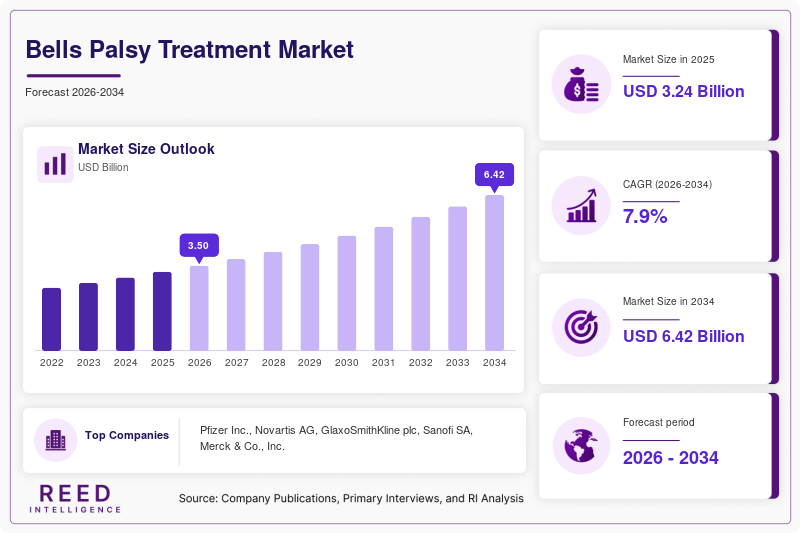
The global Bells Palsy Treatment Market was valued at USD 3.24 billion in 2026 and is projected to reach USD 5.98 billion by 2034, expanding at a CAGR of 7.9% during 2026–2034. The market continues to gain momentum as healthcare systems increasingly focus on early neurological diagnosis, improved patient outcomes, and broader access to specialized treatment options. Bell’s palsy, a neurological disorder characterized by temporary facial muscle weakness or paralysis, affects a significant number of individuals annually across developed and developing economies. The growing prevalence of viral infections, rising awareness regarding facial nerve disorders, and advancements in treatment protocols are supporting long-term market expansion.
A major factor contributing to market growth is the increasing adoption of early intervention therapies. Clinical evidence indicates that prompt administration of corticosteroids and supportive rehabilitation significantly improves recovery rates. As healthcare providers continue to emphasize rapid diagnosis and treatment initiation, demand for pharmaceutical therapies, physical rehabilitation programs, and advanced diagnostic services is increasing. Furthermore, expanding healthcare infrastructure in emerging economies is enabling better patient access to neurological care.
Key Highlights
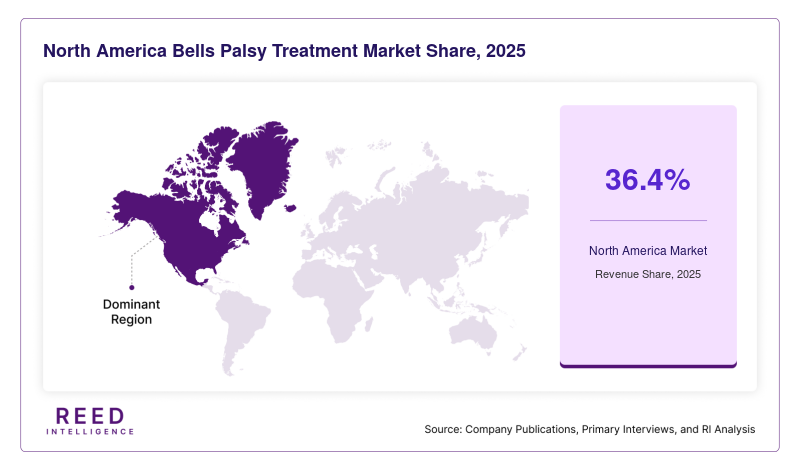
- North America dominated the market with a 36.4% share in 2025.
- while Asia Pacific is expected to grow at the fastest CAGR of 9.8% during 2026–2034.
- By treatment type, corticosteroid therapy accounted for the largest share of 42.8%.
- while combination drug therapy is projected to grow at a CAGR of 10.3%.
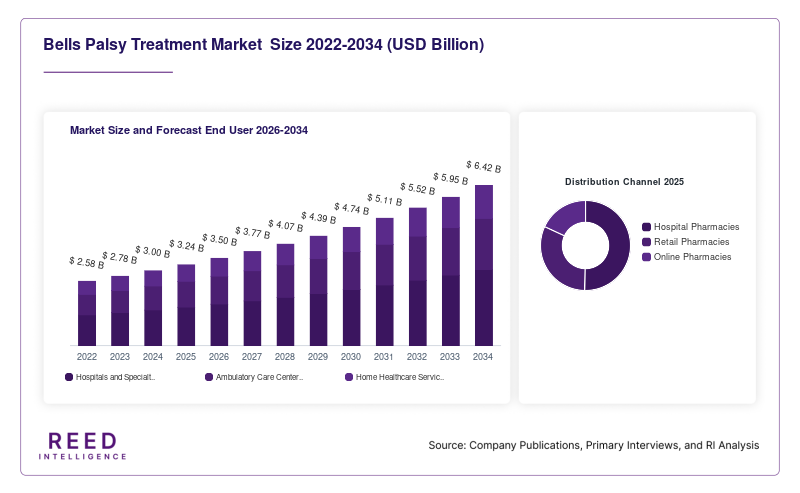
- By end user, hospitals and specialty clinics led with a 48.6% share.
- whereas home healthcare services are expected to expand at a CAGR of 10.8%.
- By distribution channel, hospital pharmacies held a 45.1% share, while online pharmacies are projected to grow at a CAGR of 11.2%.
- The United States remained the dominant country, with market values of USD 690 million in 2024 and USD 745 million in 2025.
Market Trends
Growing Integration of Digital Rehabilitation Technologies
Digital rehabilitation solutions are becoming increasingly important within the Bells Palsy Treatment Market. Healthcare providers are integrating mobile applications, virtual physiotherapy sessions, and AI-enabled facial movement monitoring tools into patient recovery programs. These technologies allow clinicians to track progress remotely and adjust rehabilitation plans based on real-time patient data. The approach improves treatment continuity, particularly for individuals who have limited access to specialty neurological care. Patients also benefit from higher engagement levels and greater convenience, which can positively influence treatment outcomes. As healthcare systems continue investing in digital transformation initiatives, technology-assisted rehabilitation is expected to become a standard component of Bell’s palsy management across several regions.
Rising Adoption of Combination Treatment Approaches
Healthcare professionals are increasingly utilizing combination treatment strategies to improve recovery outcomes among Bell’s palsy patients. Instead of relying solely on corticosteroids, physicians are prescribing antiviral medications, physiotherapy programs, facial exercises, and supportive therapies as part of integrated care plans. Clinical observations suggest that multimodal treatment approaches may help reduce complications and support faster nerve recovery in selected patient populations. Growing awareness among healthcare providers regarding personalized treatment pathways is further driving this trend. Pharmaceutical companies and rehabilitation centers are also collaborating to develop coordinated treatment protocols. As evidence supporting comprehensive care models continues to expand, combination treatment approaches are expected to gain stronger acceptance across global healthcare systems.
Market Drivers
Increasing Incidence of Neurological and Viral Disorders
The rising prevalence of neurological conditions and viral infections is a major factor driving the Bells Palsy Treatment Market. Several studies have associated Bell’s palsy with viral triggers, including herpes simplex virus infections and other inflammatory conditions affecting facial nerves. As populations grow and healthcare reporting systems improve, more cases are being diagnosed and treated annually. Increased disease awareness among physicians and patients has also contributed to earlier detection rates. Governments and healthcare organizations are supporting neurological health initiatives that encourage timely diagnosis and treatment. Consequently, the growing patient population requiring therapeutic intervention continues to generate sustained demand for medications, rehabilitation services, and diagnostic procedures worldwide.
Expanding Healthcare Infrastructure and Access to Specialized Care
Healthcare infrastructure development across emerging and developed economies is supporting market growth. Investments in hospitals, specialty clinics, diagnostic centers, and neurological treatment facilities are improving patient access to quality care. Many countries are increasing healthcare spending to strengthen disease management capabilities and address unmet neurological healthcare needs. Improved insurance coverage and reimbursement policies are further encouraging patients to seek treatment at earlier stages of disease progression. In addition, the expansion of telehealth services is enabling specialists to reach patients in underserved locations. These factors collectively contribute to greater treatment adoption rates and broader utilization of pharmaceutical and rehabilitation services, strengthening the long-term outlook for the market.
Market Restraints
Limited Awareness and Delayed Diagnosis in Developing Regions
Despite improvements in healthcare accessibility, limited awareness regarding Bell’s palsy remains a significant challenge in several developing regions. Many patients initially misinterpret symptoms as temporary facial discomfort or associate them with unrelated health conditions. Delayed diagnosis often results in postponed treatment initiation, reducing the effectiveness of early therapeutic interventions. In rural and underserved areas, shortages of neurologists and specialized healthcare professionals further complicate timely diagnosis and management. Healthcare facilities may also lack advanced diagnostic equipment necessary for comprehensive neurological assessments. These limitations can negatively impact patient outcomes and restrict market penetration. For example, patients who do not receive corticosteroid therapy within recommended treatment windows may experience prolonged recovery periods or residual facial weakness. Consequently, awareness gaps and healthcare accessibility challenges continue to restrain market growth in certain regions despite increasing demand for treatment services.
Market Opportunities
Expansion of Telemedicine-Based Neurological Care
Telemedicine is creating substantial opportunities within the Bells Palsy Treatment Market. Digital healthcare platforms allow neurologists and rehabilitation specialists to consult with patients regardless of geographical location. This capability is particularly valuable in regions where access to specialty care remains limited. Remote monitoring technologies can help clinicians evaluate facial muscle recovery and modify treatment plans without requiring frequent in-person visits. Healthcare providers are increasingly investing in virtual care infrastructure to improve patient engagement and reduce treatment costs. As internet connectivity and smartphone adoption continue to rise globally, telemedicine-based neurological care is expected to reach a larger patient population. This trend presents growth opportunities for healthcare technology providers, rehabilitation centers, and pharmaceutical companies seeking to expand patient access.
Development of Advanced Therapeutic and Regenerative Solutions
Ongoing research into nerve regeneration and neurological recovery therapies offers promising opportunities for market participants. Pharmaceutical companies and biotechnology firms are investigating novel treatment approaches that may enhance facial nerve repair and improve recovery outcomes. Innovations involving regenerative medicine, targeted drug delivery systems, and neuroprotective compounds are attracting research investments. Clinical trials evaluating advanced therapeutic combinations are also expanding. As scientific understanding of facial nerve disorders improves, new treatment options may emerge that address unmet clinical needs. Such advancements have the potential to increase treatment effectiveness and differentiate future products within the market. Companies investing in research and development activities are likely to benefit from growing demand for innovative neurological treatment solutions.
Segmental Analysis
By Treatment Type
Corticosteroid therapy represented the dominant subsegment within the treatment type category, accounting for 42.8% of market share in 2024. Corticosteroids remain the first-line treatment for Bell’s palsy due to their effectiveness in reducing inflammation and improving recovery outcomes when administered early. Healthcare providers widely prescribe these medications because of their established clinical efficacy and accessibility. Strong physician confidence, extensive clinical evidence, and broad inclusion in treatment guidelines continue to support their market leadership. Additionally, increasing diagnosis rates and growing patient awareness regarding the benefits of prompt treatment have contributed to sustained demand. Pharmaceutical manufacturers continue introducing improved formulations that support treatment compliance and optimize therapeutic outcomes, further reinforcing the position of corticosteroid therapy within the global market.
Combination drug therapy is expected to be the fastest-growing subsegment, expanding at a CAGR of 10.3% during 2026–2034. This growth is driven by increasing adoption of treatment plans that integrate corticosteroids with antiviral medications and supportive therapies. Physicians are increasingly recognizing the benefits of multimodal treatment strategies for selected patient groups. Ongoing clinical research examining the effectiveness of combination approaches is also encouraging broader adoption. Healthcare providers are focusing on personalized treatment pathways designed to improve recovery rates and minimize long-term complications. Growing awareness of integrated care models among both clinicians and patients is expected to accelerate demand for combination therapies. As evidence supporting comprehensive treatment approaches continues to strengthen, this subsegment is likely to experience significant expansion throughout the forecast period.
By End User
Hospitals and specialty clinics dominated the end-user segment with a 48.6% market share in 2024. These facilities serve as the primary point of diagnosis and treatment for Bell’s palsy patients. Hospitals offer comprehensive neurological assessment capabilities, access to specialists, and integrated rehabilitation services that support effective patient management. Specialty clinics also provide targeted expertise in facial nerve disorders and rehabilitation programs. Strong healthcare infrastructure in developed markets, coupled with increasing referrals for neurological evaluation, has strengthened the position of this subsegment. Furthermore, hospitals frequently participate in clinical research and advanced treatment programs, enabling them to adopt emerging therapeutic approaches more rapidly. The concentration of skilled healthcare professionals within these facilities continues to support their leading market share.
Home healthcare services are projected to register the fastest CAGR of 10.8% during 2026–2034. Growth is being driven by increasing demand for convenient and cost-effective treatment options. Patients recovering from Bell’s palsy often require ongoing physiotherapy and monitoring, making home-based care an attractive alternative to frequent clinical visits. Advances in telemedicine, remote monitoring technologies, and digital rehabilitation platforms are enabling healthcare providers to deliver effective care outside traditional clinical settings. Aging populations and rising healthcare cost pressures are also encouraging adoption of home healthcare models. Service providers are expanding their capabilities to include virtual consultations, guided exercise programs, and remote progress tracking. These developments are expected to significantly accelerate growth within the home healthcare segment over the forecast period.
By Distribution Channel
Hospital pharmacies held the largest share within the distribution channel segment, accounting for 45.1% of the market in 2024. Their dominance is largely attributed to the strong relationship between diagnosis, treatment initiation, and medication dispensing within hospital settings. Bell’s palsy patients frequently receive prescriptions immediately following clinical evaluation, making hospital pharmacies a critical component of the treatment pathway. These facilities maintain reliable medication inventories and provide direct pharmacist support regarding dosage instructions and treatment adherence. The increasing number of hospital admissions and outpatient neurological consultations has further strengthened demand through this channel. Additionally, hospital pharmacies often serve as preferred dispensing locations for specialized therapies and combination treatment regimens, supporting their continued leadership position.
Online pharmacies are anticipated to be the fastest-growing distribution channel, expanding at a CAGR of 11.2% through 2034. Growing consumer preference for digital healthcare services and convenient medication purchasing options is driving this growth. Online platforms provide easy access to prescribed medications while reducing travel requirements for patients undergoing recovery. Increasing internet penetration and smartphone usage are further encouraging adoption across both developed and emerging markets. Many online pharmacies are integrating teleconsultation services and digital prescription management systems, creating a more seamless patient experience. Competitive pricing strategies and home delivery options are also contributing to rising utilization rates. As digital healthcare ecosystems continue to evolve, online pharmacies are expected to capture a larger share of medication distribution within the market.
Regional Analysis
North America
North America accounted for 36.4% of the global Bells Palsy Treatment Market in 2025 and is projected to maintain a strong position throughout the forecast period. The region is expected to register a CAGR of 7.4% between 2026 and 2034. Market growth is supported by advanced healthcare infrastructure, widespread availability of neurological specialists, and high awareness levels regarding facial nerve disorders. Strong reimbursement systems and early diagnosis practices also contribute to greater treatment adoption rates across the region.
The United States remains the dominant country within North America. A key growth factor is the extensive integration of telehealth and digital rehabilitation technologies into neurological care pathways. Healthcare providers increasingly utilize remote consultations and virtual physiotherapy services to support patient recovery. This approach improves treatment accessibility while enhancing long-term patient engagement, contributing to sustained market expansion across the country.
Europe
Europe represented 28.1% of the global market in 2025 and is anticipated to expand at a CAGR of 7.2% through 2034. Growth is supported by strong public healthcare systems, rising neurological disease awareness, and favorable reimbursement structures. The region benefits from established clinical treatment guidelines and widespread access to pharmaceutical therapies. Increasing healthcare expenditure and growing emphasis on patient-centered treatment approaches are further supporting market development.
Germany emerged as the leading country within Europe. One unique growth factor is the country's focus on integrated rehabilitation services. German healthcare providers emphasize multidisciplinary treatment strategies that combine medication, physiotherapy, and specialist consultations. This comprehensive care model has improved treatment outcomes and encouraged broader adoption of Bell’s palsy therapies across healthcare institutions.
Asia Pacific
Asia Pacific held 22.6% of the global market in 2025 and is forecast to record the fastest CAGR of 9.8% during 2026–2034. Rapid healthcare infrastructure expansion, growing healthcare spending, and increasing awareness regarding neurological conditions are driving market growth. The region is witnessing substantial improvements in diagnostic capabilities and treatment accessibility. Expanding urban populations and rising disposable incomes are also supporting demand for advanced healthcare services.
China dominates the Asia Pacific market. A distinctive growth factor is the rapid modernization of healthcare facilities across urban and secondary cities. Government investments in healthcare infrastructure have improved access to neurological specialists and diagnostic services. As healthcare coverage continues to expand, more patients are receiving timely diagnosis and treatment, accelerating market growth throughout the country.
Middle East & Africa
The Middle East & Africa region captured 6.5% of the global market in 2025 and is expected to achieve a CAGR of 7.6% over the forecast period. Growth is supported by increasing healthcare investments, expanding hospital networks, and improving access to specialty care. Several countries are implementing healthcare modernization programs designed to strengthen diagnostic and treatment capabilities for neurological disorders. These initiatives are contributing to gradual market expansion.
Saudi Arabia represents the dominant country within the region. A major growth factor is the government's commitment to healthcare diversification and infrastructure development. Significant investments in specialized medical centers and digital healthcare services are enhancing patient access to neurological treatment. These improvements are expected to support stronger adoption of Bell’s palsy therapies and rehabilitation services during the forecast period.
Latin America
Latin America accounted for 6.4% of the global Bells Palsy Treatment Market in 2025 and is projected to grow at a CAGR of 7.5% through 2034. Rising healthcare awareness, improving diagnostic capabilities, and increasing access to pharmaceutical treatments are supporting market development. Governments and private healthcare providers are investing in healthcare infrastructure upgrades to address growing demand for neurological services. These initiatives are creating favorable conditions for market growth.
Brazil remains the leading country in the Latin American market. A unique growth factor is the expansion of public healthcare programs focused on improving access to specialized treatment services. Increased availability of neurological consultations and rehabilitation programs is enabling more patients to receive timely care. This trend is expected to contribute significantly to market growth across the country during the forecast period.
Competitive Landscape
The Bells Palsy Treatment Market is moderately consolidated, with several pharmaceutical manufacturers and healthcare companies competing through product development, strategic partnerships, and geographic expansion initiatives. Market participants are focusing on improving treatment accessibility, expanding neurological therapy portfolios, and strengthening distribution networks to enhance their competitive positions.
Pfizer Inc. remains one of the leading companies due to its extensive pharmaceutical portfolio and strong global presence. The company continues to invest in neurological and anti-inflammatory therapeutic research. Other significant participants include Novartis AG, GlaxoSmithKline plc, Sanofi SA, and Merck & Co., Inc., all of which maintain established positions within the broader neurological treatment landscape.Recent competitive activity has centered on digital health integration, patient support programs, and expanded access to specialty treatments. Companies are increasingly collaborating with healthcare providers and rehabilitation centers to deliver comprehensive care solutions. Strategic acquisitions and research partnerships are also helping organizations strengthen innovation capabilities and accelerate product development efforts. As demand for effective neurological treatment options continues to rise, competition is expected to intensify across both developed and emerging healthcare markets.
Key Players
- Pfizer Inc.
- Novartis AG
- GlaxoSmithKline plc
- Sanofi SA
- Merck & Co., Inc.
- AbbVie Inc.
- Bristol Myers Squibb
- Eli Lilly and Company
- Teva Pharmaceutical Industries Ltd.
- Sun Pharmaceutical Industries Ltd.
- Cipla Limited
- Dr. Reddy’s Laboratories Ltd.
- Viatris Inc.
- Amneal Pharmaceuticals, Inc.
- Aurobindo Pharma Limited
Recent Developments
- A leading pharmaceutical company expanded its corticosteroid production capacity in 2025 to address rising demand from neurological treatment centers.
- Multiple healthcare providers introduced AI-supported facial rehabilitation platforms designed to improve remote patient monitoring and recovery tracking in 2025.
- Several biotechnology firms initiated clinical studies evaluating advanced combination therapies aimed at improving facial nerve recovery outcomes in 2025.
- Regional hospital networks across Asia Pacific expanded tele-neurology programs to improve access to Bell’s palsy diagnosis and treatment services.
- Pharmaceutical manufacturers strengthened partnerships with rehabilitation centers to support integrated treatment pathways and patient education initiatives.
Bells Palsy Treatment Market Segments
- Corticosteroid Therapy
- Antiviral Therapy
- Combination Drug Therapy
- Physical Therapy
- Surgical Intervention
End User
- Hospitals and Specialty Clinics
- Ambulatory Care Centers
- Home Healthcare Services
Distribution Channel
- Hospital Pharmacies
- Retail Pharmacies
- Online Pharmacies
By Region
- North America
- Europe
- APAC
- Middle East and Africa
- LATAM