Benzocaine Market Size, Share, Demand Report By Type (Ester-Based Benzocaine, Pharmaceutical-Grade Benzocaine), By Application (Oral Care, Dermatological Applications, Pain Relief Products), By End-Use (Pharmaceutical Industry, Personal Care Industry, Healthcare Providers), By Region & Segment Forecasts, 2025–2034
USD 3950
Market Overview
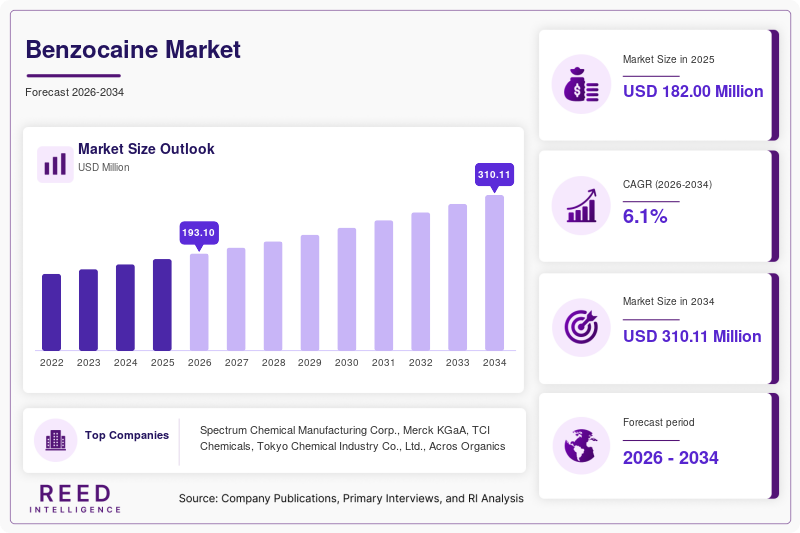
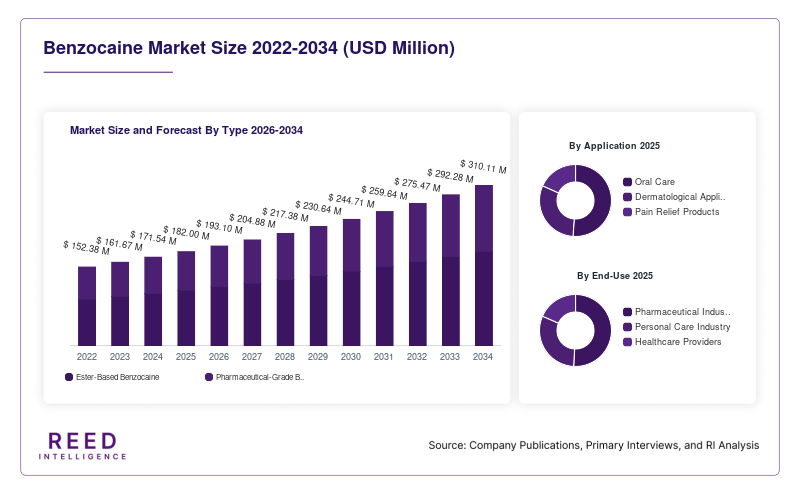
The Benzocaine Market size was valued at USD 182 million in 2025 and is projected to reach USD 191 million in 2026. Over the forecast period, the market is expected to grow to approximately USD 305 million by 2034, registering a compound annual growth rate (CAGR) of 6.1% from 2025 to 2034.
The market growth is driven by increasing demand for over-the-counter (OTC) pain relief products, rising prevalence of oral and dental conditions, and expanding use in cosmetic and personal care industries. Benzocaine is widely incorporated into oral analgesics and antiseptic products, particularly for conditions such as toothaches, sore throat, and minor skin irritations. The growth of the pharmaceutical and consumer healthcare sectors, especially in emerging economies, is further contributing to increased consumption.
Key Highlights
- North America held 32.0% of the Benzocaine Market share in 2025, while Asia Pacific will register the fastest CAGR of 7.2% through 2034.
- Pharmaceutical-grade benzocaine accounted for 52.0% share in 2025, while personal care applications will grow at a CAGR of 6.7%.
- Oral care applications represented 45.0% share in 2025, whereas dermatological applications will grow at a CAGR of 6.9%.
- The United States remained the dominant country, with the market valued at USD 58.2 million in 2025 and projected to reach USD 61.1 million in 2026.
Market Trends
Rising Demand for OTC Healthcare Products
The growing inclination toward self-care and over-the-counter medications is significantly shaping the benzocaine market. Consumers are increasingly seeking quick and accessible solutions for minor health concerns such as toothaches, sore throat, and skin irritations. Benzocaine, due to its fast-acting numbing properties, is widely used in OTC products like lozenges, gels, and sprays. Retail pharmacies and e-commerce platforms are further boosting accessibility, allowing consumers to easily purchase benzocaine-based products without prescriptions. This trend is particularly strong in urban regions where convenience and cost-effectiveness influence purchasing behavior. The shift toward preventive healthcare and self-medication continues to reinforce the demand for benzocaine formulations.
Increasing Use in Cosmetic and Personal Care Applications
Another notable trend is the growing incorporation of benzocaine in cosmetic and personal care products. It is widely used in numbing creams and sprays applied before minor cosmetic procedures such as tattooing, waxing, and laser treatments. The rising popularity of aesthetic treatments among younger consumers is contributing to increased demand. Additionally, product innovation in skincare formulations is enabling safer and more efficient use of benzocaine in topical applications. Manufacturers are focusing on developing formulations with improved absorption and reduced irritation, which enhances consumer acceptance. This trend reflects a broader shift toward multifunctional personal care products that combine therapeutic and cosmetic benefits.
Market Drivers
Increasing Prevalence of Oral Health Issues
The rising incidence of dental problems such as cavities, gum infections, and tooth sensitivity is a major driver for the benzocaine market. Poor dietary habits, high sugar consumption, and inadequate oral hygiene contribute to these conditions, increasing the need for pain relief solutions. Benzocaine is commonly used in oral gels and lozenges that provide immediate relief from dental pain. The growing awareness of oral health, coupled with increased spending on dental care products, is boosting demand. Additionally, the expansion of dental care services and clinics is further driving the use of benzocaine-based anesthetics in minor dental procedures and treatments.
Expansion of Pharmaceutical and Healthcare Industries
The rapid growth of the pharmaceutical and healthcare sectors globally is another key factor supporting the benzocaine market. Increased investments in healthcare infrastructure, particularly in developing regions, are enhancing access to medical treatments and products. Benzocaine is widely used in topical anesthetics and first aid formulations, making it an essential component in healthcare systems. The rising production of generic drugs and OTC medications is also contributing to market growth. Moreover, continuous research and development activities aimed at improving drug formulations are expanding the scope of benzocaine applications across various therapeutic areas.
Market Restraint
Regulatory Concerns and Safety Issues
One of the primary restraints affecting the benzocaine market is the increasing regulatory scrutiny related to its safety profile. Benzocaine has been associated with rare but serious side effects, such as methemoglobinemia, particularly when used in high concentrations or in sensitive populations like infants. Regulatory authorities in several regions have imposed strict guidelines on the use and labeling of benzocaine-containing products. These regulations can limit product availability and increase compliance costs for manufacturers.
The impact of these safety concerns extends across the industry, affecting both pharmaceutical and consumer product segments. For instance, manufacturers may need to reformulate products or reduce benzocaine concentrations to meet regulatory standards, which can influence product efficacy and consumer perception. Additionally, negative publicity surrounding potential risks may reduce consumer confidence and demand. Companies must invest in safety studies and transparent communication to mitigate these challenges, which can increase operational expenses and slow market growth.
Market Opportunities
Growth in Emerging Markets
Emerging economies present significant growth opportunities for the benzocaine market due to increasing healthcare awareness and improving access to medical products. Countries in Asia Pacific, Latin America, and Africa are experiencing rising demand for affordable and effective pain relief solutions. The expansion of retail pharmacy networks and e-commerce platforms is making benzocaine-based products more accessible to a larger population. Additionally, government initiatives to improve healthcare infrastructure are supporting market growth. Manufacturers can capitalize on these opportunities by introducing cost-effective formulations tailored to local needs and preferences, thereby expanding their market presence.
Innovation in Drug Delivery Systems
Advancements in drug delivery technologies offer promising opportunities for the benzocaine market. Innovative formulations such as controlled-release gels, sprays, and patches are enhancing the effectiveness and safety of benzocaine products. These innovations improve drug absorption, reduce side effects, and provide longer-lasting relief, making them more appealing to consumers. Pharmaceutical companies are investing in research and development to create differentiated products that meet evolving consumer demands. The integration of benzocaine with other active ingredients in combination therapies is also opening new avenues for growth, particularly in specialized medical and cosmetic applications.
Segmental Analysis
By Type
The ester-based benzocaine segment dominated the market in 2024, accounting for approximately 68% of the total share. This dominance is attributed to its widespread use in pharmaceutical and personal care applications. Ester-based benzocaine is preferred due to its effectiveness as a local anesthetic and its compatibility with various formulations. It is commonly used in oral gels, lozenges, and topical creams, making it a versatile ingredient across multiple product categories. The established manufacturing processes and availability of raw materials further support the growth of this segment.
The pharmaceutical-grade benzocaine segment is expected to be the fastest-growing, with a projected CAGR of 6.8% during the forecast period. This growth is driven by increasing demand for high-quality and regulated products in medical applications. Pharmaceutical-grade benzocaine offers higher purity and safety, making it suitable for use in clinical settings and advanced formulations. The rising focus on quality standards and regulatory compliance is encouraging manufacturers to invest in this segment, thereby driving its growth.
By Application
The oral care segment held the largest market share in 2024, accounting for approximately 45% of the total revenue. Benzocaine is widely used in oral gels, lozenges, and sprays for the treatment of toothaches and sore throat. The increasing prevalence of dental issues and growing awareness of oral hygiene are key factors driving this segment. Additionally, the availability of OTC oral care products has made benzocaine easily accessible to consumers.
The dermatological applications segment is expected to grow at the fastest rate, with a CAGR of 6.9%. This growth is driven by the increasing use of benzocaine in skincare and cosmetic products. It is commonly used in numbing creams for minor procedures such as waxing and tattooing. The rising popularity of cosmetic treatments and personal grooming trends is further boosting demand in this segment. Innovations in skincare formulations are also contributing to its growth.
By End-Use
The pharmaceutical industry dominated the benzocaine market in 2024, accounting for approximately 52% of the total share. Benzocaine is widely used in various pharmaceutical formulations, including topical anesthetics and first aid products. The growth of the pharmaceutical industry and increasing demand for OTC medications are key factors supporting this segment. Additionally, ongoing research and development activities are expanding the applications of benzocaine in new therapeutic areas.
The personal care industry is expected to be the fastest-growing segment, with a CAGR of 6.7%. This growth is driven by increasing consumer demand for multifunctional personal care products. Benzocaine is widely used in cosmetic formulations for its numbing properties, making it suitable for use in various treatments. The rising trend of self-care and grooming is further supporting the growth of this segment, as consumers seek convenient and effective solutions for minor discomfort.
Regional Analysis
North America
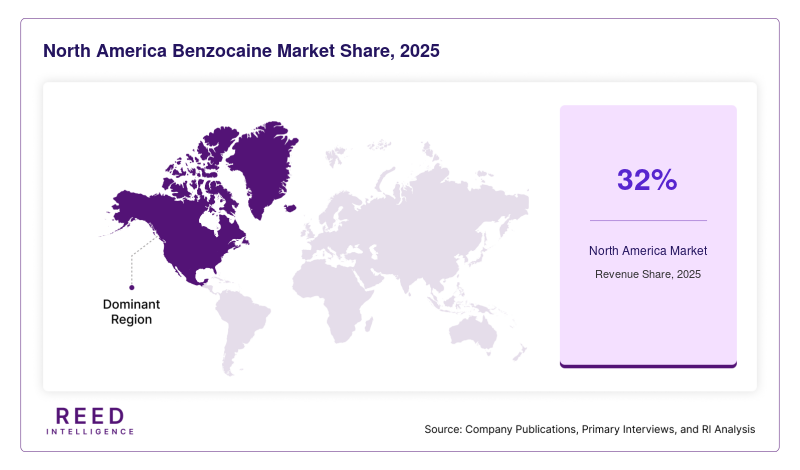
North America accounted for a significant share of the benzocaine market in 2025, contributing approximately 32% of the global revenue. The region is expected to grow at a CAGR of 5.4% during the forecast period. High consumer awareness, well-established healthcare infrastructure, and strong demand for OTC medications are key factors supporting market growth. The presence of leading pharmaceutical companies further strengthens the market position in this region.
The United States dominates the North American market due to its advanced healthcare system and high consumption of OTC products. A unique growth factor in this region is the strong presence of regulatory frameworks that ensure product safety and quality. While these regulations can pose challenges, they also enhance consumer trust, thereby sustaining long-term demand for benzocaine-based products.
Europe
Europe held around 26% of the benzocaine market share in 2025 and is projected to grow at a CAGR of 5.7%. The region benefits from a well-developed pharmaceutical sector and increasing demand for oral care products. Growing awareness of personal hygiene and healthcare is driving the use of benzocaine in various applications, including dental and dermatological products.
Germany is a leading country in the European benzocaine market, supported by its strong pharmaceutical industry and research capabilities. A unique growth factor in Europe is the emphasis on sustainable and high-quality formulations. Manufacturers are focusing on developing products that meet stringent environmental and safety standards, which enhances market growth and consumer acceptance.
Asia Pacific
Asia Pacific is the fastest-growing region in the benzocaine market, accounting for approximately 24% of the global share in 2025 and expected to grow at a CAGR of 7.2%. Rapid urbanization, increasing healthcare expenditure, and rising awareness of oral health are key drivers in this region. The expanding middle-class population is also contributing to increased demand for OTC products.
China leads the Asia Pacific market due to its large population and growing pharmaceutical industry. A unique growth factor in this region is the rapid expansion of e-commerce platforms, which are making healthcare products more accessible. This digital transformation is significantly boosting the distribution and sales of benzocaine-based products.
Middle East & Africa
The Middle East & Africa region accounted for around 9% of the benzocaine market share in 2025 and is expected to grow at a CAGR of 5.9%. Improving healthcare infrastructure and increasing awareness of medical treatments are driving market growth. The demand for affordable healthcare solutions is particularly strong in this region.
South Africa is a key market within this region, benefiting from ongoing healthcare developments and government initiatives. A unique growth factor is the increasing penetration of international pharmaceutical brands, which are introducing a wider range of benzocaine-based products. This is enhancing product availability and driving market expansion.
Latin America
Latin America held approximately 9% of the benzocaine market share in 2025 and is projected to grow at a CAGR of 6.3%. The region is experiencing steady growth due to increasing healthcare awareness and expanding pharmaceutical industries. The demand for OTC medications is rising, supported by improving economic conditions.
Brazil dominates the Latin American market due to its large population and growing healthcare sector. A unique growth factor in this region is the increasing adoption of self-medication practices. Consumers are increasingly relying on OTC products for minor health issues, which is boosting the demand for benzocaine-based formulations.
Competitive Landscape
The benzocaine market is moderately fragmented, with several global and regional players competing based on product quality, pricing, and innovation. Leading companies are focusing on expanding their product portfolios and enhancing their manufacturing capabilities to meet growing demand. Strategic collaborations, mergers, and acquisitions are also common in this market as companies seek to strengthen their market position.
A key market leader is Spectrum Chemical Manufacturing Corp., known for its extensive range of pharmaceutical-grade benzocaine products. The company has recently invested in expanding its production capacity to meet increasing global demand. Other major players are focusing on research and development to introduce innovative formulations and improve product safety. The competitive landscape is characterized by continuous efforts to comply with regulatory standards and maintain high-quality production processes.
Key Players
- Spectrum Chemical Manufacturing Corp.
- TCI Chemicals
- Merck KGaA
- Tokyo Chemical Industry Co., Ltd.
- Acros Organics
- Alfa Aesar
- Santa Cruz Biotechnology, Inc.
- MP Biomedicals
- Parchem Fine & Specialty Chemicals
- Jigs Chemical
- Shandong Xinhua Pharmaceutical Company
- Nantong Xinhua Chemical Co., Ltd.
- Wuhan Fortuna Chemical Co., Ltd.
- Henan Tianfu Chemical Co., Ltd.
- Haihang Industry Co., Ltd.
Recent Developments
- In 2024, a leading pharmaceutical company expanded its benzocaine production facility to meet rising global demand for OTC products.
- In 2023, a major player introduced a new benzocaine-based topical spray with improved absorption technology.
- In 2023, several companies invested in research and development to create safer formulations with reduced side effects.
Benzocaine Market Segments
By Type
- Ester-Based Benzocaine
- Pharmaceutical-Grade Benzocaine
By Application
- Oral Care
- Dermatological Applications
- Pain Relief Products
By End-Use
- Pharmaceutical Industry
- Personal Care Industry
- Healthcare Providers
By Region
- North America
- Europe
- APAC
- Middle East and Africa
- LATAM