Benzoe Siam Market Size, Share, Demand Report by Grade (Pharmaceutical Grade, Cosmetic Grade, Industrial Grade), By Application (Fragrances & Perfumes, Herbal Therapeutics, Food Flavoring, Incense & Aromatherapy), By End-Use (Personal Care & Cosmetics, Pharmaceutical & Nutraceutical, Food & Beverage, Religious & Cultural Applications), and Regional Forecasts, 2026–2034
USD 3950
Market Overview
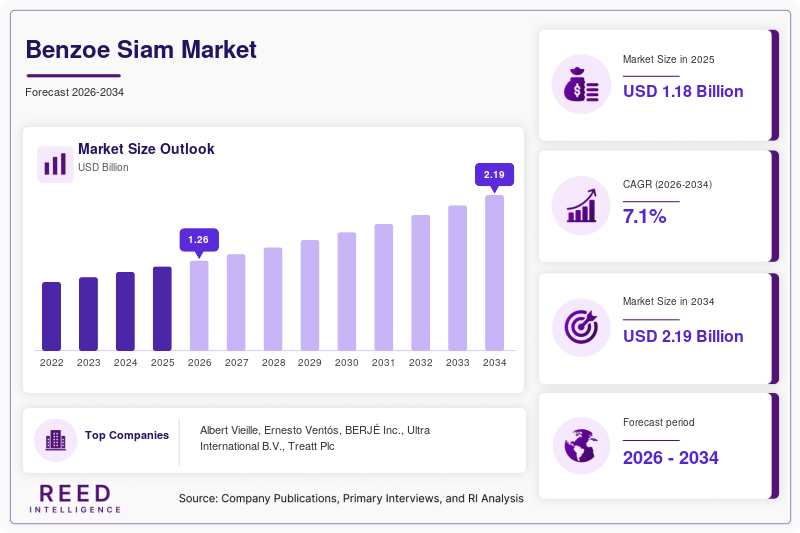
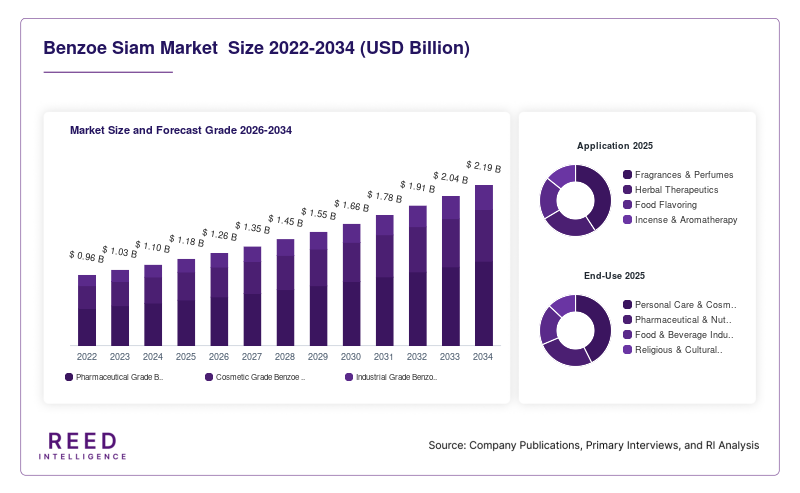
The global Benzoe Siam Market size was valued at USD 1.18 billion in 2026 and is projected to reach USD 2.04 billion by 2034, expanding at a compound annual growth rate (CAGR) of 7.1% during 2026–2034. Benzoe Siam, a natural balsamic resin derived primarily from Styrax tonkinensis trees, has maintained stable commercial demand due to its extensive use in fragrance formulations, pharmaceuticals, incense, food flavoring, and traditional medicine. The market has experienced sustained momentum as manufacturers across personal care, aromatherapy, and herbal wellness industries increasingly shift toward plant-derived ingredients. Rising consumer awareness regarding natural aromatic compounds and the growing preference for botanical raw materials in cosmetics and therapeutic applications have significantly supported global expansion. Increased investment in sustainable harvesting practices in Southeast Asia, particularly in Laos, Thailand, and Vietnam, has also enhanced supply consistency and quality standards, improving international trade opportunities. Furthermore, expanding applications in premium perfumery and clean-label wellness products continue to create favorable conditions for producers and processors. Demand from Europe and North America remains strong due to consumer preference for natural resin-based ingredients, while Asia Pacific benefits from indigenous sourcing and rising regional manufacturing capacity.
Key Highlights
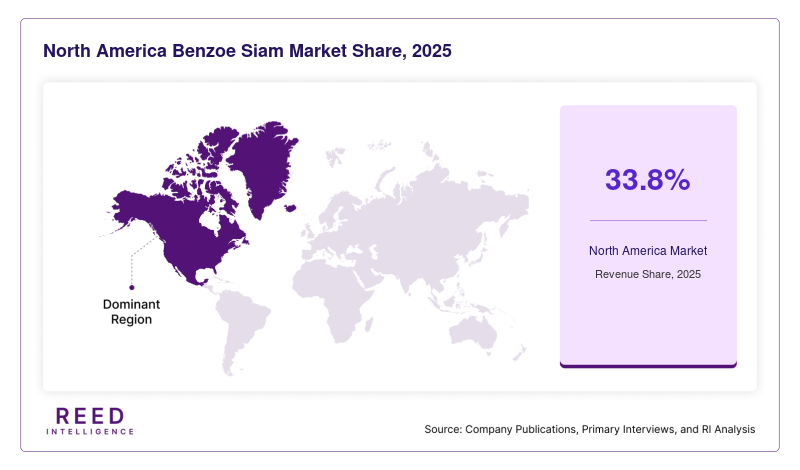
- North America dominated the market with a 33.8% share in 2025.
- Asia Pacific is expected to grow at the fastest CAGR of 8.9% during 2026–2034.
- By grade, pharmaceutical-grade Benzoe Siam accounted for the largest share of 39.4%, while cosmetic-grade Benzoe Siam is projected to grow at a CAGR of 9.1%.
- By application, fragrances and perfumes led with a 36.7% share, whereas herbal therapeutics is expected to expand at a CAGR of 8.8%.
- The United States remained the dominant country, with market values of USD 248 million in 2024 and USD 269 million in 2025.
Market Trends
Expansion of clean-label fragrance and aromatherapy industries
The Benzoe Siam Market is increasingly shaped by the rapid development of clean-label fragrances and aromatherapy products. Consumers are showing stronger preference for natural scent ingredients over synthetic aroma chemicals, particularly in premium perfumes, candles, and wellness products. Benzoe Siam’s sweet balsamic profile makes it suitable for luxury fragrance blending and essential oil formulations. Wellness-focused product launches, especially in Europe and North America, are encouraging suppliers to develop higher-purity resin extracts. Brands are also promoting ingredient traceability, which supports sustainably harvested Benzoe Siam from Southeast Asia. This trend is enhancing product differentiation while strengthening the resin’s role in botanical personal care and home fragrance categories.
Integration into herbal pharmaceuticals and traditional medicine modernization
Benzoe Siam is gaining wider adoption in herbal medicine and natural pharmaceutical formulations due to its antiseptic, anti-inflammatory, and expectorant properties. Traditional medicinal systems in Asia have historically used Benzoe Siam in balms, tinctures, and respiratory remedies, but modernization of herbal healthcare is increasing standardized commercial use. Pharmaceutical companies are investing in natural active ingredients that align with preventive healthcare trends. Demand for herbal cough syrups, topical antiseptics, and wellness supplements is expanding across emerging economies. Regulatory support for botanical ingredients in wellness sectors is also contributing to broader product development, making Benzoe Siam a relevant component in evolving natural healthcare markets.
Market Drivers
Rising consumer demand for natural ingredients in personal care and cosmetics
Global beauty and personal care manufacturers are increasingly replacing synthetic preservatives and fragrance compounds with naturally sourced alternatives, directly supporting Benzoe Siam demand. Benzoe Siam is valued for both aromatic and preservative qualities, making it suitable for skin creams, perfumes, soaps, and incense products. Consumers are actively seeking botanical formulations perceived as safer and environmentally responsible. This shift has encouraged cosmetic manufacturers to expand product portfolios that emphasize natural ingredients. As premium skincare and artisanal fragrance categories continue to grow, Benzoe Siam’s use as a multifunctional ingredient is expected to rise, particularly in formulations emphasizing authenticity, sustainability, and sensory appeal.
Growth in traditional medicine commercialization across Asia and global wellness sectors
The commercialization of traditional medicine is driving Benzoe Siam Market growth through broader integration into modern healthcare products. Herbal formulations inspired by Ayurvedic, Traditional Chinese Medicine, and Southeast Asian therapeutic systems increasingly include natural resins for respiratory and topical uses. Governments in several Asian countries are supporting herbal product exports, increasing processing investments. International wellness brands are also incorporating Benzoe Siam into natural balms, oils, and supplements. This convergence of traditional knowledge and industrial production creates stronger demand channels, improves product standardization, and expands Benzoe Siam’s commercial relevance beyond cultural markets into mainstream health and wellness sectors.
Market Restraint
Supply chain limitations linked to geographic concentration and raw material volatility
A major restraint in the Benzoe Siam Market is the concentration of raw material production in limited Southeast Asian regions, particularly Laos, Thailand, and Vietnam. Climatic changes, deforestation, inconsistent harvesting practices, and agricultural land conversion can disrupt resin supply and impact pricing stability. Because Benzoe Siam production depends heavily on tree health and harvesting cycles, fluctuations in raw material quality may affect downstream industries such as perfumery and pharmaceuticals. Smaller producers often face certification and export compliance challenges, limiting global scalability. For example, inconsistent resin purity can complicate pharmaceutical-grade processing, increasing costs for international manufacturers. These constraints may restrict supply continuity and challenge broader market expansion.
Market Opportunities
Sustainable sourcing and certification programs creating premium pricing potential
Sustainable sourcing represents a major opportunity within the Benzoe Siam Market as consumers and manufacturers increasingly prioritize ethical supply chains. Certification programs focused on biodiversity preservation, fair trade, and traceability can significantly improve product value in premium fragrance and wellness segments. Producers who invest in eco-conscious harvesting and transparent sourcing may gain stronger access to North American and European markets where sustainability credentials influence purchasing decisions. Partnerships between cooperatives and multinational ingredient suppliers can also enhance rural incomes while stabilizing resin production. This opportunity supports both environmental stewardship and market differentiation, positioning Benzoe Siam as a higher-value natural ingredient.
Product innovation in nutraceuticals and functional wellness applications
Emerging innovation in nutraceuticals and functional wellness products creates new growth channels for Benzoe Siam. Beyond traditional applications, manufacturers are exploring resin-derived compounds for respiratory support, stress management, and immunity-focused formulations. Functional teas, herbal capsules, and therapeutic oils incorporating Benzoe Siam may appeal to wellness-conscious consumers seeking natural remedies. Research into botanical efficacy and improved extraction technologies can further broaden commercial possibilities. As consumers increasingly seek preventive health products, Benzoe Siam suppliers can diversify beyond perfumery and incense into broader wellness categories, strengthening long-term market resilience and application diversity.
Segmental Analysis
By Grade
Pharmaceutical-grade Benzoe Siam held the dominant market share of 39.4% in 2024 due to its broad utilization in herbal medicine, antiseptic preparations, tinctures, and respiratory treatments. High purity requirements and growing pharmaceutical standardization have strengthened this subsegment’s global demand. Manufacturers prioritize pharmaceutical-grade resin for medicinal reliability, particularly in Europe and Asia where botanical healthcare industries are expanding. This segment also benefits from increasing consumer preference for natural therapeutic compounds. The integration of Benzoe Siam into respiratory balms and topical antiseptic formulations has supported sustained volume demand. Standardized extraction and processing technologies further reinforce this segment’s market leadership.
Cosmetic-grade Benzoe Siam is projected to register the fastest CAGR of 9.1% during the forecast period due to increasing use in skincare, perfumery, soaps, and aromatherapy products. Beauty manufacturers are leveraging Benzoe Siam’s aromatic richness and preservative properties to develop premium formulations aligned with clean beauty trends. Demand is especially rising in North America and Europe where botanical personal care categories are expanding rapidly. Product innovation in anti-aging creams, natural deodorants, and luxury fragrances is accelerating cosmetic-grade consumption. This growth reflects broader industry movement toward multifunctional natural ingredients.
By Application
Fragrances and perfumes accounted for the largest share of 36.7% in 2024, supported by Benzoe Siam’s extensive role as a fixative and aromatic enhancer. Luxury and artisanal fragrance manufacturers increasingly incorporate natural balsamic notes to differentiate premium offerings. Benzoe Siam’s compatibility with oriental, woody, and amber scent profiles strengthens its relevance across multiple fragrance categories. Growth in home fragrance products such as candles and incense also supports this segment. Consumer demand for authentic sensory experiences and plant-derived aromatic compounds has reinforced fragrances as the market’s primary application.
Herbal therapeutics is expected to witness the fastest CAGR of 8.8% through 2034 due to rising consumer adoption of botanical medicine. Benzoe Siam’s traditional role in respiratory wellness, skin care, and anti-inflammatory preparations is gaining broader commercial acceptance. Functional health products emphasizing natural ingredients are driving investment in therapeutic formulations. Manufacturers are exploring advanced extraction methods to improve efficacy and standardization. This trend is particularly relevant in Asia Pacific and emerging wellness markets where preventive healthcare products are expanding.
By End-Use
Personal care and cosmetics emerged as the dominant end-use segment with a 34.9% market share in 2024. Benzoe Siam’s incorporation into creams, soaps, perfumes, and aromatherapy products supports this leadership. The segment benefits from rising clean-label beauty trends, premiumization strategies, and consumer preference for botanical ingredients. Brands increasingly market resin-based products as sustainable and authentic, improving product appeal. Expansion of luxury wellness and skincare categories further strengthens demand from personal care manufacturers globally.
Pharmaceutical and nutraceutical applications are forecast to grow at the fastest CAGR of 8.6% during 2026–2034. This growth is driven by rising preventive healthcare awareness, herbal product modernization, and broader therapeutic research into natural compounds. Benzoe Siam’s medicinal versatility offers opportunities in respiratory products, antiseptics, and wellness supplements. Increased regulatory clarity around botanical ingredients may also support market penetration. As health-conscious consumers seek plant-based alternatives, this segment is likely to gain strategic importance.
Regional Analysis
North America
North America accounted for 33.8% of the global Benzoe Siam Market share in 2025 and is projected to expand at a CAGR of 6.5% during the forecast period. The region’s market strength is driven by high consumer spending on premium fragrances, botanical cosmetics, and natural wellness products. Demand from clean beauty brands and aromatherapy manufacturers continues to support imports of pharmaceutical and cosmetic-grade Benzoe Siam.
The United States dominates the regional market due to established personal care and herbal supplement industries. A unique growth factor is the increasing popularity of artisanal and luxury fragrance brands emphasizing natural resin ingredients. Consumer preference for transparent ingredient sourcing has encouraged suppliers to strengthen sustainable import channels, supporting broader market penetration.
Europe
Europe held 27.4% of the global market share in 2025 and is forecast to grow at a CAGR of 6.8% through 2034. The region benefits from strong demand for organic cosmetics, botanical medicine, and high-end perfumery, especially in Western Europe. Regulatory support for safer, plant-based ingredients also contributes to sustained Benzoe Siam integration across several industrial categories.
Germany remains the dominant European market due to its advanced herbal medicine and natural cosmetics sectors. A unique growth factor is the region’s emphasis on clean-label product certification and environmental sustainability. European manufacturers increasingly integrate ethically sourced Benzoe Siam into personal care and medicinal formulations to align with evolving consumer standards.
Asia Pacific
Asia Pacific represented 24.1% of the Benzoe Siam Market in 2025 and is expected to register the fastest CAGR of 8.9% during 2026–2034. Regional growth is supported by local sourcing advantages, expanding resin processing infrastructure, and strong cultural use in incense and traditional medicine. Rising industrialization is improving export competitiveness.
China leads the regional market due to substantial herbal product manufacturing and large-scale fragrance ingredient demand. A unique growth factor is the modernization of traditional medicine industries, which increasingly standardize natural resin applications for broader domestic and export markets, accelerating commercial demand.
Middle East & Africa
Middle East & Africa captured 8.1% of the global market share in 2025 and is projected to grow at a CAGR of 7.0%. Demand is supported by traditional incense use, religious applications, and growing luxury fragrance markets. Increased disposable income in Gulf countries also supports resin-based aromatic products.
Saudi Arabia leads regional consumption due to cultural reliance on incense and perfumery traditions. A unique growth factor is rising investment in premium oud and resin fragrance blending, where Benzoe Siam serves as an important complementary aromatic ingredient in luxury scent portfolios.
Latin America
Latin America held 6.6% of the global market in 2025 and is anticipated to expand at a CAGR of 6.7% through 2034. Growth is supported by increasing herbal wellness adoption and natural cosmetics development. Regional manufacturers are gradually expanding product offerings using imported botanical ingredients.
Brazil dominates the Latin American market due to its expanding personal care manufacturing sector. A unique growth factor is the country’s strong consumer preference for botanical beauty products, encouraging greater use of natural aromatic compounds such as Benzoe Siam in skin and wellness applications.
Competitive Landscape
The Benzoe Siam Market remains moderately fragmented, with regional resin harvesters, botanical extract processors, and global fragrance ingredient suppliers competing across quality and sourcing capabilities. Leading companies emphasize sustainable procurement, resin purity, and diversified end-use applications. Albert Vieille remains a market leader due to its strong natural fragrance ingredient portfolio and established international supply network. Recent development includes expanded sourcing partnerships in Southeast Asia to strengthen premium resin procurement. Other notable players such as Ernesto Ventós, BERJÉ Inc., Ultra International B.V., and Treatt Plc are investing in botanical extraction innovation and broader cosmetic-grade ingredient distribution. Competitive differentiation increasingly centers on traceability, organic certification, and customized extract development for pharmaceutical and fragrance sectors.
Key Players
- Albert Vieille
- Ernesto Ventós
- BERJÉ Inc.
- Ultra International B.V.
- Treatt Plc
- Robertet Group
- AOS Products Pvt. Ltd.
- Hermitage Oils
- Eden Botanicals
- Beroe Inc.
- Floracopeia Inc.
- Synthite Industries Ltd.
- Van Aroma
- PerfumersWorld Ltd.
- Shaanxi Guanjie Technology Co., Ltd.
Recent Developments
- Albert Vieille expanded sustainable resin sourcing initiatives in Laos during 2025 to improve premium-grade Benzoe Siam supply stability.
- Treatt Plc introduced new botanical resin extraction capabilities in 2024 focused on natural fragrance applications.
- BERJÉ Inc. strengthened its Southeast Asian sourcing partnerships in 2025 to support cosmetic and therapeutic ingredient expansion.
Benzoe Siam Market Segments
Grade
- Pharmaceutical Grade Benzoe Siam
- Cosmetic Grade Benzoe Siam
- Industrial Grade Benzoe Siam
Application
- Fragrances & Perfumes
- Herbal Therapeutics
- Food Flavoring
- Incense & Aromatherapy
End-Use
- Personal Care & Cosmetics
- Pharmaceutical & Nutraceutical
- Food & Beverage Industry
- Religious & Cultural Applications
By Region
- North America
- Europe
- APAC
- Middle East and Africa
- LATAM